
Sheinbaum: The 4T Must Fulfill the Commitments It Has Made to Prevent the Advance of the Far Right
This article by Arturo Sánchez Jiménez and Alma E. Muñoz originally appeared in the June 24, 2026 edition of La Jornada, Mexico’s premier left wing daily newspaper.
Mexico City. It is “very difficult” for the far right to take root in Mexico, due to the strength of national history, the people’s identification with the principles of social justice, and the relationship of trust built between citizens and the government, President Claudia Sheinbaum Pardo affirmed this Wednesday, though she warned that the governments of the Fourth Transformation must continue fulfilling the commitments they have made in order to prevent the advance of far-right projects.
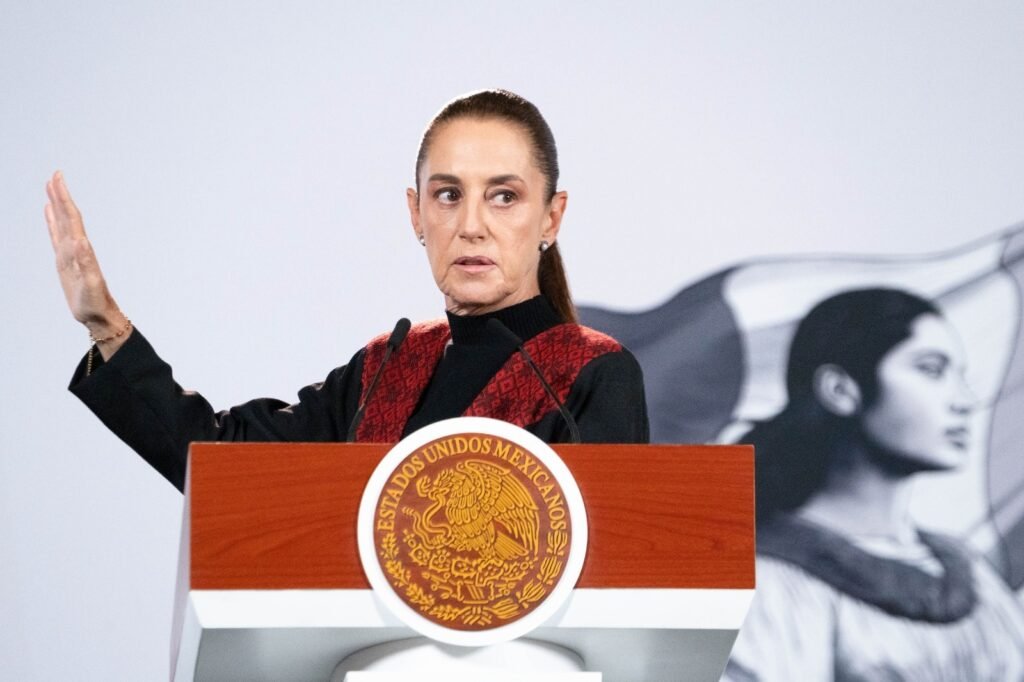
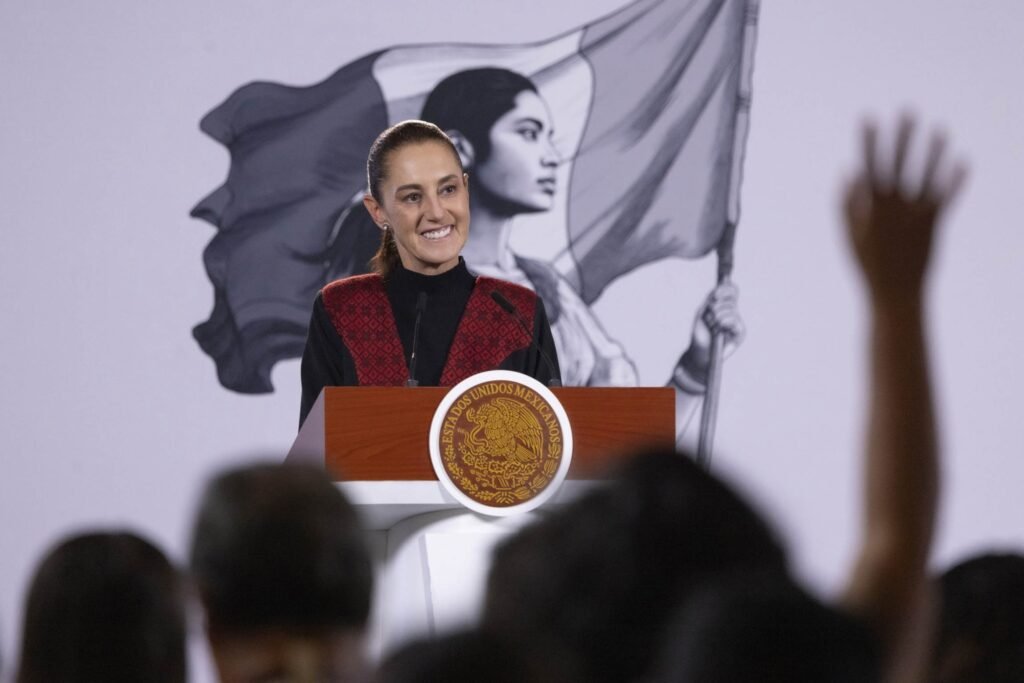
Asked at her daily press conference about the advance of far-right forces in countries such as Argentina, Ecuador, and Colombia, and the role that some media outlets have played in those processes, the president stated at the National Palace that it is always necessary to observe what is happening in other nations, but stressed that Mexico has particular characteristics.
“Of course we must always be attentive to what happens in other places. Work very hard to inform, not to disappoint, and to keep delivering for the people,” she noted.
Sheinbaum attributed that difference to the reclaiming of national history promoted by the Fourth Transformation. She accused previous governments of trying to erase or minimize the role of historical figures such as Miguel Hidalgo, José María Morelos, Benito Juárez, Emiliano Zapata, and Francisco Villa. According to the President, the recovery of that historical memory strengthens national identity and hinders the penetration of far-right political projects.
“When we reclaim our history with Mexican humanism, from the original cultures to the country’s great transformations, the people identify with it, they recover their historical memory,” she affirmed.
She also highlighted the pioneering character of the 1857 Constitution, for establishing the separation between Church and State and eliminating privileges, as well as the 1917 Constitution, for incorporating principles of social justice.
“Very difficult for the far right to insert itself into our country,” she maintained. “On the other hand, the brotherhood that has been achieved between the people and the government. That is why we cannot betray them, ever.”
The president considered that governmental honesty and the fulfillment of the commitments made with the population are fundamental elements to prevent the advance of conservative currents. “Honesty has to be our banner, and to be honest and never lie to the people,” she said.
She also warned about the risks of informational manipulation on social media and through artificial intelligence tools. For this reason, she proposed opening a national discussion on the role of digital platforms, their algorithms, and the way information is administered.
Nevertheless, she maintained that the best defense against disinformation remains direct contact with citizens. “The most important thing is house by house. Because there is nothing more powerful, even in the face of social media, than face to face,” she said.
Separately, she explained that her government does not contemplate carrying out investigations of former presidents and that, in any case, it falls to the Attorney General’s Office (FGR) to do so in the event of any alleged crime committed by the former leaders.
-
Defense of Sovereignty “Is Not Rhetoric, It’s Principles,” Sheinbaum Says
Sheinbaum recalled foreign pressure on Mexico in the 19th and 20th centuries and blamed the neoliberal governments and Calderón for opening the door to U.S. influence.
-
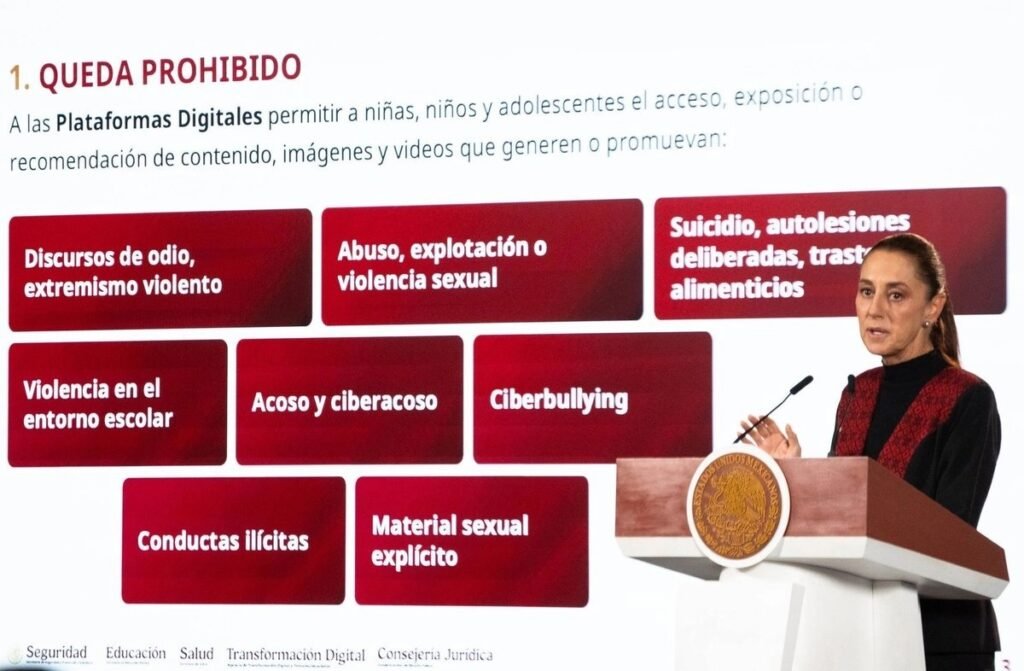
Sheinbaum Presents Draft Decree to Force Digital Platforms to Take Down Content That Incites Violence and Hate
No fines for now: the government will talk with tech companies before publishing the decree next week, a promise made after the Coahuila school attack.
-
People’s Mañanera October 9
President Sheinbaum’s daily press conference, with comments on digital safety, IMSS-Bienestar, sovereignty, and the opposition.