

Mexico’s Resigning Attorney General Allowed Fuel Theft to Run Rampant: Sentences Plummeted to Zero
This article by Arturo Daen was originally published in the November 28, 2025 edition of Sin Embargo.
Mexico City. The case of the Miss Universe owner exposed a fuel trafficking corruption network with millions of dollars in losses for the country, and brought to the forefront once again the low level of effectiveness of the Attorney General’s Office (FGR) under Alejandro Gertz from 2019 until his resignation, regarding investigations into these dirty businesses and the punishment of those involved.
While in 2014, Pemex observed a peak of 1,045 people sentenced for hydrocarbon theft in federal and local courts, by 2024, according to a response via Transparency, the figure plummeted to just two sentences, and from January to June of this year, zero, no one sentenced.
In federal courts alone, the FGR only managed to secure 11 convictions for hydrocarbon crimes between 2019 and June 2025.
According to news reports, an official from the Attorney General’s Office (FGR) allegedly accepted bribes to warn businessman Raúl Rocha about the investigations against him for tax evasion on the southern border.
These events add to a previous scandal involving high-ranking Navy officials also allegedly involved in a tax-evading fuel theft network, which had operated for months with ships bringing in millions of liters of hydrocarbons on the coasts of Tamaulipas.
All this comes against the backdrop of a meager number of sentences for this type of crime, considering the magnitude of the damage to the public treasury, at least 16 billion for tax evasion, and 20 billion that Pemex loses each year due to clandestine taps.

Sentences for fuel theft fall to a minimum
Between 2019 and July 2025, the legal department of Petróleos Mexicanos (Pemex) recorded 6,560 arrests for fuel theft in all its forms. During the same seven-year period, only 172 people were sentenced for these crimes in federal or local courts, without Pemex specifying how many of these resulted in convictions.
According to a response on the National Transparency Platform, in 2018 Pemex observed 215 rulings, by 2023 the number dropped to only 12. Then there were only two rulings in 2024, and none between January and July of this year.
At the federal level, the figures are even more meager. Between 2019 and 2024, the Attorney General’s Office (FGR) opened 44,000 investigations into crimes related to hydrocarbons. In 2019, there were 10,461 investigations, and by 2024, that number had dropped to 4,294.
Despite this volume of investigations, the Federal Judiciary Council only registered 21 sentences for these types of crimes between 2019 and June of this year. Of these, only 11 resulted in convictions in federal courts and justice centers for crimes of hydrocarbon theft and illegal possession of fuel.
Of the 21 sentences in federal courts, six were given in 2019, six in 2020, four in 2021, one in 2022, three in 2023 and one in 2024. From January to June of this year, none.
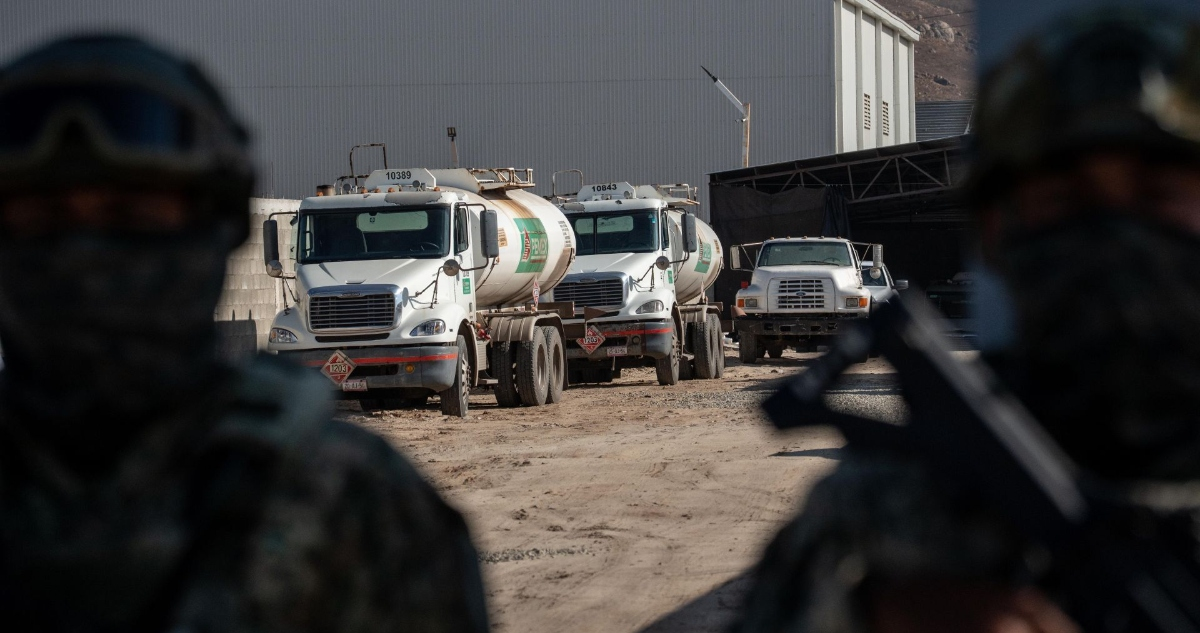
Also in response to a Freedom of Information request, the Attorney General’s Office (FGR) stated that from 2019 to 2024 it had only investigated one public official allegedly involved in fuel theft. It only mentioned that he was a driver, and that the case occurred in 2021, without providing details about the outcome of the investigation.
In April 2024, the Reforma and Milenio media outlets reported that Gertz’s Attorney General’s Office (FGR) failed in a key fuel theft case against two Pemex monitoring engineers accused of stealing 18,210 barrels of gasoline in 2018. The judge ruled that the prosecution had failed to prove their responsibility, and they were acquitted.
Since 2019, the Attorney General’s Office (FGR) has received fewer complaints and opened fewer investigations, according to data from the National Institute of Statistics and Geography (INEGI). In financial crimes, historically crucial for prosecuting corruption and money laundering, the decline is drastic: the number of cases opened dropped from over 10,000 in 2018 to just over 2,000 in 2024.
There were more than nine thousand arrest warrants pending execution at the end of 2023. For specialists, this demonstrates a Prosecutor’s Office incapable of fulfilling even its essential functions.
Millions in damage to the public treasury
The aforementioned data are magnified when reviewing the damage to the public budget caused by the theft and smuggling of fuel, the so-called fiscal huachicol, and the cases where the alleged involvement of Navy officials and the FGR itself in corruption networks and illegal trafficking of hydrocarbons is mentioned.
In 2023 and 2024 alone, Pemex discovered 26,664 clandestine hydrocarbon taps, representing losses of 40 billion pesos, according to reports from the oil company.
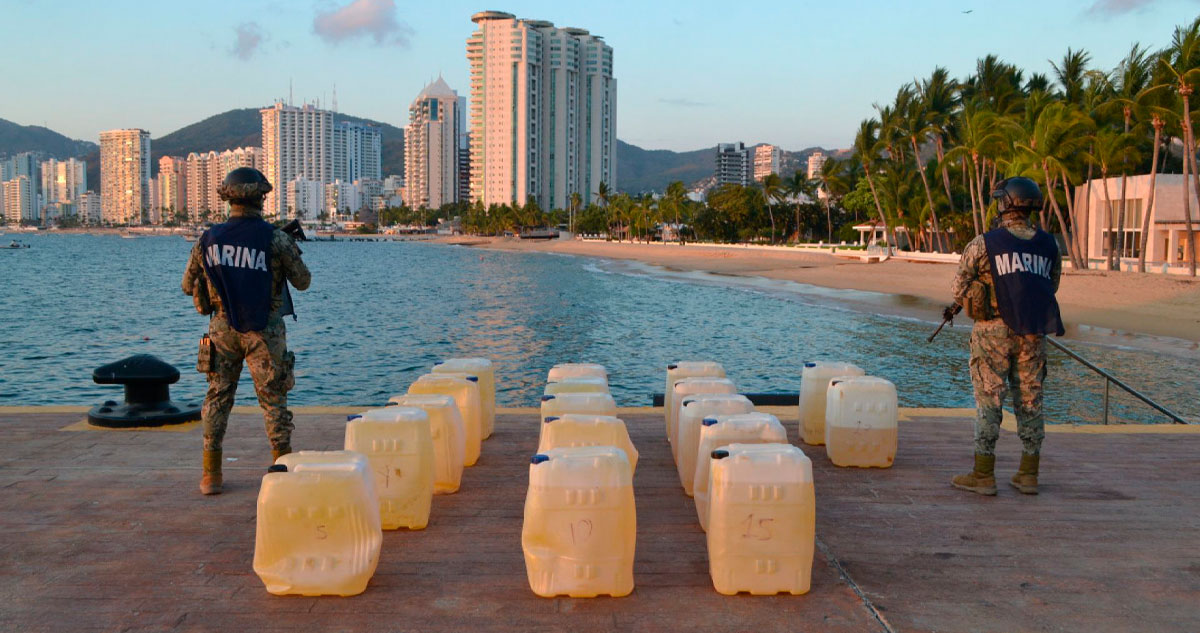
Although there has been a decrease in the levels of stolen fuel compared to the six-year term of Enrique Peña Nieto, when 81,000 barrels were being extracted clandestinely per day, the problem is still far from being eradicated.
In fact, during 2024 Pemex experienced an increase in the theft and illegal trade of the fuels it produces. The state-owned oil company estimated that the average amount of fuel stolen reached 17,000 barrels per day in 2024, representing a 10.4 percent increase compared to the 15,000 barrels per day in 2023.
Added to this is the financial damage caused by so-called fiscal fuel theft, which is the illegal importation of fuels by declaring that it is another product, such as additives or lubricants, in order to evade the payment of taxes when crossing customs.
According to the Secretary of Finance, the complaints filed with the Attorney General’s Office for tax evasion up to October involved an amount of at least 16 billion pesos that did not reach the public coffers, by evading customs controls.
Last September, federal authorities reported the arrest of 14 people involved in fuel theft at maritime terminals in Tamaulipas, including Navy commanders such as Vice Admiral Manuel Roberto “N”. This stemmed from a complaint filed a couple of years prior by the then Secretary of the Navy, Rafael Ojeda, and the discovery last March of a vessel carrying 10 million liters of diesel, weapons, and vehicles. The government itself described the seizure as “historic.”

Just a couple of months later, another high-profile case erupted involving a fuel theft ring. It was revealed that Raúl Rocha, owner of the Miss Universe pageant, was accused of participating in a network of drug trafficking, arms trafficking, and fuel theft, illegally transporting hydrocarbons across the border with Guatemala.
According to El País and the Reforma newspaper, the FGR file mentions that a prosecutor’s office official, Mari Carmen Ramírez Rodríguez, already detained in a Morelos prison, participated in the fuel theft network, and that while assigned to the Special Prosecutor’s Office for Investigation of Hydrocarbon Crimes, she allegedly accepted bribes to leak information about the investigations against Raúl Rocha and accomplices.
On the subject, during the morning press conference, Mayor Claudia Sheinbaum commented on Gertz Manero: “He has done a good job leading the Attorney General’s Office. We have coordinated on many issues. I think we need much more coordination between the state Attorney General’s Offices and the Attorney General’s Office of the Republic. There are security issues where it is very important to have greater coordination; that is what we have been working on since we took office.”
-
People’s Mañanera October 13
President Sheinbaum’s daily press conference, with comments on security, new prisons, healthcare, Jalisco, and popular support.
-
Constitutional Reforms Strengthen the Defense of Mexican Sovereignty, Sheinbaum Says
Elections swayed by foreign interference can now be annulled, and Sheinbaum likened those seeking outside backing to the conservatives who brought Maximilian.
-
At the End of the Six-Year Term There Will Be 350,000 New Places for Undergraduate Studies, Sheinbaum Says
The plan includes new high schools and technological institutes, converting middle schools without afternoon shifts, and more Rosario Castellanos campuses.