Land of the Godínez: Work, Obedience & Dispossession in Contemporary Mexico
This article by Diana Osorio originally appeared in the December 17, 2025 edition of Rebelión.
In Godín, José Baroja, the Chilean-Mexican writer whose Sueño en Guadalajara y otros cuentos has given us so much to talk about, offers a scene that, far from being exaggerated, resonates with the starkness of a mirror: a boss welcoming his new employee with the phrase, “Your body and soul belong to us.” Jaime, the protagonist, smiles and thanks him. The fiction here is not artifice; it is a lucid—and brutal—synthesis of the Mexican labor economy. The story lays bare the logic that sustains the current job market: a system that demands loyalty without reciprocity, sacrifice without justice, and discipline without rights.
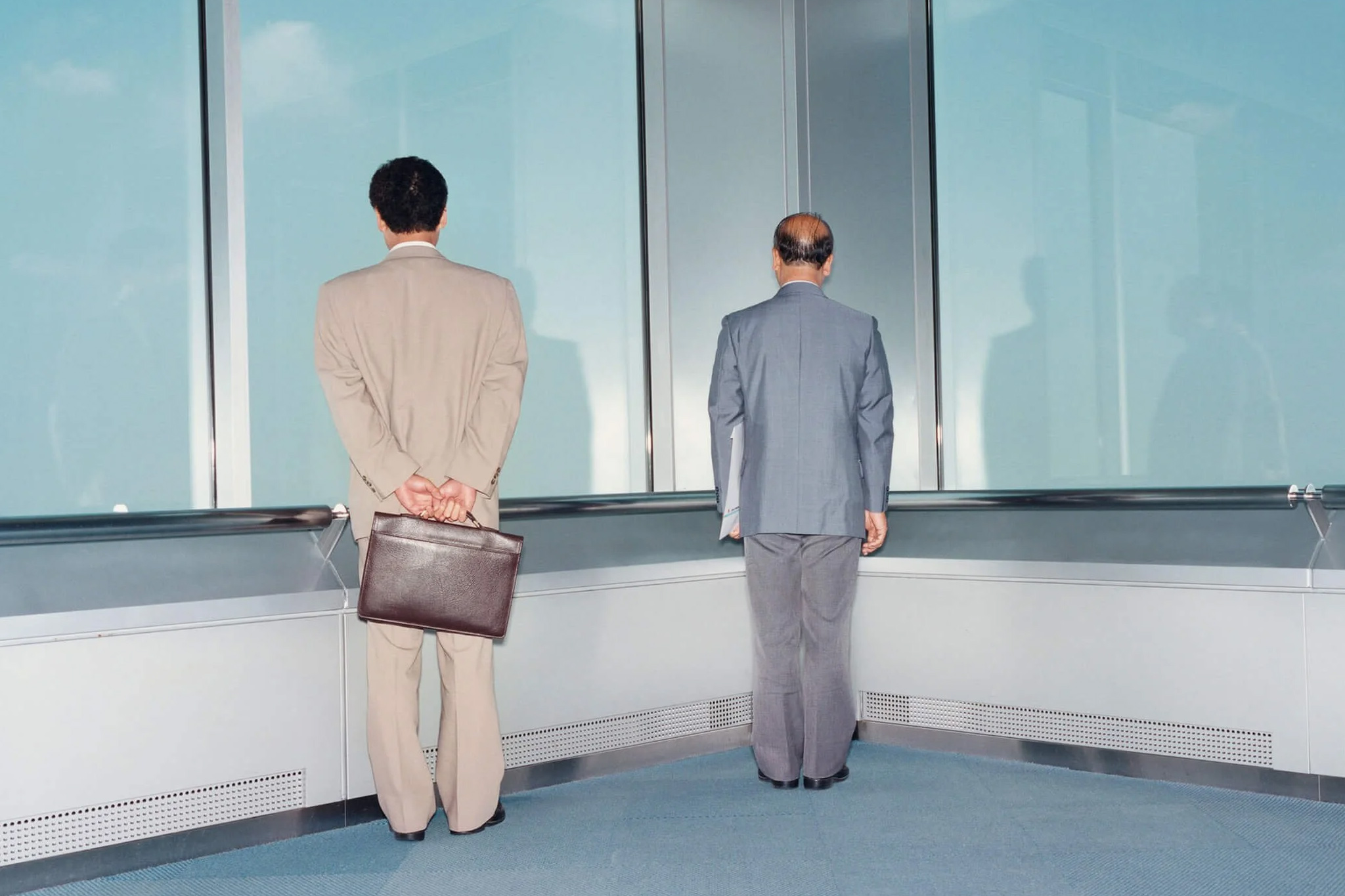
The figure of the godín, so commonly used to describe the typical office worker, masks a deeper reality: a process of workplace domestication experienced by millions. This is not merely a cultural or humorous phenomenon; it is the expression of an economic order that normalizes long hours, insufficient wages, constant evaluations, loss of identity, and a growing sacrifice of personal life. What Baroja narrates as satire is, in reality, pure sociology.
Precariousness has been legitimized to the point of becoming commonplace. In a country where more than half the workforce lives in the informal sector and where having a job doesn’t guarantee escaping poverty, Jaime clings to his job like someone trying to survive a shipwreck by grasping at a drifting plank. But the plank belongs to the same sinking ship. The fantasy of security associated with formal employment persists as a national myth, even when daily experience proves otherwise: temporary contracts, dismissals without severance pay, denied benefits, constant surveillance, and bureaucracy normalized even for going to the bathroom.
Forced gratitude is one of the most perverse pillars of the Mexican labor system, where workers learn to be grateful for the bare minimum.
The story accurately illustrates how this symbolic violence is internalized. Jaime not only accepts the conditions, he is grateful for them. This forced gratitude is one of the most perverse pillars of the Mexican labor system, where workers learn to be grateful for the bare minimum: the possibility of continuing to work, the privilege of having a place to exhaust themselves, the opportunity to sacrifice their time in exchange for a salary that barely sustains survival. Gratitude, in this context, is a form of control.
Baroja also denounces, without subtlety, the structural inequality that permeates the labor market. The statement “if you’re a woman, Indigenous, or an Indigenous woman, you’re screwed even more” serves as a reminder that employment in Mexico is not only precarious: it is profoundly discriminatory. Access to decent work varies according to origin, gender, and class, and the most vulnerable sectors bear the burden of double or triple precarity as if it were an inevitable fate.
The story’s ending—Jaime’s death in his cubicle, the empty funeral, the company untouched—encapsulates an uncomfortable truth: the worker is expendable, replaceable, disposable. The company remains; the boss remains; the employee disappears without a trace. In a country where individual efforts are rarely recognized and where labour rights are treated as concessions rather than guarantees, Jaime’s silent death becomes a national allegory.
What Godín presents is more than a critique of the corporate world. It’s a call to question the very structure of work in Mexico: a system that consumes bodies and time without restoring dignity, that demands obedience while degrading life, that rewards submission and punishes insight. Jaime’s life—which could be that of any worker in Guadalajara, in the Valley of Mexico, or on the northern border—is the story of a country that has turned precarity into the norm and sacrifice into a civic virtue.

Because it’s not just about bad working conditions: it’s about an economic model that thrives on the exhaustion of its own people. A model that hides its violence behind rhetoric of “commitment,” “team spirit,” and “wearing the company colors.” A model that demands total dedication while offering mere crumbs. A model that, if left unchallenged, will continue to produce thousands of Jaimes: worn-out, grateful, invisible workers, willing to offer their bodies and souls in exchange for a security that never arrives.
Baroja’s story thus functions as a warning. Not about the future, but about the present. Not about an isolated case, but about the majority condition. As long as we accept that precariousness is normal, that exploitation is part of the national character, and that work must be experienced as a sacrifice, Jaime’s story will continue to repeat itself under bright office lights, in windowless cubicles, in endless workdays where workers confuse loyalty with survival.
The political challenge lies in this repetition: to break the normalization of burnout, to question the rules of the labor game, and to reclaim the basic right to a life not consumed by the utility of others. Where Jaime gives his soul, perhaps the country can—if it dares—recover its own.
-
PRI Members, Businessmen and Bankers, the Biggest Beneficiaries of Fobaproa
“The same banks that were saved in 1995 are, today, in their ordinary role as investors, collectors of the servicing of that same debt,” charges Rojas Silva in Contralínea.
-
People’s Mañanera October 13
President Sheinbaum’s daily press conference, with comments on security, new prisons, healthcare, Jalisco, and popular support.
-
Constitutional Reforms Strengthen the Defense of Mexican Sovereignty, Sheinbaum Says
Elections swayed by foreign interference can now be annulled, and Sheinbaum likened those seeking outside backing to the conservatives who brought Maximilian.