
Presidents of Cuba & Venezuela Express Solidarity & Send Condolences After Train Derailment
This article originally appeared in the December 28, 2025 edition of La Jornada, Mexico’s premier left wing daily newspaper.
Mexico City. The derailment of the Interoceanic train caused various reactions from political parties, governors, senators, deputies, and even condolences from the presidents of Cuba, Miguel Díaz-Canel Bermúdez, and Venezuela, Nicolás Maduro.
In addition to expressing their solidarity and sorrow for the deaths and injuries on social media, some public figures demanded a thorough investigation and the suspension of operations until the causes of the accident are known; others criticized the infrastructure and lack of planning; and still others considered evaluating the continued involvement of the Secretariat of the Navy (SEMAR) in the railway management of this train.
Salomón Jara, Governor of Oaxaca, deeply regretted the accident and offered his full support to the affected families. Kenia López Rabadán, President of the Chamber of Deputies, sent her deepest condolences to the victims’ families and called for a thorough investigation.
Meanwhile, Díaz-Canel conveyed his government’s condolences “to the people and government of Mexico” and expressed solidarity, as did the Maduro government.
The Navy reaffirmed its commitment to providing “transparent” service, as it is the entity responsible for the Interoceanic Corridor.
After lamenting the loss of life, as well as the impact on the injured, the President of the Senate of the Republic, Laura Itzel Castillo, expressed her confidence that a thorough investigation will be carried out to clarify what happened.
The Morena party in the Chamber of Deputies stated that, once the investigations into the Interoceanic Train derailment are complete, the underlying causes must be addressed. Meanwhile, the PAN party demanded a permanent halt to train operations and the creation of a legislative commission to investigate the project, which, they indicated, has cost over 60 billion pesos.
The economic vice-coordinator of the National Action Party (PAN), Héctor Saúl Téllez, recalled that his party has questioned the series of irregularities in the project initiated during the previous six-year term. He proposed that the Superior Audit Office of the Federation conduct a special investigation and that operations be resumed only after an independent technical audit, with international participation, certifies the safety of the tracks and locomotives.
He stated that in the audits carried out on the train, the ASF “has reported irregularities of approximately 57.75 million pesos, with overpayments of 28.85 million in the rehabilitation of Line Z, where the accident occurred.
The Institutional Revolutionary Party (PRI) demanded a thorough investigation and punishment for those responsible for the accident. On his social media accounts, the party’s national leader, Alejandro Moreno, asserted that this project “lacks maintenance, oversight, and seriousness. It’s all propaganda, corruption, and pure lies.”
Referring to the accident, he said that “this is the direct consequence of the improvisation, negligence and contempt with which they govern.”
The national leader of the National Action Party (PAN), Jorge Romero, expressed his condolences and acknowledged the efforts of the emergency teams that attended to the injured.
-
AMLO Warns of the Rise of Neofascism: “It’s Not the Right, nor the Far Right”
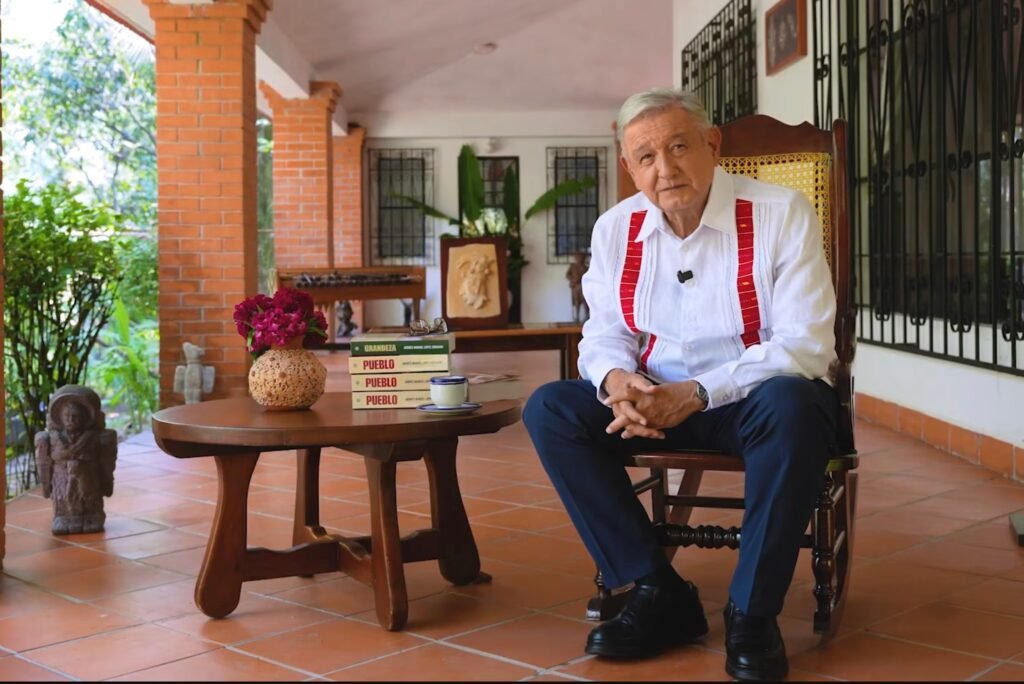
Returning in a video from his La Chingada ranch, he presented his new book, Pueblo, dedicated to Sheinbaum, whom he called the world’s best President.
-
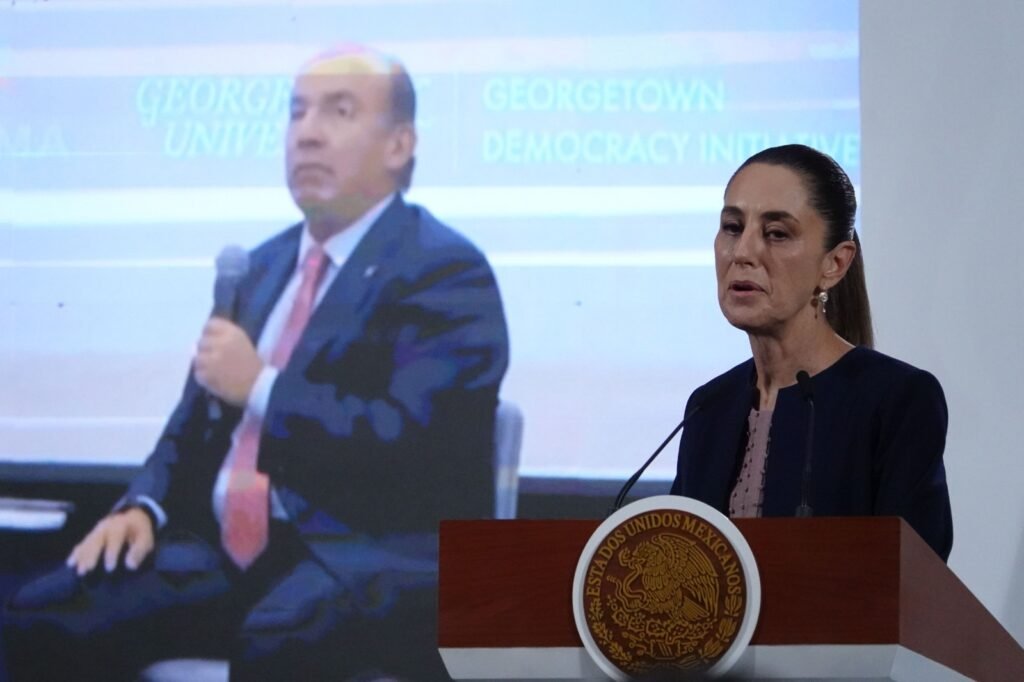
Sheinbaum Mocks Calderón: “It Would Be a Gem for Him to Talk About Democracy”
She suggested he explain his security chief García Luna, now serving 38 years in a US prison, and why homicides doubled during his term.
-
People’s Mañanera September 30
President Sheinbaum’s daily press conference, with comments on housing, the environment, water, single nationality, Calderón, and the Lie Detector.