Unions Warn 40 Hour Workweek Reform Could be “Paper-Only”
This article by Arturo Rivero was originally published by Lafuentelaboral on February 10, 2026.
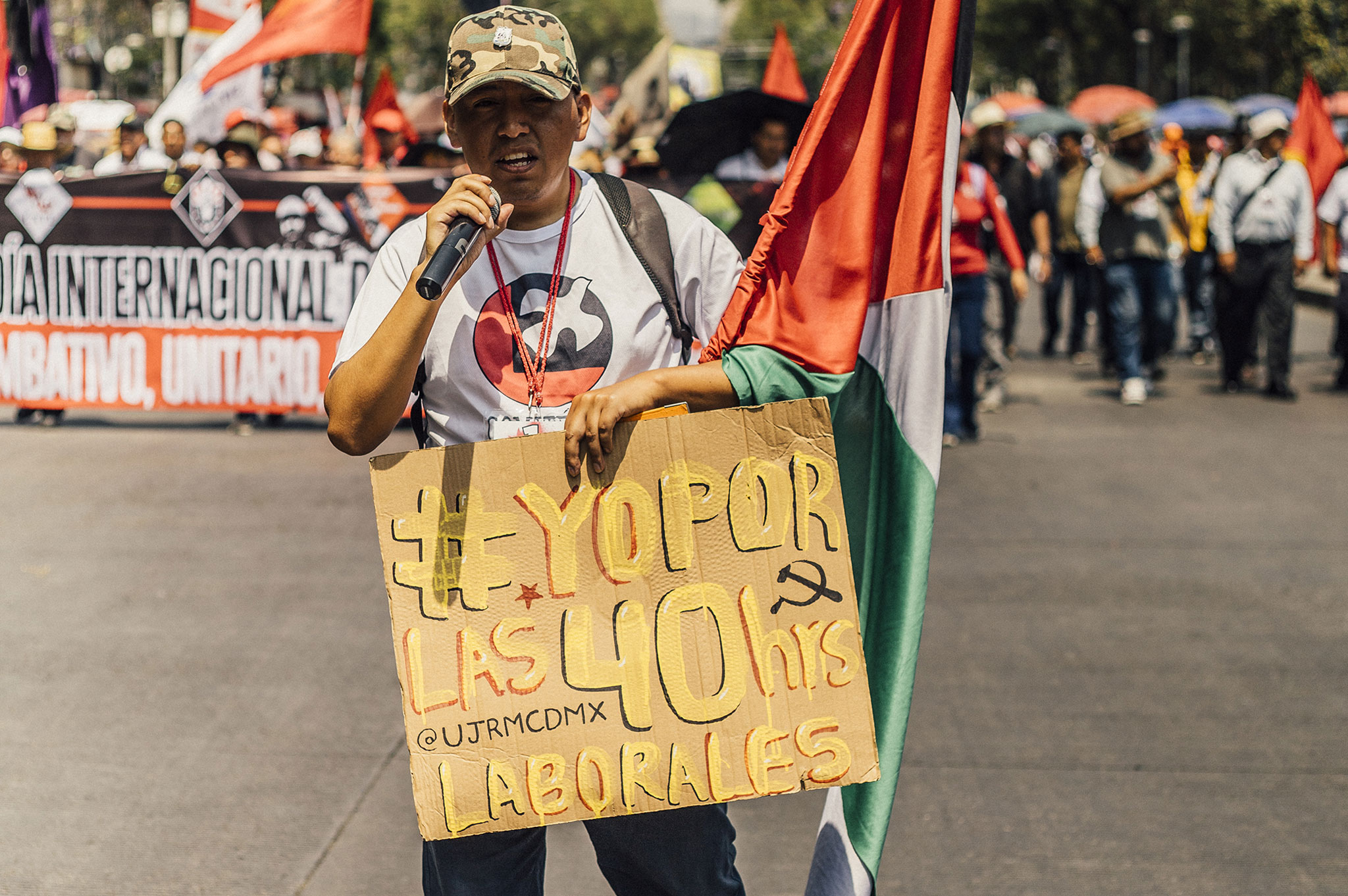
Trade union organizations warned that the initiative to reduce the workday to 40 hours a week could become a paper-only reduction if Congress approves the current design with no background modifications.
In a joint pronunciation, unions members of the Trade Union Dialogue Table, the General Association of Workers and the National Union of Workers (UNT), among them the National Social Security Workers Union (SNTSS), the Telephone Workers Union of the Mexican Republic (STRM), the Mexican Syndicate of Electricians (SME) and the Workers’ Union of UNAM (STUNAM), noted that the proposal contains provisions that postpone or neutralize the effective reduction of working hours.
According to the document, one of the main risks is that the full implementation of the 40-hour work day is delayed until 2030, maintaining during that period the scheme of six-day work for one break, without advancing to the five-by-two model.
Unions also warned about the modification in the definition of working hours, replacing the concept of “being at the disposal of the employer” with “developing subordinated activities”, which could exclude from pay on-call times, waiting or availability.
Another critical point is the redesign of the overtime regime, which would allow to combine ordinary and extraordinary days of up to 12 hours a day, with possible effects on health, safety at work and the actual income of workers.
They indicated that the intensive use of overtime would increase the tax and social security burden for the worker and could impact the benefit distribution (PTU), raising the company’s deductible costs. Organizations also warned that terminological changes in the law could facilitate work simulation schemes and liability avoidance, particularly if effective collective bargaining is not guaranteed.
In the case of micro and small enterprises, they noted that implementation without adequate public support could encourage informality or staff fragmentation.
In front of this scenario, the signing unions called on the Chamber of Deputies to open a process of broad and binding social dialogue, with union participation and support from the ILO, before moving forward with the approval of the reform.
-
Claudia Sheinbaum Announces Cancellation of La Parota Dam in Guerrero; Water Wells Will Be Built Instead
After a two-decade grassroots fight against the CFE dam on the Papagayo River, the government will supply Acapulco with radial wells and tanks instead.
-
Thousands March in Mexico City in Support of Cuba, 73 Years After the Assault on the Moncada Barracks, Against US Attacks on the Island
Backed by over 100 organizations, from Morena to communist parties, the march condemns Trump’s invasion threats and the six-decade blockade.
-
The Study of the Far Right Is Necessary: Mexico’s Science Secretary
Scholars at a Secihti panel traced how far-right movements, “neither new nor spontaneous,” are gaining ground by borrowing the left’s own vocabulary on jobs, freedom, and crisis.