Morena National Council President Urges Party to Eradicate Opportunism Before 2027 Elections
This article by Nestor Jimenez and Fernando Camacho originally appeared in the March 7, 2026 edition of La Jornada, Mexico’s premier left wing daily newspaper.
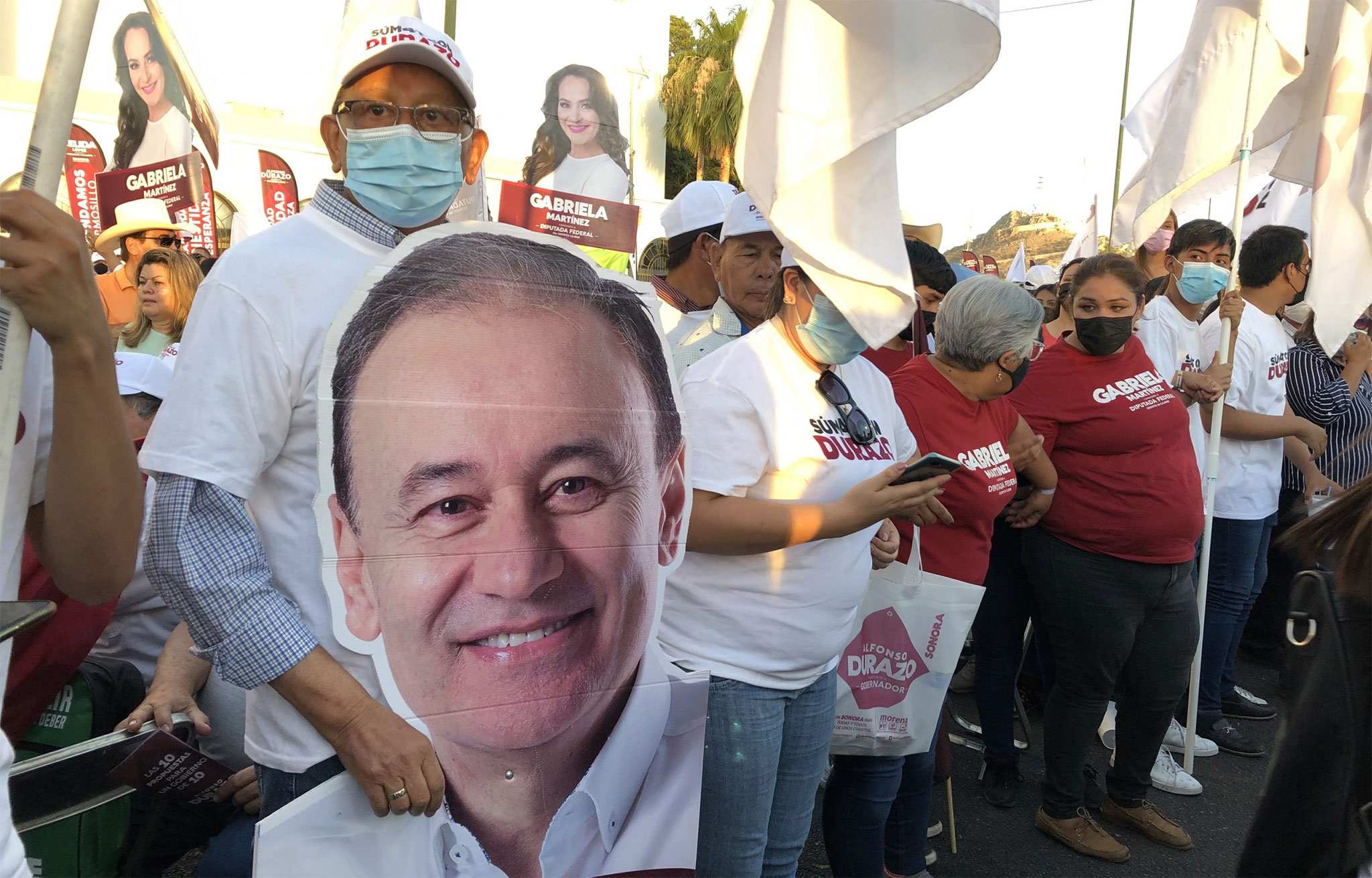
The president of the National Council of Morena, Alfonso Durazo, stressed to the members of this body that, heading into the 2027 elections, opportunism and personal political aspirations must be set aside, while warning that political projects fail due to internal weaknesses and temptations arising from petty calculations.
Before the members of the Morena party who make up the highest body of the party – second only to its National Congress – and with the attendance of many of the aspirants for the candidacies for governorships and federal deputies for next year, the Governor of Sonora also asked them to take care of Morena and the Transformation, and made it clear that in the face of that objective, “we are all indispensable.”
At this moment, he stressed, “there is no room for ambiguity. What is at stake, I repeat, is not a position or a political situation. What is at stake is the progress of the second phase of the Fourth Transformation led by our President, Claudia Sheinbaum.”
The Morena party’s leadership met this Saturday at a hotel on Paseo de la Reforma to approve the guidelines for defining the 2027 candidates. During the opening of the session, Durazo stated that “transformation projects fail not only due to external attacks, but also due to internal weaknesses, due to the temptations that arise from the petty calculations of some of its members.”
He pointed out that the complexity of the upcoming electoral process is “evident” and warned that “there are no more rosy campaigns. On the contrary, they are full of poison.”
Given these conditions, he added that “unity is not an organizational luxury, it is a strategic condition to successfully face the demanding electoral horizon that 2027 is already outlining.”
He believed that the rules to be approved this Saturday should help strengthen internal autonomy and guarantee fair, equitable and transparent processes, “so that no one, even in defeat, harbours a feeling of injustice within themselves.”
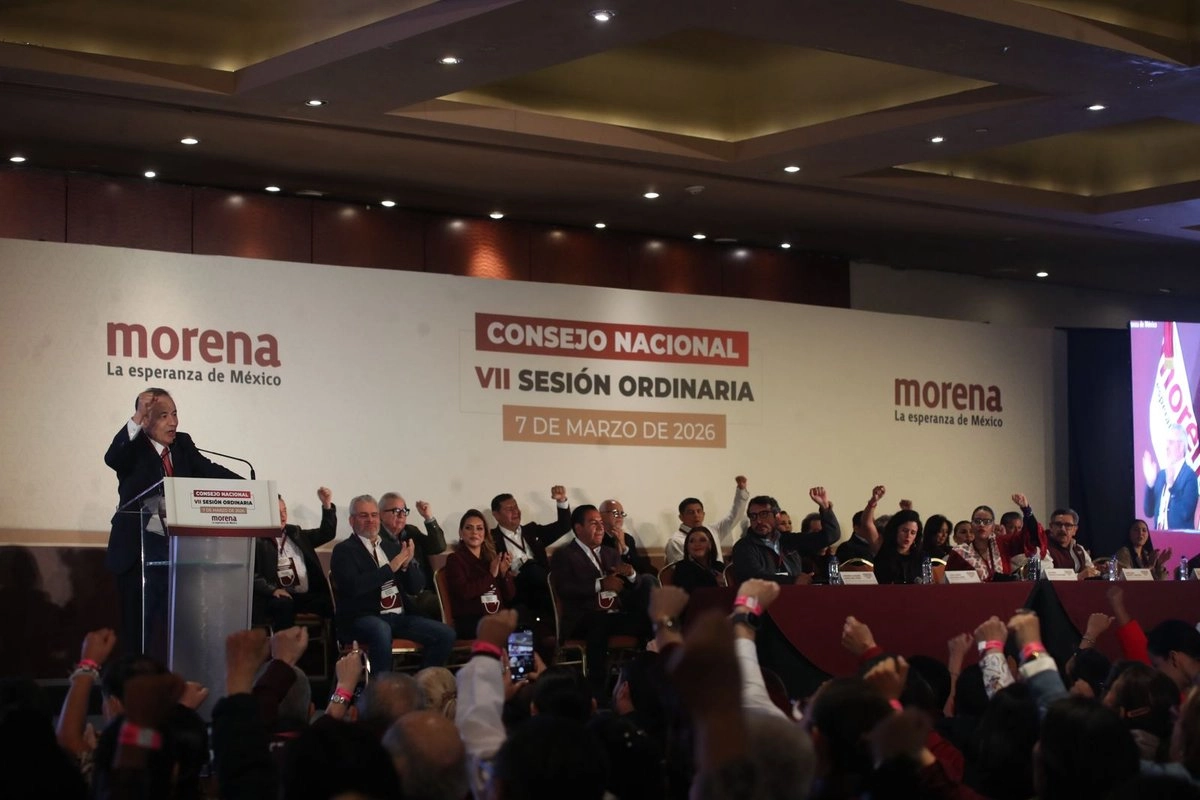
Accompanied by governors from the party and members of the National Executive Committee, Durazo affirmed that Morena is currently riding a wave of success, but indicated that this wasn’t always the case. “In these prosperous times, it’s necessary to emphasize one of its founding principles: here in Morena, there are no public offices, only public responsibilities, and we mustn’t forget that.”
And when we stray from the ethical principles that gave rise to our work, he added, “people stop believing; when we act opportunistically, people stop believing; when everything revolves around personal ambition, people stop believing; when it’s just a matter of ‘you get out so I can get in,’ people stop believing. Closing these gaps is an essential condition for the consolidation of the project.”
Following this, he called on the members of Morena to process what he defined as legitimate internal aspirations, “without fragmenting ourselves, without weakening ourselves and without putting the people’s trust at risk,” since when we walk divided, “the same old people win, the elites who historically hijacked power to subject it to their particular interests win.”
He advocated for selecting candidates by evaluating electoral competitiveness, track record, consistency, ethical performance, and commitment to the project, and concluded that the rules that are approved represent an ethical and political message that will be sent to society.
With this new phase of work within the political institute, he emphasized that “the fate of a personal political aspiration is not at stake here. Anyone who thinks so is profoundly mistaken. What is at stake here is the strength of Morena in the coming years. We are a social force that today has an even greater responsibility: to demonstrate that the Transformation does not depend on a single individual, but on an organized, disciplined, and politically responsible movement.”
At the same time, he advised those seeking candidacies, “that in their journey they should never undermine the very institution that has provided or will provide them with political support for their aspirations. No one will gain anything by denigrating fellow candidates, much less the movement and its governments. I remind you that the movement needs us all and that in politics the shortest distance between two positions is not necessarily a straight line. If we are loyal to it, the movement will generously guarantee us political life well beyond 2027.”
He also asked them to understand that party discipline does not mean uniformity, but rather honoring the agreements made by the National Council, “authentic unity is not achieved by sacrificing consistency. We understand unity in its most demanding sense, not that of an uncritical unity or one built on forced silences.”
Emphatically, he reminded them twice that Morena is no longer an opposition party, “but a key element of the country’s governance,” and urged the council members to understand their responsibility in that context.
Durazo placed the electoral reform initiative as a priority, because “it is not just a proposal from President Claudia Sheinbaum and her agenda with allies in the 2024 campaign, but it would lay new foundations.”
He called on the national councilors to “understand that taking care of Morena is taking care of the transformation, that taking care of internal politics is taking care of sovereignty, that taking care of the principles of our movement is taking care of the future of Mexico, that taking care of the coalition with our sister parties, the Green Party and the Workers Party, is not a simple sum of votes, but a strategic understanding to strengthen the capacity of our movement to drive the national transformation.”
The session is expected to last for at least a couple of hours, with the meeting continuing behind closed doors.
-
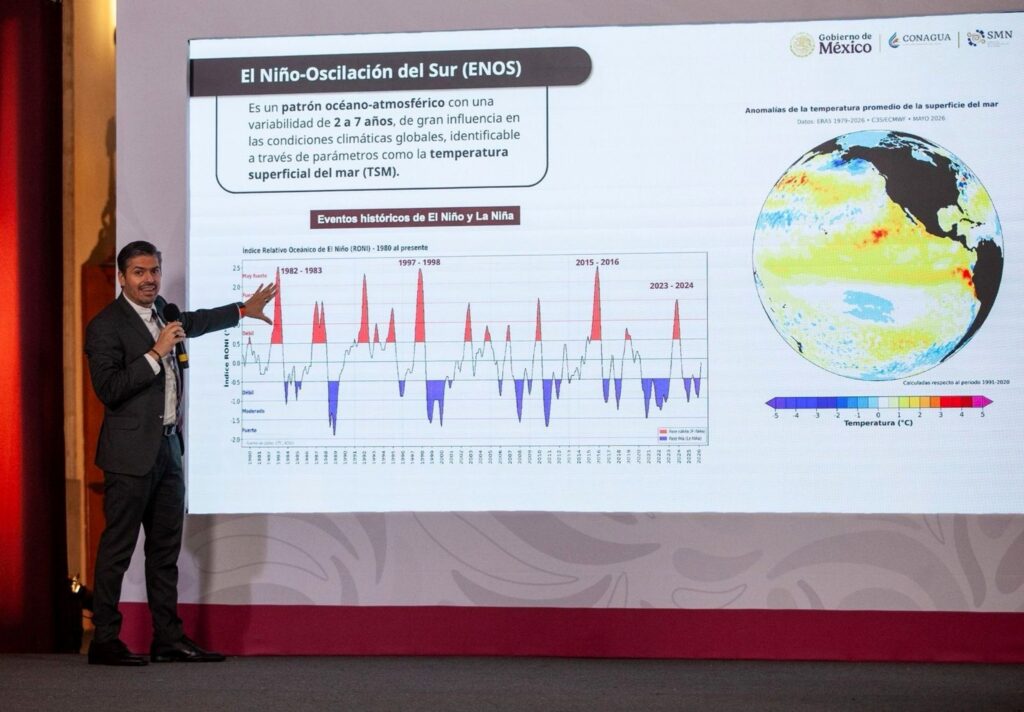
A Very Strong El Niño Phenomenon Is Forecast for 2026-2027 in Mexico
El Niño, the cyclical Pacific warming that alters global weather, has a 97-100% chance of setting in over Mexico, peaking between November 2026 and January 2027.
-
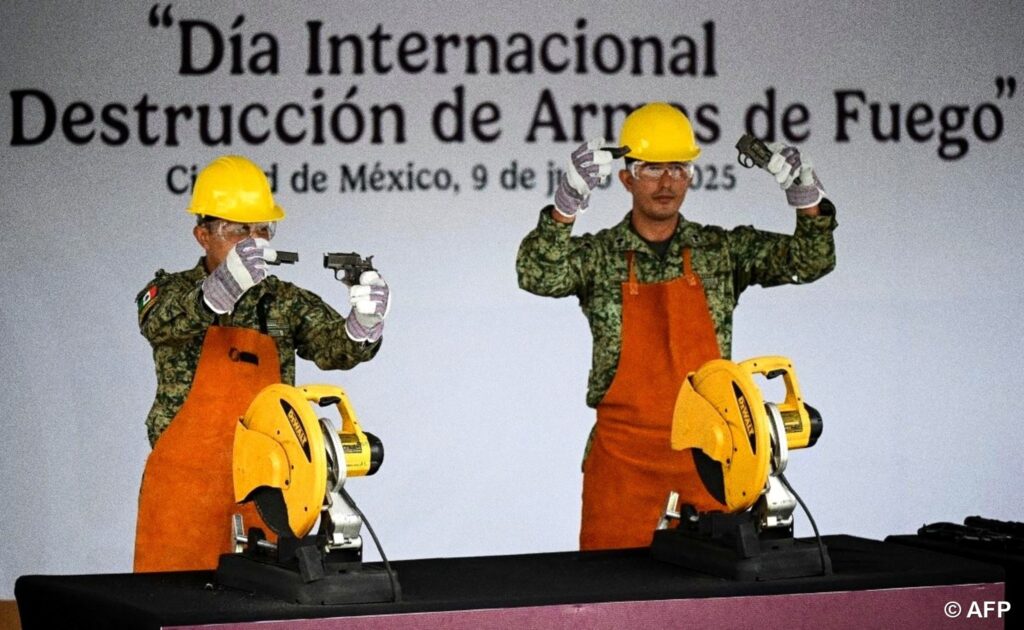
75% of Guns Seized in Mexico Come From the US: Sheinbaum
At a disarmament and gun-destruction event with the Catholic Church at the Basilica of Guadalupe, Sheinbaum said citizens have voluntarily handed in 11,679 firearms since October 2024.
-
In June, 106 Missing Persons Were Located in Tamaulipas
Those located were found alive and given institutional support; in 84% of the cases prosecutors established that no crime had occurred, state authorities said.