Mexican Farmers Announce Nation-Wide Blockades for March 20th
This article by Jesus Estrada originally appeared in the March 9, 2026 edition of La Jornada, Mexico’s premier left wing daily newspaper.
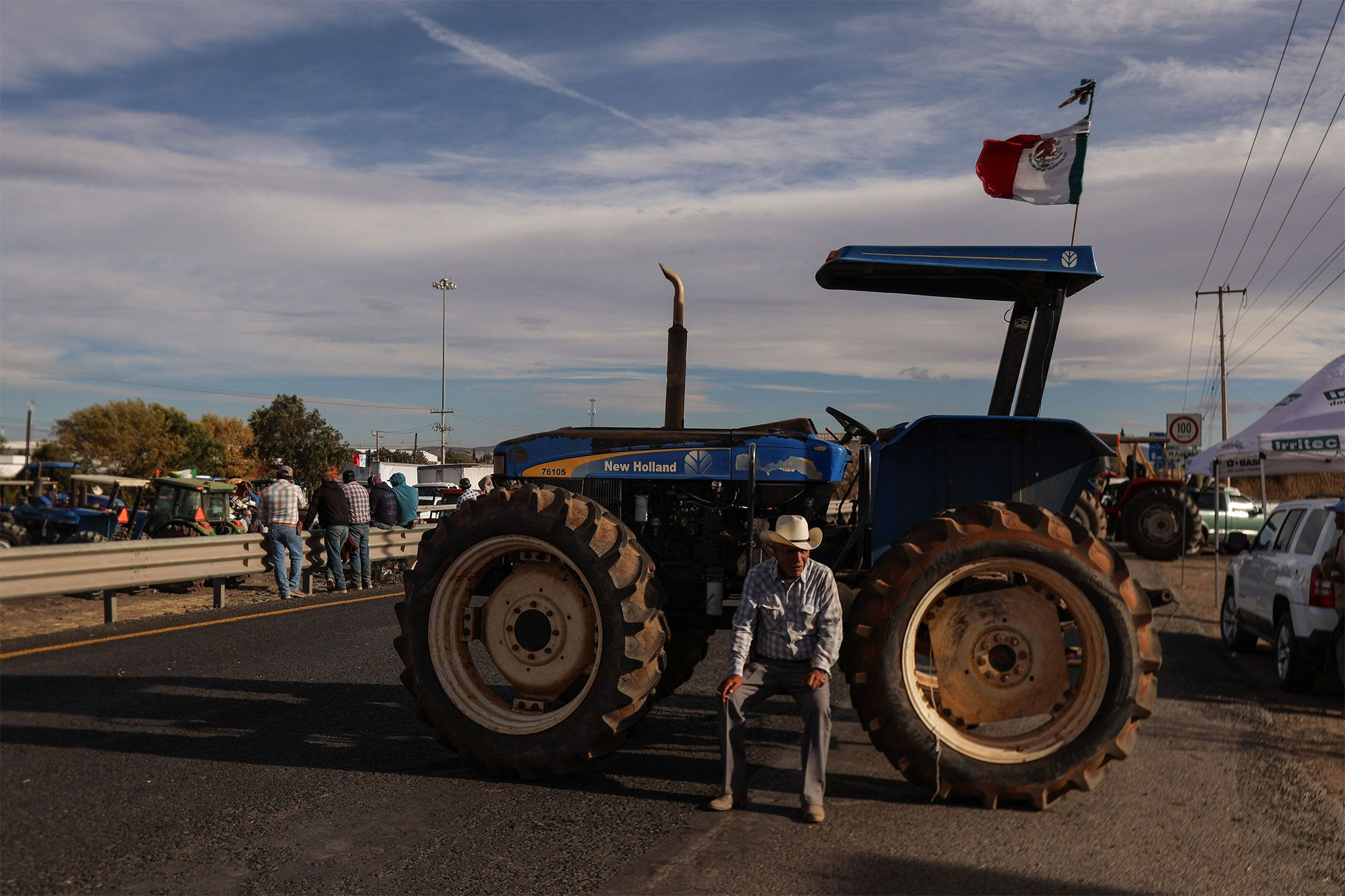
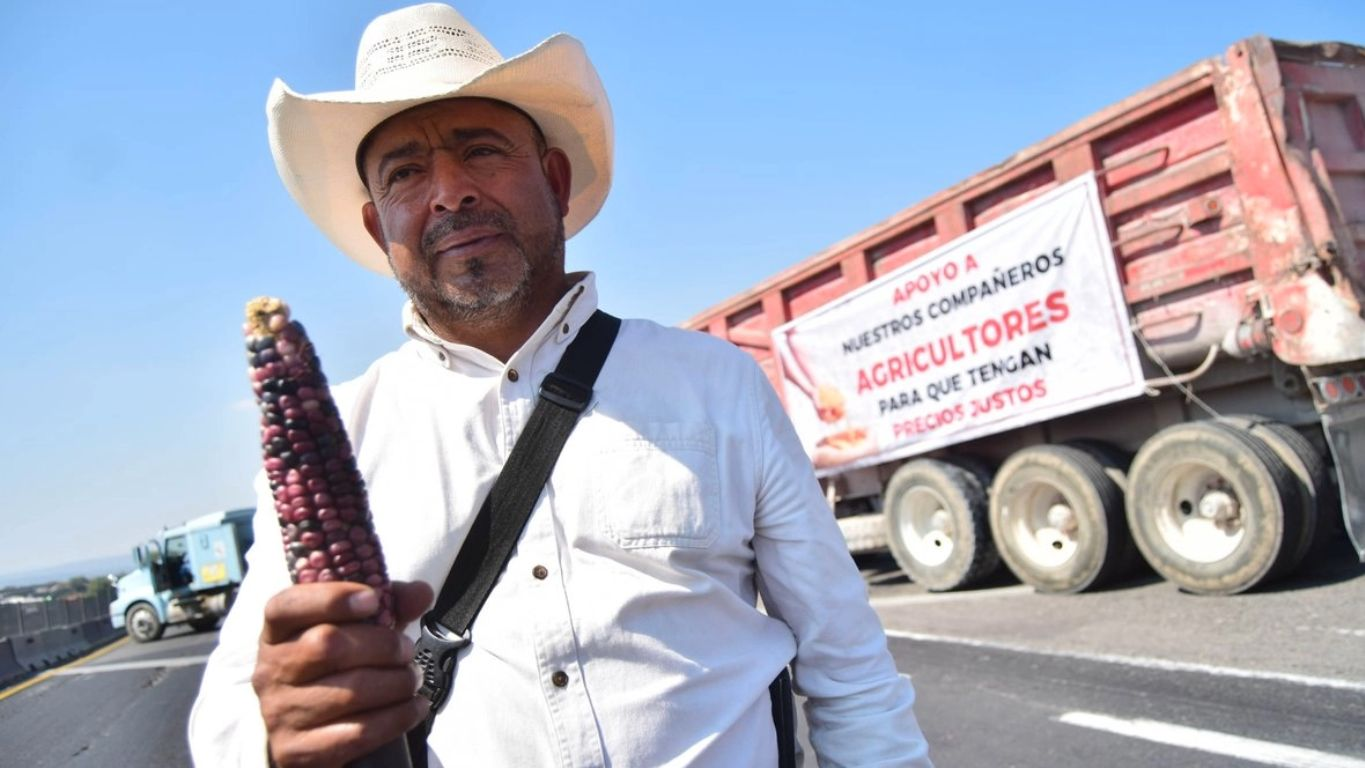
Chihuahua, Chihuahua. Demanding that the federal government address points in their petition related to regulating the food market and the marketing of crops, which were presented last December and continue to be ignored, members of the National Front for the Rescue of the Mexican Countryside (FNRCM) will demonstrate on highways and railway lines on March 20.
Eraclio Rodríguez Gómez, one of the organization’s leaders, stated in an interview with La Jornada that the government only fulfilled its promises regarding water, but other issues remain unresolved, such as establishing an agricultural development bank, removing basic grains from the Free Trade Agreement, and guaranteeing prices.
“When corn reached almost 8 pesos per kilogram, a kilogram of tortillas cost 27 pesos; today, corn costs between 3.30 and 3.50 pesos, at best, and tortillas cost exactly the same. This tells us that the government is very closely tied to big business, favoring them with its profits.”
He explained that these are demands related to the creation of a national agriculture, that the Secretariat of Agriculture and Rural Development (SADER) should have a different vision, “not one that depends on imports and exports, but on national needs, with goals for the country.”
This, he considered, “would give us a different field, because we cannot continue developing an agriculture conditioned by the prices set by the Chicago stock exchange, which rather than regulating is a totally speculative market.”

“The support from SADER arrived late”
Members of the FNRCM criticized the fact that the support from SADER to market basic grains such as yellow corn arrived late and only partially, with 600 pesos per ton provided by the federal government and 150 pesos paid by the state administrations of Chihuahua and Tamaulipas.
They complained: “We have an attempt at subsidies when most yellow corn producers have already had to sell, because they had many commitments to cover and the government let time pass; they helped until there is not much grain left in the warehouses, at least in Chihuahua, there is less than half of what was produced last year.”
Rodríguez Gómez stated that “the overdue payments for corn and wheat have not been fully resolved; very little progress has been made, and with the current prices for the harvest still in storage, the proposal they’re making is very poor. There’s no way a farmer can sell their crop with such a low price per ton on the market; many will go straight to bankruptcy.”
“The proof that there is no progress is that the price of a kilogram of tortillas remains between 25 and 30 pesos, which is paid by the final consumer; therein lies the government’s failure, which has not been able to bring order to the market,” he warned.
Eraclio Rodríguez described as a failure of the SADER the fact that farmers sell their crops at extremely low prices, while marketing companies, the masa and tortilla industry and intermediaries (coyotes), generate large profits.
“Profits are for business owners”
He stated that “when corn reached almost 8 pesos per kilogram (between 7.60 and 7.80 pesos), a kilogram of tortillas cost 27 pesos; today, corn costs between 3.30 and 3.50 pesos, at best, and tortillas cost exactly the same. This tells us that the government is very closely tied to big business, favoring them with its profits.”
The leader of the national front pointed out: “We don’t want subsidies, because in the end that money will end up in the hands of big business; we ask that if corn is worth 7 pesos per kilogram, tortilla business owners pay that amount, because they want to pay the price of tortillas as if corn were worth 8 pesos.”
Rodríguez Gómez questioned: “Where is the government’s hand, then? Julio Berdegué (head of the Secretariat of Agriculture and Rural Development) is lying when he says he seeks to regulate the market, but he has been a liar since the beginning of this federal administration; that is nothing new to us.”
-
Jáuregui’s Defense Demands That Mexico’s Attorney General Summon Governor Maru Campos to Say What She Knows About the CIA
His lawyer says all the evidence points to the late state investigations chief, and that Campos changed her version of what she knew on Latinus.
-
People’s Mañanera October 21
President Sheinbaum’s daily press conference, with comments on Pemex, fuel theft, Jalisco’s water crisis, missing persons, and the lie detector.
-
Jáuregui’s Arrest Does Not Close the CIA Case in Chihuahua; Morena Demands Broader Investigations
Morena leader Ariadna Montiel holds Governor Maru Campos politically responsible and says ex-prosecutor Guillermo Zuany must also face justice.