Zapotec Community in Oaxaca Strengthens Defense of its Cultural Heritage After Dispute with Adidas Over Appropriation
This article originally appeared in the March 10, 2026 edition of Proceso.
The Zapotec community of Villa Hidalgo Yalálag, an indigenous town nestled in the Sierra Norte of Oaxaca, which became a national and international point of reference when they denounced the sports company Adidas Mexico for cultural appropriation for presenting the “Huarache Oaxaca Slip-On” model, by designer Willy Chavarría, without their authorization, has maintained a process of recovery and protection of its cultural wealth since 2023.
The struggle of this community is not only focused on the controversy of a unique model or prototype of huarache called “Huarache Oaxaca Slip-On”, whose design bears similarities to the traditional huaraches of the community of Villa Hidalgo Yalálag, Oaxaca, but it goes back to the recovery of their official Zapotec name that they had lost in 1877.
Over the years, Villa Hidalgo Yalálag has also compiled a catalog of its niches, chapels, hermitages and churches that are part of the community, as confirmed by the municipal authorities of Villa Hidalgo Yalálag and their legal advisor Juan Maldonado Vargas.
In addition, they reported that the Municipal Register of Pets, cats and dogs, has been created to maintain control for public health purposes.
Maldonado Vargas states that the objective is for the community to have a catalog with its elements of Cultural, Natural, Material and Intangible Heritage, such as its dances, music, traditions, gastronomy, clothing, crafts and of course its natural spaces.
The sports company Adidas has joined these community projects for the protection of the cultural wealth of Yalálag and although no one has confirmed the version, it is known that in the main access of the community past its church of San Antonio de Padua, construction work is being carried out on what appears to be a sports complex.
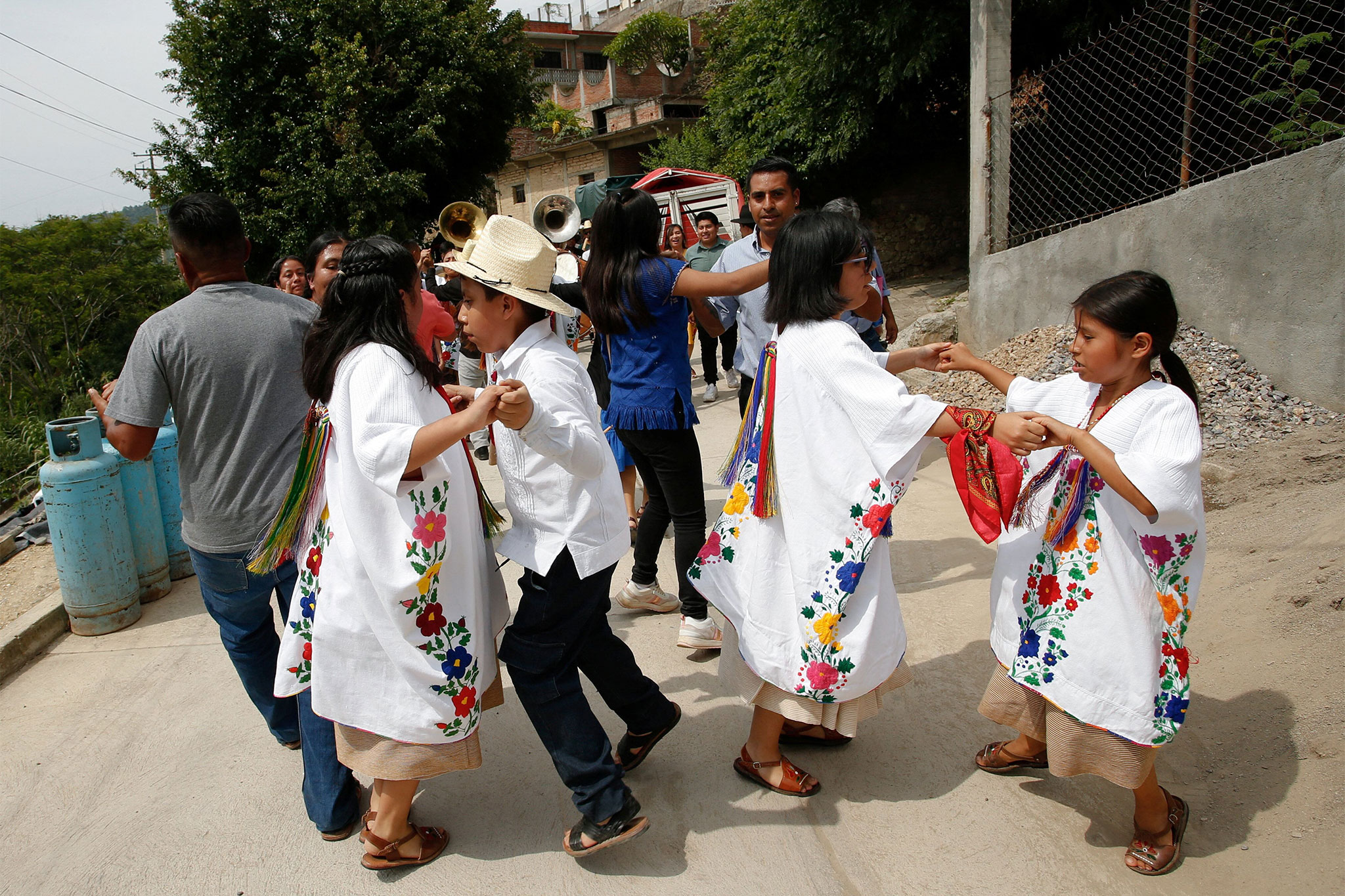
It is worth remembering that on August 2, 2025, at the San Juan Museum of Art in Puerto Rico, during a musical concert, a unique model or prototype of huarache called “Huarache Oaxaca Slip-On” was presented, whose design bears similarities to the traditional huaraches of the community of Villa Hidalgo Yalálag, Oaxaca, made in a handcrafted way, by the different families that dedicate themselves to the production, from a Yalalateco, to entire families that clean, tan and prepare the hides.
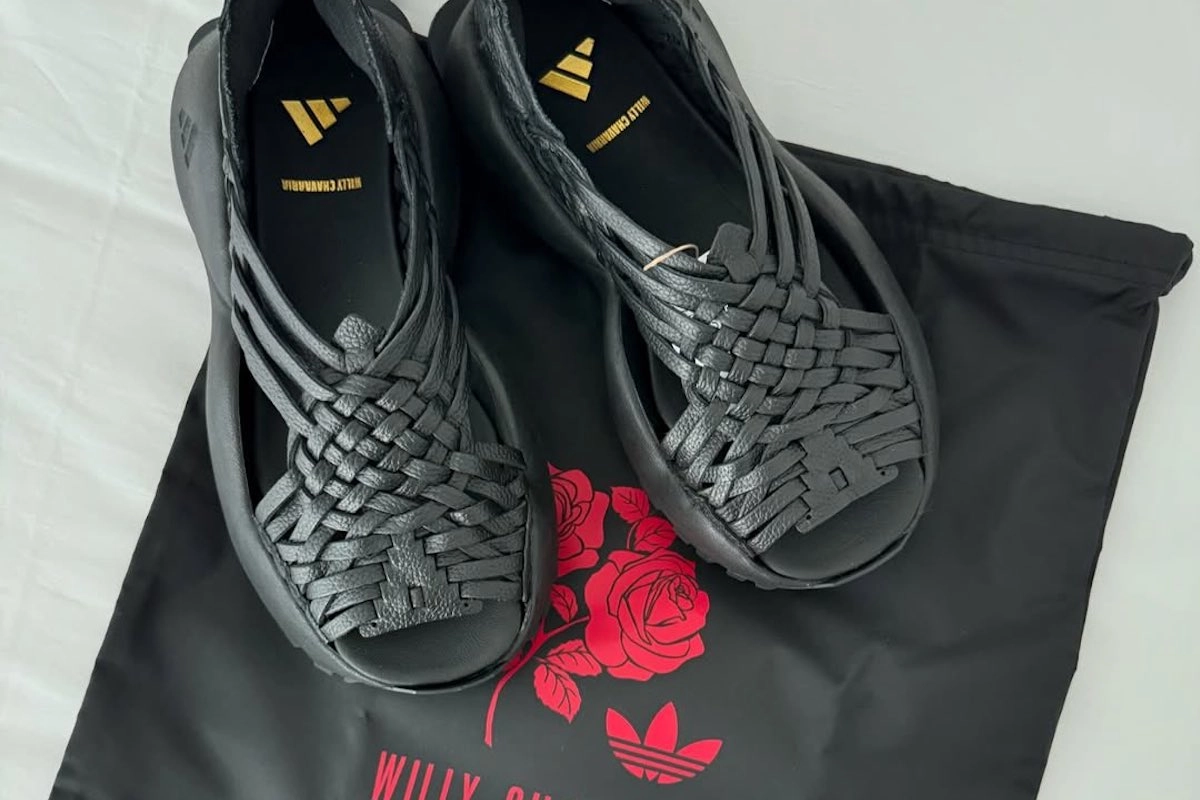
The Huarache was created by designer Willy Chavarría in collaboration with the sports company Adidas México S. A de CV, who were in charge of launching and producing the Huarache according to the presentations released in San Juan, Puerto Rico.
The municipal authority, residents, and huarache artisans of the community of Villa Hidalgo Yalálag were made aware of the situation, which necessitated holding various meetings involving the huarache artisans and community advisors, particularly Juan Maldonado Vargas, a descendant of Yalalteco who fulfills his role of assisting the community with various problems, in order to present a position regarding cultural appropriation or misappropriation.
The reactions from the Government of the State of Oaxaca were not long in coming. On August 4, 2025, Governor Salomón Jara Cruz and the head of the Oaxaca Ministry of Culture and Arts, Flavio Sosa Villavicencio, as well as the Oaxaca Congress, publicly declared their position regarding the cultural appropriation of the huarache by designer Willy Chavarría and Adidas, “Huarache Oaxaca Slip-On,” which bears a strong resemblance to the huaraches made in the community of Villa Hidalgo Yalálag using traditional and ancestral methods.
Similarly, the federal government, through the head of the Ministry of Culture, Claudia Curiel de Icaza, and the Undersecretary of Cultural Development, Marina Núñez Bespalova, as well as the National Institute of Indigenous Peoples, made statements regarding what they considered the possible cultural appropriation of the identity elements that fully identify the community of Villa Hidalgo Yalálag in the presence of the President of the Republic, Claudia Sheinbaum Pardo.
Meanwhile, in the Sierra Juárez of Oaxaca, in an act of strengthening identity, the community of Villa Hidalgo Yalálag, in a community assembly, after a detailed review of all its elements, issued a statement asking for “respect and recognition of indigenous cultural intellectual property and intangible cultural heritage, respect for the ancestral knowledge and wisdom of the community of Villa Hidalgo Yalálag.”
In the statement that was disseminated in the different media, they demanded a dialogue table for the recognition of the ancestral knowledge and wisdom of the production of the artisanal huarache of Yalálag with the production of the Adidas Huarache “Oaxaca Slip On”, to which they agreed.
Days later, representatives from Adidas Mexico and the community of Villa Hidalgo Yalálag issued a public apology, a document that was read in both Spanish and Yalálag Zapotec, in which the Adidas representatives humbly expressed their recognition of the ancestral knowledge and wisdom of the Yalálag community.
The public apology highlighted: “At Adidas, we deeply value the cultural richness of the Indigenous Peoples of Mexico, with the aim of engaging in direct dialogue on the points raised in your letter and exploring, together with your Authority, the steps that will allow us to move towards reparation for the damage done to the Zapotec Community of Yalálag.”
“Today, in front of the Yalalteca community, on behalf of Adidas Mexico, we offer our most sincere recognition and respect for the cultural richness of the indigenous communities of Mexico, with the profound symbolic and traditional meaning of their valuable artisanal legacy, present in the cultural representations and traditional techniques that we witness here.”
They acknowledged that the “Oaxaca Slip-On” model was conceived taking inspiration from a design originating in the State of Oaxaca, typical of the tradition of the town of Villa Hidalgo Yalálag.
The Mexican state, through its federal, state, and municipal levels of government, has been in violation of international norms and conventions since 1972, and in 2003, by failing to generate the records, inventories, registers, or catalogs for the protection of the Cultural Heritage of Indigenous Peoples and Communities, and above all, their protection. As a result, businessmen or companies, due to the economic power they represent, appropriate the ancestral elements that identify the Indigenous communities.
This is how, up to this point, it is known unofficially that the damage repair agreement continues to strengthen between the Villa Hidalgo Yalálag Community and Adidas Mexico.
The legal advisor of the Yalálag community confirmed that, for the past three years, they have been working on a process of recovering and protecting their cultural heritage.
He emphasized that on March 18, 2023, by decree of the Oaxaca Congress, Yalálag recovered its official name. In 1877, it had been known as Villa Hidalgo, as Decree 35 had discontinued the use of the town name San Juan Bautista Yalálag. Officially, its name remained Villa Hidalgo, even though the community’s identity is Yalálag. Therefore, the municipal authority and the citizens’ assembly, through a name recovery process, requested the legislative branch to officially recognize Villa Hidalgo Yalálag, as this is the name that reflects the identity of the indigenous community.
-
Sheinbaum Meets Privately with Maru Campos on Her Arrival in Ciudad Juárez
If any law was broken in the drug operation involving CIA agents in Chihuahua, those responsible, including state officials, must be prosecuted, the two agreed.
-
Beatriz Mojica: From Criticizing AMLO to Coordinating Morena in Guerrero
The senator on leave is Morena’s pick for governor of Guerrero in 2027, after a career that includes the PRD and her 2018 support for Ricardo Anaya.
-
Morena’s Elections Commission Chief: Differences Are Natural to a Living Party
Amid criticism over the 10 chosen profiles, Citlalli Hernández, president of Morena’s National Elections Commission, defended the differences as natural to a living party.