
Broken Promises and Discontent
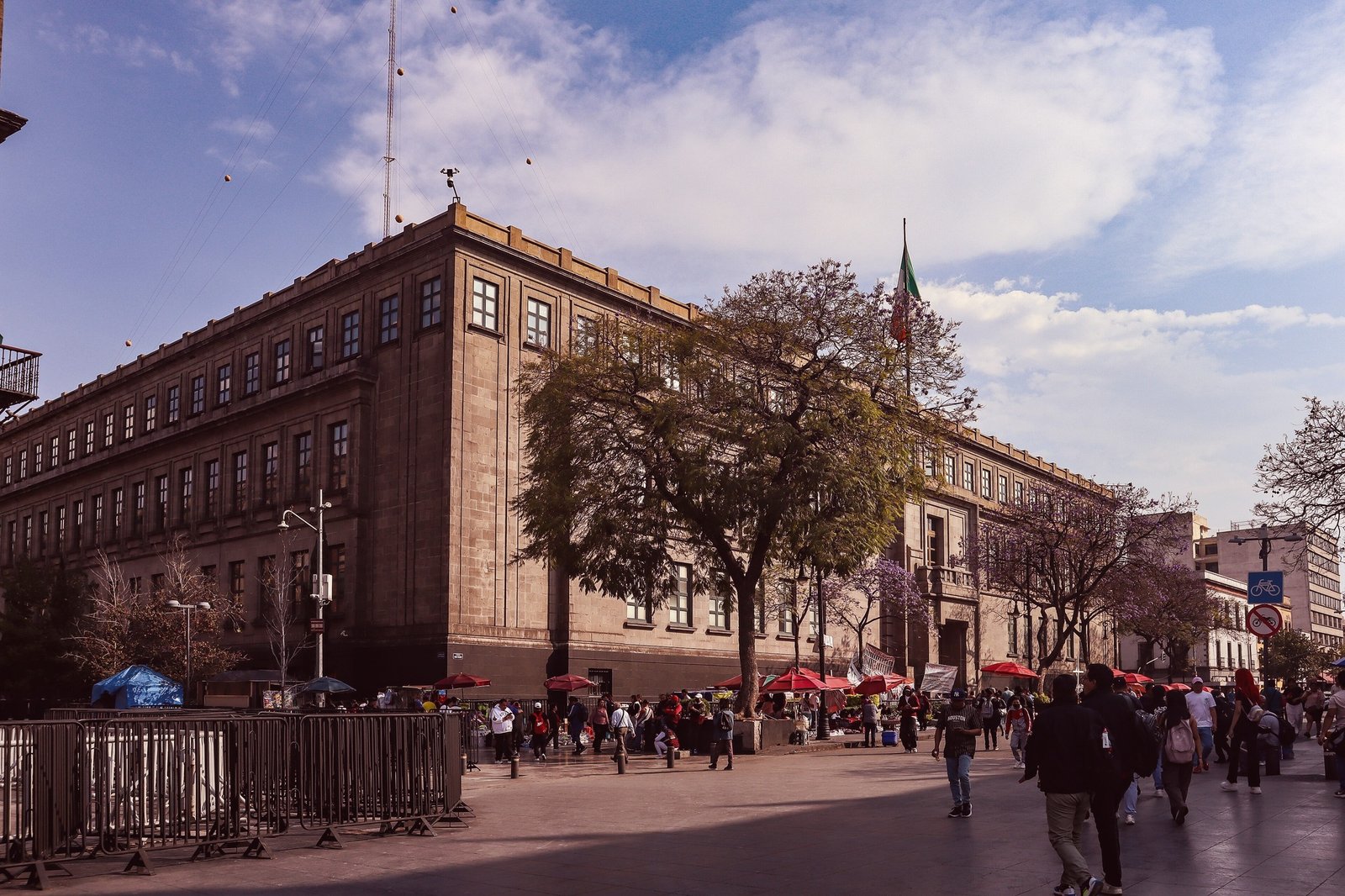
On a cloudy afternoon in May 2025, I gathered with dozens of others in a house in the Benito Juárez district of Mexico City. We had braved the seasonal afternoon storms to hear from and pose questions to candidates in Mexico's upcoming judicial elections. One month later, the country went to the polls and cast their votes for nearly 900 open judicial positions, including district judges, circuit magistrates, electoral court magistrates, and Supreme Court ministers.1“Cargos a elegir en la elección Poder Judicial 2025,” INE, accessed October 7, 2025, https://ine.mx/cargos-pj-2025/. Thanks to a constitutional amendment signed into the national register by then President Andrés Manuel López Obrador on September 16, 2024, Mexico is the first country to elect every state and federal judicial position—including the Supreme Court—by direct popular vote. The amendment also decreased the number of ministers from eleven to nine, shortened terms from fifteen to twelve years, capped minister salaries so as not to exceed that of the President, and established a new Judicial Discipline Tribunal to sanction or remove ministers.2“Publica DOF decreto de la reforma constitucional al Poder Judicial,” Comunicación Social, September 15, 2024, https://www.dof.gob.mx/nota_detalle.php?codigo=5738985&fecha=15/09/2024#gsc.tab=0. López Obrador's party, the National Regeneration Movement (MORENA), argued that the changes were necessary to wrest the judiciary out of the hands of a “political and economic elite that felt it owned the country” and continue moving forward with the nation's “Fourth Transformation.”3“La Reforma al Poder Judicial,” Regeneracíon, November, 2024, https://www.infpmorena.com..mx/_files/ugd/19cb2a_ff71f30a7f8c4e99b260f1028f94b56a.pdf. After the reform became constitutional law, MORENA's Regeneración magazine (an intentional callback to the pre-Mexican Revolution outlet run by the Flores Magón brothers) declared that “the people are a force to be reckoned with and have achieved something historic: The process of regenerating the judiciary begins.”4“La Reforma al Poder Judicial.” When Mexicans went to the polls in June to elect nine new ministers, a majority of them agreed with what was taking place.5Jordan Lippert and Sofia Hernandez Ramones, “Ahead of Mexico's First-Ever Judicial Elections, Most Mexicans Approve of the Law That Implemented Them,” Pew Research Center, May 22, 2025. https://www.pewresearch.org/short-reads/2025/05/22/ahead-of-mexicos-first-ever-judicial-elections-most-mexicans-approve-of-the-law-that-implemented-them.
This paper discusses the political and social background to Mexico's historic judicial elections. It does so by examining two previous far-reaching Supreme Court reforms. First, the 1994 reform organized by President Ernesto Zedillo and the Institutional Revolutionary Party (PRI), with assistance and input from the National Action Party (PAN). That reform—the most significant before 2024—was initiated in the context of overlapping pressures facing the ruling party, including declining legitimacy, increased crime, and demands from international financial institutions like the International Monetary Fund (IMF). Zedillo's reform took place during the ongoing neoliberalization of Mexico's economy, marked by onerous foreign debt obligations, the widespread privatization of previously state-owned resources, and the slashing of wages. The second is the 2011 reform organized by President Felipe Calderón in the context of Mexico's ongoing war on drugs and endemic human rights violations—problems connected to the neoliberal policies of previous administrations.
The first two sections of this paper set the stage for Ernesto Zedillo's 1994 reform by describing Mexico under the PRI, when the Supreme Court's power was limited, and its members were hand-picked by the hegemonic party. Section two presents the neoliberalization of Mexico's economy that began in the early 1980s and paved the way for MORENA's rise as an explicitly antineoliberal alternative.6“Declaración de Principios de Morena,” National Electoral Institute, accessed October 18, 2025, https://portal.ine.mx/wp-content/uploads/2024/12/ine-deppp-morena-declaracion-de-principios-2024.pdf. Section three discusses the motivations behind the reform, eventually agreeing with Fix-Fierro's multicausal explanation.7Héctor Fix-Fierro, “Judicial Reform in Mexico: What Next?” in Beyond Common Knowledge: Empirical Approaches to the Rule of Law, ed. Erik G. Jensen and Thomas C. Heller (Stanford University Press, 2005), 248. Section four follows a remade Supreme Court as it attempted—without success—to resolve the most pressing problems of 21st-century Mexico, including violence, corruption, and inequality. Section five discusses the war on drugs and the 2011 reforms, which attempted to revamp the country's entire judicial system in the face of overwhelming violence caused by the war on drugs.
When López Obrador took power in 2018, the struggle for an accountable and effective judicial system was ongoing. The judicial system, including the Supreme Court, was facing accusations of corruption, human rights abuses, and nepotism.8Christopher Sherman, “Report: nepotism a threat to Mexico's judiciary,” Associated Press, August 27, 2018, https://apnews.com/general-news-d24df70bbdc044abb437d53a3c1587b1. The country's two previous ruling parties, the PRI and the PAN—known collectively as the “PRIAN” by their detractors because of their shared political policies—were also widely derided. Into this legitimacy gap stepped the political newcomer, MORENA, which could declare with all seriousness and with great success that a new economic, political, and social project—including a new Supreme Court—was desperately needed.
I argue that previous changes to the Supreme Court, including in 1994 and 2011, failed to create a just and responsive legal system. The 1994 reform was driven less by the needs of ordinary people and more by the imperatives of a political elite and a neoliberal economic agenda. It loosened the PRI's hold on the Supreme Court, but led to the development of a new judicial elite with its own self-serving interests. The 2011 reform attempted to strengthen human rights, but could not resolve larger social issues on its own. Discontent grew, and MORENA took power in a landslide. There is no quick fix for creating a judicial system that responds to the needs of the majority while also protecting the rights of minorities. That said, and as this paper will demonstrate, a radical departure from what the PRI and PAN had previously offered was undeniably necessary when López Obrador entered the National Palace.
01A Weird Bug
Unlike the War of Independence, the Mexican Revolution did not have a definitive conclusion. No conquering forces marched into the capital in 1920 as Agustín de Iturbide's Army of the Three Guarantees had done in 1821. But significant dates abound. On February 5, 1917, a new Constitution was approved by a heterogeneous group of men brought together by Venustiano Carranza, who would serve as president of Mexico until his assassination in 1920.9Greg Grandin, America, América (Penguin Random House, 2025), 368. The new Constitution came with a new Supreme Court. There would be eleven ministers with lifelong terms of service, nominated by state legislatures and confirmed by a simple majority vote in the House of Deputies.10José María Serna de la Garza, The Constitution of Mexico (Hart Publishing, 2013), 104. This method of selection won out over universal and direct manhood suffrage—a method that a minority of delegates felt was necessary to ensure the Supreme Court's “democratic character.”11Serna de la Garza, The Constitution, 104n11. The new Constitution also retained the amparo suit—a legal provision adopted in 1857 that allows ministers to review alleged constitutional violations by the government against concerned citizens.12Emily Edmonds-Poli and David A. Shirk, Contemporary Mexican Politics. 4th ed. (Rowman & Littlefield, 2020), 122. In all, the Court was granted a degree of independence from the executive not seen during the rule of Porfirio Díaz, whose regime was premised on more or less total control over the rule of law.
Following the Revolution, Mexico's political arena was factionalized and chaotic. Various armed groups, many of them led by former revolutionary fighters, vied for state power.13Andrea Pozas-Loyo and Julio Ríos-Figueroa, “The transformations of the role of the Mexican Supreme Court” in Judicial Politics in Mexico: The Supreme Court and the Transition to Democracy, ed. Andrea Castagnola and Saúl López Noriega (Routledge, 2018), 26. In an attempt to stabilize the nation, military general Plutarco Elías Calles—the Jefe Máximo—founded the National Revolutionary Party (PRN) in 1929. The party would change its name under the leadership of Lázaro Cárdenas, before permanently renaming itself as the Institutional Revolutionary Party (PRI) in 1946. It is impossible to discuss any aspect of Mexican political life in the 20th century without talking about the PRI. Doing so is not always easy. “Authoritarian but civil, not competitive in the electoral arena but with regular elections; hyper-presidential but with a long institutional continuity; a hegemonic party of revolutionary origin but without a closed ideology; corporate but inclusive”—Calles's creation was “a weird bug [in the] taxonomy of political systems” that “requires a description full of buts.”14Andrea Castagnola and Noriega Saúl López, “The Supreme Court and the (no) Rights Revolution,” in Judicial Politics in Mexico: The Supreme Court and the Transition to Democracy, ed. Andrea Castagnola and Saúl López Noriega (Routledge, 2018), 162.
Mexico had achieved a degree of stability by the end of Cardenas's tenure, and in an already well-established tradition that would continue for decades, the outgoing president picked his successor. The Supreme Court was brought into the PRI's fold, along with loyal opposition parties, trade unions, and social groups.15“Mexico and the Fourth Transformation,” Tricontinental: Institute for Social Research, September 8, 2025, https://thetricontinental.org/dossier-mexico-fourth-transformation. Led by the Court, the legal system adapted itself to the PRI's rule and became a skilled “regime supporter.”16Pozas-Loyo and Ríos-Figueroa, “The transformations,” 28. Each successive minister was nominated by a PRI president and confirmed by a PRI-dominated Senate, and each one knew how to go along to get along. The ministers were “colourless” or chameleon-like actors who, if not PRI members themselves, followed the “ideas of the highest members of the ruling group at the moment, especially those of the president of the republic, be they revolutionary, conservative, or whatever else is in fashion.”17Pilar Domingo, “Judicial Independence: The Politics of the Supreme Court in Mexico.” Journal of Latin American Studies 32, no. 3 (2000): 719, https://doi.org/10.1017/S0022216X00005885.
The Supreme Court was reformed dozens of times over the next several decades. An early change was initiated by President Alvaro Obregón, who took the nomination and confirmation process out of the hands of state legislatures and gave it to the executive and Senate.18Pablo Mijangos y González, Historia Mínima de la Supreme Corte de Justicia de México (The College of Mexico, 2019), 133. Obregón's reform also allowed the president to initiate the removal of ministers. A 1934 reform shortened the length of service from life to six years, but lined up the ministerial appointments with those of the president, meaning that each executive had the “de facto prerogative to ask the justices to ‘move on,’” and could take office with his own new slate of judges.19Pozas-Loyo and Ríos-Figueroa, “The transformations,” chap. 1. In addition, an unwritten rule mandated that each minister have at least a superficial connection to the PRI.20Pozas-Loyo and Ríos-Figueroa, “The transformations,” chap. 1.
During the PRI's rule, the executive limited the Supreme Court's power within the political sphere. At the same time, it expanded the ministers' power over the rest of the judiciary.21Pozas-Loyo and Ríos-Figueroa, “The transformations,” chap. 1. Ministers appointed lower court justices and had significant budgetary control thanks to a series of reforms in the early 1980s. The PRI needed a subordinate Supreme Court when it came to political decisions, but an effective and efficient judicial system when it came to all other legal matters. These two desires—a Supreme Court subordinate to the executive and capable of carrying out the rule of law—were the prime movers behind many of the judicial reforms during the PRI's rule.
02Fue el Estado
During the PRI era, Mexico's political system was supported by clientelism, patronage, and coercion.22Edmonds-Poli and Shirk, Contemporary, 88. The state distributed material benefits, jobs, and legal favors in exchange for political loyalty. Many ministers were former bureaucrats, political allies, or otherwise loyal to the party.23Pazos-Loyo and Ríos-Figueroa, “The transformations,” chap. 1. These were the carrots, and they were handed out often. But the stick was always nearby.24Mexicans use the phrase pan y palo to describe this dynamic. Violence was used with devastating effect on October 2, 1968, when troops killed hundreds of protesters in the Plaza of Three Cultures in Mexico City and caged hundreds more in nearby prisons. Three years later, the Falcons (Halcones), an infamous state-sponsored paramilitary group, killed over one hundred students and civilians at the National Polytechnic Institute. Chants of fue el estado—“it was the state”—are still heard today. However, the violence also revealed the state's weakness. The fact that it resorted to shooting and caging political dissenters showed it could not successfully co-opt the opposition.25Edmonds-Poli and Shirk, Contemporary, 88. The PRI's political and ideological legitimacy was beginning to diminish.
In 1985, a massive earthquake devastated Mexico City. The PRI's response was anemic at best, and party functionaries worked overtime to hide the true number of deaths. Mexico's president, Miguel de la Madrid, was in the United States negotiating with the IMF when the earthquake happened, and calming the nerves of investors took priority over accurate statistics. Then, in 1988, the PRI was forced to resort to a remarkably ham-fisted fraud tactic to shove through Carlos Salinas de Gortari and maintain control of the presidency.26In his 2004 autobiography, Miguel de la Madrid, who had embraced the IMF in 1982 and initiated Mexico's slide into neoliberalism, admitted that the election was rigged The opposition candidate, Cuauhtémoc Cárdenas, was a former member of the PRI. He had attempted to work from within to democratize the party and move it away from neoliberal economic policies that he and his supporters viewed as a betrayal of the Mexican Revolution's more social democratic values.27Edmonds-Poli and Shirk, Contemporary, 79. When the consummate neoliberal technocrat Salinas de Gortari was picked to be the PRI's presidential candidate, Cárdenas and his allies left and formed the National Democratic Front (FDN), later the Party of the Democratic Revolution (PRD).28Edmonds-Poli and Shirk, Contemporary, 95. That same year, the PRI lost its two-thirds majority in the lower house of Congress. By 1997, it had lost its overall congressional majority. Soon after, Cárdenas was elected Governor of Mexico City, just four years after the position was opened to popular election rather than being hand-picked by the president.
During the 1980s, a series of scandals damaged the Supreme Court's public image. A retired minister, Alfonso Guzmán Neyra, took part in an ostentatious award ceremony for a notoriously corrupt chief of the Mexico City Police.29Mijangos y González, Historia Mínima, 193. The former Attorney General of Mexico City was appointed to the Supreme Court even though it was well known that his office ran a secret torture chamber. Finally, it was revealed that a minister had written a letter celebrating Salinas de Gortari's victory.30Mijangos y González, Historia Mínima, 193. These events contributed to a growing popular sentiment that Mexico's judicial system was grossly incompetent, if not an active part of the problem.
There were other reasons for frustration. The judicial system had always been slow, secretive, and difficult for most people to access—both in terms of getting in front of a judge and accessing court records.31Pozas-Loyo and Ríos-Figueroa, “The transformations.” The ministers wrote little, rarely spoke to the public, and seldom explained their decisions, even when deciding extremely consequential cases. Then there was the drug violence, which ramped up across country during the 1980s for different reasons, including the PRI's neoliberal economic policies, which devastated many rural and working-class communities and pushed them into the drug trade; the United States's war on drugs, which raised prices and made the trade more profitable; and the growth of powerful cartels within Mexico.32Edmonds-Poli and Shirk, Contemporary, chap. 12. Although it would take another twenty-plus years and more failed policies to turn the drug trade into the full-on drug war described in a later section, the legal system was clearly unable to keep Mexicans safe. Cartels were killing judges, and many state officials were taking bribes and allowing criminals to walk free.33Mijangos y González, Historia Mínima, 196.
The early 1980s were also the beginning of neoliberalism and the gradual end of strong state intervention in the economy—not only in Mexico but across Latin America.34Grandin, America, 599. Economic nationalism was over, replaced by deregulation, austerity, and privatization. The Harvard-educated Salinas de Gortari oversaw much of the change. When he took office in 1988, Mexico had one billionaire. When he left, there were dozens, all of whom “had made their money scooping up the nation's banks, mines, toll roads, sugar plantations, TV stations, and telephone services.”35Grandin, America, 603. Neoliberal policies would continue through the transformation of the Supreme Court and the PRI's historic fall at the turn of the century.
03Zedillo Reads Lampedusa
On January 1, 1994, the North American Free Trade Agreement (NAFTA) went into effect. On paper, the agreement was meant to boost trade, investment, and productivity across North America by removing tariffs. That same day, the Zapatista Army for National Liberation (EZLN) seized several towns across the southernmost state of Chiapas and declared war on the Mexican government. Before the year was out, two leading PRI members—the party's popular presidential candidate, Luis Donaldo Colosio, and its general secretary, José Francisco Ruiz Massieu—were dead.36Edmonds-Poli and Shirk, Contemporary, 82.
Yale graduate and former Bank of Mexico economist Ernest Zedillo took the murdered Colosio's place and began his presidential term on December 1, 1994. His first measure was a far-reaching reform to the Supreme Court, which quickly passed through Congress and became constitutional law on December 31. The PAN supported the reform and pushed for more judicial independence than what was in Zedillo's original proposal. A more independent Court was in the PAN's interest since—for the time being—it was out of power.37Jodi S. Finkel, “Judicial Reform as Insurance Policy: Mexico in the 1990s,” Latin American Politics and Society 47, no. 1 (2005): 87-113, https://doi.org/10.1111/j.1548-2456.2005.tb00302.x, 102. Forced to win PAN votes in the lower house, Zedillo named a PAN supporter as the new President of the Supreme Court, and gave the responsibility for implementing the reform to PAN members.38Finkel, “Judicial Reform,” 107. The PRD had always been an opposition party and rejected the reform as a PRI scheme on the grounds that it did not go far enough in creating an independent Court.39Finkel, “Judicial Reform,” 107-8. The Labour Party (PT)—another opposition party with the fewest representatives in Congress—supported the reform as an incremental but important change, and a necessary part of its strategy of survival through parliamentary alliances.40Rosendo Bolívar Meza, “The Labour Party: its alliance policy since 2006,” Political Studies (Mexico) no. 22 (2011), https://www.scielo.org.mx/scielo.php?script=sci_arttext&pid=S0185-16162011000100010
The ministers drafted their own reform suggestions and presented them to Zedillo. They asked for more extensive powers of judicial review than what the president had offered, opposed dismissing the entire bench, and—in a telling admission—argued that the Court did not need a “cleanup” like the truly corrupt branches of government, such as the federal police.41Fix-Fierro, “Judicial Reform,” 246. But their protests did not matter. The Court was closed for thirty days, and when it opened again in February 1995, all of the previous ministers had been forced into retirement with million-dollar pensions.42“¡‘Golpe de Estado a la Corte’! El día en que Ernesto Zedillo sacudió a la SCJN,” Político MX, April 28, 2025, https://politico.mx/2024/11/29/golpe-de-estado-a-la-corte-el-dia-en-que-ernesto-zedillo-sacudio-a-la-scjn/
The reform made several changes that increased the ministers' power, autonomy, and professionalism.43Mijangos y González. Historia Mínima, 204-11. The number of ministers was reduced from twenty-six to eleven, and term lengths fell from life to fifteen years. The Court was explicitly declared a “constitutional court” and given the power to determine the unconstitutionality of laws and resolve other constitutional controversies.44Pedro Salazar Ugarte, “The Law As Power,” in Judicial Politics in Mexico: The Supreme Court and the Transition to Democracy, ed. Andrea Castagnola and Saúl López Noriega (Routledge, 2018), 96. The ministers' rulings on constitutional matters would now have a “general effect” similar to the judicial review process in the United States.45Finkel, “Judicial Reform,” 93. The reform also raised qualifications and created the Federal Judicial Council (CFJ) to serve as a hiring and disciplinary body guarding against corruption and ensuring a high standard of performance in office.46Domingo, “Judicial Independence,” 715. Finally, it attempted to break the revolving door between the ruling party and the judiciary. Ministerial candidates could not hold a public office for one year before appointment, and were banned from working in the federal government after leaving the Court.47Joshua Espinosa, “Así fue la drástica reforma de Ernesto Zedillo a la Suprema Corte,” Infobae, April 29, 2025, https://www.infobae.com/mexico/2025/04/30/asi-fue-la-drastica-reforma-de-ernesto-zedillo-a-la-suprema-corte/ After the changes, many felt that the new ministers had become “true constitutional interpreters” capable of issuing expansive rulings that would put the Constitution ahead of the executive's wishes.48Pozas-Loyo and Ríos-Figueroa, “The transformations,” 37. During his 1995 State of the Union Address, Zedillo declared that the decades of presidential control over the Supreme Court were over and a new era of legal legitimacy had arrived.49Finkel, “Judicial Reform,” 91.
Different explanations have been offered as to why the PRI, with the support of the PAN, helped build the judicial branch into a more robust, functional, and independent institution. Some see the 1994 reform as part of a more general transformation of Mexican society in response to significant demographic changes.50Fix-Fierro, “Judicial Reform,” 248. Between 1940 and 1994, the country's population quadrupled, the number of people living in urban areas increased dramatically, and life expectancy and literacy rates rose significantly. It stood to reason that “a more complex and developed society” required a more developed and effective legal system.51Fix-Fierro, “Judicial Reform,” 248.
Other types of domestic pressures are relevant. For decades, the PRI had won every congressional, gubernatorial, and presidential election with over 60 percent of the vote.52Edmonds-Poli and Shirk, Contemporary, 71. But if the Mexican Revolution proved anything, it was that no regime lasts forever, especially when the economy is bad. Economic growth began to slow in the early 1970s, and a series of financial crises—including the worst one yet when Zedillo took office—marked the end of the so-called “Mexican Miracle.” Besides the ire of the general population, financial difficulties made it harder for the PRI to dole out monetary favors to the people and organizations it was accustomed to paying off.53Edmonds-Poli and Shirk, Contemporary, 72. Many powerful interests began to question the benefits of doing business with a party that was rapidly losing its luster.54Edmonds-Poli and Shirk, Contemporary, 72. Finally, while the EZLN never posed a serious threat to the PRI's rule, the national and international press was full of stories about guerrilla fighters taking up arms against the state.
A great deal of political strategy went into the reform. Perhaps Zedillo had read the great Italian novelist Giuseppe Tomasi di Lampedusa: “If we want things to stay as they are, things will have to change.”55Giuseppe Tomasi di Lampedusa, The Leopard (Pantheon, 1960). Or, maybe he had heard the warning from Octavio Paz, the country's Nobel Prize-winning author: “The hegemonic party is in crisis, on the way to disappearing if it doesn't transform itself. The dilemma for the PRI is very clear: either it transforms and democratizes, or it disappears.”56Fernando García Ramírez, “Sobre la dictadura perfecta.” Letras Libres, April 16, 2025, https://letraslibres.com/ideas/garcia-ramirez-dictadura-perfecta-mario-vargas-llosa-octavio-paz/. Along these lines, some see Zedillo's move as an “insurance policy” for any difficulties ahead.57Fix-Fierro, “Judicial Reform,” 271. The move could be described as a classic instance of swallowing short-term losses for (potential) long-term gains.58Finkel, “Judicial Reform,” 88.
International pressure should also be considered. Mexico entered the General Agreement on Tariffs and Trade in 1986 and negotiated NAFTA in 1994. The country was now an important global investment partner, but there was concern about it having an effective judicial system that could produce reliable economic outcomes.59Fix-Fierro, “Judicial Reform,” 269. Under pressure to change, the PRI and the PAN reacted to scrutiny from foreign nations and international banks by “strengthening the courts in their role as the ‘guardians’ of the legal system.”60Serna de la Garza, The Constitution, 124. The move pleased the World Bank in particular, which had been encouraging countries across Latin America to reform their judiciaries to please possible investors and, thereby, attract foreign loans.61Finkel, “Judicial Reform,” 106.
Zedillo presented the Supreme Court reform as something that Mexicans “needed, wanted, demanded, and deserved.”62Espinosa, “Reforma drástica.” He promised an effective justice system, under which the law would apply to all Mexicans.63Espinosa, “Reforma drástica.” But other explanations have pointed to less humanitarian motivations for the reform, including Zedillo's alleged desire to get rid of ministers appointed by former presidents Miguel de la Madrid and Salinas de Gortari.64“Ernesto Zedillo, the former president who inaugurated the ‘golden pension’ for ministers, reappears to question the reform of the judiciary.” Pie de Pagina, September 16, 2024, https://piedepagina.mx/ernesto-zedillo-el-expresidente-que-inauguro-la-pension-dorada-de-ministros-reaparece-para-cuestionar-la-reforma-del-poder-judicial/ Some call the move a presidential coup, and say that it allowed the executive to fill the Court with ministers who would support his future neoliberal policies, including the privatization of passenger trains, the reduction of workers' pensions, and bailing out the banks by turning their private debt into public debt—a payment that Mexicans, much poorer than Zedillo, are still paying off.65Espinosa, “Reforma drástica.” It is also important to remember that the PRI was not internally homogenous: Party “hardliners” resisted Zedillo's reform, while “softliners” accepted the insurance policy strategy previously described.66Finkel, “Judicial Reform,” 105.
Ultimately, the reasons for the 1994 reform stem from a combination of social, economic, and political factors.67Fix-Fierro, “Judicial Reform,” 271. A belief in democracy or a desire to create a judicial system more accountable to the needs of most Mexicans was not a central concern. The changes were overseen by a small group of Mexico's elite within the PRI and PAN—the upper-echelons of the upper-echelon—who were influenced by the needs of national and international business interests as much as anything else. The PRI was also motivated by its declining power, and the PAN signed on knowing that the ruling party would have to come to the bargaining table.
04The Turn of the Century
In 1997, the Supreme Court ruled against the PRI in a case involving electoral laws for the first time in the party's history. One year later, the Court again ruled in favor of an opposition party.68Serna de la Garza, The Constitution, 127. The biggest blow soon followed, when, in 2000, PAN candidate Vicente Fox became the first non-PRI president in seventy-three years. Time had caught up with the PRI, and it was no longer possible to rely on the tried-and-true extra-legal methods of the previous era.
A new party was in power, and Zedillo's reconstituted Supreme Court sat on the bench. But the ministers remained widely unpopular. As the century came to an end, almost half of Mexico City's residents believed ministers were “dishonest or very dishonest,” and there was a general opinion that the legal system as a whole was difficult to access.69Jeffrey K. Staton, “Lobbying for Judicial Reform: The Role of the Mexican Supreme Court in Institutional Selection,” Florida State University, May 15, 2003, 8. https://biblioteca.cejamericas.org/bitstream/handle/2015/2725/mex-lobby-supreme-court.pdf?sequence=1&isAllowed=y A judiciary-sponsored PR campaign attempted to change the Court's image by explaining the results of the 1994 reform and describing the ministers as newly autonomous actors.70Staton, “Lobbying,” 8. Ministers started writing in newspaper columns and publishing books, the number of judicial press releases increased dramatically, and a new radio station allowed the public to listen to judicial sessions.71Staton, “Lobbying,” 9.
The well-known desafuero (removal of immunity) case against López Obrador did not help the Supreme Court's public image, especially in the eyes of the political left.72Mijangos y González, Historia Mínima, 235-6. In 2000, López Obrador was elected as head of government of Mexico City, and a run for the presidency in 2006 was clearly on the table. In an attempt to bar his path, Fox dug up a minor legal matter and tried to strip López Obrador of his immunity as head of government so that he could be prosecuted. Mariano Azuela Güitrón, the President of the Supreme Court, worked with Fox to ensure a strong legal case against López Obrador.73Mijangos y González, Historia Mínima, 237. The case was eventually dismissed after the chief prosecutor resigned for lack of evidence, and massive protests filled Mexico City's central plaza. The whole event ended up backfiring against Fox and the PAN, as López Obrador emerged more popular than ever. Many mark the protests against the desafuero as the first of several social movements that would eventually cohere into MORENA, first as a civil association and later a registered political party.74Héctor Alejandro Quintanar, Las raíces del Movimiento Regeneración Nacional. Antecedentes, consolidación partidaria y definición ideológica de Morena (Editorial Itaca, 2017).
The highest ranks of the judicial system were quickly thrown back into the spotlight. On July 6, 2006, PAN candidate Felipe Calderón became president in the closest election in recent history. López Obrador and the PRD filed hundreds of suits with the Federal Electoral Tribunal, the highest electoral court in the country, but to no avail. The Tribunal recognized significant legal problems with Calderon's campaign, but ruled they were insufficient to impact the outcome of the election.75Jaime Cárdenas, “El proceso electoral de 2006 y las reformas electorales necesarias,” Cuestiones Constitucionales 16 (2007): 43–69, http://www.scielo.org.mx/scielo.php?script=sci_arttext&pid=S1405-91932007000100002&lng=es&nrm=iso. López Obrador then named himself the legitimate victor, participated in a symbolic “inauguration,” and formed so-called Legitimate Government organizations across the country.76Edmonds-Poli and Shirk, Contemporary, 92. A year later, he declared that the ministers of the Court only served to “legitimize the fraudulent operations that are carried out in the summits of power.”77Mijangos y González, Historia Mínima, 238. Considering that fifty-three percent of all voters would support López Obrador when he ran for the presidency twelve years later—a record level of support that was only broken by his successor, Claudia Sheinbaum—his view of the judiciary as loyal to the rich and powerful cannot be considered wildly outside of the norm.
05Something New, Something Old
The desafuero debacle boosted support for López Obrador and further alienated his supporters from the Supreme Court. But larger events were soon chipping away at the legitimacy of the entire judicial system. Ten days after taking office, Calderón began Mexico's militarized war on drugs by donning army fatigues and sending troops to his home state of Michoacán.78Nathaniel Parish Flannery, “Calderón's War,” Colombia Journal of International Affairs, April 17, 2023, https://jia.sipa.columbia.edu/news/calderons-war. Billions of dollars of resources came from the United States thanks to the Mérida Initiative.79Edmonds-Poli and Shirk, Contemporary, 93. But as in the U.S., the war on drugs south of the border has been a total failure.
The reasons for the failure are too numerous to discuss in this paper. From the beginning, Calderón himself knew that the U.S. was the greatest consumer of drugs and supplier of arms to cartels. The problem was, therefore, far more complex than a matter of pure force—something the United States has always struggled to understand.80“Mexican President Vows to Win Drug War,” ABC News, April 15, 2009, https://abcnews.go.com/Politics/story?id=7342256&page=1. Calderón's “kingpin” strategy—the targeted arrests and killings of cartel leaders—was ineffective at best and counterproductive at worst.81Flannery, “Calderón's War.” NAFTA's privatization policies also played a role in exacerbating drug violence, with Greg Grandin arguing that within a hollowed-out state, drug cartels “serve as an effective parallel government, taxing legitimate businesses, providing employment, and funding such basic infrastructure projects as phone lines, electricity, and road-building.”82Greg Grandin, “Why stop at two?” London Review of Books 31, no. 20 (2009), https://www.lrb.co.uk/the-paper/v31/n20/greg-grandin/why-stop-at-two. Calderon's Secretary of Public Security, Genaro García Luna, is currently serving a decades-long sentence in the U.S. for helping the Sinaloa Cartel.83“Ex-Mexican Secretary of Public Security Genaro Garcia Luna Sentenced to Over 38 Years in Prison,” U.S. Immigration and Customs Enforcement, October 17, 2024, https://www.ice.gov/news/releases/ex-mexican-secretary-public-security-genaro-garcia-luna-sentenced-over-38-years. It is a dark but entirely unsurprising irony that Calderon's administration was complicit in the very drug trade it was supposedly trying to combat.
As the war on drugs ramped up, several bills and constitutional amendments attempted to crack down on crime while protecting the rights of the accused. Changes were necessary due to the total ineffectiveness of the Mexican state in combating crime and the resulting abysmal levels of trust in the justice system.84David A. Shirk, “Justice Reforms in Mexico: Change and Challenges in the Judicial Sector,” Mexican Law Review 3, no. 2 (2011): 205-246. https://www.wilsoncenter.org/sites/default/files/media/documents/publication/Chapter%207-%20Justice%20Reform%20in%20Mexico%2C%20Change%20and%20Challenges%20in%20the%20Judicial%20Sector.pdf As part of the change, the Supreme Court was allowed to ground its rulings on human rights outlined in international treaties and decisions made by the Inter-American Court of Human Rights, not just in the federal Constitution.85Victor Manuel Collí Ek, “Improving Human Rights in Mexico: Constitutional Reforms, International Standards, and New Requirements for Judges,” Human Rights Brief 20, no. 1 (2012): 7-14, https://digitalcommons.wcl.american.edu/cgi/viewcontent.cgi?article=1850&context=hrbrief Most commentators were hopeful about the new human-rights-focused approach, and the Supreme Court even won a United Nations human rights prize in 2013.86Oscar Lopez, “Mexican Supreme Court Receives Human Rights Prize from United Nations,” The Latin Times, December 10, 2013, https://www.latintimes.com/mexican-supreme-court-receives-human-rights-prize-united-nations-136775 But almost two decades later, those particular changes are widely considered a failure, and future events would make it difficult to maintain that optimism.87Rebecca Janzen, “Mexico made criminal justice reforms in 2008 – they haven't done much to reduce crime,” The Conversation, February 7, 2023, https://sc.edu/uofsc/posts/2023/02/conversation_mexico.php.
By the time a fed-up electorate returned the PRI to power in 2012, tens of thousands of people had been killed and disappeared in drug-related violence.88Mijangos y González, Historia Mínima, 219. Enrique Peña Nieto took over, but the violence did not stop. Worse, the history of state-led killings under a PRI regime seemed to be repeating itself. On September 26, 2014, forty-three students from the Ayotzinapa Rural Teachers' College were disappeared in the state of Guerrero. The students had been traveling to Mexico City for the yearly commemoration of the infamous Tlatelolco massacre of October 2, 1968. Subsequent investigations revealed the role of local, state, and federal forces—including President Peña Nieto—in the attack, and chants of fue el estado returned.89Stepanie Brewer, “Ayotzinapa Case: Key Points to Understand the Mexican Government's New Actions,” Washington Office on Latin America, accessed October 20, 2025, https://www.wola.org/analysis/ayotzinapa-key-points-understand-mexican-governments-new-actions/. Before 2014, Mexico's judicial system had begun an ambitious project of reforms meant to strengthen institutional respect for human rights. But the state's role in Ayotzinapa and the complete lack of accountability showed that something was still amiss.
At the end of 2018, a report was released documenting widespread nepotism within Mexico's judiciary.90Sherman, “Nepotism.” Viewed with nearly twenty-five years of hindsight, the Judicial Council created by Zedillo's reform to increase professionalization and decrease corruption was an improvement on the hand-picking of judges by Supreme Court ministers, but ultimately amounted to a “half-broken promise” due to the astounding number of family ties that still existed.91Julio Ríos-Figueroa, “Family Ties and Nepotism in the Mexican Federal Judiciary,” in The Limits of Judicialization: From Progress to Backlash in Latin America, ed. Sandra Botero, Daniel M. Brinks, and Ezequiel A. Gonzalez-Ocantos (Cambridge University Press, 2022), 197. The entire judicial system, including the Supreme Court, had “managed to reproduce patterns of behavior… similar to those of the patronage networks created under the authoritarian regime.”92Ríos-Figueroa, “Family Ties,” 213. Mexico had multi-party competitive elections, and Supreme Court ministers were no longer hand-picked by the executive. But no one could have been faulted for questioning what had actually changed.
06Conclusion
This paper has discussed two periods of reform to the Supreme Court of Mexico. First, the weakening of the PRI and the entrenchment of neoliberalism during the 1990s, which gave rise to the 1994 reform initiated by Ernest Zedillo. Second, the beginning of the war on drugs and catastrophic levels of violence and human rights abuses during the first decade of the 21st century, which produced the 2011 reform package under Felipe Calderón's administration. The paper argued that both reforms failed to address issues facing the majority of Mexicans and must be seen in the context of growing social discontent that ultimately led to the rise of MORENA.
The 1994 reform was an elite-controlled event primarily driven by the interests of the two most powerful and neoliberal-minded parties: the PRI and the PAN. President Ernesto Zedillo faced numerous challenges upon taking office, including a devastating financial crisis that undermined the PRI's legitimacy and limited its ability to govern through clientelism and patronage; a judicial system largely powerless against drug-related violence and implicated in the crimes it was meant to combat; an international neoliberal economic policy promoted by the United States, which demanded a business-friendly environment for investment and loans; and the PRI's declining influence in federal legislature and state governments. All these pressures—along with significant political scheming—contributed to the first overhaul of the Supreme Court. Reforms after 2000, including the extensive changes enacted during and around 2011, primarily focused on strengthening the state amid the increasingly brutal war on drugs—an ongoing catastrophe that must be understood within the context of wealth inequality created by neoliberalism, as well as the continued influence of Mexico's northern neighbor. Mexico's judicial system, led by the Supreme Court, has been ineffective at best and complicit at worst in fighting organized crime. In many cases, the state has been just as lethal in promoting organized violence as the drug cartels.
This has been a story of broken promises. Neoliberalism's spokespeople talked about liberty and wealth for everyone.93Grandin, America, 601. But in 2018, less than one percent of Mexicans held forty-three percent of all national wealth.94Mijangos y González, Historia Mínima, 221. Ernesto Zedillo promised an effective judicial system that would treat all Mexicans equally.95Espinosa, “Reforma drástica.” But confidence in the judiciary remains low, and new ministers simply created their own patronage networks.96Ríos-Figueroa, “Family Ties,” 213. Felipe Calderón said he would win the war on drugs, but had nothing to show after six years except for hundreds of thousands of murders and disappearances. Calderón's judicial reforms were meant to strengthen human rights and the rule of law, only for the state to facilitate the disappearance of forty-three students less than five years later. Enrique Peña Nieto talked of justice for the families of the disappeared. Instead, his administration put forward one obfuscation after another. Given the characters and institutions involved, one may question whether any of these promises were sincere.
Bibliography
- Alejandro Quintanar, Héctor. Las raíces del Movimiento Regeneración Nacional. Antecedentes, consolidación partidaria y definición ideológica de Morena. Editorial Ítaca, 2017.
- Brewer, Stepanie. “Ayotzinapa Case: Key Points to Understand the Mexican Government's New Actions.” Washington Office on Latin America. Accessed October 20, 2025. https://www.wola.org/analysis/ayotzinapa-key-points-understand-mexican-governments-new-actions/.
- Cárdenas, Jaime. “El proceso electoral de 2006 y las reformas electorales necesarias.” Cuestiones Constitucionales 16 (2007): 43–69, http://www.scielo.org.mx/scielo.php?script=sci_arttext&pid=S1405-91932007000100002&lng=es&nrm=iso.
- Castagnola, Andrea, and Noriega Saúl López. “The Supreme Court and the (no) Rights Revolution.” In Judicial Politics in Mexico: The Supreme Court and the Transition to Democracy, edited by Andrea Castagnola and Saúl López Noriega. Routledge, 2018.
- Collí Ek, Víctor Manuel. “Improving Human Rights in Mexico: Constitutional Reforms, International Standards, and New Requirements for Judges.” Human Rights Brief 20, no. 1 (2012): 7-14. https://digitalcommons.wcl.american.edu/cgi/viewcontent.cgi?article=1850&context=hrbrief
- Domingo, Pilar. “Judicial Independence: The Politics of the Supreme Court in Mexico.” Journal of Latin American Studies 32, no. 3 (2000): 719. https://doi.org/10.1017/S0022216X00005885.
- Edmonds-Poli, Emily, and David A. Shirk. Contemporary Mexican Politics. 4th ed. Rowman & Littlefield, 2020.
- Espinosa, Joshua. “Así fue la drástica reforma de Ernesto Zedillo a la Suprema Corte.” Infobae, April 29, 2025. https://www.infobae.com/mexico/2025/04/30/asi-fue-la-drastica-reforma-de-ernesto-zedillo-a-la-suprema-corte/
- Fix-Fierro, Héctor. “Judicial Reform in Mexico: What Next?” In Beyond Common Knowledge: Empirical Approaches to the Rule of Law, edited by Erik G. Jensen and Thomas C. Heller. Stanford University Press, 2005.
- Flannery, Nathaniel Parish. “Calderón's War.” Colombia Journal of International Affairs, April 17, 2023. https://jia.sipa.columbia.edu/news/calderons-war.
- Government of Mexico. “Publica DOF decreto de la reforma constitucional al Poder Judicial.” Comunicación Social. September 15, 2024. https://www.dof.gob.mx/nota_detalle.php?codigo=5738985&fecha=15/09/2024#gsc.tab=0.
- Grandin, Greg. America, América. Penguin Random House, 2025.
- Grandin, Greg. “Why stop at two?” London Review of Books 31, no. 20 (2009). https://www.lrb.co.uk/the-paper/v31/n20/greg-grandin/why-stop-at-two.
- Janzen, Rebecca. “Mexico made criminal justice reforms in 2008 – they haven't done much to reduce crime.” The Conversation, February 7, 2023. https://sc.edu/uofsc/posts/2023/02/conversation_mexico.php.
- Jodi S. Finkel. “Judicial Reform as Insurance Policy: Mexico in the 1990s.” Latin American Politics and Society 47, no. 1 (2005): 87-113. https://doi.org/10.1111/j.1548-2456.2005.tb00302.x.
- Lippert, Jordan, and Sofia Hernandez Ramones. “Ahead of Mexico's First-Ever Judicial Elections, Most Mexicans Approve of the Law That Implemented Them.” Pew Research Center, May 22, 2025. https://www.pewresearch.org/short-reads/2025/05/22/ahead-of-mexicos-first-ever-judicial-elections-most-mexicans-approve-of-the-law-that-implemented-them.
- Lopez, Oscar. “Mexican Supreme Court Receives Human Rights Prize from United Nations,” The Latin Times, December 10, 2013. https://www.latintimes.com/mexican-supreme-court-receives-human-rights-prize-united-nations-136775
- Meza, Rosendo Bolívar. “The Labour Party: its alliance policy since 2006.” Political Studies (Mexico) no. 22 (2011). https://www.scielo.org.mx/scielo.php?script=sci_arttext&pid=S0185-16162011000100010.
- National Electoral Institute. “Cargos a elegir en la elección Poder Judicial 2025.” Accessed October 7, 2025. https://ine.mx/cargos-pj-2025/.
- National Electoral Institute. “Declaración de Principios de Morena.” Accessed October 18, 2025, https://portal.ine.mx/wp-content/uploads/2024/12/ine-deppp-morena-declaracion-de-principios-2024.pdf.
- Pablo Mijangos y González. Historia Mínima de la Suprema Corte de Justicia de México. The College of Mexico, 2019.
- Pozas-Loyo, Andrea, and Julio Ríos-Figueroa. “The transformations of the role of the Mexican Supreme Court.” In Judicial Politics in Mexico: The Supreme Court and the Transition to Democracy, edited by Andrea Castagnola and Saúl López Noriega. Routledge, 2018.
- Ramírez, Fernando García. “Sobre la dictadura perfecta.” Letras Libres, April 16, 2025. https://letraslibres.com/ideas/garcia-ramirez-dictadura-perfecta-mario-vargas-llosa-octavio-paz/.
- Ríos-Figueroa, Julio. “Family Ties and Nepotism in the Mexican Federal Judiciary.” In The Limits of Judicialization: From Progress to Backlash in Latin America, edited by Sandra Botero, Daniel M. Brinks, and Ezequiel A. Gonzalez-Ocantos. Cambridge University Press, 2022.
- Serna de la Garza, José María. The Constitution of Mexico. Hart Publishing, 2013.
- Sherman, Christopher. “Report: nepotism a threat to Mexico's judiciary.” Associated Press, August 27, 2018, https://apnews.com/general-news-d24df70bbdc044abb437d53a3c1587b1.
- Shirk, David A. “Justice Reforms in Mexico: Change and Challenges in the Judicial Sector.” Mexican Law Review 3, no. 2 (2011): 205-246. https://www.wilsoncenter.org/sites/default/files/media/documents/publication/Chapter%207-%20Justice%20Reform%20in%20Mexico%2C%20Change%20and%20Challenges%20in%20the%20Judicial%20Sector.pdf
- Staton, Jeffrey K. “Lobbying for Judicial Reform: The Role of the Mexican Supreme Court in Institutional Selection.” Florida State University, May 15, 2003. https://biblioteca.cejamericas.org/bitstream/handle/2015/2725/mex-lobby-supreme-court.pdf?sequence=1&isAllowed=y
- Tomasi di Lampedusa, Giuseppe. The Leopard. Pantheon, 1960.
- Ugarte, Pedro Salazar. “The Law As Power.” In Judicial Politics in Mexico: The Supreme Court and the Transition to Democracy, edited by Andrea Castagnola and Saúl López Noriega. Routledge, 2018.
- “¡‘Golpe de Estado a la Corte’! El día en que Ernesto Zedillo sacudió a la SCJN.” Político MX, April 28, 2025. https://politico.mx/2024/11/29/golpe-de-estado-a-la-corte-el-dia-en-que-ernesto-zedillo-sacudio-a-la-scjn/.
- “Ernesto Zedillo, the former president who inaugurated the ‘golden pension’ for ministers, reappears to question the reform of the judiciary.” Pie de Pagina, September 16, 2024. https://piedepagina.mx/ernesto-zedillo-el-expresidente-que-inauguro-la-pension-dorada-de-ministros-reaparece-para-cuestionar-la-reforma-del-poder-judicial/
- “Ex-Mexican Secretary of Public Security Genaro Garcia Luna Sentenced to Over 38 Years in Prison.” U.S. Immigration and Customs Enforcement, October 17, 2024. https://www.ice.gov/news/releases/ex-mexican-secretary-public-security-genaro-garcia-luna-sentenced-over-38-years.
- “La Reforma al Poder Judicial.” Regeneracíon. November, 2024, https://www.infpmorena.com..mx/_files/ugd/19cb2a_ff71f30a7f8c4e99b260f1028f94b56a.pdf.
- “Mexican President Vows to Win Drug War.” ABC News, April 15, 2009. https://abcnews.go.com/Politics/story?id=7342256&page=1.
- “Mexico and the Fourth Transformation.” Tricontinental: Institute for Social Research, September 8, 2025. https://thetricontinental.org/dossier-mexico-fourth-transformation.