CIA Agents in Mexico Were Elite: Green Berets, Counterterrorists, Tested in Afghanistan
This article by SinEmbargo Staff originally appeared in the October 20, 2026 edition of SinEmbargo, an independent Mexican digital news outlet.
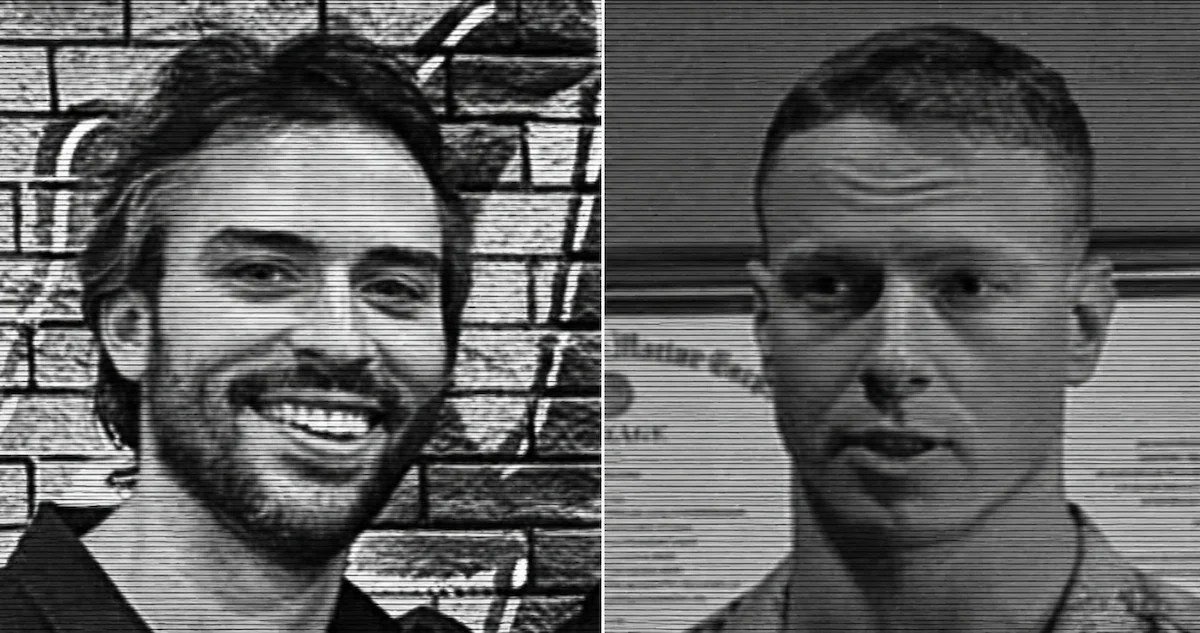
Mexico City, October 20 (SinEmbargo).– Before arriving in Chihuahua, where they took part in state operations without authorization from the Government of Mexico, CIA agents Richard Leiter Johnston III and John Dudley Black served in the United States Armed Forces and took part in missions in Afghanistan. One belonged to the U.S. Army Special Forces and the other served in the Marine Corps. Their military careers took them from these war zones to the illegal covert operation on Mexican territory that came to light when both died, on April 19, 2026, in a rollover in the Sierra Tarahumara.
The Americans were not mere drone-operation instructors, as the Chihuahua Attorney General’s Office, then headed by César Jáuregui Moreno, initially maintained. According to the investigation of the Federal Attorney General’s Office (FGR), presented at last weekend’s hearing, the two agents took part, armed, in the deployment, supposedly against clandestine synthetic drug laboratories in the community of El Pinal. Their presence in the state was not limited to the days before their deaths; the documentation presented by the Public Prosecutor’s Office during the hearing against Jáuregui indicates that they had been in Chihuahua since at least October 2025.
The Public Prosecutor’s Office also revealed that Richard Leiter Johnston was in Chihuahua from October 2025 and returned from January 21 to 31, 2026. He also had a reservation from April 14 to 20, the period in which he took part in the operation. For his part, John Dudley Black, the other American who died, was staying in room 2312 of the Holiday Inn hotel, where his belongings remained. The Prosecutor’s Office also documented that Johnston rented two gray Volkswagen Jetta vehicles from the company Eurocar, under contracts 81957 and 85272.
A report prepared on May 15, 2026, based on the GPS records of both vehicles, revealed that they remained for long periods at the State Public Security Complex, particularly near the C4 Office of Strategic Operations. For the Public Prosecutor’s Office, these movements made it possible to establish a relationship between the Americans and the state security facilities. The information matched the testimony of an agent who stated that, on April 16, he had seen an unofficial gray car driven by a man he identified as apparently American in the Strategic Operations parking lot.
A Green Beret With Missions in Afghanistan and the Philippines
Richard Leiter Johnston III served as a platoon leader in the 25th Infantry Division, where he led soldiers in support of Operation Freedom Sentinel in Afghanistan in 2016, carrying out counterterrorism operations and training the Afghan Security Forces, according to his obituary published by Murphy Funeral Homes, which states that he “died on April 19, 2026 while serving his country overseas.” His story was also published on U.S. Special Forces Taps, a site dedicated to veterans of U.S. special operations.
Johnston continued his military training until he joined the U.S. Army Special Forces. He passed the selection and qualification course that allowed him to earn the Green Beret, the insignia of the units specialized in unconventional operations. He also received training in combat, airborne operations, military free fall, and combat diving. According to his obituary, he went on to command Special Forces Operational Detachment SFOD-A 1333, with which he took part in joint military exercises in Southeast Asia and was deployed to the Philippines to work with local forces in operations against terrorist organizations.
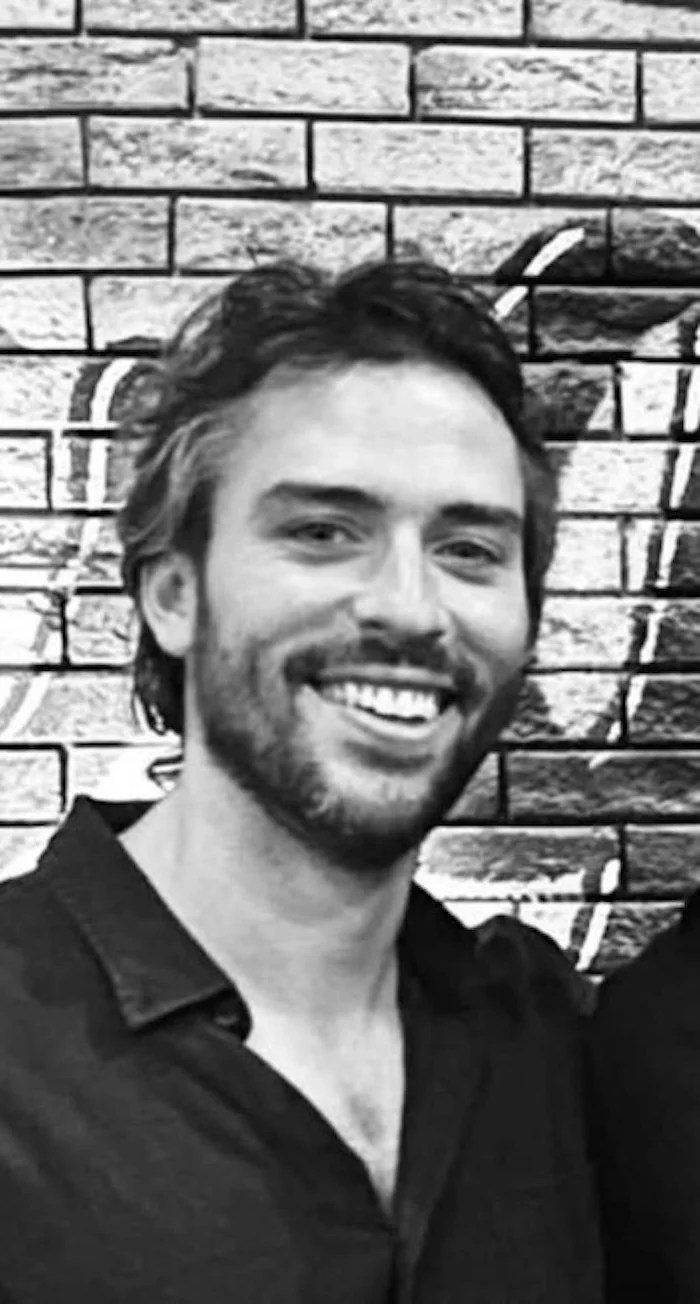
After leaving the Army, Richard was selected to work in the Middle East, Africa, East Asia, and the Western Hemisphere. Throughout his career, Richard used his command of Mandarin and his self-taught Spanish to operate better in these regions, according to his obituary, which omits any explicit mention of the CIA and does not identify Chihuahua as the place of his death.
“Richard’s life was tragically cut short in a traffic accident while carrying out his duty, supporting our country’s priorities. His tireless dedication, committed to fulfilling the mission until the very last moment, is a testament to his devotion. He was doing work he firmly believed in, using the skills he had honed throughout his career,” reads the same obituary.
John Dudley Black: From the Marines to the Sierra Tarahumara
John Dudley Black, the other American who died in Chihuahua, also had a military career that included Afghanistan. He was born in San Francisco, California, but grew up in Spokane, Washington, where he studied at Trinity Catholic School and then at Gonzaga Preparatory School, from which he graduated in 2001.
During his school years he played football and ran track. He later enrolled at Gonzaga University and took part in its reserve officer training program before joining the Marine Corps, journalist Alexandra Duggan reported in a story published by The Spokesman-Review and later picked up by The Seattle Times.
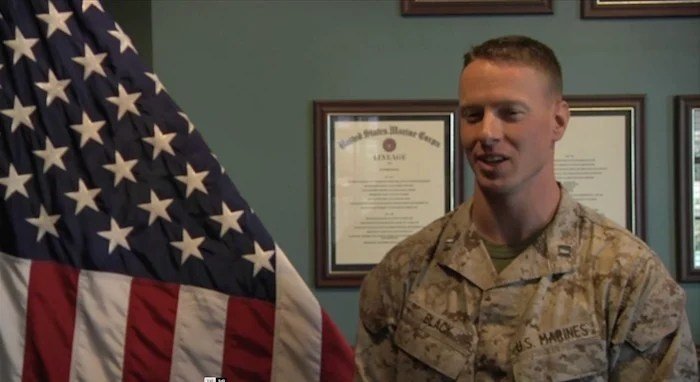
Duggan maintains that text messages sent to friends announcing Black’s death indicate that he took part in the university’s Reserve Officers’ Training Corps. He also served in Afghanistan, according to the same report. The profile also highlights how, in a 2013 video published on the official website of the U.S. Marine Corps, Black spoke of his experience in Afghanistan as aide-de-camp to the commanding general of the 1st Marine Division.
The careers of Johnston and Black took on another dimension when Mexican authorities began to reconstruct their movements in Chihuahua. The data presented during the arraignment hearing against César Jáuregui revealed that the Americans’ presence went back to at least October 2025. The state Public Prosecutor’s Office presented hotel reservations, vehicle rental contracts, and geolocation records that made it possible to identify their movements, as well as prolonged stays at public security facilities.
The investigation also shed light on the role Johnston and Black played in the last days of their lives. According to testimony gathered by Mexican authorities, both were in contact with Guillermo Arturo Zuany Portillo, then Special Prosecutor for Strategic Operations and Anti-Kidnapping, who allegedly coordinated the presence of the U.S. personnel. Those testifying said the foreigners received rifles in Zuany’s office before heading to El Pinal, in the Sierra Tarahumara, on April 16.
Details of their operation published by El Universal describe much more direct participation. According to those reports, Johnston and Black were part of the tactical group, carried rifles and balaclavas, checked coordinates on electronic tablets, and coordinated with the director of the State Investigation Agency, Pedro Román Oseguera Cervantes. These elements contrast with the initial version of the Chihuahua authorities, who presented the Americans as instructors from the United States Embassy who had only asked to travel with state officials.
Between April 17 and 19, the deployment of Mexican authorities supposedly focused on destroying facilities supposedly used to produce synthetic drugs near El Pinal, in the municipality of Morelos. Returning from the operation, in the early hours of April 19, a pickup truck that was part of the convoy fell into a ravine near the community of Polanco and caught fire. Johnston and Black were traveling in the vehicle, along with Pedro Román Oseguera Cervantes and his bodyguard, Manuel Genaro Méndez Montes. All four died. The accident exposed a collaboration that, according to the investigations, had not been authorized by the Mexican federal government.
The controversy deepened when the FGR began reviewing the circumstances of the operation and the first explanations offered by state authorities. According to reports by El País, investigators reviewed security cameras at the Prosecutor’s Office facilities and interviewed members of the operation. One of the witnesses said that, after the accident, he received instructions to conceal the presence of CIA personnel. The same report indicates that the pickup was carrying extra fuel in jerry cans, a circumstance that the testimonies linked to the fire after the fall.
-
Mexico’s Health Secretariat Exposes Company for Distributing Medicines at Overcharges of up to 60% in the State of Mexico
A firm tied to a TV network won 1.7 billion pesos in contracts to run hospital pharmacies; after new tenders, the government pays 32% less and moves more medicine.
-
People’s Mañanera October 20
President Sheinbaum’s daily press conference, with comments on women’s health, Chihuahua, water for Jalisco, and housing.
-
Trump Asked to Participate in Oil Production, but I Told Him It Can’t Be Done, Sheinbaum Says
Sheinbaum also rejected Trump’s claim that cartels control parts of Mexico, and cited fentanyl crossings down over 60 percent and homicides cut in half.