Rise of Churches Aligned With Zionism Made Chiapas an Israel-Friendly Zone
This article by Hermann Bellinghausen originally appeared in the October 26, 2026 edition of La Jornada, Mexico’s premier left wing daily newspaper.
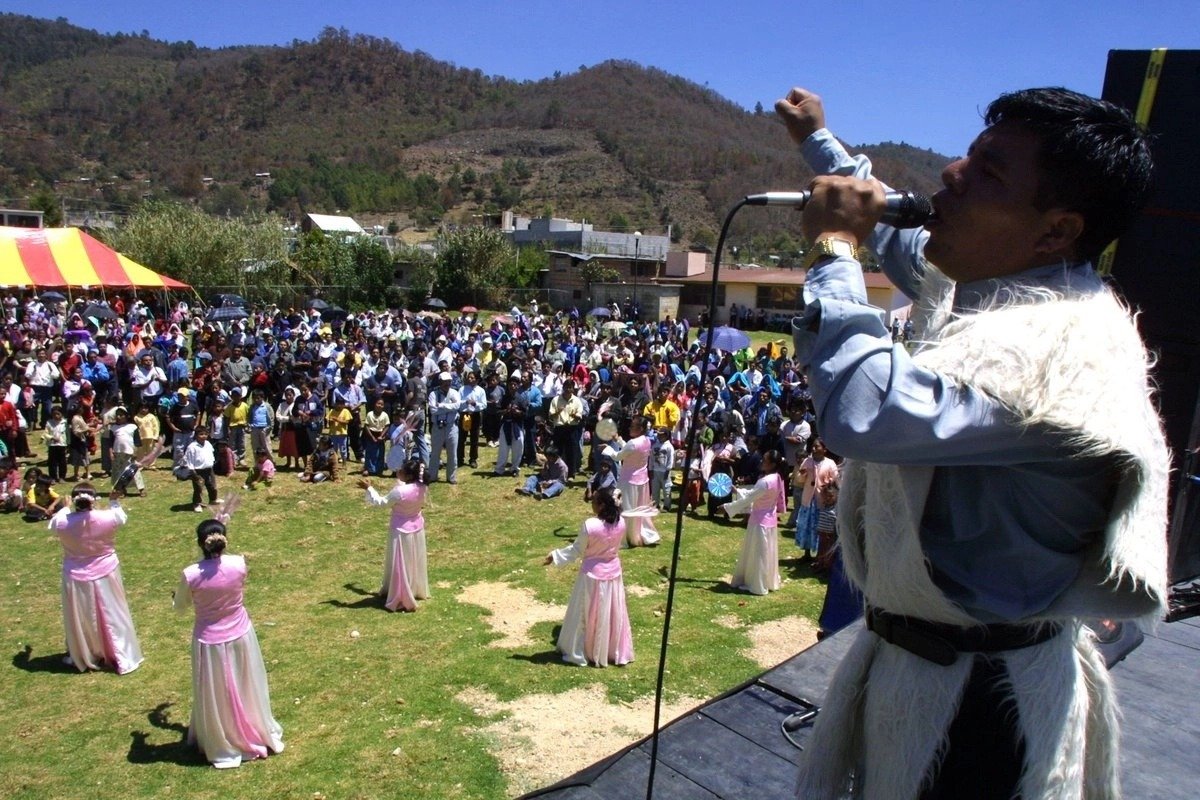
San Cristóbal de Las Casas, Chiapas. Chiapas stands out for experiencing religious events of diverse kinds with important political implications, and not only social ones. The variety and dispersion of churches and Christian denominations is impressive in a state with a large number of formally established religious or mystical expressions. For decades, San Cristóbal de Las Casas has been the epicenter of a plurality of beliefs perhaps unique in Mexico.
In recent years the activity of Zionist Christian churches has become noticeable; in the face of the genocide perpetrated by Israel in Gaza for three years, they choose to back it, something very similar to what has transformed the political-religious map of Latin America, which has become the only Israel friendly area in the world outside Europe and the white extensions of the British empire.
So dynamic are the churches and religious affiliations in Chiapas, particularly in Los Altos, that even the Catholic Church, the oldest, experienced differences when the so-called Liberation Theology was established here under the leadership and inspiration of Bishop Samuel Ruiz García, with an open preference for the Maya Indigenous peoples, above all starting with the historic National Indigenous Congress of 1974 in San Andrés Larráinzar.
Its success brought it into confrontation with the conservative Catholicism of the dominant classes and with the PRI State, until reaching the climax with the Indigenous insurrection of 1994. Although the Zapatista Army of National Liberation (EZLN) has always avoided any religious identity and opts for the peoples’ freedom of belief, it is known that its civilian bases and allied organizations in the jungle, the north and Los Altos are mostly liberationist Catholics.
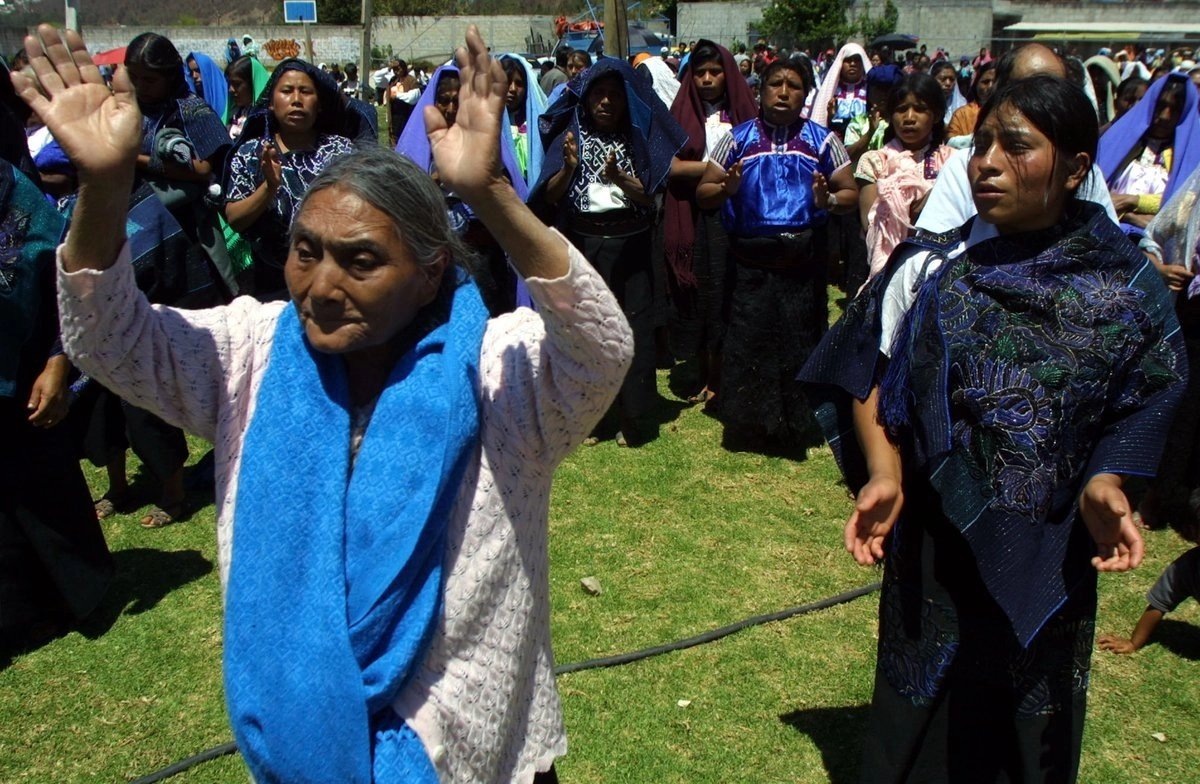
As indisputable as they are difficult to document, the “traditional” or syncretic beliefs, perhaps with pre-Hispanic elements, form part of the deep religiosity of these communities that already lived here before the sword and the Cross.
San Cristóbal de las Casas was already a peculiarly cosmopolitan place before the galloping gentrification of the Pueblos Mágicos. As for religion, Buddhist and Eastern meditation centers abound, two Islamic mosques with a fundamentally Tsotsil base operate, decades ago a Sikh community was established here and more recently a discreet Hasidic colony that practices Orthodox Judaism. But if anything changed the social and religious profile of the municipality and the city of San Cristóbal it was the mass expulsion of families from neighboring San Juan Chamula, who left “traditional Catholicism” in the 1980s and joined evangelical and Pentecostal churches, only to be violently persecuted by the political-religious power of the Chamula town council.
Established in the Jovel valley and in other parts of San Cristóbal, they founded numerous neighborhoods and settlements, today heavily populated and bustling. The dominant note is the countless temples one finds, of a great number of denominations, some as powerful as the Jehovah’s Witnesses, others Pentecostal, or Tsotsil churches, above all to the north and west of the city. The same in new urban centers such as Betania. Some evangelical variants such as La Roca and El Guardián de mi Hermano have carried out actions of a military type, generally non-violent, although the former has been associated with the gang Los Motonetos. As a whole, the Chamula exile in San Cristóbal constitutes a political, economic and religious power.
It should not be overlooked that the paramilitary groups of the 1990s were made up of evangelicals, and their victims were Zapatista bases or those of allied Catholic organizations in the Chol and Tsotsil regions, as could be seen with the Acteal massacre against Las Abejas in 1997 and the massacres in the northern zone.
Against this backdrop, some denominations veered toward a Christian Zionism very similar to what has occurred in Central America, the entire Andean region and the Amazonian territories of seven countries, where the spread of Protestant churches has been continuous for decades. From there it is only one step to explicit or tacit support for the State of Israel. Thus, they have become the gateway for Israeli expansionism through religious practices that are less and less Christian and that lead to a sort of second-tier Judaism, encouraged by similar churches from the United States that for decades have practiced a religious colonialism with profound consequences for the community life of the original peoples of Chiapas.
Benjamin Netanyahu already expressed it during a visit to Brazil in 2019:
We have no better friends in the world than the evangelical community, and the evangelical community has no better friend in the world than the State of Israel.
Benjamin Netanyahu, Brazil, 2019
There are 600 million believers, 133 in Latin America, of whom there would be 10 in Mexico. In Brazil there are close to 50 million, and in the United States more than 90.
The association of non-Catholic churches and Christian organizations with Judaism is not new. What is new is the pro-Israeli turn that pastors and “friends” of their churches have surreptitiously induced. Norman Lewis, the writer and chronicler who gave rise to Survival International, warned for years about the effects of these new missions, which promote individualism and what is today called the “prosperity theology,” which goes directly against the solidarity-based, participatory and communal culture of the Indigenous peoples of the continent.
He observed this in South America, Central America, Mexico, even on other continents. In 1983 he pointed out that the “born-again” fundamentalist missionaries, recruited in the United States for the New Tribes Mission “with impressive technical equipment and abundant funds,” announced the “second coming of Jesus Christ,” the end of the world and the salvation of the true believers.
Over time, many subordinated themselves to Judaism in the official version of the State of Israel, and consequently support Israeli military actions in Palestine and Lebanon. Paradoxically, they could be described as more “religious” than the Israeli State, more military than theocratic, where “democratic” selectivity prevented for 70 years the full inclusion of Islamic or Christian Palestinians; political participation was always the privilege of the Jewish minority. In another paradox, evangelical fervor, in its unconditional devotion to the mythical and the real Israel, finds little appreciation in Israel, where the population treats them as intruders and there is no shortage of those who spit as they pass; they do not consider them their equals.
A notable expression of this syncretism is the Church of God of New Testament Judaism, a religious congregation that expressly mixes the Christian faith of the New Testament with practices and elements of biblical Judaism, to the point of centering on salvation, perfection and sanctification through the study and practice of biblical Judaism, and sharing with it the wait for the Messiah, the return of Yeshua Ha-Mashiach. It is headed in Mexico and Latin America by the apostle Tito Galván Zafra. Its action groups are: Sons of Abraham, Ladies of Ruth, The Valiant of David and Here I Am. It has a presence in various states of the center and south of the country, but in Chiapas they have drawn attention for their closeness to the Israeli missions of young members of the Israel Defense Forces, who take part, particularly from Tuxtla Gutiérrez and San Cristóbal de Las Casas, in “solidarity” incursions into Indigenous schools in Zinacantán, Chamula, Oxchuc and San Cristóbal itself.
-
Mexico’s Exports Grew 37.9 Percent and Imports 33.1 Percent Annually in September
September exports hit a record 77.8 billion dollars, led by a 94.7 percent jump in electronics, and the year-to-date trade balance is now in surplus.
-
People’s Mañanera October 27
President Sheinbaum’s daily press conference, with comments on the IMSS, INE audits, Canacar blockades, and Charlyn Corral.
-
Lula Invited Me to Brazil After His Electoral Triumph; I Also Invited Him to Mexico, Sheinbaum Says
The two presidents spoke by phone after Sunday’s runoff in Brazil and agreed to meet soon, Sheinbaum wrote on X.