Mexico’s Ambassador Vasconcelos Says at UN That Ending US Blockade Against Cuba Is Urgent and Imperative
This article by Arturo Sánchez Jiménez and Emir Olivares originally appeared in the October 28, 2026 edition of La Jornada, Mexico’s premier left wing daily newspaper.
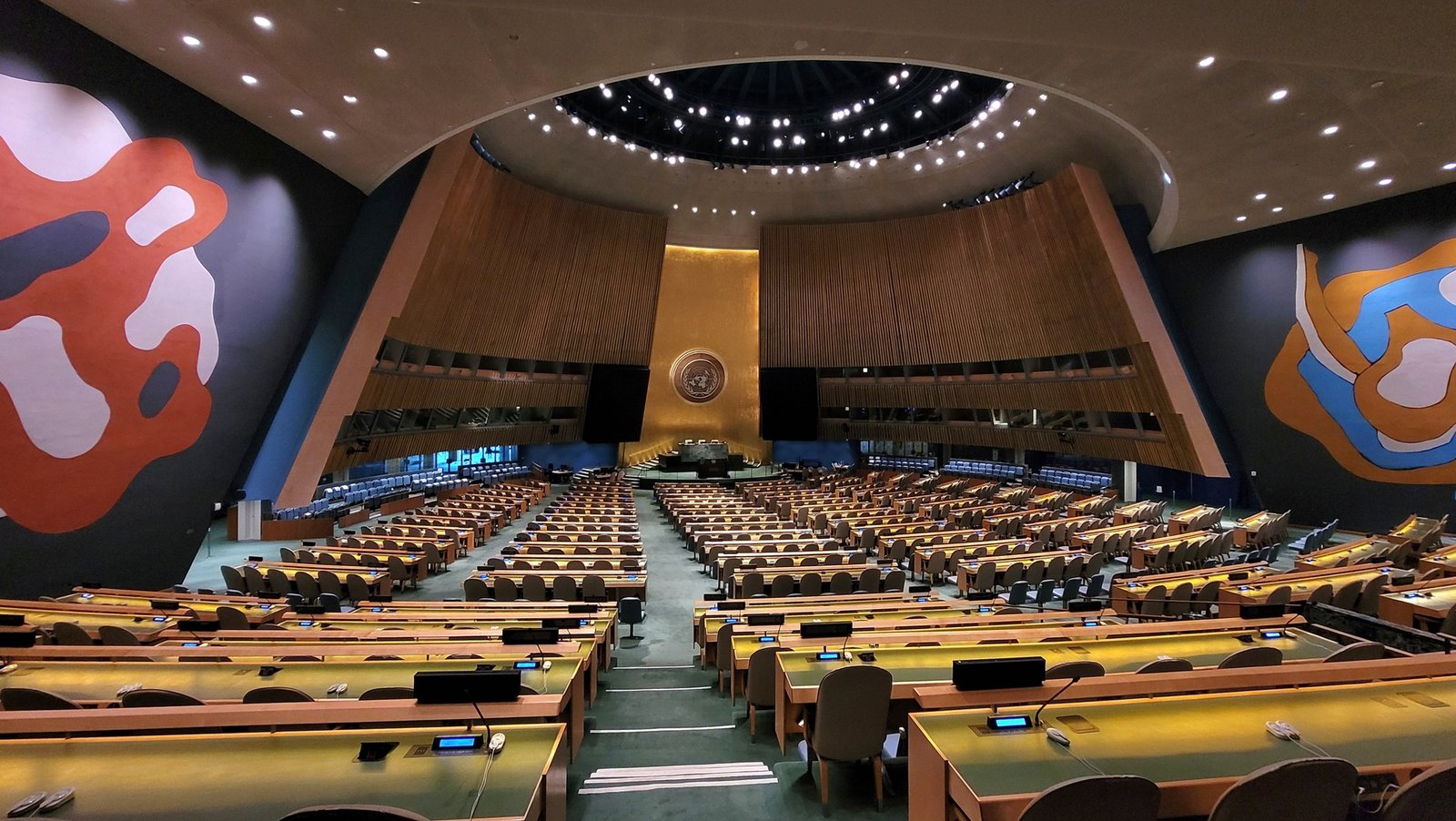
Ending the blockade imposed by the United States against Cuba “constitutes an urgent necessity and a humanitarian imperative,” Mexico maintained this Wednesday before the General Assembly of the United Nations (UN). Héctor Vasconcelos, Mexico’s permanent representative to the body, cited the shortage of food and medicine, the lack of bank liquidity and the energy crisis as effects that “impact the daily lives of millions of people.”
In the debate taking place since yesterday in New York on the need to lift the economic, commercial and financial blockade against the island, the diplomat highlighted that Mexico “has maintained its support for the Cuban people through concrete humanitarian assistance initiatives” and stated that the sanctions unilaterally imposed by the US against the island constitute “a structural obstacle to Cuba’s economic and social development with direct consequences for the well-being of its population.”
No people should be forced to face these conditions as a result of unilateral coercive measures.
Héctor Vasconcelos, Mexico’s Permanent Representative to the UN
Vasconcelos recalled that in the general debate of the 81st session of the Assembly, Mexico “reaffirmed its solidarity with the people of Cuba and its rejection of the embargo and of any unilateral economic measure contrary to the Charter of the United Nations.” He also defended the country’s “historic and consistent position,” sustained for more than six decades, of condemning the blockade “for considering it contrary to international law and incompatible with the principles” of that document.
For the Mexican representative, “dialogue, cooperation and respect for international law must prevail over measures that deepen the hardships of a population.” Advancing in that direction, he added, “would not only benefit Cuba, but would also contribute to building a more prosperous hemisphere in solidarity, based on justice, peace and understanding among nations.”
“Solidarity must be translated into deeds and not be limited to declarations of principles,” he stated.
Likewise, he maintained that “the fraternity between our peoples does not depend on circumstances or differences.”
The diplomat warned that “the use of unilateral measures as a mechanism of external pressure to influence the internal decisions of a sovereign State is incompatible with the principles enshrined in the Charter” of the UN “and contravenes the spirit of peaceful coexistence among nations.” In that sense, he reaffirmed Mexico’s rejection “of the imposition of unilateral sanctions outside the measures adopted by the Security Council.”
In his speech, Vasconcelos reiterated “the importance of Cuba being excluded from the United States’ list of State sponsors of terrorism.” He explained that this inclusion “imposes additional barriers on its financial operations and international commercial exchanges.”
“The current situation demands giving priority to channels of dialogue, mutual understanding and international cooperation,” he said.
The representative of Mexico stated that eliminating the obstacles that prevent Cuba’s full participation in the international community “would contribute to consolidating a multilateral order based on respect for international law and on the purposes and principles of the Charter of the United Nations.”
-
People’s Mañanera October 28
President Sheinbaum’s daily press conference, with comments on Guadalajara water, INE contracts, Marine Le Pen, and the Lie Detector.
-
Denying the Blockade Against Cuba Is US Hypocrisy, Cuban Ambassador to Mexico Eugenio Martínez Says
At Mexico’s Chamber of Deputies, the diplomat said Washington imposes an energy siege, virtually a naval blockade, and pressures countries to change their UN votes.
-
Mexico’s Federal and Jalisco Governments Will Invest 25 Billion Pesos to Solve the Water Problem in Guadalajara
The plan builds two aqueducts and renovates a 70-year-old purification plant with no new debt, privatization, or higher water rates, Lemus said.