How the McPRIAN, Salinas Pliego and Others Profited from Carlos Manzo.
This article by Mariana Álvarez Torres originally appeared in the October 31, 2026 edition of SinEmbargo, an independent Mexican digital news outlet.
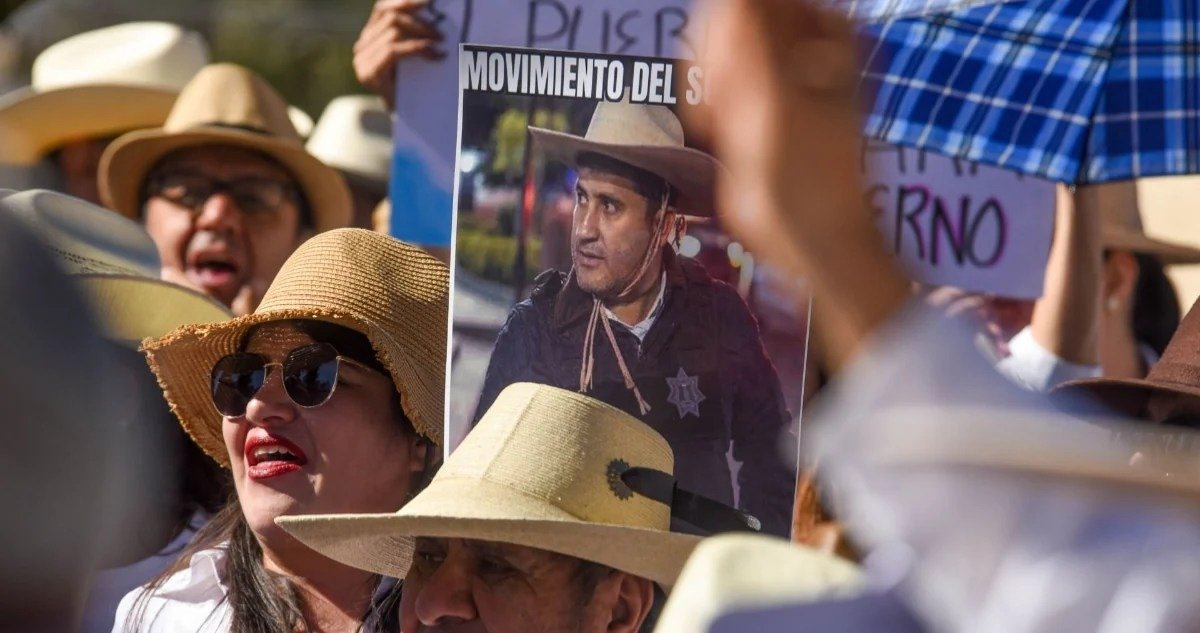
Mexico City, October 31 (SinEmbargo).– The murder of Carlos Manzo, independent Mayor of Uruapan, Michoacán, has been used by the opposition to drive an offensive against the Government of President Claudia Sheinbaum and to promote what was at the time presented as a spontaneous movement of Generation Z.
One year after the crime, that call to action, which brought together promoters of the Pink Tide (Marea Rosa) and figures from the PAN and the right, is widely criticized, while the Sombrero Movement, founded by the former mayor, is going through an internal rupture over accusations about the handling of the investigation and the electoral aspirations of Grecia Quiroz, his widow and the current Mayor.
Carlos Manzo was murdered on November 1, 2025 during the Festival of Candles, in the Historic Center of Uruapan. The attack took place in front of attendees and was recorded in videos that circulated widely on social media. By that time, the former mayor had built a public image characterized by confrontation with criminal groups and his constant demands for greater support from the state and federal governments to confront insecurity in the municipality.
Just two days after the homicide, figures from the PAN and the far right began to react on social media and to use the crime to question the federal Government and its security cabinet. Thus, the Mayor’s death became one of the opposition’s main arguments to denounce the situation of violence and to call for mobilizations against the president.
Amid the first national reactions, the political exploitation of the tragedy and the attempts to turn the murder into a partisan banner were questioned. Manzo had won the Mayor’s office of Uruapan as an independent in 2024, after splitting from Morena, but his trajectory and political positions did not necessarily correspond to the image that sectors of the opposition began to build after his death.
For this reason, his brother Juan Manzo, Undersecretary of Government of Michoacán, lamented that different groups sought to appropriate his figure to advance their own interests. In that context, the official recalled that Carlos had an affinity with the leftist grassroots and questioned the use of his murder to attack the federal Government.
Generation Z and the Pink Tide
On November 15, 2025, Mexico City (CdMx) was the scene of a mobilization called under the name Generation Z, which used youth symbols, among them the flag from the anime One Piece, and presented itself as a nonpartisan expression of discontent against the federal Government.
However, among the attendees there were also members of the Pink Tide, that is, people linked to the opposition and former officials who had participated in other mobilizations against Morena. The call brought together sectors with different demands and positions, from young people who rejected the entire political class to adults who focused their complaints on the Sheinbaum Administration.
The presence of these groups called into question the spontaneous and exclusively youthful character of the protest. Above all, the Pink Tide, which had backed Xóchitl Gálvez during the 2024 presidential elections, reappeared in a mobilization that sought to present itself as a citizen expression independent of the parties.
The march ended with clashes and disturbances in the downtown area of the capital. After the events, the presence of pro-life groups, operatives linked to the Cuauhtémoc borough government and protesters carrying signs in English calling for United States intervention was also documented.
After what happened, questions were directed at the organizers and the profiles that drove the call from outside the contingents. Among the names pointed to in the public discussion were Ricardo Salinas Pliego, Claudio X. González and Vicente Fox, who figured in the strategy of amplifying messages against the federal Government.
It is worth noting that the mobilization exposed great contradictions, given that while some young people insisted that their protest did not belong to any party, other participants defended positions and slogans linked to traditional sectors of the opposition.
In June 2026, an investigation into far-right digital networks, carried out by SinEmbargo, exposed mechanisms of artificial amplification through bots and fake accounts to position political causes, messages and calls to action.
The amplification of messages against the federal Government allowed Manzo’s murder to transcend the local sphere and become a recurring argument of the opposition. However, the Generation Z call did not maintain the same public presence it had during November 2025, when the Mayor’s death was one of the main triggers of the protests.
The Sombrero Movement Fractures
While the opposition mobilization was losing strength, the Sombrero Movement began to face an internal dispute over Carlos Manzo’s legacy and the course of the investigations into his murder.
On August 4, 2026, Juan Manzo accused members of the movement and Grecia Quiroz of politically using his brother’s death. In an interview conducted by SinEmbargo, the Undersecretary questioned why the priority was not to clarify the homicide and pointed out that the Mayor had information that could contribute to the investigations.
“It is more profitable for them not to deliver results so they can politicize the absence of results. And it seems to me that in the case of the Sombrero Movement they have used Carlos’s case, who is ultimately the one most aggrieved by this unfortunate event, so that his death becomes a political discourse,” he stated.
One of the main points of confrontation has been the handover of Carlos Manzo’s cell phones, since his brother believes the devices could contain relevant information about the threats he allegedly received before being murdered.
At the same time, Juan Manzo questioned the lack of support for the arrest of José Manuel Jiménez Miranda, identified as the former mayor’s Chief of Security and of bodyguards, as well as the defense of other members of his inner circle who face proceedings related to the crime.
Later, on August 25, the official made public a letter addressed to Jorge Álvarez Máynez, national leader of Movimiento Ciudadano, after that party expressed its support for Grecia Quiroz. In the document, he accused the political actors who took up the case of seeking votes and power from the family tragedy. He wrote:
You and your movement are just a few more on the long list of people for whom justice is the last thing they seek, but rather votes and consequently power and money.
Juan Manzo, in a letter to Jorge Álvarez Máynez
In the letter he also pointed out that members of the Sombrero Movement and people close to the Mayor had evidence that could help clarify the murder, but that, according to him, they failed to hand it over to the authorities.
Two days later, Carlos Manzo’s former private secretary, Jessica Yesenia Méndez, laid out allegations about internal omissions and the relationships of people in the municipal environment with the former mayor’s team. Among the issues addressed were the alleged leaks of information about Manzo’s schedule that would have facilitated the criminal operation.
Juan Manzo also went to Mexico City to request that the Attorney General’s Office (FGR) take over the investigation and review the possible responsibility of people close to the former mayor.
Grecia Quiroz Seeks the Governorship
Grecia Quiroz took over as Municipal President of Uruapan after her husband’s murder and later confirmed that she will seek the governorship of Michoacán in 2027, backed by the Sombrero Movement.
The Mayor registered the trademarks “Carlos Manzo” and “Movimiento Independiente del Sombrero” with the Mexican Institute of Industrial Property (IMPI), which since early 2026 she can use to organize meetings, consultations and political activities.
Since taking office, Quiroz has held state and federal authorities responsible for the lack of security that, she maintains, her husband faced before being murdered. She has also demanded that the FGR take over the case to guarantee impartiality and to dig deeper into the lines of investigation she considers pending.
However, she has rejected Juan Manzo’s claims about an alleged lack of cooperation with the authorities. Regarding the former mayor’s cell phones, she asserted that they are available for the proceedings, as long as the review is carried out in her presence. She also denied that the City Council pays the fees of the lawyers of the detained bodyguards.
Juan Manzo has maintained that the priority must be to clarify the homicide and not turn it into a tool for electoral profit. In addition, he has warned that belonging to the Sombrero Movement must not become a means of avoiding criminal responsibility.
“Being part of the Sombrero Movement can become an element of impunity for the very crime against Carlos Manzo, and I will not accept that. Nor if there is impunity on the part of someone from Morena or another party,” he told SinEmbargo.
33 Arrested and 90 Percent Progress
One year after the murder, the Michoacán State Attorney General’s Office (FGE) reported 33 people arrested and 90 percent progress in the homicide investigation, and also confirmed that the crime was revenge by the Jalisco New Generation Cartel (CJNG) for the confrontation Carlos Manzo had with that organization.
According to the investigations, the reprisal would have originated after the capture, on August 27, 2025, of René Belmontes Aguilar, alias “El Rhino” or “El Chamuco,” identified as the CJNG plaza boss in Uruapan. After his arrest, Manzo exhibited and insulted him during a live broadcast on Facebook, which he deleted minutes later.
Among those arrested are Ramón Ángel Álvarez Ayala, alias “El R1,” identified by the authorities as the leader of “Los Rs,” one of the main CJNG cells in Michoacán, and Jorge Armando Gómez Sánchez, known as “El Licenciado” or “El Contador,” accused of coordinating the attack. The Attorney General’s Office identifies them as the probable masterminds of the crime. At least 29 of those arrested have already been ordered to stand trial.
The investigations point to an operation that would have involved prior surveillance, leaking of information and coordination among different participants to carry out the Mayor’s murder. Among the people accused of providing data about his movements is Samuel García Rivero, former Director of Protocol of the City Council, accused of leaking his schedule to the criminal cell.
On October 29, the arrest of Rosa Alejandra “N,” former Well-Being Secretary of the Uruapan City Council, was also reported; she is accused of alleged cover-up by favoring. The official was close to the team of Carlos Manzo and Grecia Quiroz, and is also the mother of Alejandro “N,” alias “El Macas,” one of the bodyguards arrested for his alleged connection to the case.
The FGE reported that the investigation totals 3,500 actions, the analysis of 1,200 hours of video, 120 hearings, 3,000 forensic procedures and 72 information extractions. To conclude the proceedings at the state level, the office said it still needs to obtain Manzo’s two cell phones, which remain in Grecia Quiroz’s possession.
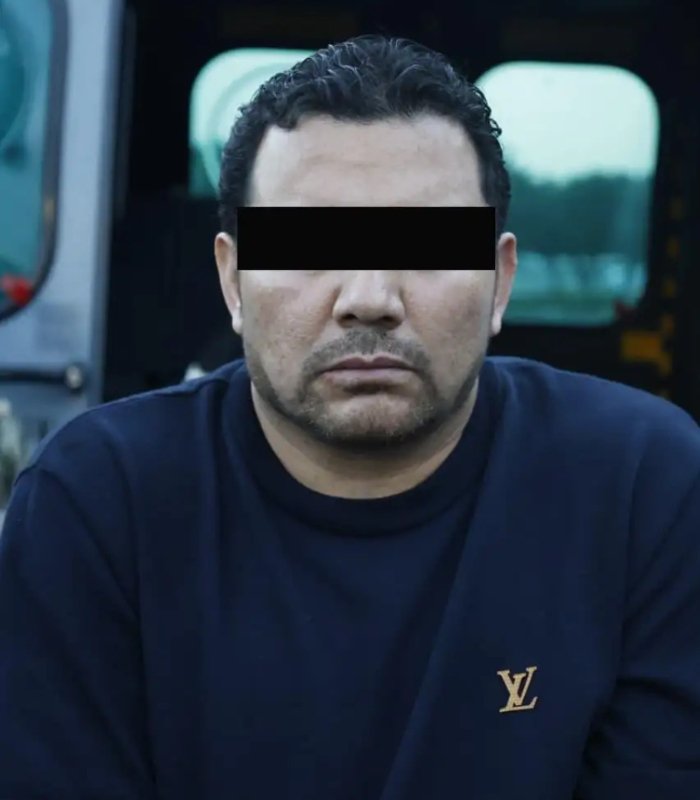
The progress in the investigation comes after months of allegations about the participation of people close to the former mayor, the conduct of his security team and the possible leaks that would have facilitated the attack. Nevertheless, the political accusations against Grecia Quiroz and other members of the Sombrero Movement do not amount to proven criminal responsibility.
Thus, one year after the homicide, the case of Carlos Manzo remains a dispute over justice and also over his political legacy. While the Attorney General’s Office maintains that the crime was a CJNG reprisal for the Mayor’s confrontation with that organization, the differences between his family and the Sombrero Movement keep open the dispute over cooperation with the authorities and the course the investigation should take.
-
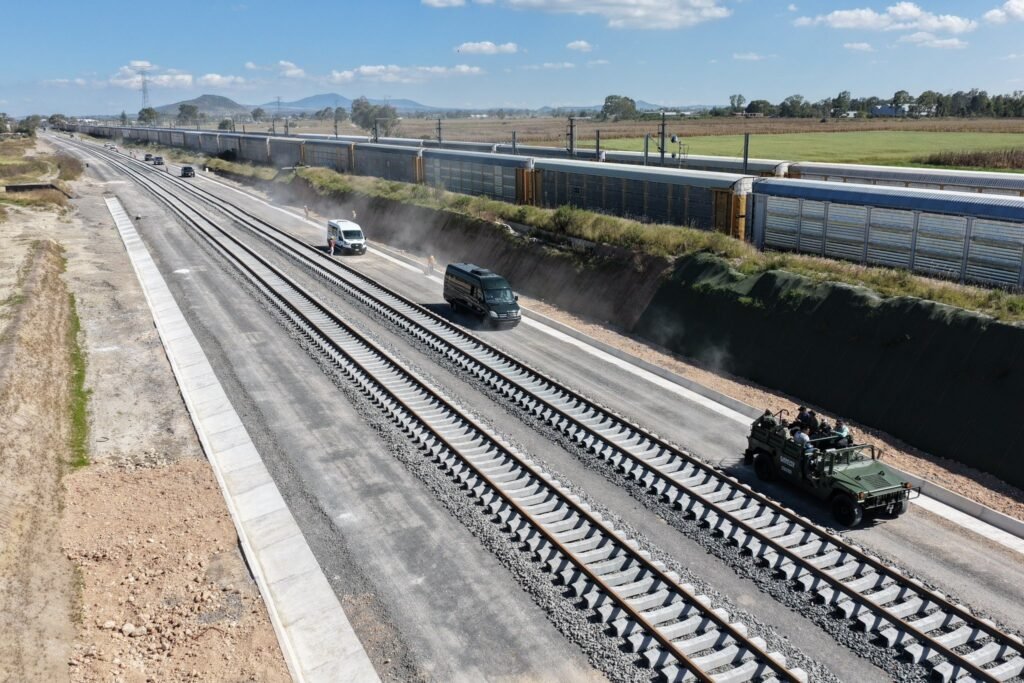
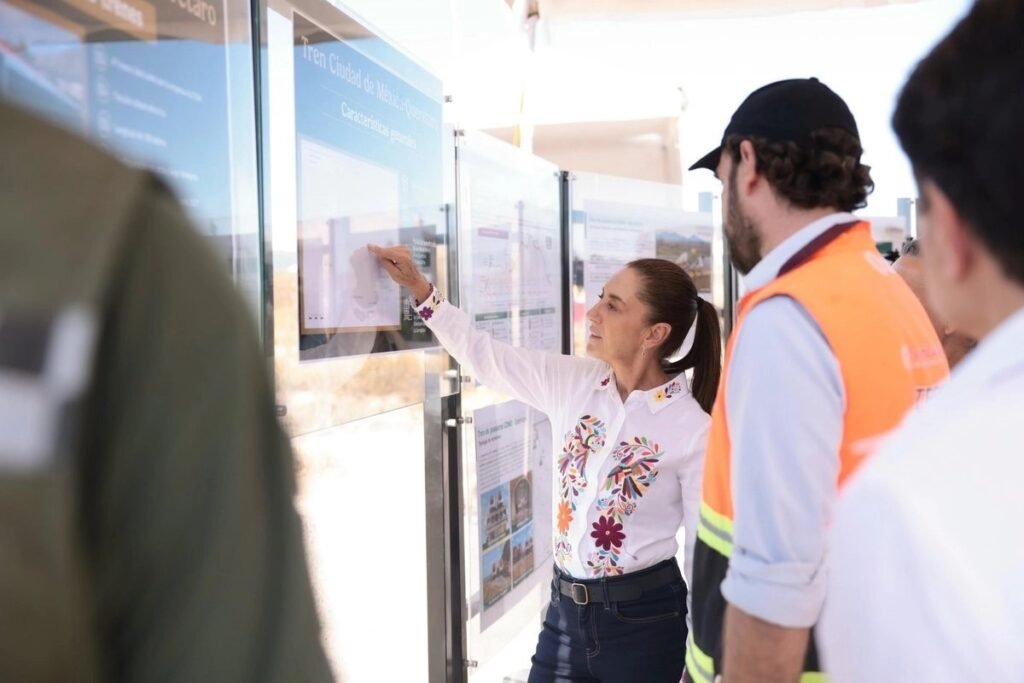
Sheinbaum Supervises Construction of the Mexico City-Querétaro Passenger Train; “It’s Progressing According to Schedule”
Some 18,500 people are working on the 230-kilometer double-track line, which will link Buenavista to downtown Querétaro in about two hours at up to 180 km/h.
-
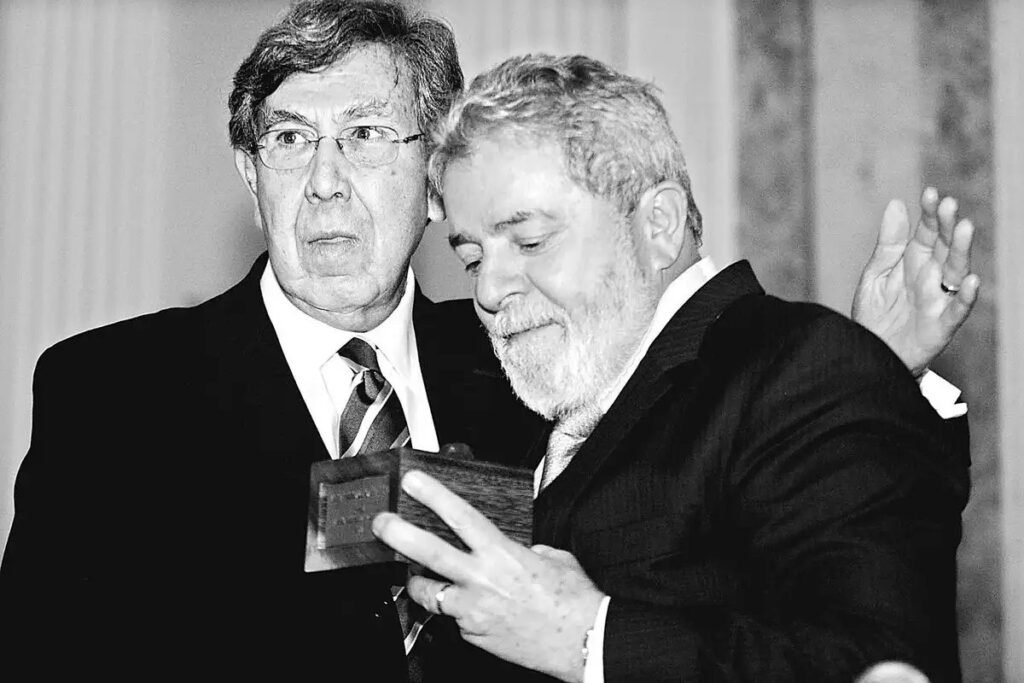
“With You I Learned to Do Politics”: Lula Remembers Cuauhtémoc Cárdenas
A stranger in a Houston audience rescued Lula’s 1979 talk by offering to translate. It was Cárdenas, who decades later visited him in prison in Curitiba.
-
Passenger Trains and Housing Drive the National Economy, Sheinbaum Says
Mexico’s economy grew 3.2% in the third quarter, beating forecasts of under 1%, as some 2,500 kilometers of new rail lines are built across the country.