Sheinbaum Visits the People’s Hospital in China’s Nanshan District
This article by Angeles Cruz Martínez, special correspondent, originally appeared in the November 18, 2026 edition of La Jornada, Mexico’s premier left wing daily newspaper.
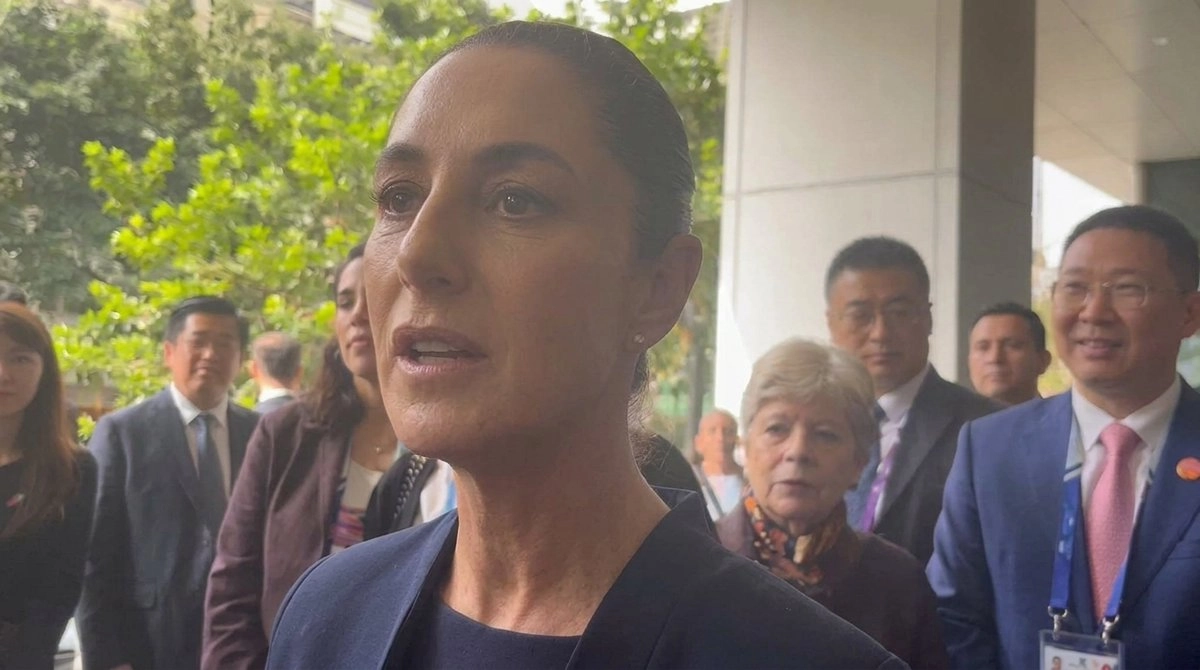
Shenzhen. To learn about China’s health system and bring best practices suited to Mexico’s circumstances back to the country, President Claudia Sheinbaum visited the People’s Hospital in Nanshan District.
Upon leaving, she said the hospital was “very impressive for its capacity to provide care, the amount of equipment and the use of artificial intelligence to make clinical diagnoses and even determine treatments.”
During the nearly two-hour tour, the president was able to observe how blood tests, sample collection and the delivery of medicines by robots are carried out.
She said there is an intention to bring these technological advances to Mexico. To that end, her administration will work with the Chinese embassy in Mexico.
She stressed that China’s health system is similar to Mexico’s, as it has all three levels of care, but here, she emphasized, “the capacity to provide care is extraordinary.”
Nanshan People’s Hospital is a highly specialized facility, and although it is 80 years old, it has been modernized over time and in 2024 earned level five smart hospital accreditation. According to information from the hospital, it has electronic medical records and medical services with a digital system.
It also has a big data research center and promoted the establishment of the Smart Healthcare Innovation Center in the Guangdong-Hong Kong-Macao Bay Area.
Separately, Health Secretary David Kershenobich said that, beyond what they were able to learn at Nanshan Hospital, Mexico’s government is interested in China’s health system because of the effective functioning of its primary care and its traditional medicine.
Here, people seek services to prevent disease, and “that is what we want, in addition to finding a way to institutionalize traditional medicine,” as the Asian giant has done, he said.
The official is accompanying President Sheinbaum on her visit to China, which has included visits to hospitals.
Kershenobich visited a center that offers traditional Chinese and allopathic medicine.
In an interview, the official said that in China, primary care is guaranteed through visits to people’s homes. This has already begun, in some form, in Mexico, with house-to-house visits to older adults, but for the management of medical conditions.
A culture of prevention still needs to be instilled so that people visit health facilities at least once a year to check their blood pressure, blood sugar levels and weight, among other indicators.
He said that in China, people pay a nominal annual fee for a basic package of services, which acts as an incentive for them to look after their health, because in most cases they go to prevent disease, not to treat it.
In Mexico, medical services are free, but “we lack a culture of prevention, social contagion.”
With that objective, 12,000 first-contact medical offices will begin operating in 2027, he said.
Regarding traditional medicine, Kershenobich highlighted the Chinese system and, above all, its coexistence with allopathic medicine. Doctors also receive university training that includes millennia-old traditional knowledge in different areas, including midwifery. This, too, is something of interest to bring to Mexico.
China also has a very strong traditional medicine industry, which we do not have, but “it can be developed based on our cultural and Indigenous wealth.”
Kershenobich mentioned the case of the municipality of Jesús María, Nayarit, where there is a hospital in which half the services involve traditional medicine and the other half allopathic medicine.
He emphasized that the Universal Health Service is designed to promote disease prevention so that fewer people need hospital care, incorporating the knowledge of Indigenous peoples.
The difference is that in China the system is “very well organized and established.” He said efforts would be made to bring that model to Mexico to institutionalize traditional medicine and, at the same time, advance digitalization through electronic medical records, which are fundamental to developing medicine in the future in Mexico and worldwide.
-
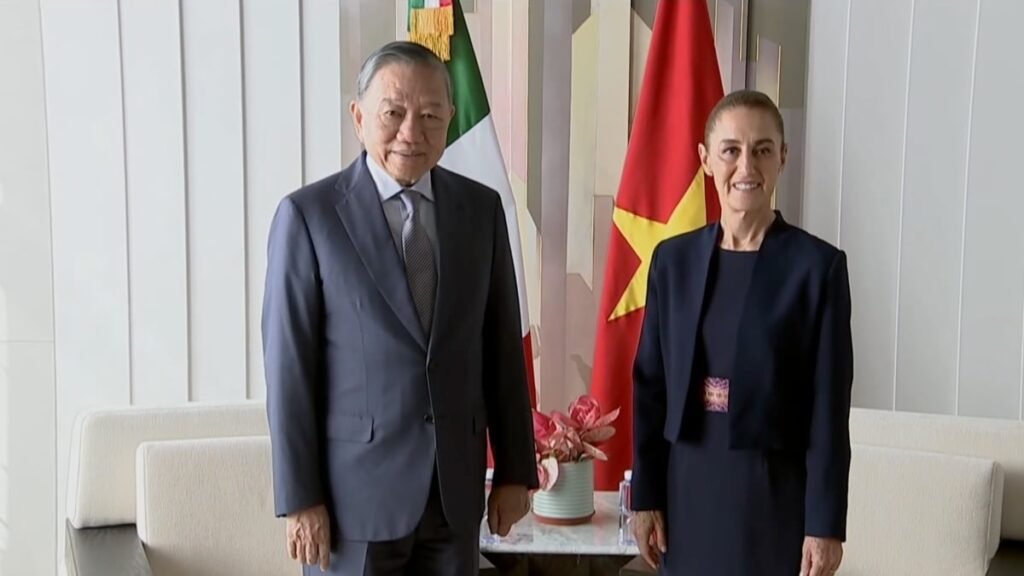
Sheinbaum Meets with Vietnam’s President; They Discuss Trade and APEC 2027
The talks with Tô Lâm, who also heads Vietnam’s Communist Party, took place in Shenzhen during Sheinbaum’s diplomatic visit to China.
-
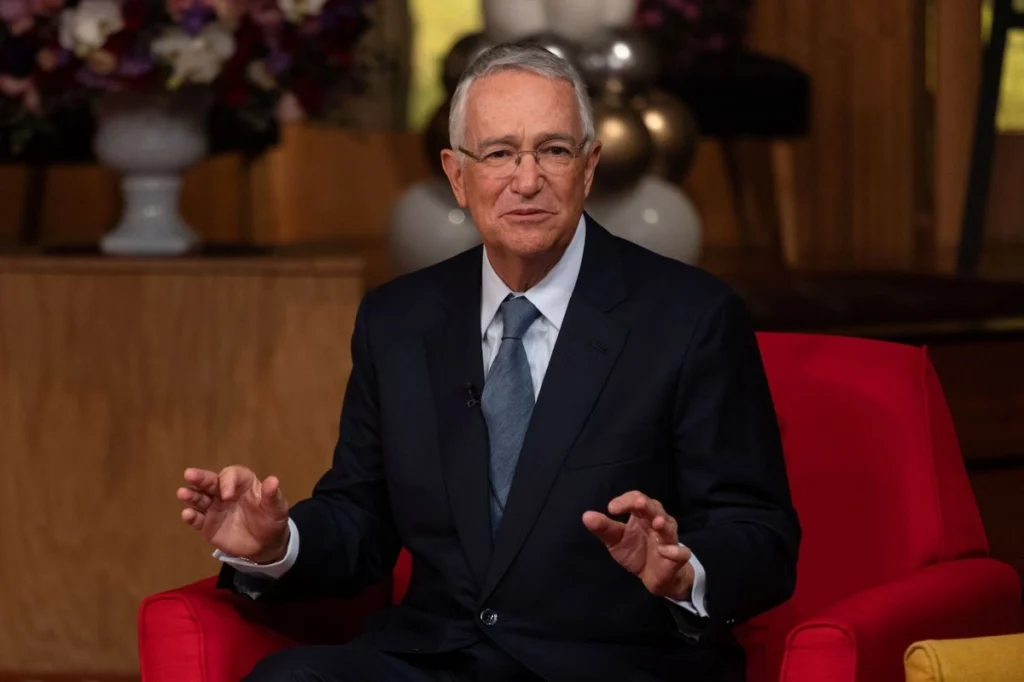
Salinas Pliego Rejects 40-Hour Workweek; Threatens to Replace 15,000 People with Machines “That Don’t Ask for Maternity Leave”
The Mexican businessman calls labor reforms an “attack on employment” and says he has already begun cutting bank teller jobs.
-
Sheinbaum Asks Xi to Send Another Panda to Mexico for Chapultepec Zoo
The request comes ahead of the 55th anniversary of Mexico-China diplomatic ties in 2027, as 36-year-old Xin Xin remains Mexico’s last panda.