Cuba: Direct Dialogue With the United States, Without Significant Progress
This article by Arturo Sánchez Jiménez originally appeared in the June 23, 2026 edition of La Jornada, Mexico’s premier left wing daily newspaper.
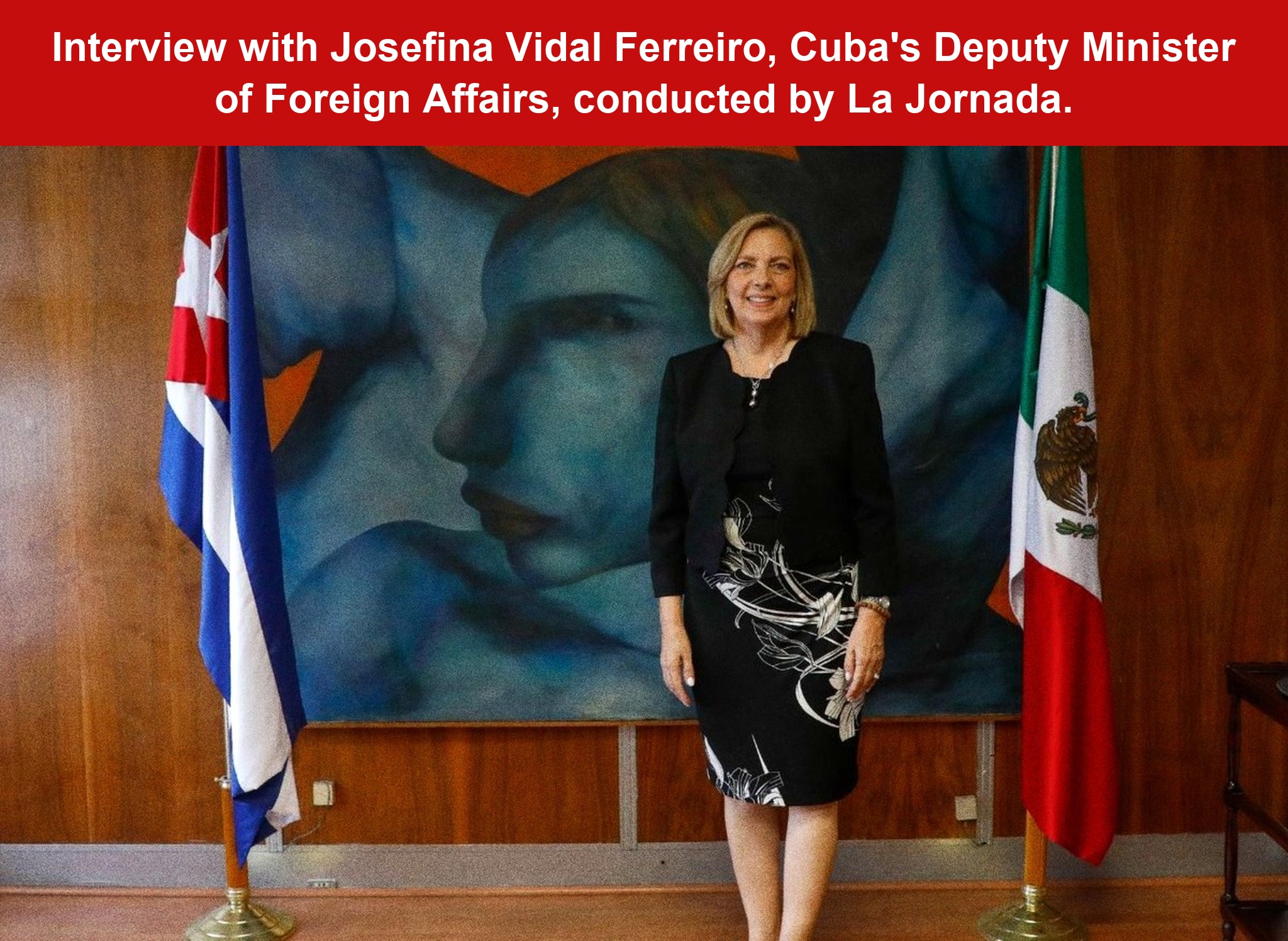
A direct dialogue channel exists between Cuba and the United States in which the island’s government is willing to discuss any topic, except the independence, sovereignty, self-determination, and internal order of the country, Josefina Vidal Ferreiro, Cuba’s Deputy Minister of Foreign Affairs, affirmed. However, that process has registered no significant advance: every time both governments sit down to talk, Washington responds days later with new sanctions against the island. “It raises doubts for us about how seriously and responsibly the United States is viewing this conversation,” the official asserts.
At the Cuban embassy in Mexico, Vidal Ferreiro, with decades of academic and diplomatic experience in the relationship with Washington, maintains that the 176 economic-opening measures announced by the Cuban government do not modify the socialist character of the State. Control over fundamental resources and strategic sectors will remain in the hands of the State, and a redistribution of income through fiscal means will be ensured. “Property will continue to be in the hands of the people of Cuba, and that is essentially socialist,” she affirms.
Nor are these improvised measures: their design began between 2020 and 2021, but the pandemic and the tightening of sanctions during the second Trump administration delayed their implementation, Vidal Ferreiro explains.
A graduate in international relations from Moscow with diplomatic experience in Washington, Paris, and Ottawa, the deputy minister was in charge for six years of the General Directorate for the United States, part of the Ministry of Foreign Affairs. She warns that, in the face of the Trump administration’s repeated rhetoric about military action against the island, Havana is preparing to exercise its right to legitimate self-defense.
The official is in Mexico as part of a tour that also included Canada. In the country she met separately with legislators, with officials of the Secretariat of Foreign Affairs, and with members of organizations such as the civil association Humanidad con América Latina, promoter of a call published in these pages to raise funds in support of the island’s people.
She expressed the Cuban government’s gratitude for Mexico’s support, which has functioned as a logistical bridge: nine ships with food and supplies have departed from Mexican territory, and Mexican-flagged ships have carried milk from Uruguay and supplies from Belize bound for Cuba.
—At what point is Cuba’s dialogue with the United States?
—There is a channel, there have been meetings, there have been exchanges, but there has been no significant progress. We have not seen that the United States has given up its historical aspiration—and I am not speaking only of the past 65 years, I go back two centuries—of wanting to impose its dictate on how Cuba should be. There have been cases in which we sit down to talk and, a few days later, a new sanction arrives. That raises doubts for us about how seriously and responsibly the United States is viewing this conversation, which on Cuba’s side we view with absolute formality.
—Is that dialogue direct, or are there intermediaries?
—It is direct between representatives of both governments. There are countries that have offered themselves as mediators and we have thanked them for it, but it has not been necessary. Historically, I do not know of an episode of exchange with the United States in which we have needed a mediator. At most, we have used some interlocutors as messengers: former President (Carlos) Salinas at one point delivered a letter from Comandante Fidel Castro to Bill Clinton; Gabriel García Márquez was also the bearer of a message. But to talk directly we have always found a way to do so face to face.
—What are the lines Cuba will not cross in those conversations?
—We are willing to talk about everything and to put absolutely everything on the table, with a single exception: any matter related to the independence, sovereignty, self-determination of Cuba, and the internal order of the country. Those questions are only for the people of Cuba to decide.
—How real do you consider the threat of military action?
—It is visible, they repeat it all the time. From the highest levels of the United States government, phrases are reiterated indicating that Washington has not renounced military action against Cuba. We do not want it, because people are going to die, Cubans and Americans. But because that threat remains latent and permanent, we cannot be naïve: at the same time that we talk, we are preparing to exercise our right to legitimate self-defense.
—Do the 176 economic-opening measures change the socialist character of the Cuban State?
—The answer is no. Control over fundamental resources—energy, biotechnology, tourism—will continue to belong to the State and to benefit the people. What is being incorporated are changes in management, but property will continue to be in the hands of the people of Cuba. The redistribution of income will operate through taxation. Public services—education, health, social security—will continue to be an absolute priority.
—How does this opening differ from the previous ones?
—In that we are now going further. In the 1990s of the last century we diversified partners and opened Cuba to foreign investment. Now the Cuban private sector will also be able to participate as an investor in private and state-owned enterprises, and the participation of Cubans residing abroad is broadened. The diversity of actors is much greater.
—Why are they being announced now?
—They do not arise from one day to the next. We had been reflecting on these transformations since 2020 and 2021. But covid-19 came and we had to concentrate all our resources on saving the population and developing our own vaccines. Then the Trump administration arrived again with measures aimed at depriving Cuba of foreign currency: they hit tourism, foreign investment, medical collaboration abroad, remittances, and they placed us on the list of state sponsors of terrorism. We decided that there was no longer any way to keep postponing it.
—You have said that there is a “communicational war.” What are you referring to?
—To the fact that there is a great propaganda machinery trying to shift the responsibility for what happens in Cuba onto the Cuban government, when it is very clear that there is an aggressor that is the United States. The most dangerous thing is the attempt to normalize the aggression, to make it acceptable to public opinion. The UN High Commissioner for Human Rights has already said it: Washington’s measures are suffocating the Cuban people, there are children dying who did not have to die. That has to stop.
-
Sheinbaum Dismisses Alleged US Memorandum for Greater Collaboration in Mexican Territory
She made clear that US forces cannot operate inside Mexico, a stance she contrasted with the Calderón years, when US agents were allowed in.
-
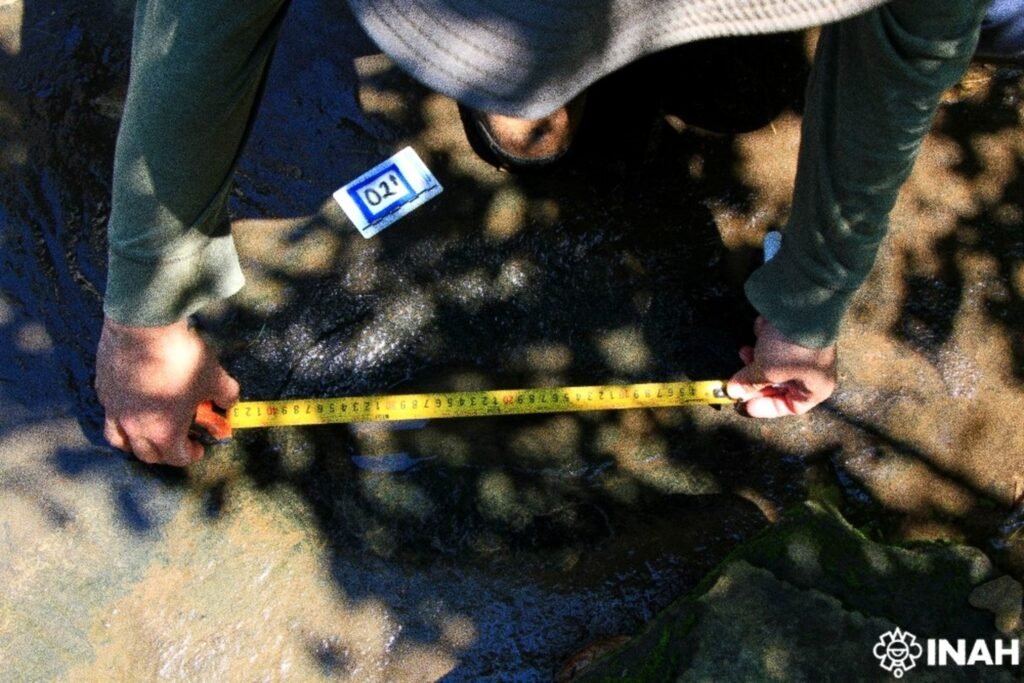
Michoacán Tyrannosaurs, Raptors and ‘Duck-Billed’ Dinosaurs: Mexico Confirms Discovery of 50 Footprints in Apatzingán
Residents of San Juan de los Plátanos reported tracks of “giant animals” in a stream bed, left 65 million years ago in the Late Cretaceous.
-
People’s Mañanera October 26
President Sheinbaum’s daily press conference, with comments on Lula’s victory, sovereignty, economic growth, and the INE.