Mexico’s Environment Secretariat Preparing Blacklist of Environment Destroyers
This article by Gloria López originally appeared in the May 21, 2026 edition of El Sol de México.
The Registry of Environmental Offenders will be one of the new control mechanisms included in the reform to the General Law of Ecological Balance and Environmental Protection being prepared by the Secretariat of Environment and Natural Resources (SEMARNAT). The registry will include individuals and legal entities sanctioned for serious offenses such as illegal logging, destruction of mangroves, or improper handling of hazardous waste.
On May 13, the Secretary of the Environment , Alicia Bárcena, met with representatives from the Environment and Natural Resources Committee and the Climate Change and Sustainability Committee of the Chamber of Deputies. There, she stated that the reform incorporates new articles and concepts and that its formulation took into account initiatives promoted by legislators from both committees.
The next day, the preliminary draft of the reform initiative that President Claudia Sheinbaum will send was published.
The creation of the registry is part of a structural and conceptual reform of the original 1988 environmental legislation, which has not been comprehensively updated since 1996. The draft incorporates new public policy instruments, environmental justice mechanisms, and conservation measures with a focus on human rights and biodiversity protection.
The Registry of Offenders will be administered by the Federal Environmental Justice Prosecutor’s Office, the name that the current Federal Environmental Protection Prosecutor’s Office (PROFEPA) will adopt as part of the reform. The registry will be public and can be consulted online, and will include data such as the offender’s name, the offense committed, the affected area, the damaged natural resources, and the environmental laws violated.
Among the behaviors that will warrant appearing in the registry are illegal logging or clearing of forest lands, destruction of mangroves, carrying out works without environmental impact authorization, causing forest fires, irregular handling of hazardous waste, as well as falsifying information to obtain environmental permits.
The draft bill proposes that those listed on the registry will be barred from obtaining environmental permits, authorizations, or concessions for a period of seven to ten years, and will also be denied access to subsidies or public support. The period of time on the registry may be reduced by up to half if the offender complies with the corrective measures and sanctions imposed by the environmental authority.
Protection for Environmental Defenders
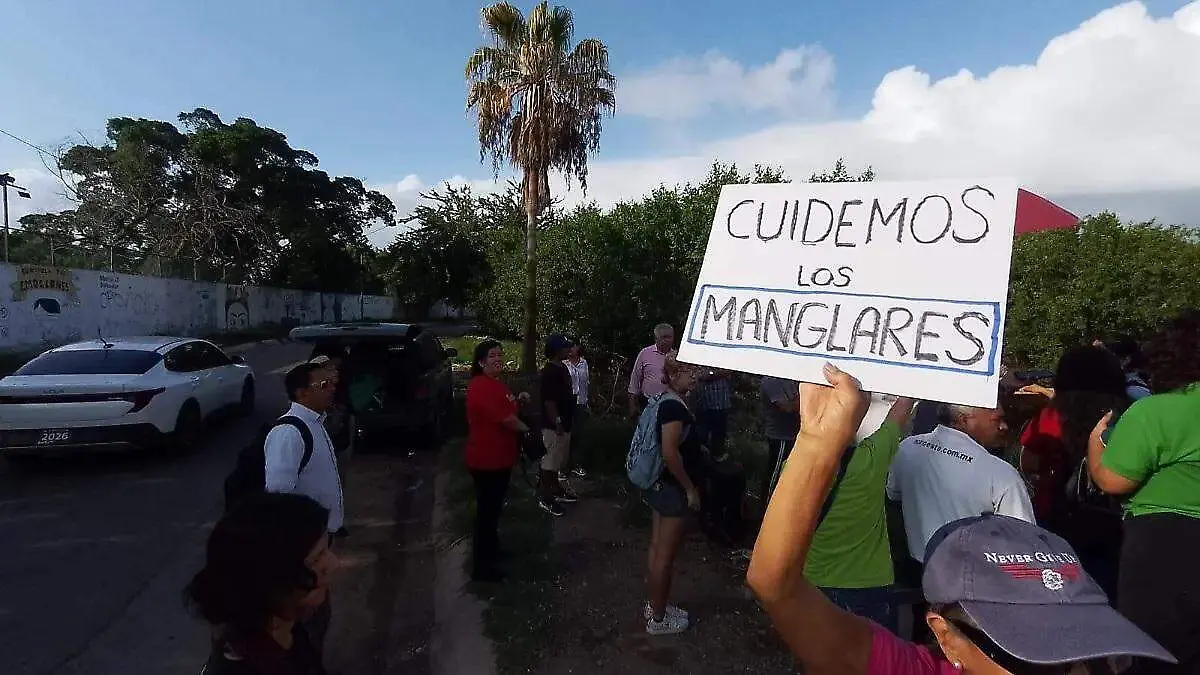
Another of the most relevant changes is that the law introduces for the first time a legal definition of environmental human rights defenders, recognizing them as individuals, groups or communities dedicated to the promotion and defense of rights related to the environment.
The project establishes as a fundamental basis of the legislation the obligation of the State to promote and guarantee safe and conducive environments for their work, granting explicit powers to both the Federation and the federative entities to recognize, protect and guarantee their human rights in coordination with the three levels of government.
Furthermore, it implements specific preventive approaches for its protection, obliging the environmental sector and the security and justice authorities to prevent, investigate and punish attacks, threats or intimidation against it.
Specific measures include guaranteeing their rights of access to information and participation, as well as keeping their identity confidential in complaint procedures to ensure their physical integrity and freedom, allowing environmental enforcement authorities to issue recommendations to protect their rights against possible violations.
Against Light Pollution & More
Other modifications to the reform include the regulation of light pollution and so-called intrusive light, a phenomenon that alters nocturnal ecosystems and affects flora, fauna, and astronomical observations; it formalizes the Annual Operating Certificate as a mandatory instrument for reporting emissions, pollutants, and greenhouse gases, and for the first time recognizes the protection of pollinators, considered fundamental for ecological balance and the conservation of ecosystems.
The initiative also recognizes the biocultural heritage of Indigenous and Afro-Mexican peoples, understood as the relationship between biodiversity, traditional knowledge, community practices and collective memory.
It includes the incorporation of a tool to identify environmental impacts from the earliest stages of infrastructure projects and programs. This is complemented by concepts such as the circular economy, nature-based solutions, and the economic valuation of environmental services.
In addition to the transformation of the National Commission for the Knowledge and Use of Biodiversity (CONABIO) into a decentralized public body with technical autonomy and its own assets.
-
Defense of Sovereignty “Is Not Rhetoric, It’s Principles,” Sheinbaum Says
Sheinbaum recalled foreign pressure on Mexico in the 19th and 20th centuries and blamed the neoliberal governments and Calderón for opening the door to U.S. influence.
-
Sheinbaum Presents Draft Decree to Force Digital Platforms to Take Down Content That Incites Violence and Hate
No fines for now: the government will talk with tech companies before publishing the decree next week, a promise made after the Coahuila school attack.
-
People’s Mañanera October 9
President Sheinbaum’s daily press conference, with comments on digital safety, IMSS-Bienestar, sovereignty, and the opposition.