
Olinia Has the Formula to Succeed in Latin America, Capuano Tripp Says
This article by Laura Poy Solano originally appeared in the October 19, 2026 edition of La Jornada, Mexico’s premier left wing daily newspaper.
Mexico has a winning formula, said Roberto Capuano Tripp, director and coordinator of the project to develop the first electric minivehicle in Mexico, called Olinia. The goal is to produce up to 50,000 vehicles a year in the country, although in a first stage it will be 15,000. With this, the aim is to serve a market segment intended for the transport of people and goods over short distances and at low speed.
In an interview with La Jornada, he explained that “we made a strategic decision because we believe the best way to achieve that goal is to be able to create a company that can count on the support of the State, but that operates like a private company, that has its agility.”
For this reason, as of this week, the Secretariat of Science, Humanities, Technology and Innovation (Secihti) launched, with the advice of Nacional Financiera, the call to select investor partners, national and foreign, with whom it seeks to constitute Sociedad Olinia.
With this effort, said the former director of Mexico City’s Metrobús, the aim is to create the first Mexican automaker dedicated to manufacturing, distributing and marketing the minivehicles developed by the project, which currently has three products: Olinia 1, for passenger transport, as well as Olinia 2 and Olinia Van, intended for cargo transport. These vehicles will go on the market with various levels of equipment and an average price starting at 150,000 pesos.
The call seeks to raise 950 million pesos to constitute a company that does not currently exist. “We are going to capitalize it with the money we raise, and when the company is constituted, the government will have no less than 33 percent and no more than 49 percent of the company’s total shares,” he stated.
The rest of the shares, between 50.1 and 66 percent, he indicated, “will be in the hands of private capital. And also, in the formula for gathering those resources, foreign capital may be allowed, but no more than 33 percent of the total, that is, between what the government and the Mexican investor will have, the company will have at least 66 percent national capital.”
He asserted that one of the factors that may be of greatest interest to the future capital partners is that the first stage, the one with the greatest uncertainty and risk, corresponding to the development of the vehicle, has already been overcome. Now, he explained, there is a model whose blueprints are ready for industrialization.
There is a significant leap in risk that a private investor generally does not assume. In fact, I think that is why we have not achieved a national vehicle company. We are the seventh-largest car manufacturer in the world, and the only one among the seven that does not have its own brand.
Roberto Capuano Tripp
What we are seeking, he asserted, “is help to achieve what we in government do not know how to do, which is to market, sell, distribute a product and provide a service as is done in many companies very successfully in the Mexican economy. We want to focus on what we are good at.”
Capuano Tripp recalled that the Mexican government invested 127 million pesos in the entire process of developing the Olinia prototypes. In particular, he highlighted the work carried out by scientists, researchers and engineers from universities and public research centers in at least 20 states.
He added that the goal is for the Olinia company to be able to open markets not only in Mexico, but also in other Latin American countries. By 2030, it is expected to be present in nations of the region that share the same mobility challenges as Mexico.
He stated that the priority is for minimobility in the country to “grow with the best conditions of quality and safety for its users.”
-
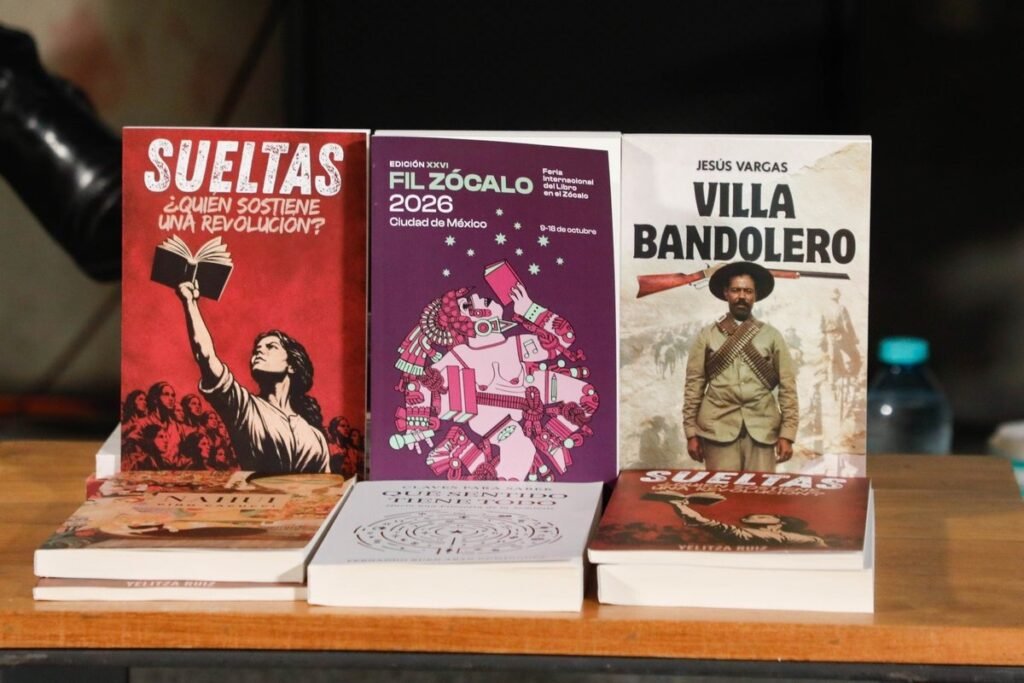
The Zócalo International Book Fair Ended; Nearly 2 Million People Attended, Paloma Saiz Says
Its director says booksellers sold like never before and younger readers flocked to the fair, which gave away some 40,000 free books in 10 days.
-
Mexico Demands US Investigate the Death of a Mexican National in Laredo; 18 So Far in the Trump Era
The SRE will file a complaint with the Webb County prosecutor and press for consular access to immigration detention centers after the latest death.
-
Mexico on the Verge of Leaving the Hunger Map
The FAO says that while many countries put corporations above the common good, Mexico is doing “the exact opposite”: more than 8 million people left poverty.