President Sheinbaum Formalizes New Guanajuato Ejido, Closing Agrarian Conflict of More Than 80 years
This article by Luis M. López originally appeared in Publimetro on January 18, 2026.
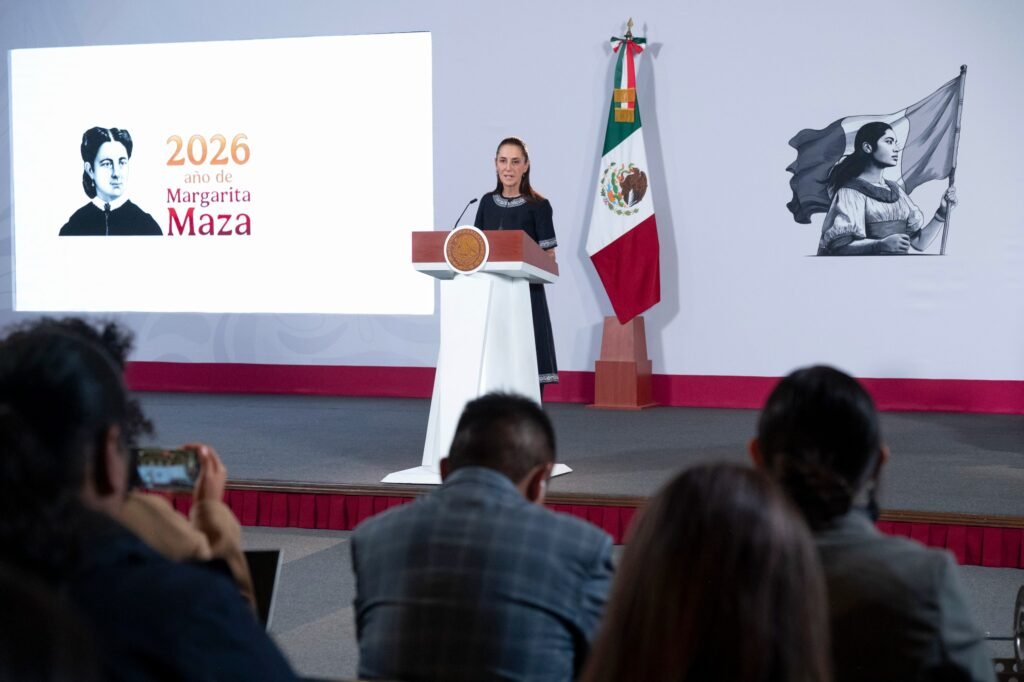
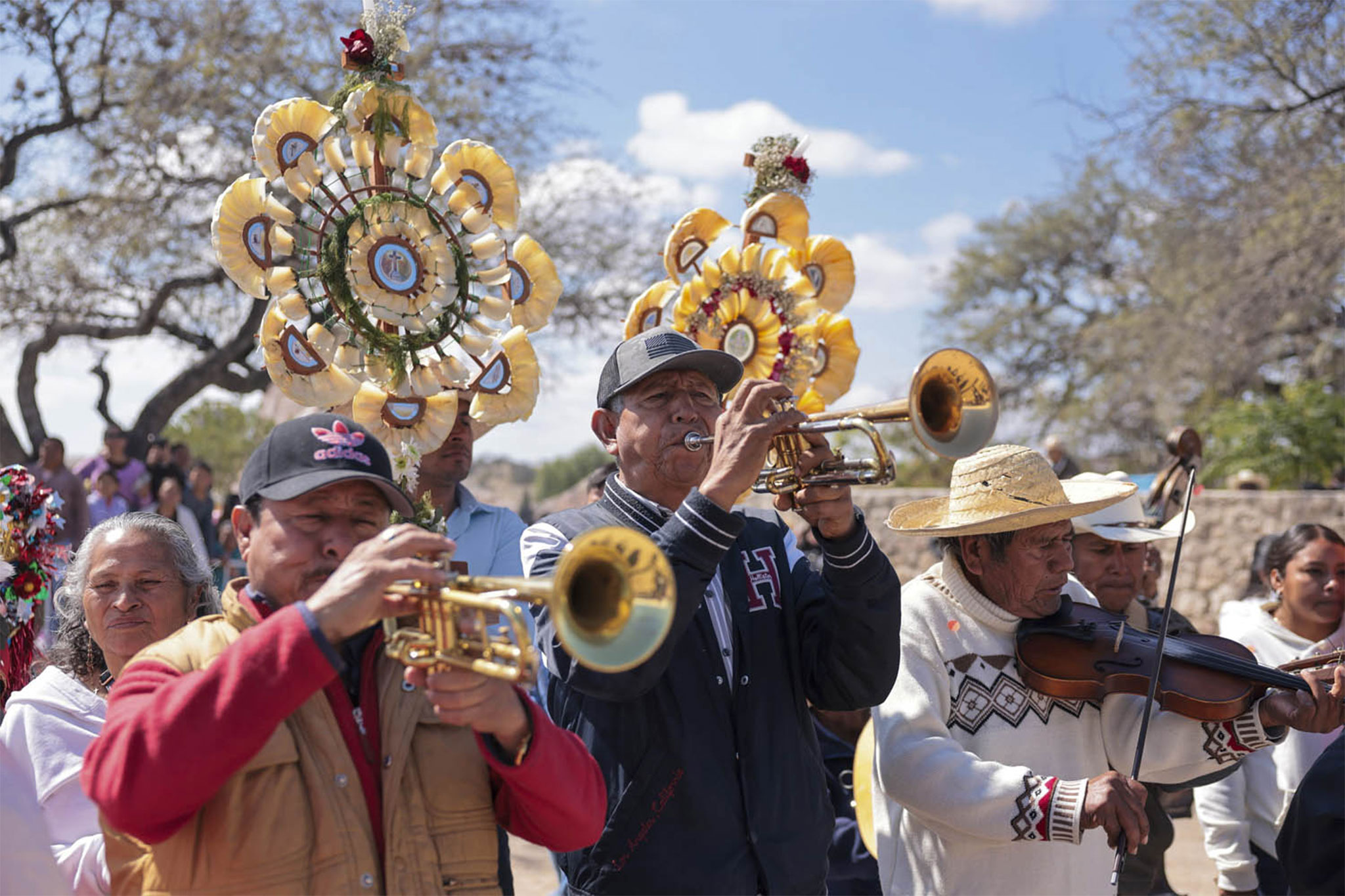
Mexican President Claudia Sheinbaum Pardo led the presentation on Sunday of progress on the Justice Plan for the Chichimeca and Otomí peoples of Guanajuato and the semi-desert of Querétaro, an event in which she delivered the agrarian documentation that gives legal life to the ejido Nuevo Cruz del Palmar, thus ending a territorial conflict of more than eight decades between the communities of La Petaca and Cruz del Palmar.
“This is a peaceful resolution to a historical conflict, and a debt that the Mexican State owed to these communities,” President Claudia Sheinbaum said.
During her message, the President described the creation of the new agrarian community as a “peaceful resolution of a historical conflict,” and linked it to the constitutional recognition of Indigenous and Afro-Mexican peoples approved in 2024, within the framework of the so-called fourth transformation.

At the event, held in the community of La Cruz del Palmar, in Guanajuato, the president stressed that the so-called justice plans cannot remain only on paper, but must be translated into concrete actions for Indigenous peoples.
President Sheinbaum declared, “That is why justice plans are made, because it is not enough for it to remain in the letter of the Constitution; the government has the obligation to do justice for the people.”
She explained that this justice is built by working directly with the communities, recognizing them, and jointly deciding what they need, the first step being the recognition of their ancestral land. “That is why we are so pleased to be delivering this document today,” he said, referring to the agrarian file that gives legal standing to the new ejido.

At the event, Sheinbaum presented the ejido commissioner with the basic file and the current register of ejido members, documents that formalize the legal existence of the Nuevo Cruz del Palmar ejido, which has an area of 569 hectares.
In an interview on site for Publimetro, Sabino Ramírez Infante, a resident and historian of Cruz del Palmar, recounted that the origin of the problem dates back to the agrarian reform era, when a portion of the land was left unregulated.

“When we tried to move forward, representatives linked to the ejido process were murdered more than eight decades ago. We waited 87 years for this great moment,” he said, referring to the creation of the new ejido.
The presidium included federal and state authorities, among them Edna Vega , head of the Ministry of Agrarian, Territorial and Urban Development (SEDATU), and Adelfo Regino, director of the National Institute of Indigenous Peoples (INPI), as well as traditional authorities from Indigenous communities in the region.
Investment & Pending Issues of the Plan
The INPI reported that the Justice Plan has accumulated more than 700 million pesos in investment, with actions in areas such as territory, sacred sites, well-being and infrastructure, in addition to agreements for the installation of community houses for Indigenous languages and technical tours for artisan paths.
With the delivery of the agrarian file, federal authorities brought to a close one of the oldest territorial conflicts in the region and formalized the birth of a new community with full legal recognition.
-
Jáuregui’s Defense Demands That Mexico’s Attorney General Summon Governor Maru Campos to Say What She Knows About the CIA
His lawyer says all the evidence points to the late state investigations chief, and that Campos changed her version of what she knew on Latinus.
-
People’s Mañanera October 21
President Sheinbaum’s daily press conference, with comments on Pemex, fuel theft, Jalisco’s water crisis, missing persons, and the lie detector.
-
Jáuregui’s Arrest Does Not Close the CIA Case in Chihuahua; Morena Demands Broader Investigations
Morena leader Ariadna Montiel holds Governor Maru Campos politically responsible and says ex-prosecutor Guillermo Zuany must also face justice.