STRIKING TEACHERS LIBERATE HIGHWAY TOLLBOOTHS
This article by Alexia Villaseñor and César Arellano appeared in the May 20, 2025 edition of La Jornada, Mexico’s premier leftist daily newpspaper.
What are the CNTE’s Demands?
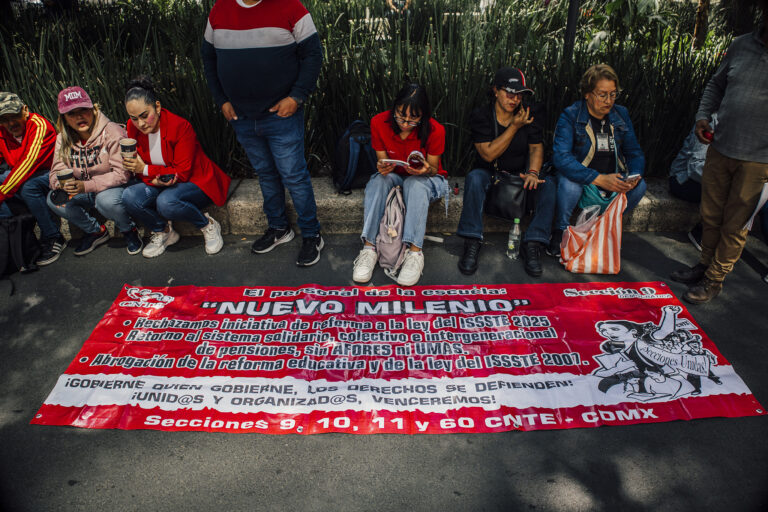
Immediate repeal of the 2007 ISSSTE Law; restoration of a solidarity-based, collective, and intergenerational pension system; the full recognition of retirement based on years of service (28 for women and 30 for men); the payment of pensions based on the minimum wage rather than on UMAs; the elimination of AFOREs as a privatization model (AFOREs are private companies who managed pensions as individual accounts, extremely restrictive and profitable for finance capital); and a profound restructuring of ISSSTE to restore its social character.
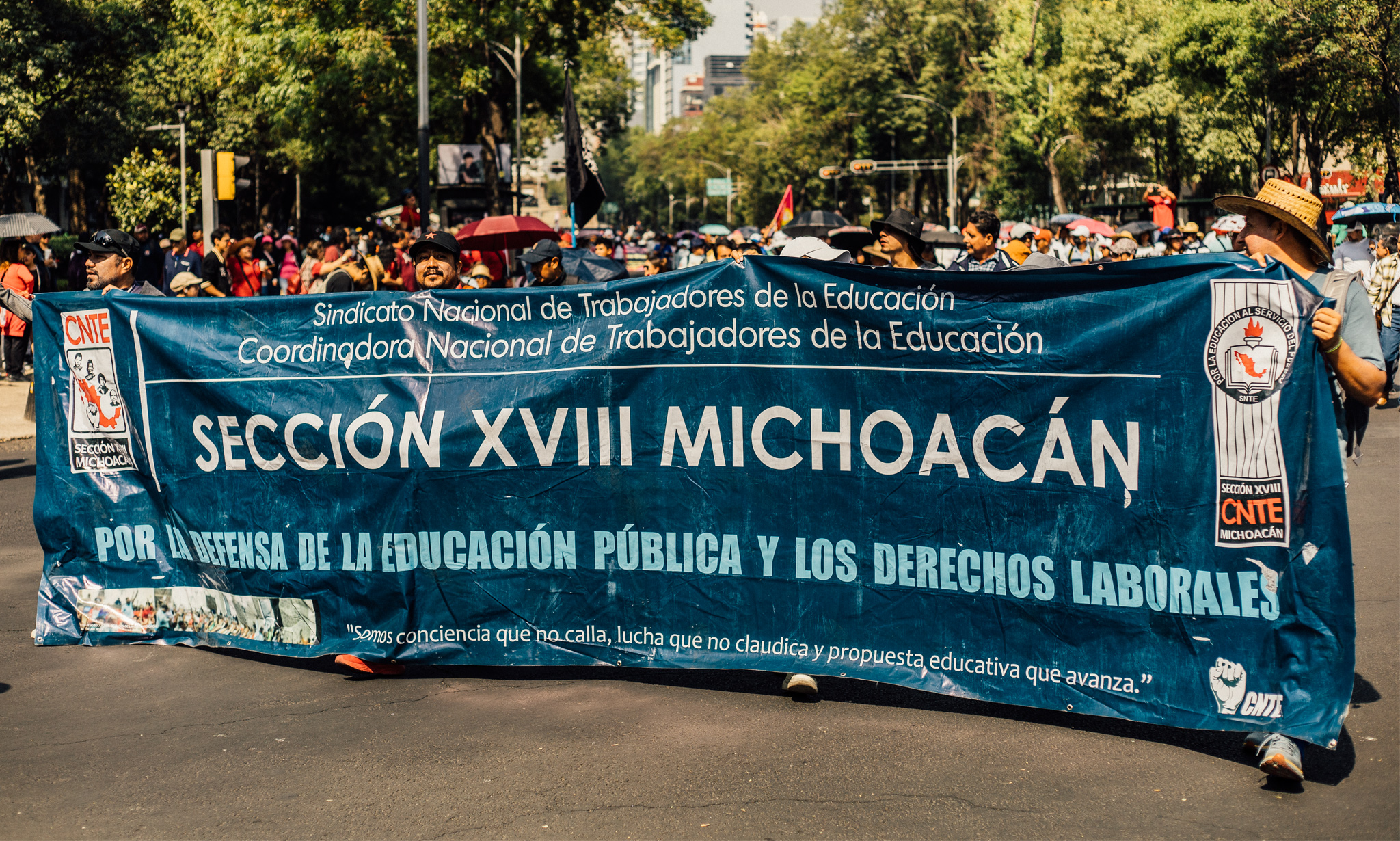
Hundreds of dissident teachers, affiliated with the National Coordinator of Education Workers (CNTE), gave motorists free passage for five hours at the toll booths in San Marcos (Mexico-Puebla), Tepotzotlán (Mexico-Querétaro), and Tlalpan (Mexico-Cuernavaca), on the fifth day of actions carried out in the context of their national strike.
Pedro Hernández, leader of Section 9 in Mexico City, who was at the Tlalpan booth, said that Education Secretary Mario Delgado Carrillo informed them that President Claudia Sheinbaum is open to dialogue, “the problem is that it hasn’t materialized. They tell us there’s a willingness, but they haven’t given us a date. We’re open to negotiation.”
Shortly before 8:00 a.m., teachers raised their pens at these three entrances to Mexico City. During the demonstration, they shouted their classic slogans, including “The strike, the strike, it’s the State’s fault,” “From north to south, from east to west, we will win this fight, no matter the cost,” and “Whoever governs, rights must be defended.”
Most drivers of private cars, passenger buses, truck drivers, and motorcyclists who crossed the toll booths without paying responded with brief honks of their horns in gratitude.
After 1:00 p.m., trucks arrived at the toll booths to transport the teachers to their sit-in at the capital’s Zócalo, which had been in place since May 15.
He reiterated that the sit-in, like the strike, is indefinite, and they hope to have some response this week. He specified that it is quite difficult for teachers to be outside in the rain these days and through other inconveniences.
“It’s a tough fight, but we’re ready to reestablish dialogue and move forward with resolving the demands.”
He called on the public to show solidarity with the movement, as there are thousands of teachers in the Zócalo who need food, water, and other basic necessities that would make their stay less difficult, even if they weren’t comfortable.
He indicated that they summarized their demands in five points: repeal of the 2007 Law of the Institute of Security and Social Services for State Workers (ISSSTE), annulment of the 2012 education reform, a salary increase above what was announced, union democracy, and social justice.
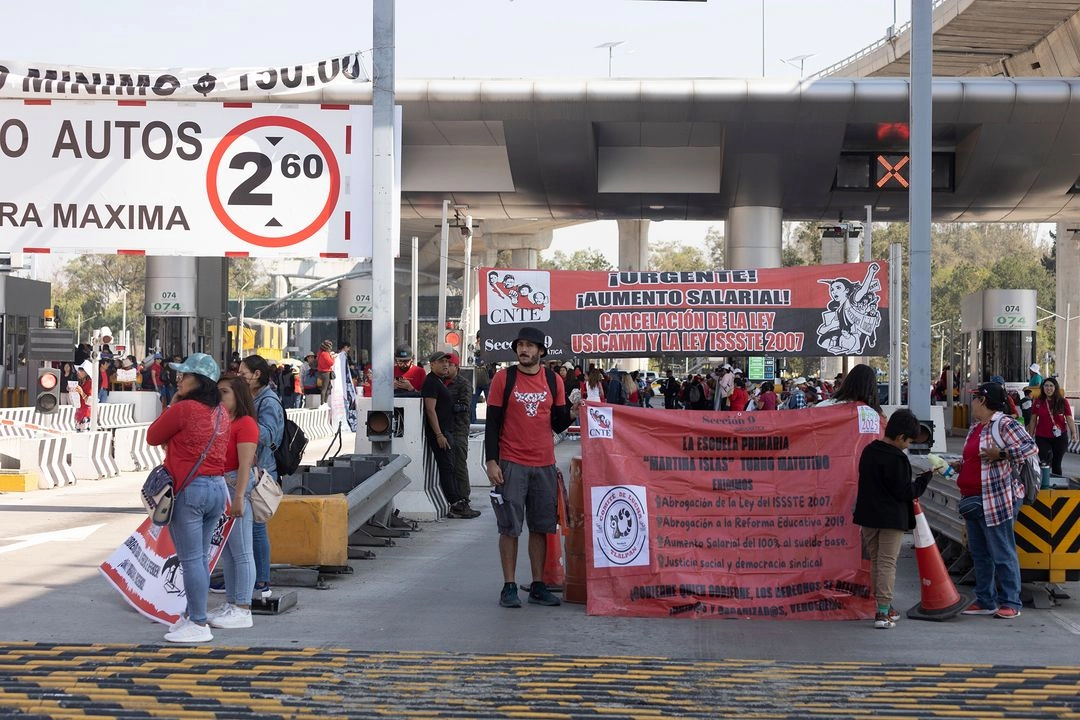
Sections 22 from Oaxaca and 7 from Chiapas were present at the San Marcos booth. Teacher Yenni Aracely Pérez, leader of Section 22, explained: “We understand that not everyone welcomes our activities, but we do so in response to just demands.”
Regarding free admission at the toll booths, Hernández said he doesn’t have figures on how much they affect the government financially, but in the case of the Mexico-Cuernavaca toll booth, it’s one of the most expensive, more than 150 pesos, and is very busy.
In the evening, the CNTE held its National Representative Assembly to determine the action plan for the following days.
-
Labor | News Briefs | Photos
CNTE Strike Day 3: Teachers vs Privatized Pensions
Photos of the Mexican teachers actions at private banks in Mexico City which manage workers pensions, whether anyone wants them to or not.
-
CNTE Teachers Will Protest at Privatized Pension Companies
Today is the third and final day of the 72-hour teachers strike.
-
CNTE Rejects “Delaying Talks” with Education Secretariat; Insists on Dialogue with President Sheinbaum
Teachers said they had met several times with President AMLO, who told them the ISSSTE Law couldn’t be repealed because they didn’t have a majority in Congress, “now they tell us it’s because there are no resources.”