
The 20-year Plan Placing Work at the Center of Mexico City
This article by María del Pilar Martínez originally appeared in the April 7, 2026 edition of El Economista.
The Secretary of Labor and Employment Promotion (STyFE) , Inés González, convened an open dialogue to chart the course of labour relations for the next two decades. The event, “Unionism for the Future of Mexico City,” was presented not only as a space for academic analysis, but also as the foundation for the twenty-year General Government Plan.
The premise guiding this effort, González said, is that labour and unionism cannot be left behind in urban planning, but must be established as the central axis of a city in constant revolution.
The institutional vision was reinforced by Dr. Beatriz Corina Mingüer Cestelos, executive director at the Institute of Democratic Planning and Foresight, who highlighted that this plan is a living document that seeks to break the logic of six-year government periods to think in the long term.
Mingüer emphasized a fundamental shift in the city’s strategy: the creation of a specific transformation plan for labour, recognizing that the working class is the priority group in Mexico City. According to Dr. Mingüer, the primary objective is for every resident to see themselves reflected in this participatory democracy project, where strengthening union organization and defending labour rights will be the pillars shaping the policies and programs of all city agencies for the next two decades.
Secretary González invited lawyers, academics, and union leaders to define the role of unionism in the future. “Given a landscape where artificial intelligence and accelerated technological change are redefining the concept of employment, the forum seeks to develop proposals that respond to the technological transition without dehumanizing work. The goal is to integrate automation and new forms of employment, such as work on digital platforms, within a framework of rights that guarantees stability and fairness in the relationship between employers and workers,” she emphasized.
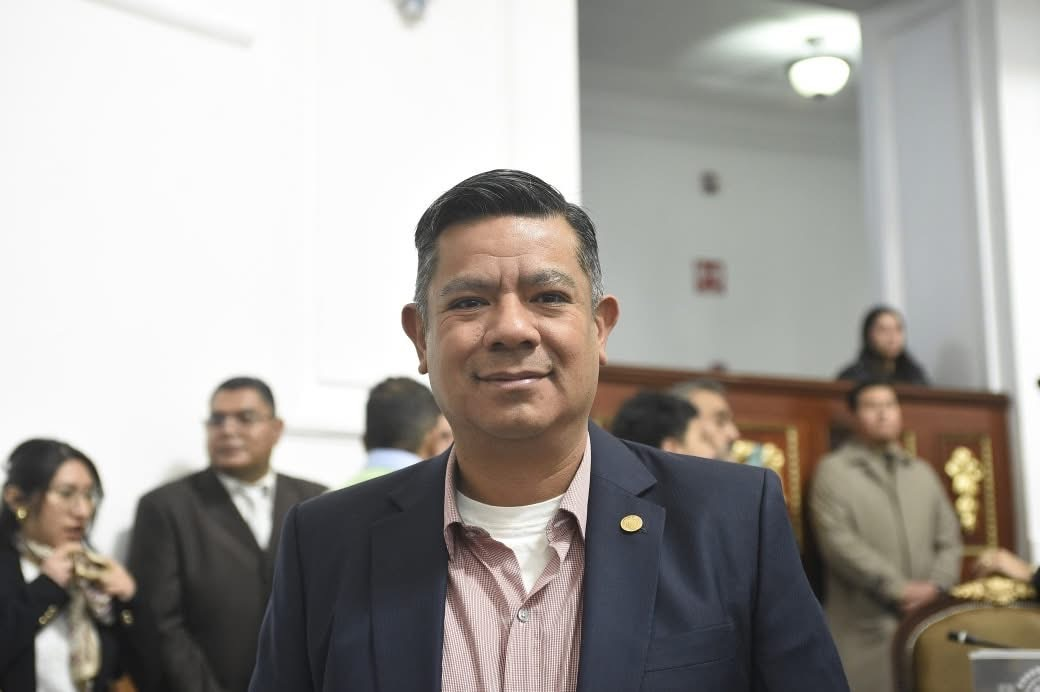
This effort was further supported by the legislative perspective of Juan Rubio Gualito, a member of the Mexico City Congress, who emphasized the need to translate these visions into the capital’s legal framework. During his remarks, Rubio Gualito pointed out that achieving real transformation requires legal frameworks that evolve alongside society, asserting that the primary objective should be to consolidate laws that not only regulate but also actively protect the dignity of those who drive the city’s economy. In his words, efforts must be made to ensure that every worker has the certainty that their voice and rights are safeguarded by a government that understands modernity not as a replacement for human beings, but as a tool for their well-being.
Inés González emphasized that a labour policy is meaningless if it ignores sectors facing special circumstances, such as people with disabilities and other vulnerable groups who have historically encountered barriers to formal employment. “The goal is to consolidate a city where men and women participate equitably in an economy that is evolving impressively, ensuring that no one is left behind in building this new model.”
Ultimately, the importance of this moment lies in the Open Parliament process, where the ideas gathered will be transformed into a binding law for future administrations. The Secretary emphasized that this is an unprecedented opportunity to contribute directly to the Mexico City plan.
-
The USMCA is Causing a Decline in Mexican Agriculture
What can the phrase “Without corn, there is no country” mean when domestic corn production is on its last legs in the face of US dumping and the state’s inability to fight neoliberal free trade?
-
Mexican Government Expands Free Internet Network
As of the end of February 2026, CFE’s infrastructure already reached a total of 109,431 points installed in various public spaces, strengthening access to digital services.
-
“The world and history will judge the silence of nations in the face of these crimes”
Statement from the Embassy of the Islamic Republic of Iran in Mexico on President Trump’s threat of genocide.