UNAM Launches Muralist David Alfaro Siqueiros Exhibit
This article by Merry Macmasters originally appeared in the January 27, 2026 edition of La Jornada, Mexico’s premier left wing daily newspaper.
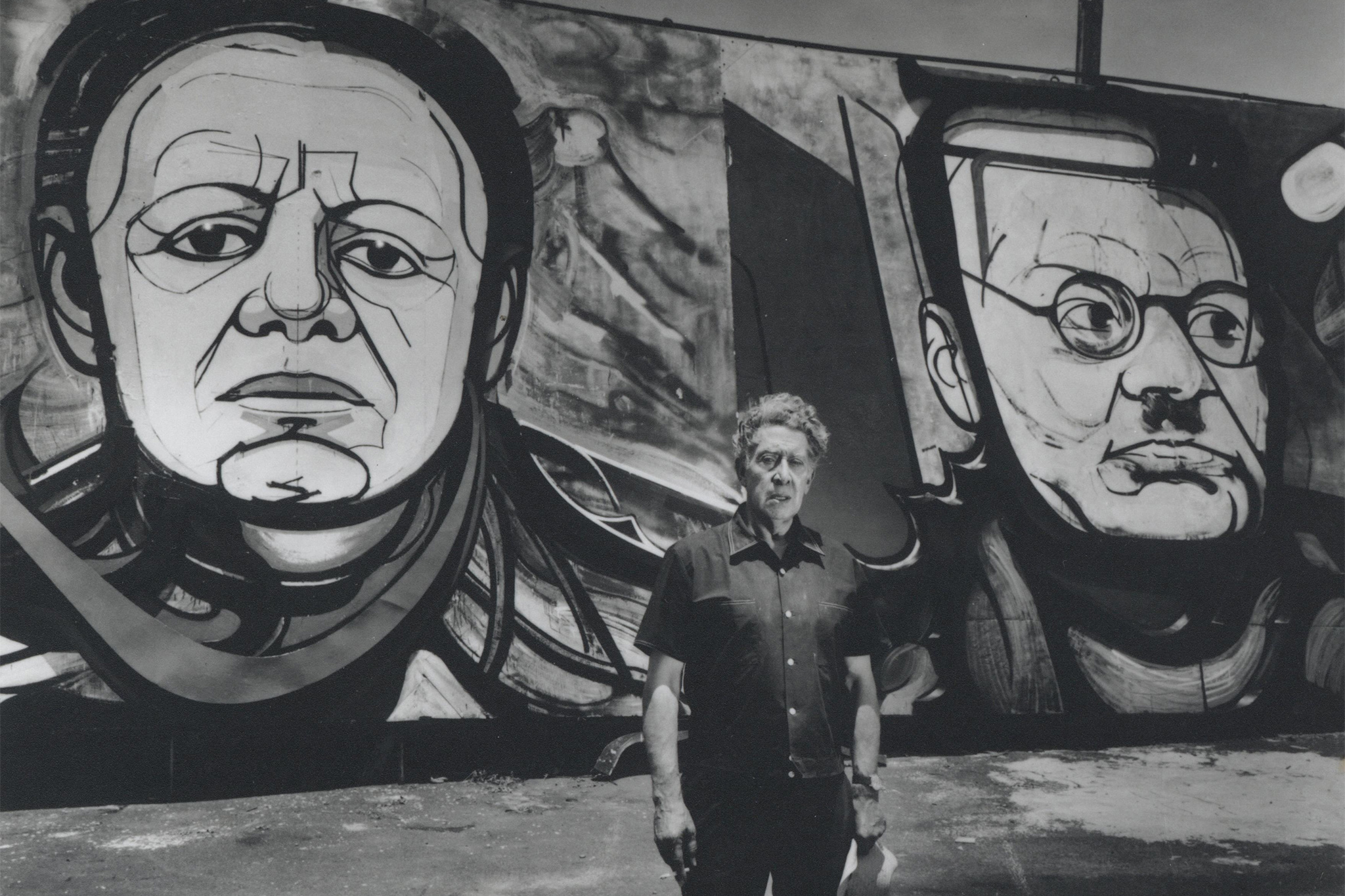
The life of muralist David Alfaro Siqueiros (1896-1974), related to the great social movements of three-quarters of the 20th century, including several imprisonments in Lecumberri Palace, will serve as bait to attract the attention of young people and the general public towards research and the importance of safeguarding documents.
The exhibition Siqueiros, Imprisoning the Flame: Traveling Exhibition of the General Archive of the Nation, of around 30 writings, such as the “public version” of the file prepared on the occasion of his last confinement, in 1960, accused of the crime of “social dissolution”, and of photographs, will open on February 4 in the Teresita de Barbieri Library of the Institute of Social Research (IIS), of the National Autonomous University of Mexico (UNAM).
The exhibition was originally organized by the General Archive of the Nation (AGN) in 2019, and consisted of more than 200 documents.
The exhibition aims to spark young people’s curiosity and “foster a connection that leads them not only to consult and use secondary sources, but also to research primary sources in archives such as the AGN,” says Karina Villegas Terán, who coordinated the exhibition with Jorge Alberto Mejía Ruiz, head of the IIS library. The figure of Siqueiros, his intellectual and political trajectory, and above all, the aesthetic power of his work, “provide us with an exceptional opportunity to generate this connection.”
Imprisoning the Flame offers a chronological and thematic reading of moments in the life of the artist and activist that are “intimately linked to his admissions to Lecumberri, as well as to the political and social life of the country.”
Photographs included in the book They Called Me the Colonel show a young, revolutionary Siqueiros. The exhibition continues with his involvement in the Spanish Civil War, through images captured during his participation on the Republican side.
There are also records, upon his return to Mexico, of his imprisonment for his role in the failed assassination attempt against Leon Trotsky.
The main focus of the exhibition is on the 1950s and 60s, with images mainly of the railway movements, the arrests of leaders such as Demetrio Vallejo and, finally, his imprisonment in 1960 which earned him four years in Lecumberri prison until he received a presidential pardon in 1964.
“From our perspective, young people are sometimes distanced from art and libraries, which they see as something foreign. Bringing this exhibition here allows visitors to handle documents such as the file from his last prison stay, and also to explore the library specializing in social issues.”
The historian adds that the exhibition not only addresses Siqueiros’s time in prison, but also serves as a “pretext for learning about 20th-century Mexican history. By reviewing the artist’s story, we also learn about the life of the country.”
For Villegas Terán, the muralist is “the embodiment of art brought into the politics of the nation’s reconstruction after the Mexican Revolution.” Like other figures of the last century, he had a cause: “to serve the country. We want to attract young people so they can learn about this.”
According to Mejía Ruiz, the exhibition is a way to “bring Siqueiros back to the university.” He notes that Siqueiros is the author of the mural New University Symbol (1952-1953), located on the east façade of the Rector’s Tower at University City, which was restored last year to improve its physical stability and recover its aesthetic appeal. Mounting an exhibition is a way to “energize” the library and, consequently, the entire IIS (Institute of Social Research).
Talía Santana Quintero, the institute’s technical secretary, notes that its library is specialized; therefore, “sometimes young people feel intimidated to approach it.” An exhibit invites them to take photos and see the artist not only in a “vulnerable state,” but also in a state of “joy, painting and writing.”
Siqueiros, Imprisoning the Flame will be exhibited from February 4 to March 20, Monday to Friday, from 9 a.m. to 6 p.m. at the Institute of Social Research of the UNAM (Maestro Mario de la Cueva circuit, no number, City of Research in Humanities, University City).
The exhibition includes parallel activities to be announced. Admission is free.
-
People’s Mañanera March 30
President Sheinbaum’s daily press conference, with comments on investments in Fine Arts & Anthropology & History institutions, Cuba, lawsuit by Mexicans who died in ICE custody, and fuel price controls.
-
Mexico’s Mobile Consulates in the US
Such consulates perform an extremely important task, especially when the policies of the US administration under Donald Trump are becoming increasingly aggressive.
-
A Law to Protect the Dignity & Life of Women
Mexico’s General Law to Prevent, Investigate, Sanction and Repair the Damage for the Crime of Femicide seeks to strengthen the capacity of the State to protect, act promptly, investigate, as well as guarantee truth, justice and reparation for victims.