Water as a Right: Sheinbaum Reports Recovery of 5 Billion Cubic Meters
This article by Fernanda Monroy originally appeared in the September 1, 2026 edition of Contralínea, a leading Mexican investigative journalism magazine.
More than 5 billion cubic meters of water have been recovered from private concessions following the reform to the National Water Law—an amount sufficient, according to President Claudia Sheinbaum Pardo, to supply more than 90 million people for a year.
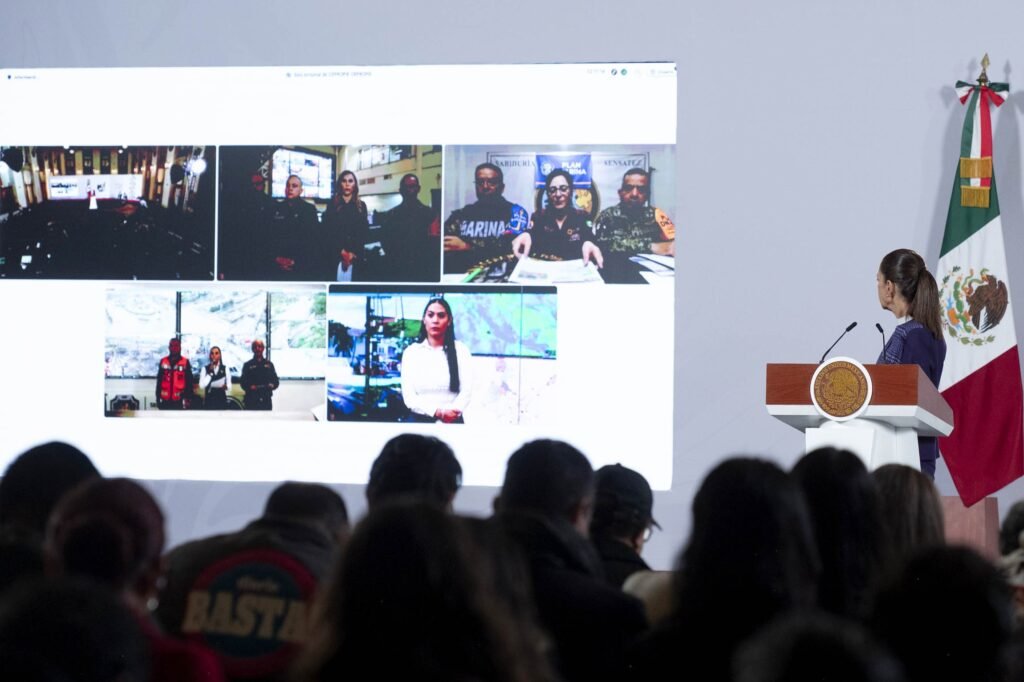
During the presentation of her Second State of the Nation Report, the President explained that the reform, published in December 2025, changed the way the federal government conceives of water resources: water ceased to be treated as “a commodity” and came to be recognized as a human right and a resource belonging to the nation.
She also recalled that for decades water was subjected to a logic of privatization that had profound consequences for the country. “We have spoken a great deal about what the privatization of energy resources meant for the country, but with water, turning water into a commodity had extremely serious effects.”
As a result of the reform, she detailed, the federal government granted 12,346 concession titles to communities, as well as to small and medium-sized producers. Some municipalities, she said, also regained direct access to the resource through the National Water Commission (Conagua).
Among the cases mentioned by the President were Mexicali and Tijuana, whose municipal governments now hold direct concessions from Conagua, whereas previously they had to pay private parties for water.
According to the President, the change seeks to ensure that access to water no longer depends on private interests and returns to its status as a right.
Cleaning Up Rivers and Recovering Water
President Claudia Sheinbaum stated that, in addition to recovering concessions, her administration is working on measures to clean up and restore some of the rivers most affected by pollution and environmental deterioration.
In a first stage, she reported, work is under way on the Atoyac, Lerma-Santiago, and Tula rivers, where 23 treatment plants and 282 kilometers of collector pipelines are being built and rehabilitated. Work is also being done to clean and dredge riverbeds, along with the construction of public spaces in these areas.
In parallel, she noted, cleanup efforts are being carried out on the Tijuana River in Baja California; the Nogales River in Sonora; and the La Sabana River in Guerrero.
The goal, the head of the federal executive explained, is for water policy not to be limited to bringing water to cities, but also to allow the recovery of bodies of water and to address the conditions that for years have worsened pollution and scarcity.
Likewise, she reported that the strategy includes the modernization and technification of agricultural-irrigation infrastructure across more than 250,000 hectares, distributed among 19 irrigation districts in 15 states.
She noted that this intervention has a dual purpose: to increase agricultural productivity and to free up water for human consumption. Improving irrigation efficiency means using less water to obtain greater production while, at the same time, having a larger volume available for other uses.
Infrastructure to Guarantee Supply
In addition to recovering and cleaning up the resource, Sheinbaum Pardo reported that the federal government is promoting 17 strategic projects intended to guarantee the human right to water and to reduce the risk of flooding.
Among them are the 200 kilometers of completed trunk networks of Healthy Water for La Laguna, in Coahuila, as well as the Eastern Zone Plan for the State of Mexico, which, according to the President, is 40 percent complete.
Also under way, at the same percentage of progress, is the Comprehensive Plan for the Metropolitan Area of the Valley of Mexico.
She also highlighted work on the El Novillo Dam in Baja California Sur; the Campeche Acuaférico water system; the second line of the Guadalupe Victoria aqueduct in Tamaulipas; a new aqueduct for the city of Colima; the Tunal II Dam in Durango; the Coatzacoalcos aqueduct in Veracruz; and the El Peaje–San José aqueduct in San Luis Potosí.
In Acapulco, she explained, the “Acapulco Is Transformed With You” program includes drinking-water, drainage, sanitation, and flood-prevention works. Meanwhile, in Tabasco, protection works against such events are under way.
She also announced projects about to begin, among them the Mujer Solteca Dam, to supply the city of Oaxaca; a desalination plant for Tijuana and Rosarito; a system of wells for Hermosillo, Sonora; and the Water for Guanajuato and Water for Zacatecas projects.
Likewise, Sheinbaum Pardo reported that, with resources coordinated among the three levels of government, 24,000 drinking-water and drainage works have been carried out in 2,183 municipalities across the country, aimed at improving the daily life of communities.
In this sense, the reform and the works presented by the President form part, according to her administration’s assessment, of a change in the State’s relationship with water resources. The aim, the President argued, is for water to once again serve the population and for its access to be guaranteed as a right, not as a commodity.
-
People’s Mañanera October 12
President Sheinbaum’s daily press conference, with comments on Jalisco water, the 4T, Indigenous rights, and digital disinformation.
-
The Meaning of October 12
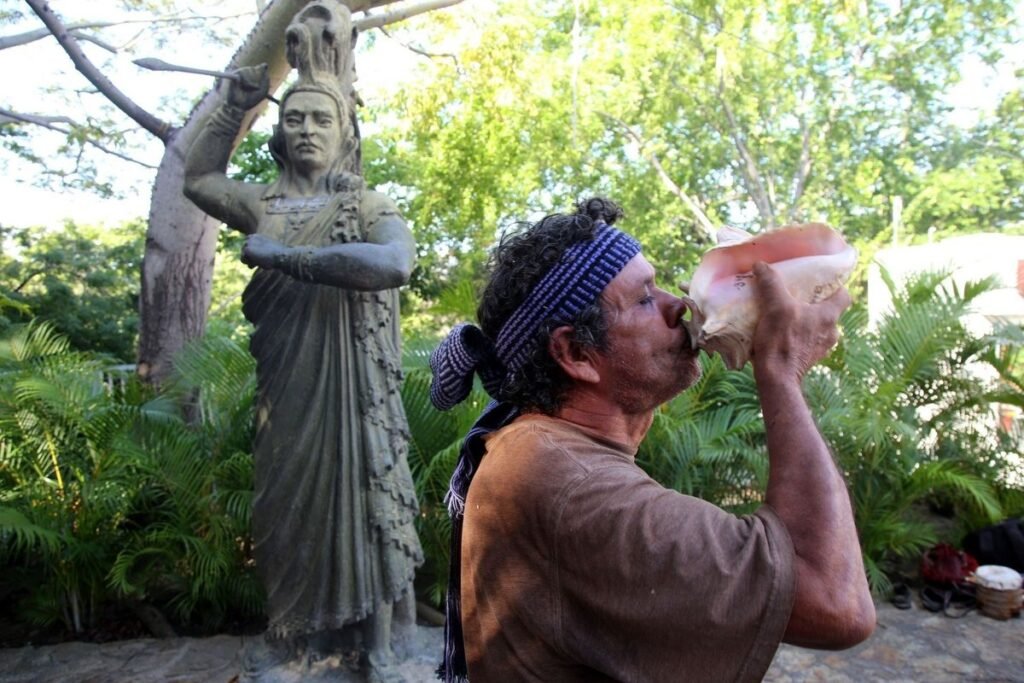
“Those lands were not empty, since they were populated by millions of native inhabitants who had lived on them for millennia,” notes Felipe Ávila.
-
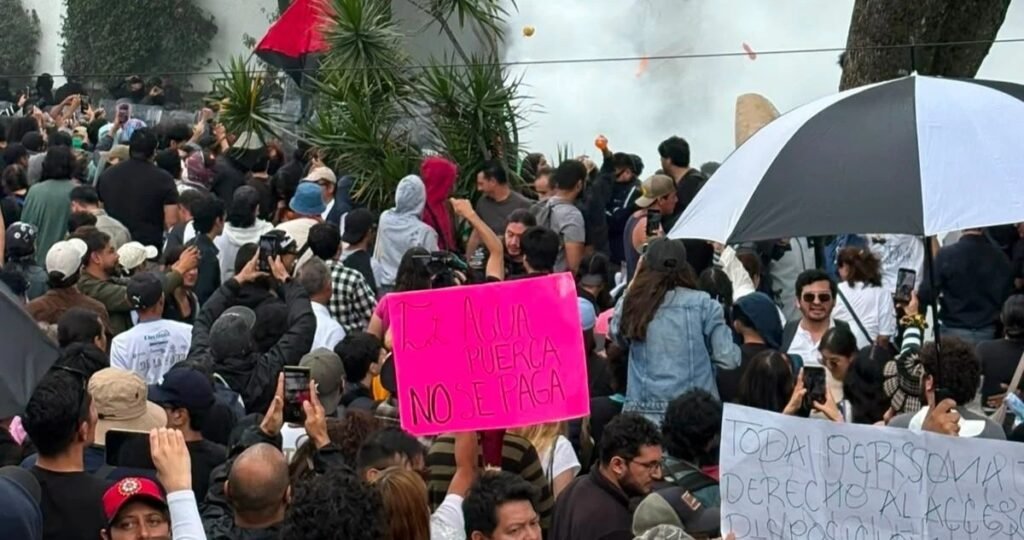
Thousands Demand Clean Water in Jalisco and Lemus Uses It to Repress Them
In Jalisco, governed by the opposition party Movimiento Ciudadano, police met the march with water cannons and tear gas, and protesters reported arrests and two people disappeared.