El Poder del Consumidor Demands Suspension of Coca Cola Christmas Caravans
This article originally appeared at El Poder del Consumidor on November 18, 2025.
El Poder del Consumidor organization filed a complaint with the Federal Commission for Protection against Sanitary Risks (COFEPRIS) requesting, as a precautionary measure, the suspension and cancellation of the Coca-Cola Christmas Caravans for violating the Regulations of the General Health Law on Advertising.
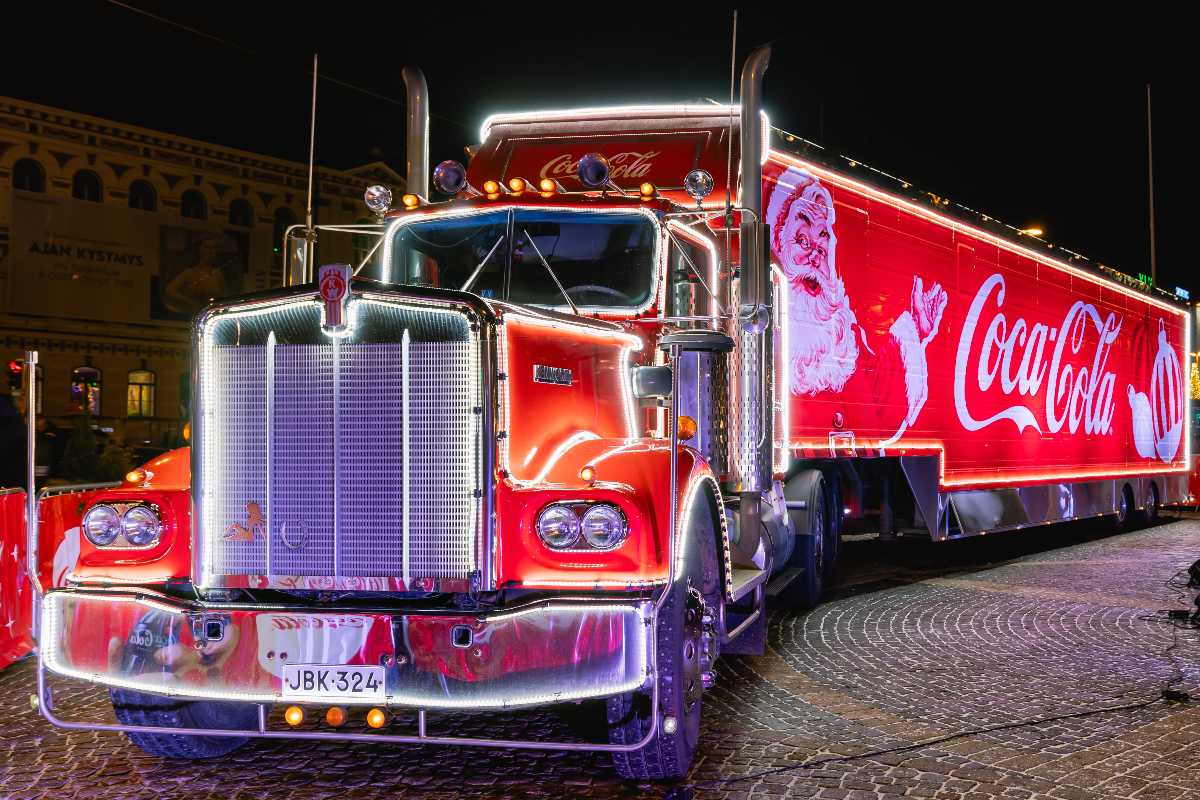
According to regulations, no product bearing warning labels or warnings may include images or elements aimed at children in its advertising, such as cartoon characters, animations, celebrities, or mascots. The company’s parades constantly feature its products alongside elements targeted at children, such as Santa Claus, polar bears, Christmas trees, and cartoons, among others, and therefore these parades should be suspended and canceled.
Coca-Cola’s Caravans are presented in Mexico as a large-scale Christmas spectacle with parades of illuminated trucks, interactive games, animated characters and Christmas mascots that travel through the streets of the country’s main cities showing its logo, its brand and its products.
Although they disguise themselves as a family Christmas parade, behind this facade, the most penetrating, aggressive and well-orchestrated advertising strategy unfolds, appropriating and capturing the festivity to achieve greater consumption of their products, especially among girls, boys and teenagers.
Recently, studies by various experts were presented demonstrating how Coca-Cola’s Christmas Caravans are a form of advertising that:
- Maximum penetration by capturing cultural elements, festivities and symbols, which together with marketing strategies , take advantage of the early stage of development and, therefore, of the lack of cognitive tools of children to recognize persuasive intent.
- It creates an emotional connection by fostering an affective bond, internalizing it and associating it with values, positive feelings, recognition, belonging, and social validation, which increases loyalty to the brand/product.
- It normalizes and legitimizes the brand by collaborating with government actors and institutions, giving it a symbolic seal of approval that generates a false perception of validity towards the Caravans; however, the authorities are the ones who must protect rights and enforce the law.
Javier Zúñiga, a lawyer with the consumer advocacy group Poder del Consumidor, stated that “this type of advertising is prohibited by law. According to Article 24 bis of the Regulations of the General Health Law on Advertising, it is prohibited to use elements such as Santa Claus or animations on any product with warning labels or warning messages. For this reason, we filed a complaint with Cofepris (Federal Commission for Protection against Sanitary Risks), requesting precautionary measures to cancel the Christmas Caravans for violating the regulations.”
“Despite this provision,” Zúñiga added, “the authorities have ignored the violations. Since 2023, we have requested that various authorities cancel the Coca-Cola Caravans due to the violations of the law they represent. However, the authorities have ignored these requests, allowing children’s rights to be violated year after year.”
In Mexico, advertising for sweetened beverages and soft drinks is aggressive and pervasive, contributing to unhealthy eating patterns. “It is no coincidence that in our country, an average of 163 liters of soft drinks are consumed per person per year, one of the highest rates in the world. Scientific studies reveal that the consumption of these products causes 40,000 deaths annually. Currently, one in three new cases of diabetes are associated with sugary drinks, and one in seven is related to cardiovascular diseases,” stated Liliana Bahena, coordinator of El Poder del Consumidor.
Children are also major consumers of soft drinks and sweetened beverages, with over 90% consuming them regularly. Several scientific studies confirm that consuming one can a day increases the likelihood of developing obesity by 60%, and increasing to two servings raises the risk of developing diabetes by 26%. Furthermore, drinking cola in children under 12 years of age is linked to weak bones, cavities, cognitive disorders, depression, and other behavioral problems.
“The law is very clear: any product that contains one or more warning labels or warnings cannot include images or elements aimed at minors in its advertising, such as children’s characters, animations, cartoons, celebrities, or mascots. At the Caravans, we can see that they use floats, polar bears, Christmas animations, and other elements clearly aimed at children to advertise their products. All of this is prohibited by law, and it is necessary for COFEPRIS (Federal Commission for Protection against Sanitary Risks) to take action against these violations,” stated Javier Zúñiga.
Therefore, COFEPRIS should not allow the Coca-Cola Christmas Caravans; otherwise, it would be permitting advertising activities without the corresponding permit and despite the express prohibition of the Regulations of the General Health Law on Advertising.
-
“I Want to Work With President Sheinbaum,” Mamdani Says; He Praises Her Policies
At the Urban 20 forum, New York Mayor Zohran Mamdani called Mexico City an international ‘inspiration’ for how it confronts the cost-of-living and care crisis.
-
Mexico Sees the US as a ‘Greater Threat’ Than China or Russia, New Survey Confirms
A Focaldata–Rockefeller poll finds 58% of Mexicans see the US as a major threat, more than double the figure for China and well above Russia.
-
Mexicana Receives Its Ninth Embraer Aircraft; Increases Its Capacity by 11.04%
Mexico’s recently nationalized airline Mexicana receives its ninth Brazilian-built Embraer E2, raising monthly capacity to 57,020 seats out of the AIFA airport.