
Mexican Legislators Approve Protection for Public Sector Union Autonomy
This article by Maritza Pérez originally appeared in the November 26, 2025 edition of El Economista.
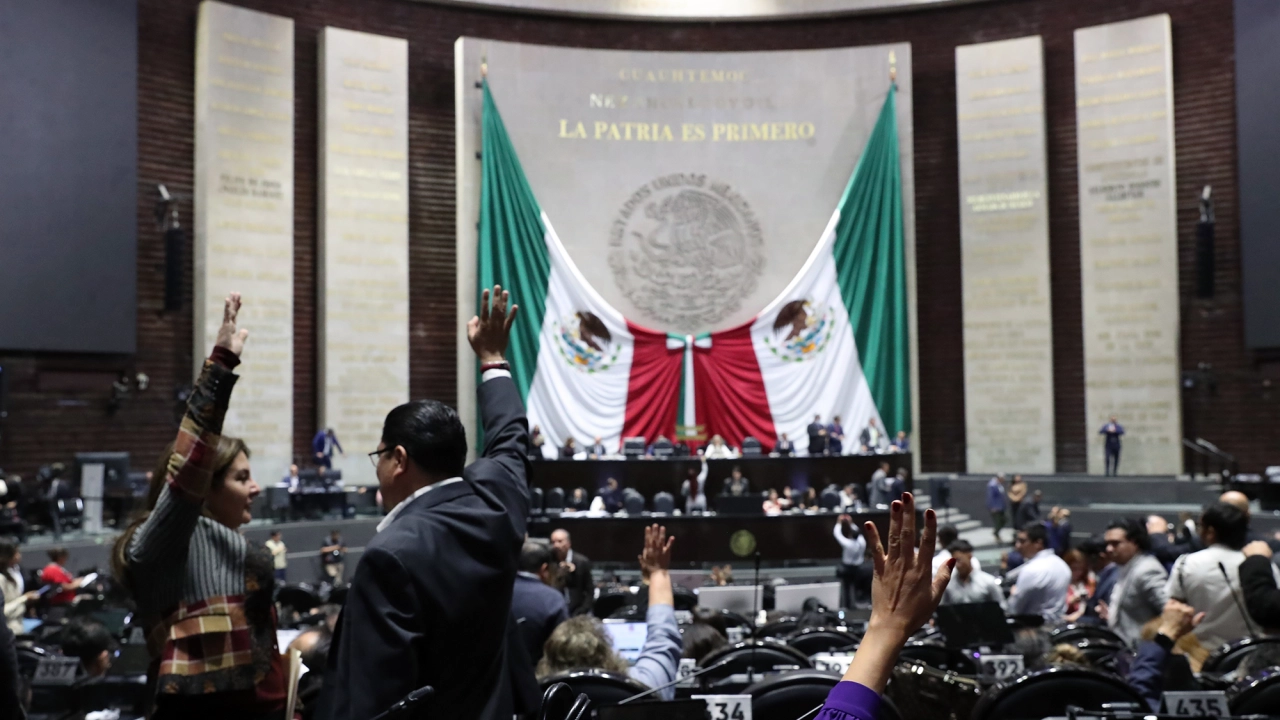
With the support of all parties, the Plenary of the Chamber of Deputies approved reforms to shield state workers’ unions from any external and governmental interference.
With 406 votes in favor, the deputies approved the project sent by the Senate that adds an article 69 Bis to the Federal Law of Workers in the Service of the State, Regulating Section B, of Article 123 of the Constitution and adds an article 64 Quater to the General Law of Administrative Responsibilities.
The above is intended to strengthen union autonomy in the law, specifically to establish that these unions must enjoy adequate protection against any act of interference by public servants in their constitution, operation, administration and free development of union elections, eligibility conditions, re-election and/or dismissal of union leadership.
Otherwise, it will be considered a serious administrative offense and must be sanctioned in accordance with the General Law of Administrative Responsibilities .
It was also detailed that acts of union interference will be understood, among other things, as coercing, inducing or threatening workers or union members to participate or abstain from participating in union campaign events, or to vote for a particular slate, leader or union; exerting hierarchical pressure or intimidation on subordinates to publicly express their support for or rejection of a particular union candidacy.
This includes forcing or conditioning attendance at union events, rallies, or meetings for proselytizing purposes; conditioning the provision of institutional services, support, licenses, or work permits on voting or supporting a union slate; offering labor benefits, promotions, incentives, or advancements in exchange for union support or votes; denying, suspending, or limiting internal rights or programs, training, bonuses, or recognition as retaliation for not supporting a particular union option.
Furthermore, using institutional programs or social support to induce or coerce union voting.
A Watershed Moment
In presenting the ruling, Deputy Sonia Rincón Chanona (Morena) highlighted that “today marks a turning point for the guarantee and progressivity of the labor rights of workers in the service of the State by safeguarding the right to free unionization and elevating union autonomy to the level of law, shielding it from harmful and corrupt interference.”
He even said that this law clearly and decisively incorporates union interference as a behavior that deviates from the honesty and probity that public servants must observe.
Meanwhile, Congressman Pedro Haces Barba (Morena), and union leader of the Autonomous Confederation of Workers and Employees of Mexico (CATEM), argued that this reform will protect unions, preventing “governments, governors, and officials from interfering in the processes of union freedom.”
He argued that unions are autonomous, so no official has the right to interfere, “as has been happening for many decades, it’s not something new, for many decades now, that governors, directors, and secretaries have interfered in union autonomy.”
He added that “without a doubt these reforms are a great step towards ensuring that workers enjoy union elections with personal, free, direct and secret voting; also that there is gender parity in the integration of their leadership and the obligation of accountability regarding the use of dues and assets.”
-
China Accuses the US of Dividing Mexico over Trade Dispute
China’s embassy described the US comments as an expression of “supremacy and hegemony” and asserted that they sought to discredit the economic cooperation between Mexico and China.
-
Sheinbaum Meets Privately with Maru Campos on Her Arrival in Ciudad Juárez
If any law was broken in the drug operation involving CIA agents in Chihuahua, those responsible, including state officials, must be prosecuted, the two agreed.
-
Beatriz Mojica: From Criticizing AMLO to Coordinating Morena in Guerrero
The senator on leave is Morena’s pick for governor of Guerrero in 2027, after a career that includes the PRD and her 2018 support for Ricardo Anaya.