A French Precedent for Mexican Workers
This editorial by Napoleón Gómez Urrutia originally appeared in the December 4, 2025 edition of La Jornada. The views expressed in this article are the author’s own and do not necessarily reflect those of Mexico Solidarity Media, or the Mexico Solidarity Project.
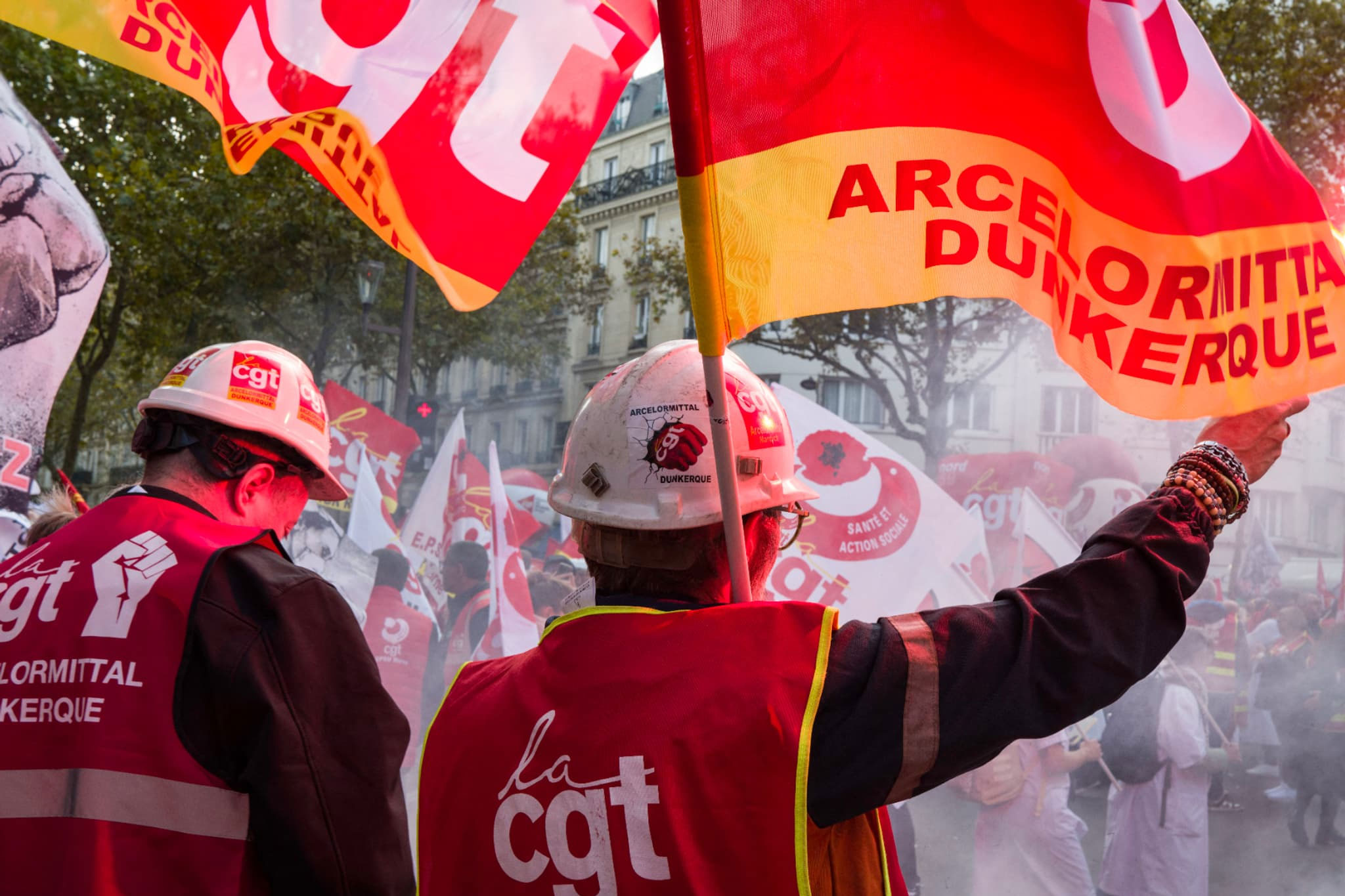
Recently, during my stay in Paris, France, in a meeting with members of the Confédération Générale du Travail (CGT), we discussed various topics, including the proposal to nationalize ArcelorMittal in France, promoted by the La France Insoumise (Unbowed France) party. This initiative is extremely interesting because it recalls the symbolic and political significance of the French Revolution; of all European countries, the French are often at the forefront of social movements, and this decision confirms that.
The idea of nationalizing the country’s largest steelmaker was approved a few days ago in the National Assembly with 127 votes in favor and 41 against. Where did this movement come from? ArcelorMittal, headquartered in Luxembourg and London, with a global workforce of nearly 200,000 employees, announced its layoff plan affecting 15,000 French workers. The proposal from La France Insoumise (France Unbowed) aims to protect these jobs while also revitalizing the decarbonization of the blast furnaces, given the difficult situation facing the European steel industry, exacerbated by US tariff policies and Asian competition.
While the French government strongly opposes nationalization, and the Senate, controlled by conservative parties, is likely to reject the initiative, this proposal raises important questions about the relationship between the state, transnational corporations, and the labour movement. Unions and left-wing political groups are convinced that nationalization is a viable way to save the steel industry and protect workers. They have promoted this measure as a direct response to the company’s downsizing plans, as their primary concern is ensuring job security and fairness for those who generate the industry’s wealth. More precisely, this proposal is a direct result of union mobilizations, which have included strikes and demonstrations in defense of jobs, highlighting the urgent need for appropriate state intervention to safeguard the steel sector and French employment.

This conflict in France reflects a global problem: multinational corporations have historically abused workers’ rights and ruthlessly exploited natural resources, generating profound social erosion that demands urgent rethinking. This is compounded by government permissiveness that sustains these labour practices. It is essential to understand that work is a fundamental part of human life: it is not just about income or material sustenance, but about entire lives that are affected. Problems within the culture of employment are social, economic, governmental, and migratory problems because they are cross-cutting. It is time to give them the importance they deserve.
Mexico can draw inspiration from this French precedent to strengthen the nation and guarantee labour rights. The fight against government permissiveness toward certain companies must be intensified, using tools such as tax, labour, and environmental audits to demand accountability, transparency, responsibility, and respect for rights. There are extremely serious cases of industrial homicide and ecocide that remain unpunished, perpetrated by national and international corporations that, regardless of the conditions under which they operate, amass wealth and profits at the expense of the exploitation—not only of labour, but also of the natural resources—of every community in which they are located.
Courageous actions, those that address structural issues and are collectively developed, can transform the economic model for the benefit of the majority.
Given this reality, such a strategy is only possible if the government acts from a true democratic principle and political will, namely, looking after the well-being of everyone, and not for particular interests.
Even in the face of the rejection of the La France Insoumise initiative, the discussion and mobilization serve as a powerful precedent and a call to reconsider business and labor policies worldwide. Looking at Mexico, history demonstrates our capacity to make strategic decisions in support of the workers’ struggle. Such is the case of the 1938 oil expropriation: a true act of sovereignty and protection of Mexican natural resources. It is therefore pertinent to engage in profound reflection, drawing inspiration from our own past and from other nations to rethink the world of work. Ultimately, it is courageous actions, those that address structural issues and are collectively developed, that can transform the economic model for the benefit of the majority. The current debate in France proves that the will for change opens new paths and possibilities for dignity, prosperity, and social, labor, and economic justice.
Napoleon Gomez Urrutia is General Secretary of the National Union of Mining, Metallurgical, Steel and Similar Workers of the Mexican Republic, and a former Morena Senator.
-
A Hundred Years After ‘La Cristiada’
“The Cristero War stands as an example of the high cost that political struggles among the elites of power can have for society when they act irresponsibly,” concludes Meyer.
-
The Normalization of the Abnormal
Palestine’s ambassador to Mexico, Nadya Rasheed, denounces the normalization of genocide in Gaza: more than 73,000 Palestinians killed, homes, schools and hospitals destroyed, water poisoned — and a world that looks away.
-
Peña Nieto Filmed Next to Controversial Israeli Contractor
Former Mexican president Peña Nieto was filmed wearing a kippah at a Jewish wedding in Italy, seated beside Avishai Neriah, the Israeli businessman an outlet accused of channeling $25M to him for Mexican government contracts, including Pegasus.