Mineros leader Gómez Urrutia says There are Those Who Want to Eliminate Unions
This article by Andrea Becerril originally appeared in the January 12, 2026 edition of La Jornada, Mexico’s premier left wing daily newspaper.
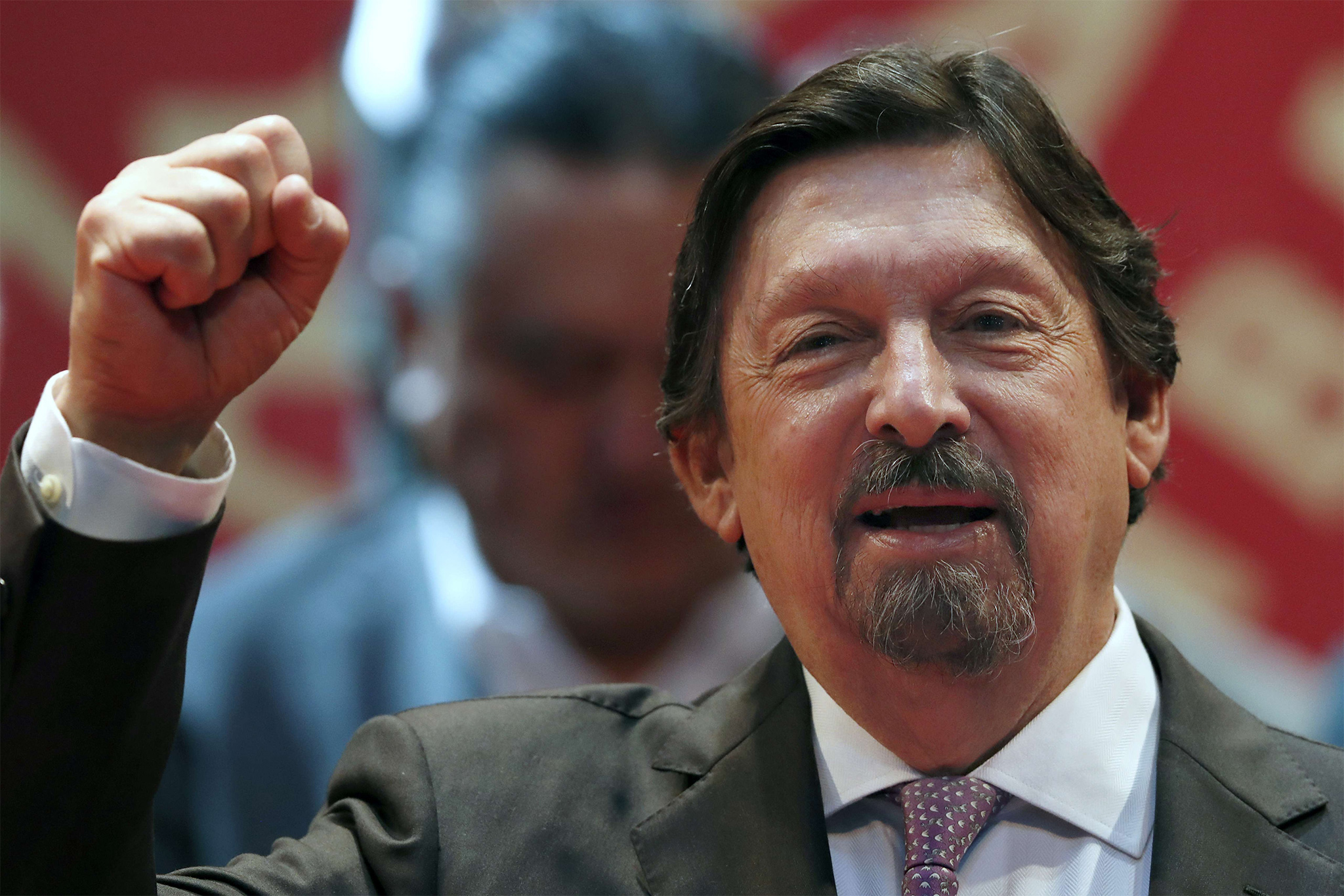
Mexico needs union leaders who understand the national and global landscape and the importance of international solidarity in order to unify strategies for fighting and defending common interests, or else there is a latent risk that they will try to eliminate these unions, warned the national leader of Los Mineros, Napoleón Gómez Urrutia.
In an interview, he detailed the results of his four-month working tour of Latin American and European nations “to position Mexico in global debates on labour, democracy and social justice,” and insisted that in the new geopolitical context, international worker solidarity is vital.
“This is something that those of us who lead unions in the country must reflect on: labour rights are no longer defined solely in national congresses, but also in international forums, in union networks and in globalized political spaces.”
To embark on this journey through Brazil, Spain, England, and France, he requested an indefinite leave of absence as a federal deputy for Morena, “but these were not months of rest, but rather of intense strategic work, of international dialogue to build labor alliances against models that harm workers.”
Gómez Urrutia added that in each country he shared recent achievements, such as wage recovery and union democracy resulting from progressive labor reforms promoted by the governments of the Fourth Transformation.
Latin America must act as a bloc
The leader commented that in Sao Paulo, Brazil, he participated in the Regional Meeting of IndustriALL Global Union, one of the most important industrial trade union federations in the world, where the defense of industrial employment was analyzed, the impact of automation was discussed, and the need for Latin America to act as a bloc to raise labor standards and avoid competition through low wages was reaffirmed.
Similarly, he met with members of the Metalworkers Union of ABC, one of the continent’s most emblematic organizations, of which the current president of Brazil, Luiz Inácio Lula da Silva, was once general secretary. They discussed the importance of union leadership with a political vision, capable of transcending mere union concerns, as well as the defense of jobs against large transnational corporations.
Once in Europe, the first stop was Spain, where he met with high-level officials, including the Second Vice President and Minister of Labor, Yolanda Díaz, with members of parliament from the Spanish Socialist Workers’ Party (PSOE), as well as with the Secretary General of the General Union of Workers (UGT), Pepe Álvarez, with whom he agreed that 21st-century trade unionism must compete for political power.
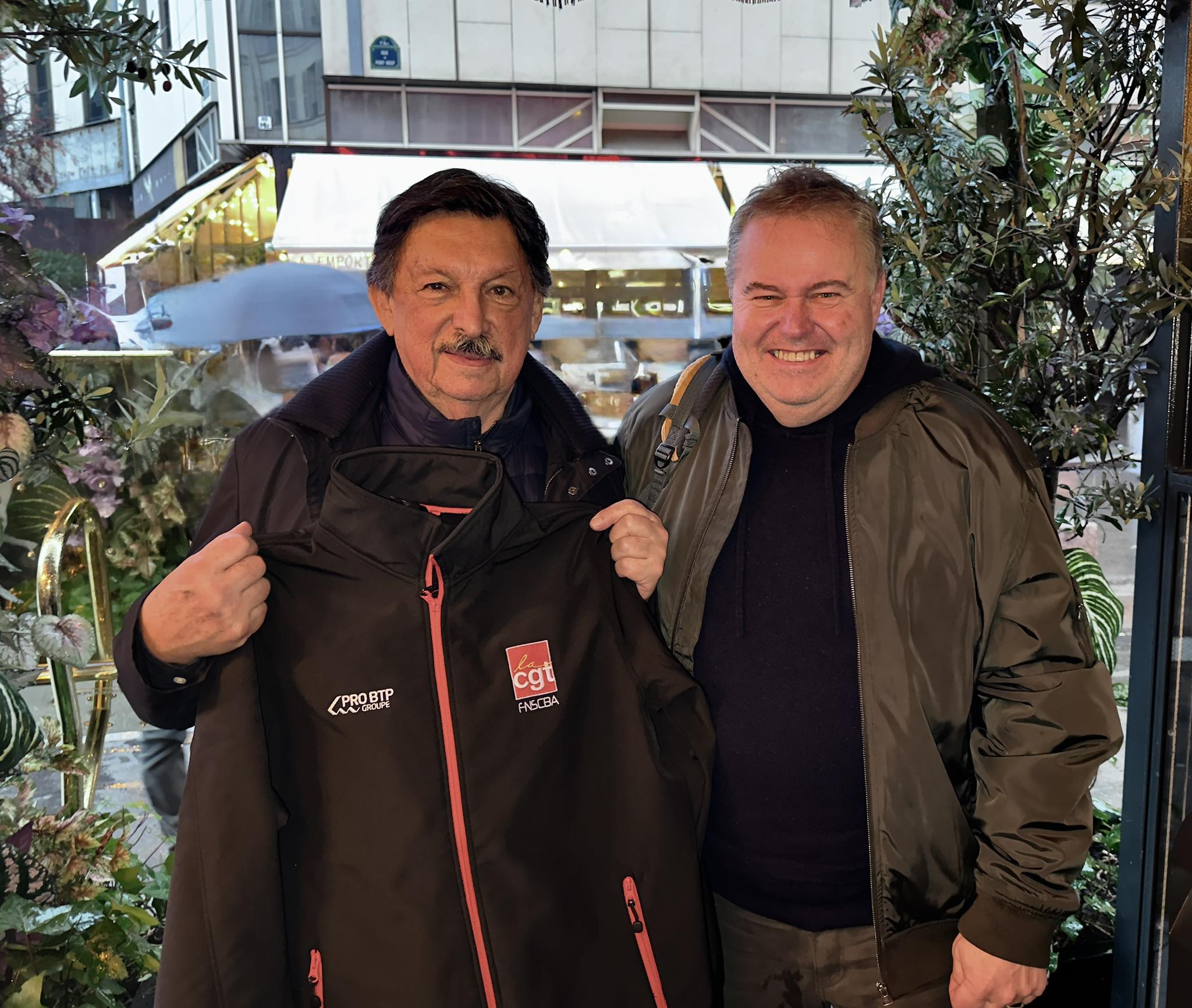
With France’s most combative trade union federation, the Confédération Générale du Travail, “we agreed that trade unionism must defend the welfare state,” while in London, England, he held meetings with political, academic and economic actors, where it was reaffirmed that trade unionism must be present in these spaces and he debated the limits of progressive parties when they move away from workers’ demands.
Gómez Urrutia stressed that during that tour from September to December of last year, he attended to express invitations from trade union organizations and returned “with greater clarity and a clearer vision of where the labor agenda should go.”
In that regard, “I call upon my fellow Mexican union leaders to strengthen international alliances and thus halt these efforts to eliminate trade union organizations.”
He noted that Wall Street business groups were the ones who pushed for workers to decide whether or not to pay union dues, as a way to weaken the organizations.
He recalled that the Cananea miners managed to withstand a strike of more than 18 years, among other things, thanks to international solidarity.
The Mining Union itself, he said, overcame the attacks and the attempt to annihilate it undertaken by former presidents Vicente Fox and Felipe Calderón, along with Germán Larrea and other of the richest businessmen in the country, “with the support of the United Steel Workers, from the United States and Canada, and many other unions around the world.”
He added that he himself lived through a forced exile of 12 years, amidst great international solidarity that allowed him to remain in the leadership of the Mining Union and carry out a judicial process that acquitted him “of fabricated charges” from the then PAN governments.
-
César Jáuregui, Maru Campos’s Former Prosecutor, Arrested in Relation to the CIA Case in Chihuahua
The CIA operated illegally on Mexican soil without the federal government’s consent; now the Chihuahua officials who allowed it are facing charges.
-
US Lifts Restrictions on Mexican Airlines
Washington revoked Order 213-2, imposed in 2025 over cargo flights moved to AIFA, reopening new US routes from both Mexico City airports.
-
“Ingeniero,” CJNG Member Who Designed and Built Narco-Tunnels, Falls in Zapopan
The Defense Secretariat says Luis Manuel “N” built drug tunnels into the US from Tijuana and took orders directly from CJNG leader Juan Carlos Valencia González.