Berdegué, Agribusiness Hatchet Man
This article by Alberto Vizcarra Osuna originally appeared in the January 22, 2026 edition of Aristegui. The views expressed in this article are the authors’ own and do not necessarily reflect those of Mexico Solidarity Media or the Mexico Solidarity Project.
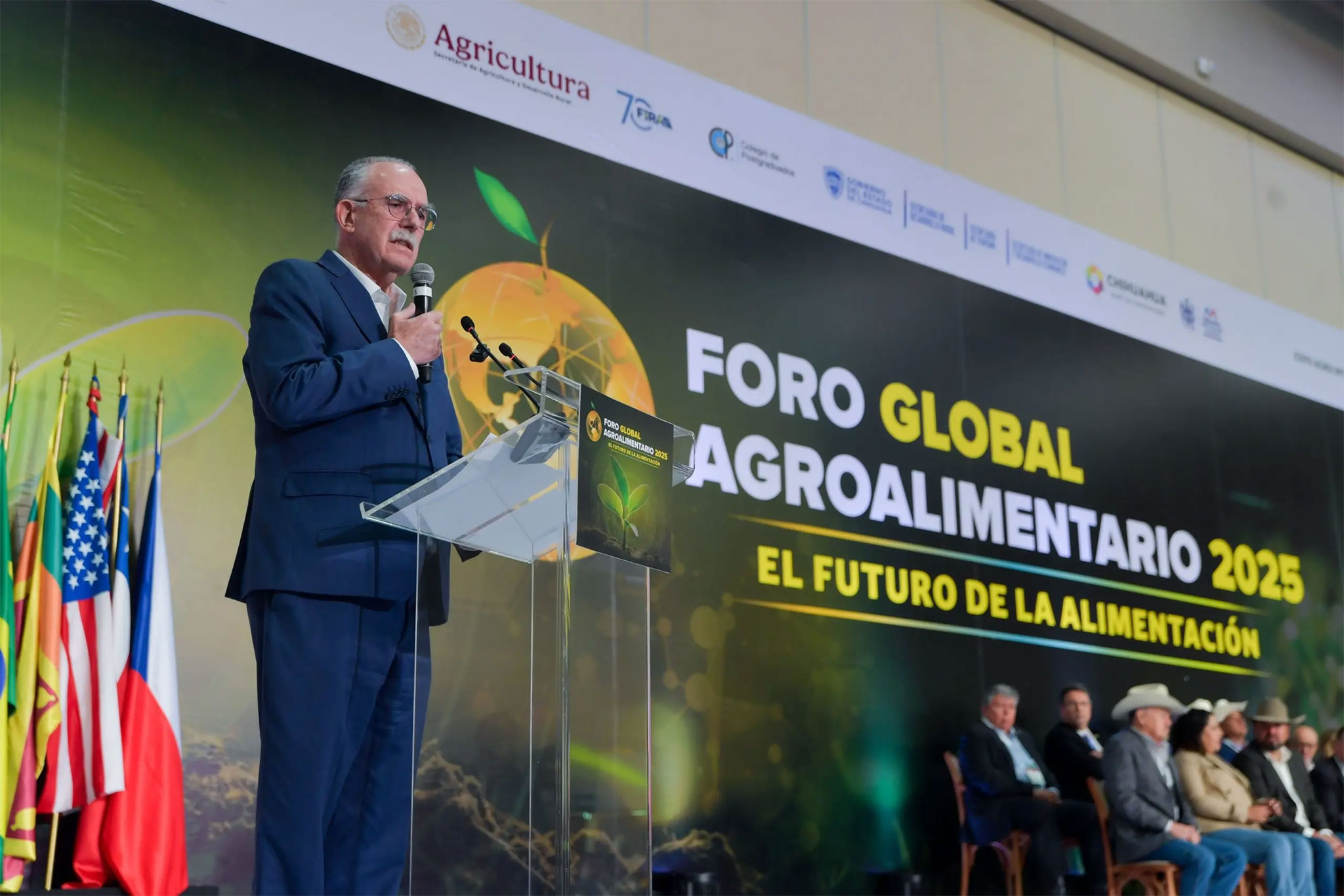
Once you hear the pronouncements of Julio Berdegué, the Secretary of Agriculture, there’s no doubt who put him in President Claudia Sheinbaum’s cabinet. His rhetoric paints him in black and white as a pawn of the large grain importers and agribusiness corporations that are steadily taking over entire swathes of the national food market.
This was evident in discussions with the coordination of the National Front for the Rescue of the Mexican Countryside (FNRCM), held last Thursday, January 15, and Friday, January 16, at the SADER headquarters in Mexico City. The FNRCM’s central argument is that, in the context of the USMCA renegotiation, the Mexican government must decide to remove staple grains from this trade agreement, given that it has been demonstrated that its design, since the signing of NAFTA, was conceived as a tool to further entrench Mexico’s food dependency, handing the national market over to increasing imports of agricultural products from the United States.
In these discussions, Secretary Berdegué, with a dogmatic air, immediately drew a line in the sand: there would be no modifications to economic policy, arguing that removing basic grains from the USMCA would entail changes the government was unwilling to make. When faced with the producers’ complaints and the documentation showing how these policies are draining domestic producers of capital and threatening to force them out of business, Berdegué remained phlegmatic, like an executioner unwilling to be moved by the victims’ emotions. He presumes to speak the truth when he admits to being a tool of an economic policy that doesn’t understand domestic producers, but rather destined them to disappear.
Mexico’s Secretary of Agriculture openly admits that the condition for maintaining the privileged position of the elite that controls the food market and agricultural exports is that Mexico not establish policies to protect domestic production of staple grains and their producers.
Every minister in a republic should be a statesman, concerned with the general welfare; even more so the one entrusted with the responsibility for national food production. This official’s personality falls far short of that ideal. He sees himself as a bureaucrat, a mere implementer of established policies, regardless of the consequences. Consequently, he submits to the regulations that keep his ministry’s budget stagnant, a budget that has not increased in the last ten years; on the contrary, it has decreased in relative terms.
The only time the Secretary loses his composure and loses his temper is when he’s challenged to rein in the agribusiness corporations and the large grain importers. That’s when he shows his true colors and presents them as untouchable, angrily declaring, “We have to respect the rules of the USMCA.”
Last October, amidst the white corn harvest in the Bajío region and the drop in corn prices on the Chicago Mercantile Exchange’s futures markets, President Sheinbaum stated that something had to be done to prevent the prices of our staple grains from remaining subject to “the fluctuations of international markets.” Since that statement, the President has not addressed this issue, which she considers contrary to the national interest.
Pressure from the US government, which goes so far as to threaten military incursions into the national territory, and the subservient personalities like Berdegué—along with others within the cabinet—have paralyzed the President and distanced her from decisions that could reverse the economic crisis and the accelerated dismantling suffered by the Mexican countryside.
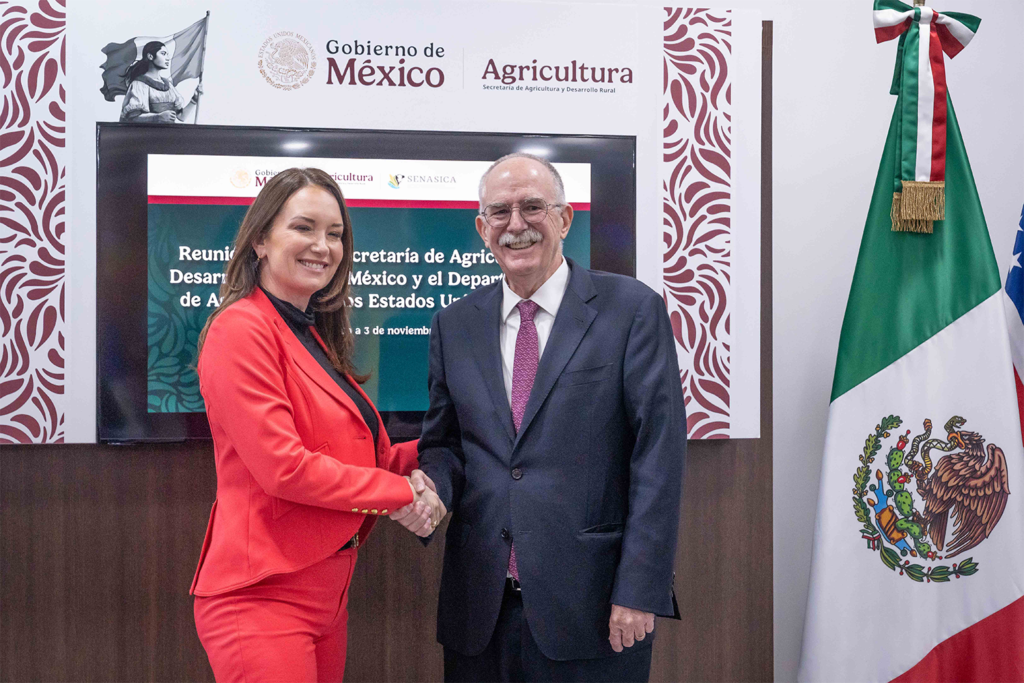
The Secretary of Agriculture and Rural Development (SADER) openly admits that the condition for maintaining the privileged position of the elite that controls the food market and agricultural exports is that Mexico not establish policies to protect domestic production of staple grains and their producers. For this reason, he opposes the demand that these grains be removed from the USMCA trade agreement. The logic is simple and fatal: we will hand over the national food market to agribusiness corporations.
Like any dogmatic man, this official is blind to the consequences and threatens producers with the specter of disaster if staple grains are excluded from the USMCA. He wants to frighten thousands of producers already living in economic hell with the prospect of disaster, unable to sell nearly four million tons of corn, beans, and sorghum from past harvests, in addition to the even larger volumes currently planted for the fall-winter cycle, which are also without a price or a market, as futures on the Chicago Mercantile Exchange continue to decline.
Berdegué’s beliefs and fears will deepen the disaster they claim to be preventing. Handing over the food market to favor agribusiness corporations is rooted in the same economic policy criteria that led the country to the 1994 debt crisis, by adjusting the national economy to the conditions imposed by investment funds and their rating agencies, which invariably recommend fiscal austerity to ensure the repayment of a public debt that grows the more it is amortized.
We are now on the verge of a new payment crisis, a result of fiscal adjustments, which will unleash social unrest. Domestic producers, along with transporters, are emerging as the natural leaders of a social mobilization with acts of resistance that go beyond mere demands, proposing alternative solutions.
There’s no need to worry too much about this bureaucrat claiming that the economic policy aligned with the USMCA is unchangeable. Reality is adept at dismantling dogmas. We should be concerned about the alternatives, so that this doesn’t lead to a disaster even worse than the current one.
-
Jáuregui’s Defense Demands That Mexico’s Attorney General Summon Governor Maru Campos to Say What She Knows About the CIA
His lawyer says all the evidence points to the late state investigations chief, and that Campos changed her version of what she knew on Latinus.
-
People’s Mañanera October 21
President Sheinbaum’s daily press conference, with comments on Pemex, fuel theft, Jalisco’s water crisis, missing persons, and the lie detector.
-
Jáuregui’s Arrest Does Not Close the CIA Case in Chihuahua; Morena Demands Broader Investigations
Morena leader Ariadna Montiel holds Governor Maru Campos politically responsible and says ex-prosecutor Guillermo Zuany must also face justice.