
In Five Years, Mexican Parasites Doubled Fortunes
This article by Clara Zepeda originally appeared in the February 23, 2026 edition of La Jornada, Mexico’s premier left wing daily newspaper.
The fortunes of Mexico’s billionaires doubled in just five years, not through individual merit, but due to an unjust economic model that depends on the labour of millions of people and the resources of the entire country, yet distributes its benefits among very few, Oxfam Mexico warned. Thus, inequality in the country is not an accident or a natural phenomenon, but rather the result of political decisions, the organization stated.
Oxfam Mexico, which is part of a global movement to end inequality with a presence in more than 80 countries, emphasized that billionaires get rich at the expense of the time, precariousness and uncertainty of millions of people.
Between 1996 and 2025, the wealth of Carlos Slim, the richest man in Mexico and Latin America and the Caribbean, for example, increased more than eight times and that of billionaires multiplied 4.2 times, while the Mexican economy did not even double in size.
Faced with an economy that exploits and steals the time of working people, subsidizes accumulated wealth, and concentrates opportunities, it is necessary to strengthen the role of the State as guarantor of rights and promoter of equality.
“Since the start of the COVID-19 pandemic in 2020, the wealth concentrated in the hands of billionaires grew by 101 percent in real terms. During that same period, Carlos Slim increased his fortune by 66 percent, while the biggest gainer among billionaires was Germán Larrea, who multiplied his fortune 2.4 times during that time,” the organization noted.
This model has been mediocre for most, but extraordinarily profitable for billionaires, who also recover more quickly from crises than the rest of society, Oxfam Mexico showed.
This extreme concentration of wealth in the country coexists with 18.8 million people without access to nutritious and quality food; 38.5 million with social deprivations or incomes below the welfare line; and 21 million women who dedicate at least one full day to unpaid care work.
“Economic inequality undermines economic activity and limits poverty reduction, erodes democracy and social cohesion, and weakens the collective capacity to address the climate crisis. When wealth is concentrated, so is the power to decide what, how, and under what conditions the economy operates,” Oxfam Mexico stated.
In the Hands of a Few
In the study: Oligarchy or Democracy. Nine Proposals Against the Extreme Accumulation of Power in Mexico, the organization pointed out that this country is one of the most unequal in the world, and this is due to the economic model that for years has favored the profitability of capital at the expense of public welfare.
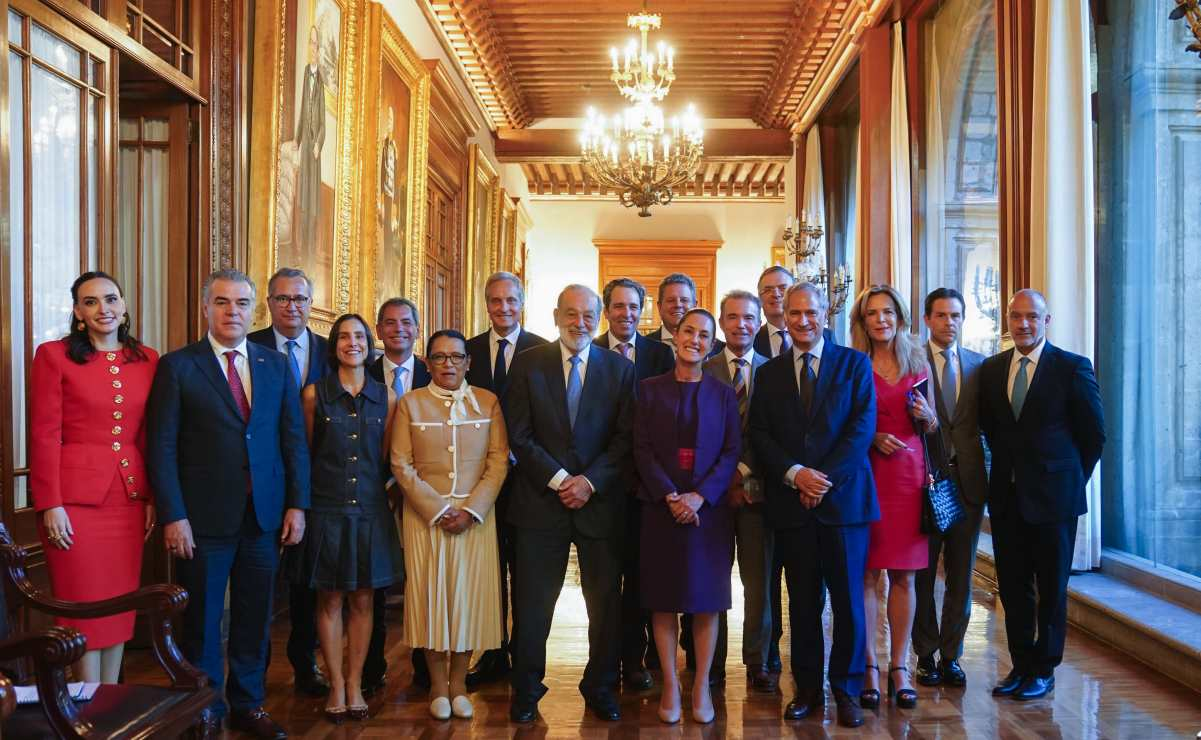
“Mexican ultra-wealthy individuals have never been so numerous or as wealthy as they are today. There are 22 billionaires with a combined fortune of 219 billion dollars, equivalent to 3.9 trillion pesos or the size of the economies of Jalisco and Guanajuato combined,” Oxfam noted.
This concentration of wealth is partly due to the fact that the Mexican economy has been characterized by a significantly higher rate of return on capital for billionaires than the overall growth of the nation’s economy. Oxfam argued that when decisions are concentrated in the hands of a few, democracy loses its meaning and transforms into an oligarchy.
This economic power inevitably translates into political power. The ultra-wealthy gain access to decision-making spaces, influence public policy, and inherit their power within dynasties lacking democratic legitimacy; and in this sense, they have also shaped the sectors in which investment is made.
“Faced with an economy that exploits and steals the time of working people, subsidizes accumulated wealth, and concentrates opportunities, it is necessary to strengthen the role of the State as guarantor of rights and promoter of equality. The key decision to achieve economic justice in the short term is the democratic mobilization of investment, for which the State needs sufficient financial, human, and institutional resources for a renewed economic policy,” he argued.
Among the nine proposals made by the organization are: mobilizing investment flows in a fair and democratic manner; making visible and correcting the fiscal irresponsibility of billionaires; and developing social infrastructure for the redistribution of care responsibilities.
-
Perception of Insecurity in Mexico Reached the Lowest Level on Record
Since 2018, when it stood at 74.9%, the figure has fallen almost 17 points, though women still feel less safe than men.
-
Morena Leader Accuses Chihuahua Governor of Slandering Her: She Represents “Corruption, Privilege, and Disloyalty”
She said Mexico deserves to know who authorized CIA agents’ role in a Chihuahua operation, after Campos linked her to drug trafficking in an interview.
-
Maru Campos Assured Me Jáuregui Was Corrupt and a Casino Owner, Sheinbaum Says
Asked who let foreign agents into the Chihuahua operation, Campos told her “it wasn’t me, it was the prosecutor,” in a tense meeting in Ciudad Juárez.