Corporatism’s Dead, Long Live Corporatism
This article by Blanca Juárez originally appeared in the February 23, 2026 edition of Sin Embargo.
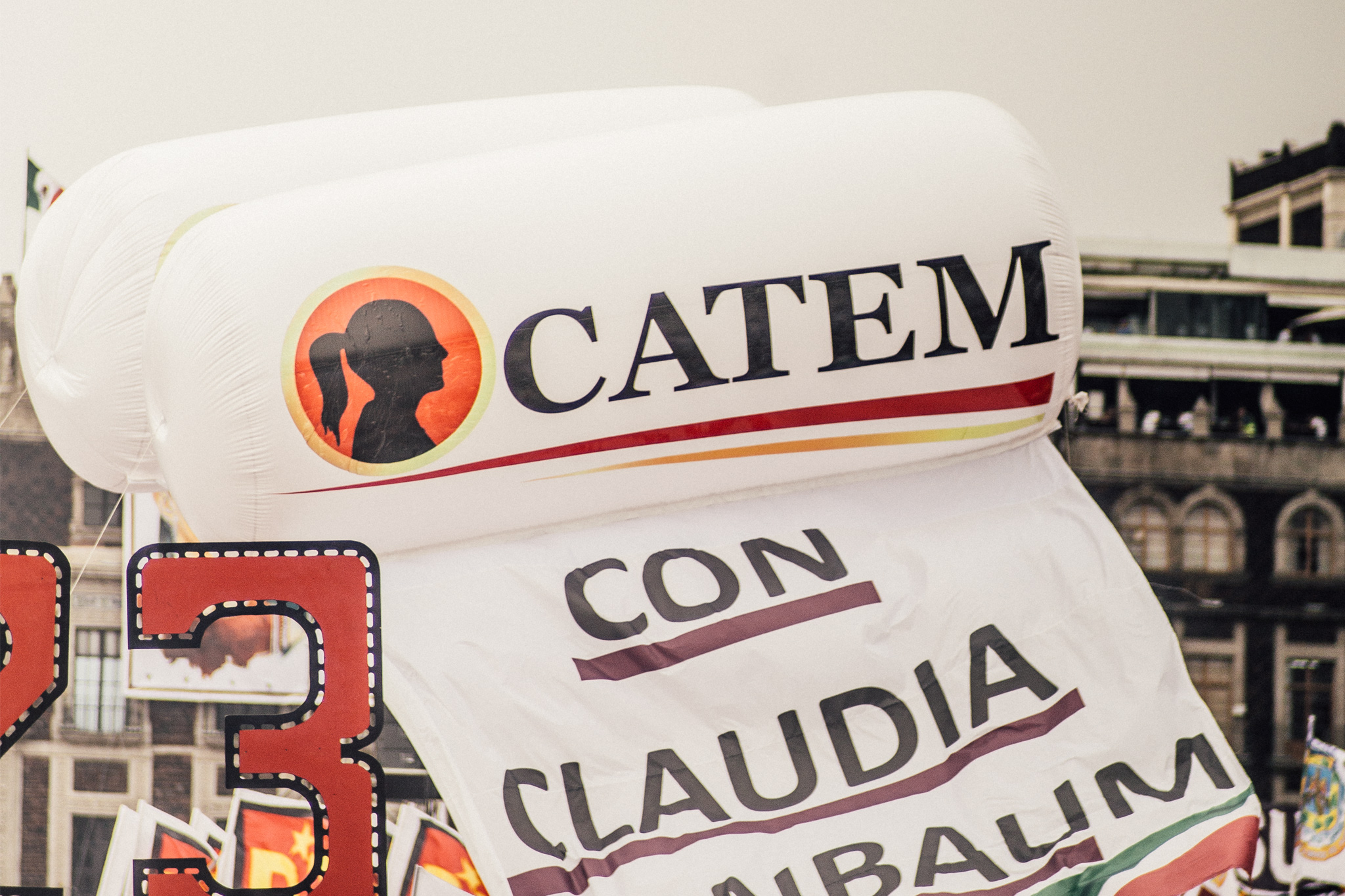
Mexico City. The PRI has nothing to offer them. The PRI-affiliated labour unions, once an electoral machine, a pillar of the previous regime, and even a symbol of pro-government labour struggles, are now in limbo. Today, their leaders are announcing the end of corporatism and seeking a rapprochement with the 4T (Fourth Transformation).
In this legislature, the PRI lacked the votes—or the will—to reserve seats for the leaders of the three unions integrated into the party, as it had done previously. In 2024, a weakened PRI barely managed to secure 13 seats in the Senate and 37 in the Chamber of Deputies. None of these seats went to the leaders of the Regional Confederation of Mexican Workers (CROM), the Confederation of Mexican Workers (CTM), or the Revolutionary Confederation of Workers and Peasants (CROC). For the first time in decades, they were left without representation.
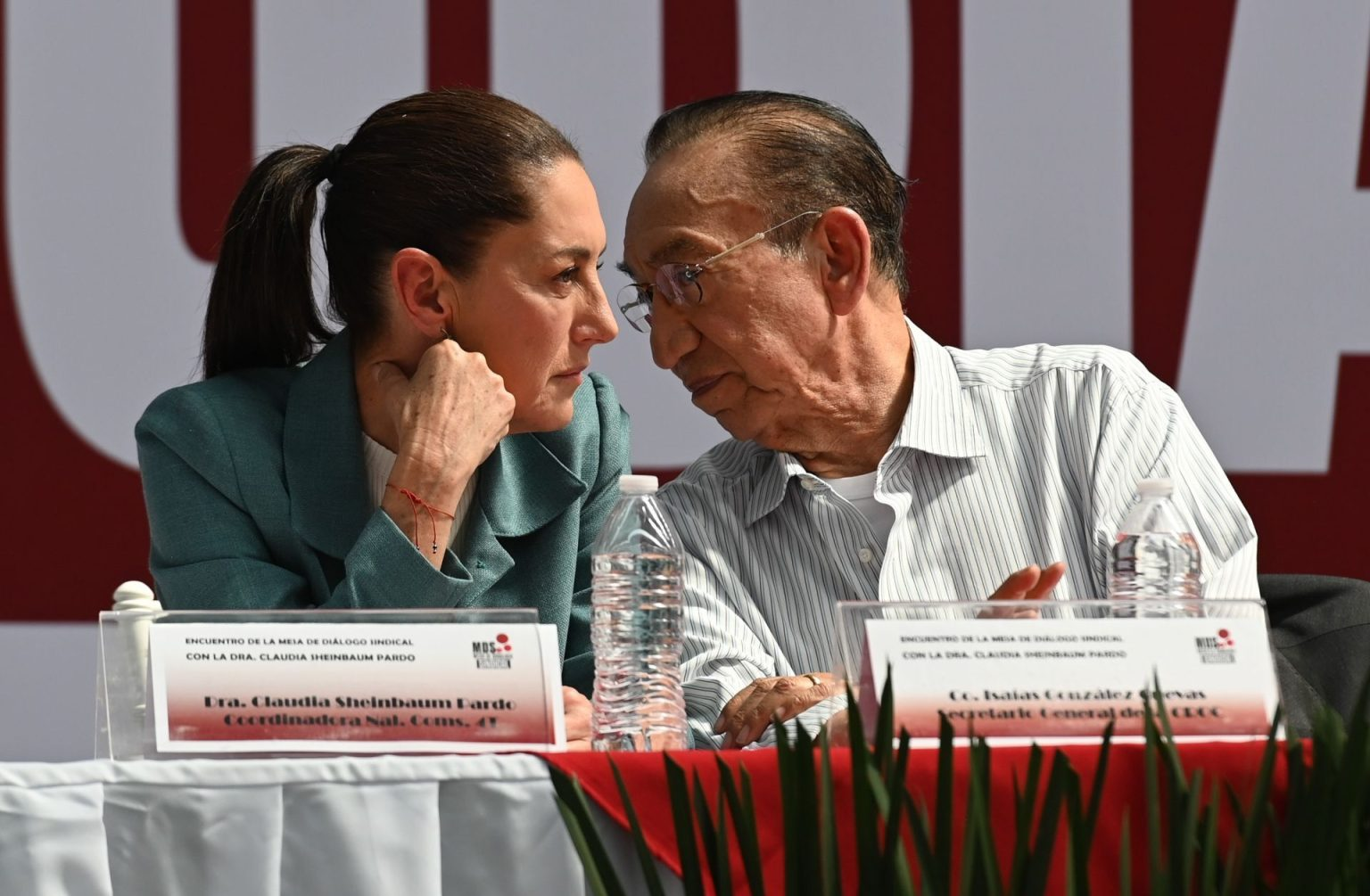
The CTM will elect its new leader on Monday, February 23, and Tereso Medina Ramírez, the frontrunner, is already announcing an “institutional collaboration” agreement with all levels of government. But in particular—and he says this with a solemn tone, as if addressing his union members—he is speaking “with the Constitutional President of the United Mexican States, Dr. Claudia Sheinbaum Pardo, because she encourages us to build a better Mexico.”
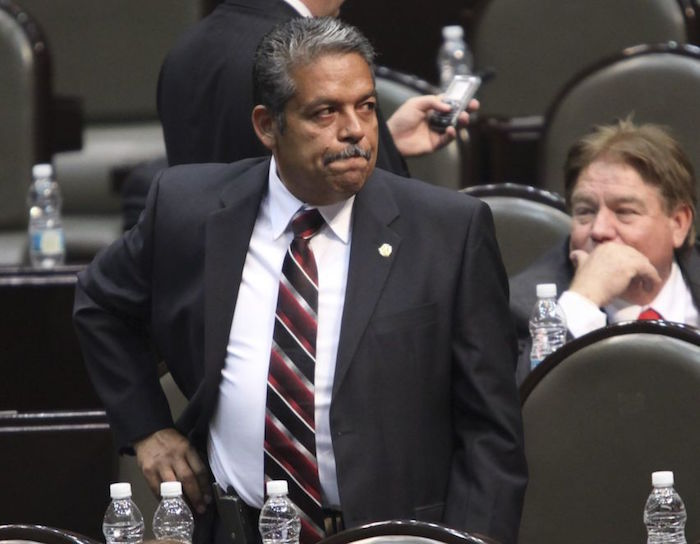
SinEmbargo also sought comment from CROC leaders Isaías González Cuevas and Rodolfo González Guzmán on this issue, but received no response. Medina Ramírez did agree to the interview, in which he triumphantly declared: “Corporatism has run its course.”
Despite the fact that the CTM stated in its statutes its adherence to the PRI and that it was an electoral reserve, Tereso Medina points out that whoever offers the workers’ vote to any party “is deceiving himself” because the country no longer works that way.
Corporatism in unions refers to their being part of the political power structure. Instead of focusing on expanding workers’ rights, they mitigate conflicts and suppress strikes. And even more importantly, they secure votes for the ruling party.
But if the PRI-affiliated unions can no longer provide all of this to the 4T, it’s not because their leaders wanted to change course. Rather, it was in spite of them. Morena doesn’t need union leaders as intermediaries “because it has the entire structure of the Secretariat of Welfare,” says labour lawyer Pablo Franco.
If the leadership used to coerce their base into voting for the PRI, today social programs that reach homes directly can influence that family and not just the affiliated worker, the specialist explains.
And on top of all that, the labor reforms resulting from the United States-Mexico-Canada Agreement (USMCA) have further reduced their room for maneuver. And it is likely that “the Mexican government will sacrifice them” in the face of renewed pressure from the Trump administration regarding labour rights, he adds.
Readjustment in the Face of the Debacle
The relationship between PRI-affiliated union leaders and the PRI leadership is “increasingly weaker,” says Pablo Franco. On the contrary, “they have sought to align themselves with the 4T (Fourth Transformation),” says the former Secretary General of Collective Affairs for the Local Board of Conciliation and Arbitration of Mexico City.
But AMLO didn’t need “union leaders to win in 2018, much less to consolidate his government project. Because he built a model of direct communication with the people.”
However, “chapulineo” is not a recent phenomenon.
The gradual decline of the PRI was foreseen years ago in some of its unions. “When I was in the Labor Affairs Secretariat of the PRD National Committee, with Mr. López Obrador, many people from the PRI and the CTM approached us and asked how they could switch to the PRD,” says Pablo Franco.
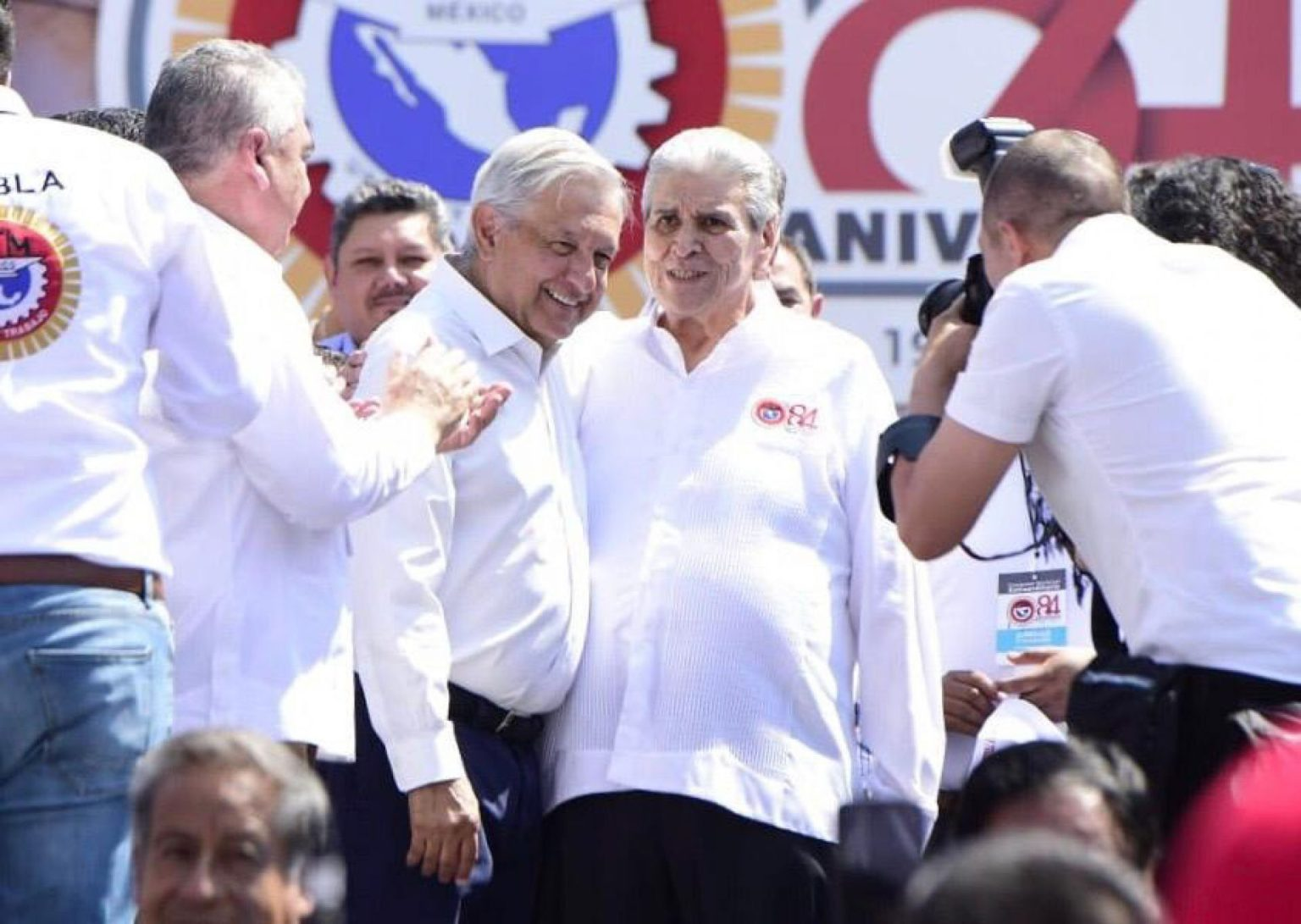
In what now seems like another life, the PRI had its union allies throughout the state apparatus. Even in the Supreme Court of Justice of the Nation (SCJN), with Justice Juan Moisés Calleja García, recalls Pablo Franco. Calleja García was a member of the CTM, and served as an advisor to the teachers’ union, the electricians’ union, and others.
But the neoliberal model promoted by the PRI governments backfired on them and their unions, which had helped them maintain a false sense of labour peace. The major labor federations, once aligned with the government, became “allies of business,” notes Franco Hernández.
Social discontent was directed not only against the ruling party, but also against its operational arms. Protection contracts—that is, contracts signed by leaders and business owners behind the backs of the workers—diminished the support that the working class could have given to the PRI.
Adding to the problem is the fact that “the corporate model is based on blackmail and intimidation, telling them: ‘if you don’t vote for our candidates, you’re going to lose your job,’” notes Pablo Franco. This strategy ultimately undermined support for the PRI. So, while the leaders remained PRI members, the rank and file of PRI-affiliated unions stopped voting for the PRI.
During the PAN administrations, there was a slight resurgence in the leadership of PRI-affiliated unions, and this continued during the six-year term of PRI member Enrique Peña Nieto. However, even then, for example, the CTM, under the leadership of Joaquín Gamboa Pascoe, became increasingly less politically active, which reduced its membership, according to Pablo Franco.
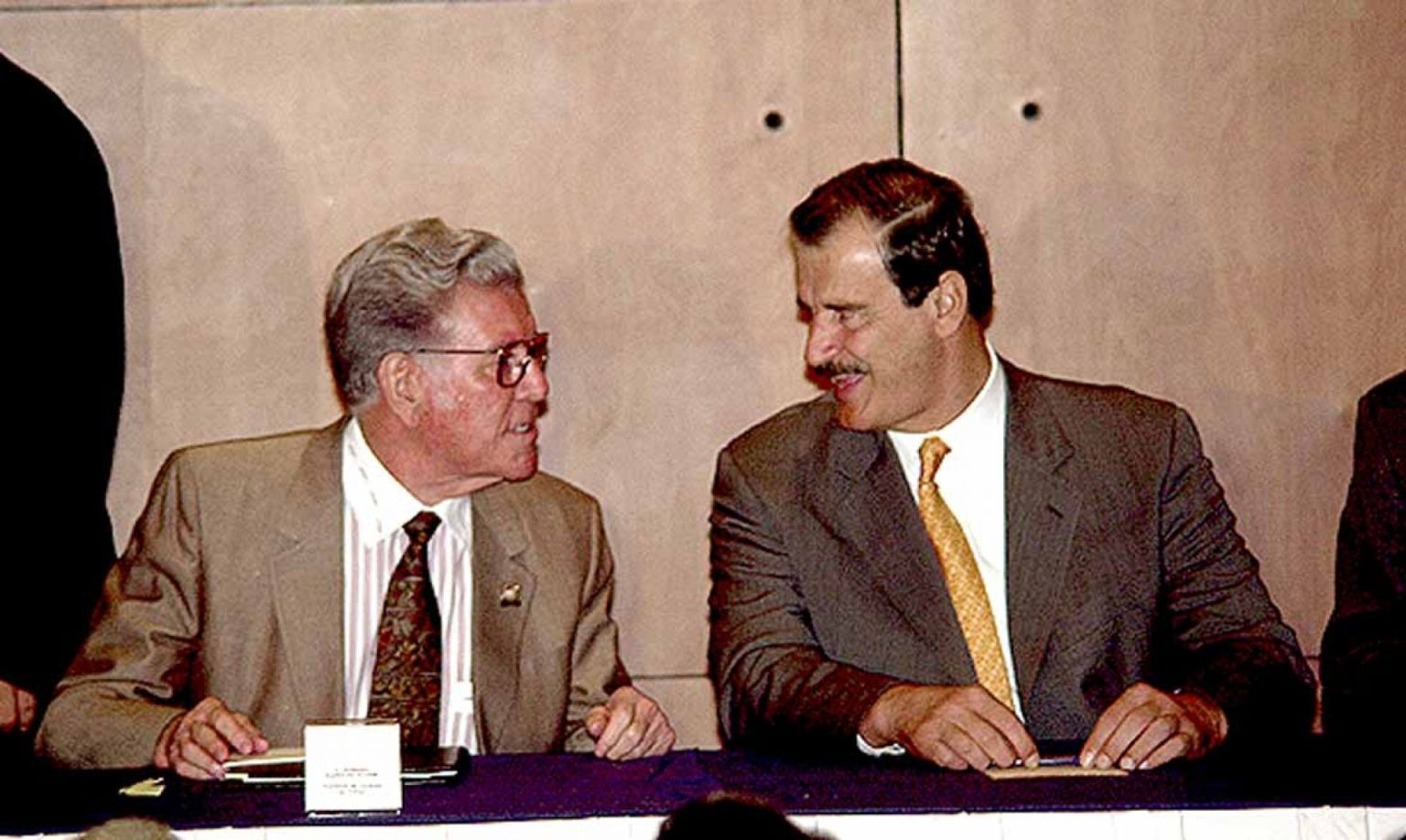
Tereso Medina states that the CTM represents “almost 3 million workers.” This figure “tells us that the union, despite all the transformations it has undergone, remains, today, the strongest labour federation in Mexico,” he points out. A membership of this magnitude can have a certain electoral influence or the capacity for collective pressure in specific situations, which is why the CTM likes to boast about it.
However, proving and verifying that number is very difficult. The information collected by the Federal Center for Conciliation and Labour Registration does not ask unions about their affiliation with a labour federation, and their membership lists are outdated.
“I don’t think it’s such an exaggerated number, although I do believe it’s inflated. When the CTM says it has 750,000 members in Mexico City, I know it’s not true. As an authority, I was responsible for certifying the union membership lists from the last convention to elect representatives to the Conciliation Boards of Mexico City. And the CTM had around 120,000 members,” says Pablo Franco.
The USMCA, Another Blow to PRI Unions
The 2019 labor reform and the USMCA established rules for transparency and union democratization. According to Pablo Franco, a former federal deputy, “the main victims of this are the bureaucracies of the largest and most traditional unions, such as the CTM, the CROC, and others.”
It should be remembered that the CTM filed 400 injunction requests against the labour reform.
Tereso Medina himself has already lost control of one of the collective bargaining agreements under these new regulations. One of the unions he leads, the “Miguel Trujillo López,” was negotiating working conditions at the General Motors plant in Silao, Guanajuato. But the workers did not re-elect him to continue representing them. Instead, they created the National Independent Union of Automotive Industry Workers (SINTTIA).

Tereso Medina is poised to lead the CTM, with the support of 28 of the 32 state federations and seven of the 10 deputy general secretaries. According to other labour experts, the CTM has been absent from the review of the USMCA under the leadership of Carlos Aceves del Olmo, who recently announced he will not seek reelection.
Medina Ramírez proposes the creation of a pluralistic council to re-examine the trade agreement. “Let’s look after our share, the redistribution of jobs in each country with social and labour justice,” he says.
The former PRI congressman and senator insists that, if elected as leader of the CTM, he will promote cooperation with President Claudia Sheinbaum Pardo. “On the issue of security, for example, we have to develop strategies with the President, work as a team, and stay vigilant, because we want the fight against insecurity in the country to continue, because our workers are among them.”
The “real and unwavering defense of national sovereignty” is another issue where he says the federal government must be supported. “That is why I call on everyone, regardless of political affiliation, to set aside sectoral, partisan, group, or personal interests and prioritize the nation’s higher interests, because building a better Mexico is in everyone’s best interest.”
Blanca Juárez is a journalist who covers political, labour, social and cultural issues from a feminist perspective.
-
Sheinbaum Presents Draft Decree to Force Digital Platforms to Take Down Content That Incites Violence and Hate
No fines for now: the government will talk with tech companies before publishing the decree next week, a promise made after the Coahuila school attack.
-
People’s Mañanera October 9
President Sheinbaum’s daily press conference, with comments on digital safety, IMSS-Bienestar, sovereignty, and the opposition.
-
Mexico’s Gas Reserves Would Last Only 3 Days
Cenagas director Cuitláhuac García revealed Mexico has no gas storage and imports 75% of what it consumes, after a US supply cut exposed the risk.