No, Trump, “America” is not the US
When the US struck and killed fishermen in small boats off the Venezuelan coast in violation of international law, human rights organizations from the UN, Latin America, the Caribbean and the US condemned the attacks. But those protesting voices soon faded like whistles in the wind.
The attacks on boats have resumed; 135 people have been killed and counting. Now it’s purely a blood sport, given that the US itself changed its story that these boats were transporting fentanyl. Suffering no consequences for the attacks, the US sent troops into the Venezuelan capital and kidnapped its President, with the loss of another 100-plus lives. Responses from international organizations? More whistling in the wind.
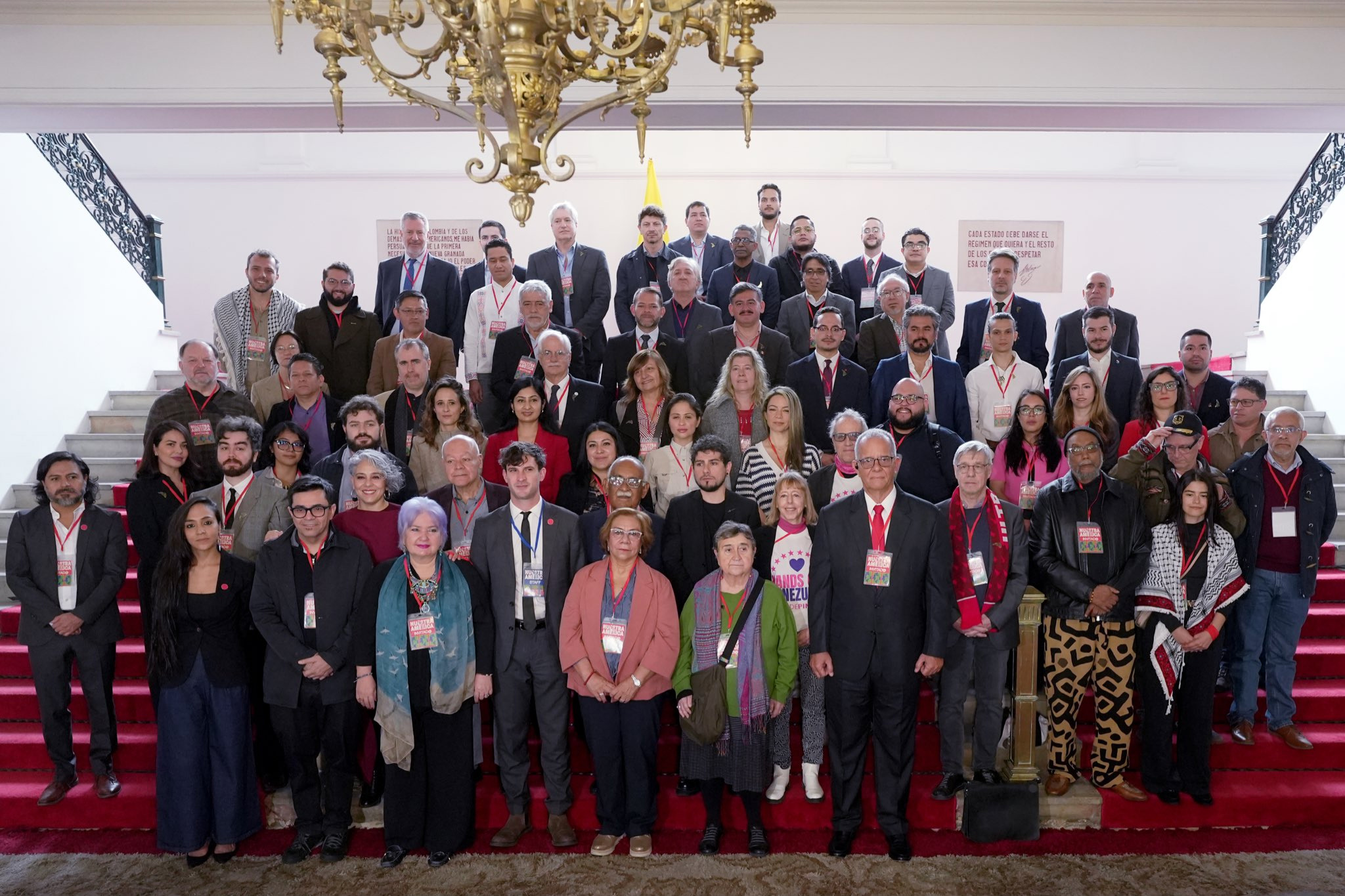
The Progressive International, composed of seasoned activists from all over the world, immediately organized an emergency global conference to discuss Venezuela and to prepare a united, concerted response. But even as the Nuestra América conference met in Bogotá, Venezuela’s crisis was superseded by Cuba’s — the US oil blockade meant that Cuba had two weeks before the country would plunge into darkness. Trump’s attacks on “everything, everywhere, all at once” are dizzying.
José Luis Granados Ceja and Kurt Hackbarth went to Nuestra América as representatives of the Mexico Solidarity Project. They joined other activists from Mexico and nations around the world who agreed that Venezuela and Cuba’s sovereignty must be defended — or who will be next? Trump has already been threatening Mexico.
Taking a cue from Minneapolis, it’s not a protest statement here and there that succeeds, but a determined and organized population raising their voices together, louder and louder — until Trump’s orders to invade, arrest or kill anyone opposing his attempt to subordinate all of the Americas, including the people of the United States of America, fade like a whistle in the wind.
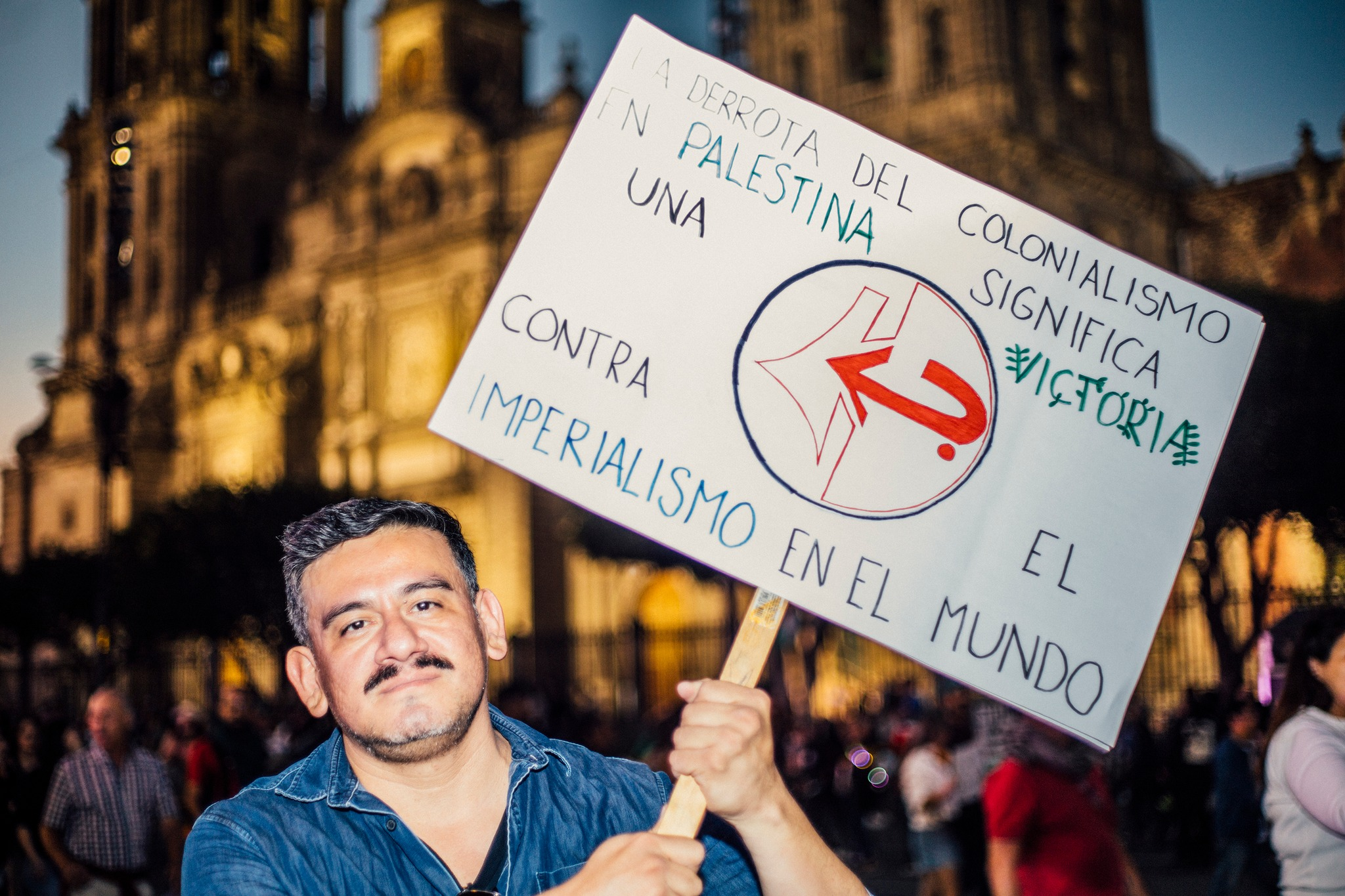
José Luis Granados Ceja, an independent journalist, photographer and political analyst based in Mexico City, co-hosts MSP’s podcast Soberanía with Kurt Hackbarth. He writes from an anti-imperialist perspective for both both English- and Spanish-language media media, covering Latin America for Drop Site News, and co-presenting with Kurt and guests on Sin Muros on Mexico’s TV station, Canal Once.
After the US military murdered Venezuelan fishermen and then kidnapped Venezuela’s president, Nicolas Maduro, an emergency international conference on the implications of the attack was called. You and Kurt Hackbarth went as representatives of the Mexico Solidarity Project. Why was it important for us to be there, and what did you hope to accomplish?
When the US committed extrajudicial murders of fishermen leaving no survivors, witnesses or evidence, anti-imperialists around the world read it as a prelude for something worse. More violence was to come.
When it did come, while not a surprise, the form of it was still a shock: a brazen invasion resulting in the deaths of around 70 Venezuelan soldiers and civilians and 32 Cuban military personnel safeguarding the president.
Progressive International (PI) jumped into high gear. Its co-director, David Adler, is part of Mexico Solidarity Project’s Rapid Response Media network, and he informed us of their plan for the Nuestra América conference.
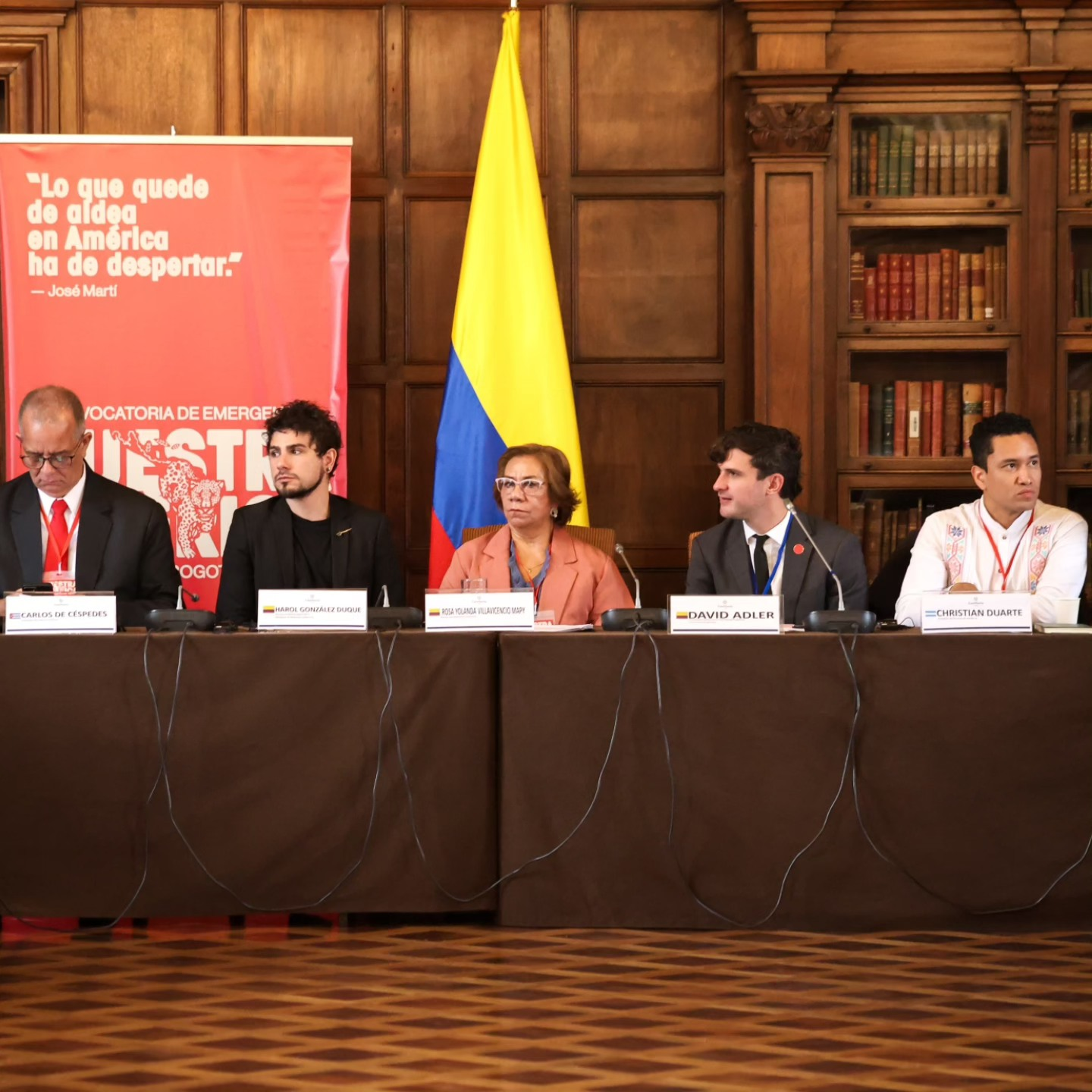
The international law violations were alarming to all countries, but the US actions were particularly dangerous for Latin America. The meeting took place in Colombia, whose president, Gustavo Petro, is a member of PI. Ninety delegates from 20 countries coalesced in just a few short weeks.
Kurt Hackbarth and I were invited to participate. The MSP decided it would be good for us to be there as journalists so that we could report firsthand on this important gathering. We presented our analysis on the Soberanía podcast when we returned.
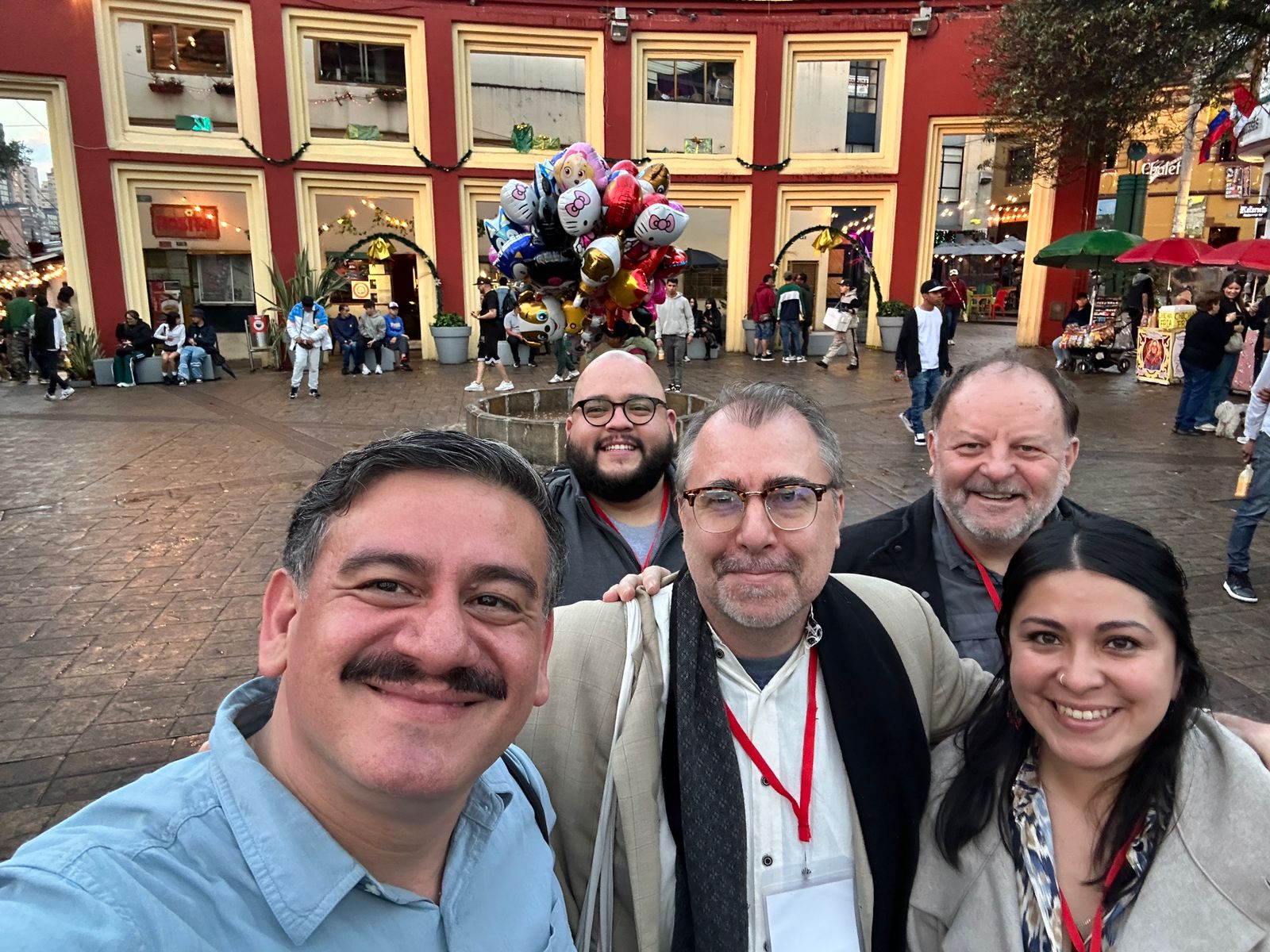
But Kurt and I are not just journalists; we are political activists who also went as MSP organizers. The main goal of the MSP is to build support for Mexico’s sovereignty and its right to implement its 4th Transformation project. By attending the conference, we met face-to-face — still the best way to build working relationships — with other builders of cross-border solidarity.
We connected with US activists from DSA, with people from a Morena chapter in Chicago, Mexican congresswoman Andrea Navarro, Canadian activists and many others.
You were a staff writer for Venezuelanalysis and still have on-the-ground connections there. Inside Venezuela, what was the reaction to the US attacks?
Violent opposition is something Venezuelans are used to. Ever since Hugo Chávez was elected in 1998 and began to implement a “Bolivarian Revolution,” a project to put the people first, to climb out from under the US boot, and to unite Latin America, the right-wing has used violent insurrectionary strategies to bring Chavismo down.
Between 2014 and 2017, they employed street protests to provoke a violent government response and then pointed to that response as an excuse to call for US intervention to protect the supposedly democratic protesters.
The Venezuelan right-wing opposition got what they wanted on January 29. The US military put boots on the ground in Caracas, the capital, and president Maduro was kidnapped right in his own offices. But the Chavista movement continued to bet on their project; the day after the kidnapping, demonstrations defended the Bolivarian Revolution.
The right-wing opposition was happy that Maduro was removed and believed that Trump would install their heroine, Corina Machado, as president. But Trump endorsed Maduro’s vice-president, Delcy Rodríguez, to carry on, only requiring that she turn over control of Venezuela’s oil. Is the opposition now disillusioned with Trump? Has he strengthened or weakened the opposition?
Strategically, Maduro’s kidnapping achieved a lot for the US. It sent a chill down the spine of left-leaning governments in Latin America, including Cuba, Colombia, Nicaragua and Mexico.
The Venezuelan opposition doesn’t have much support. Trump was correct on one thing; he saw Machado’s negatives — she wouldn’t be able to unify the country. Now Venezuela is in a new phase.
Delcy Rodríguez backed the National Assembly decision to revise the country’s oil laws in accordance with some of Trump’s demands. She has released some prisoners and has called on all of Venezuela to chart a new course of unity and of democratic — not insurrectionary — opposition. She noted that the country had paid a high price for its internal polarization.
But in my opinion, those — like Machado — who cheered the invasion should not have any place or voice in Venezuela’s future. They’re traitors!
The conference’s concrete result was the San Carlos Declaration. What’s its significance, and can it lead to concrete actions?
The Declaration outlines a new continental project affirming that the future of America lies in the hands of its peoples. America, as Bad Bunny enumerated at the Super Bowl halftime show (!), includes myriad diverse nations and peoples; it is not the US. Their sovereign decisions must be defended by all.
It articulates the alternative to Trump’s “Donroe” Doctrine. It says “no” to killings, unilateral attacks, electoral interference, resource extraction and imperial domination. “For the past twelve months — and for the past two centuries — Nuestra América has been the stage for these acts of aggression. But we also know how to resist!” asserted Colombia’s Minister of Foreign Affairs, Rosa Yolanda Villavicencio.
As one concrete action, Nuestra América is planning a flotilla of aid to Cuba, and Mexico is also doing what it can. What can people in the US do to support the Declaration?
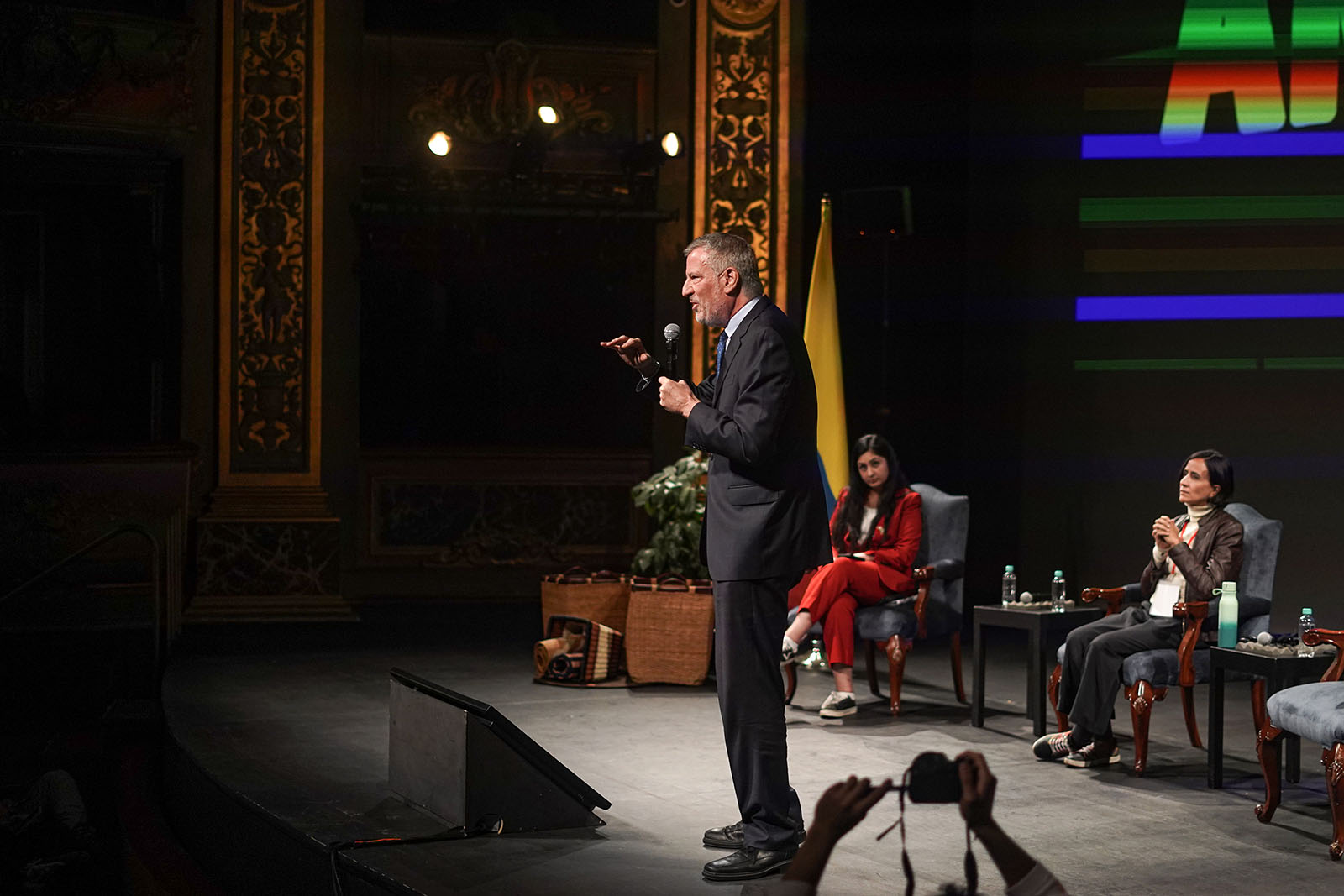
Since Trump is a US creation, people in the US have a key role to play. Bill DeBlasio, the former progressive mayor of New York, spoke about the need to elect Democrats. But the majority of participants agreed that “Blue imperialism isn’t going to save us.” They must continue to resist fascism at home and connect it to the fight to defend Latin America.
Because the MSP brings factual information and a left analysis to people within the US and builds concrete relationships between US and Mexican activists, we can play a role.
Donate to the Nuestra América aid flotilla to Cuba!
-
Jáuregui’s Defense Demands That Mexico’s Attorney General Summon Governor Maru Campos to Say What She Knows About the CIA
His lawyer says all the evidence points to the late state investigations chief, and that Campos changed her version of what she knew on Latinus.
-
People’s Mañanera October 21
President Sheinbaum’s daily press conference, with comments on Pemex, fuel theft, Jalisco’s water crisis, missing persons, and the lie detector.
-
Jáuregui’s Arrest Does Not Close the CIA Case in Chihuahua; Morena Demands Broader Investigations
Morena leader Ariadna Montiel holds Governor Maru Campos politically responsible and says ex-prosecutor Guillermo Zuany must also face justice.