
What Does President Sheinbaum’s New Housing Initiative Propose?
This article by Fernando Gutiérrez originally appeared in the March 12, 2026 edition of El Economista.
In the midst of implementing her housing policy—which aims to build 1.8 million homes during her six-year term—President Claudia Sheinbaum sent an initiative to the Congress of the Union with the objective of harmonizing the concept of adequate housing within the legal framework applicable to public programs.
The housing reform initiative was sent by the federal Executive to the Chamber of Deputies on March 11, 2026, and seeks to update the legal framework of the sector to align it with the constitutional reform approved in December 2024.
According to the explanatory statement, the project proposes a legislative harmonization to incorporate the concept of “adequate housing” and thereby adjust the powers of the public institutions in charge of housing policy.
“The purpose of this initiative is to harmonize secondary legislation on housing with the recently reformed constitutional mandate, incorporating the adequate housing approach as the axis of the Mexican State’s housing policy.”
The Conceptual Change
One of the central adjustments is the incorporation of the concept of ” adequate housing ” into secondary legislation.
The term seeks to harmonize the Mexican legal framework with international human rights standards, particularly those defined by the Committee on Economic, Social and Cultural Rights of the United Nations (UN).
Until now, Mexican legislation has primarily used the concept of “decent and dignified housing.” The initiative proposes complementing that approach with broader criteria related to urban conditions, access to services, and the environment.
“The concept of adequate housing involves considering not only the physical characteristics of the dwelling, but also its urban environment, the availability of services and accessibility to development opportunities.”

Adequate Housing Criteria
The initiative incorporates the elements used in international law to define when housing meets adequate standards. These include:
- Legal security of tenure, which implies protection against arbitrary evictions.
- Availability of basic services, such as drinking water, electricity and sanitation.
- Affordability, to prevent the cost of housing from compromising other essential expenses.
- Habitability, in terms of sufficient space and safe structural conditions.
- Accessibility, particularly for people with disabilities or in vulnerable situations.
- Suitable location, with reasonable access to employment, education, transportation and services.
- Cultural adaptation, which takes into account the characteristics and construction practices of each region.
These criteria would serve as a reference for the design and evaluation of public housing programs.
Adjustments to INFONAVIT & FOVISSSTE Powers
The proposal also raises modifications to the powers of agencies such as the National Housing Fund Institute for Workers (INFONAVIT) and the Housing Fund of the Institute of Security and Social Services for State Workers (FOVISSSTE).
Historically, these institutions have operated primarily as financial entities responsible for granting mortgage loans to workers. However, recent reforms to their regulatory framework now allow them to participate in housing development projects.
The initiative proposes to broaden their scope of action so that they can participate in the development and promotion of housing projects, which would include the acquisition of land, the construction or rehabilitation of housing and the promotion of lease-to-own schemes.

Regulatory Process
Legislative documentation indicates that the initiative was exempt from the Regulatory Impact Analysis (RIA). The Digital Transformation and Telecommunications Agency issued a certificate of exemption, considering that the project primarily seeks to harmonize existing legal provisions resulting from recent constitutional changes.
Likewise, the Ministry of Finance and Public Credit (SHCP) determined that the reform does not imply direct increases in federal public spending.
According to the financial analysis included in the initiative, the planned functions could be carried out through the current administrative structures of agencies such as the Secretariat of Agrarian, Territorial and Urban Development (SEDATU), as well as with the resources of INFONAVIT and FOVISSSTE.
Urban Planning & Housing Policy
Finally, the initiative proposes to strengthen institutional coordination in the planning of housing projects.
The objective stated in the explanatory memorandum is to promote housing developments with better access to services, transportation and urban amenities, in line with the criteria for adequate housing established in the constitutional reform.
“The national housing policy must promote housing developments that guarantee effective access to services, infrastructure, and urban amenities, in accordance with the principle of adequate housing.” The proposal is currently under legislative review in the Chamber of Deputies.
-
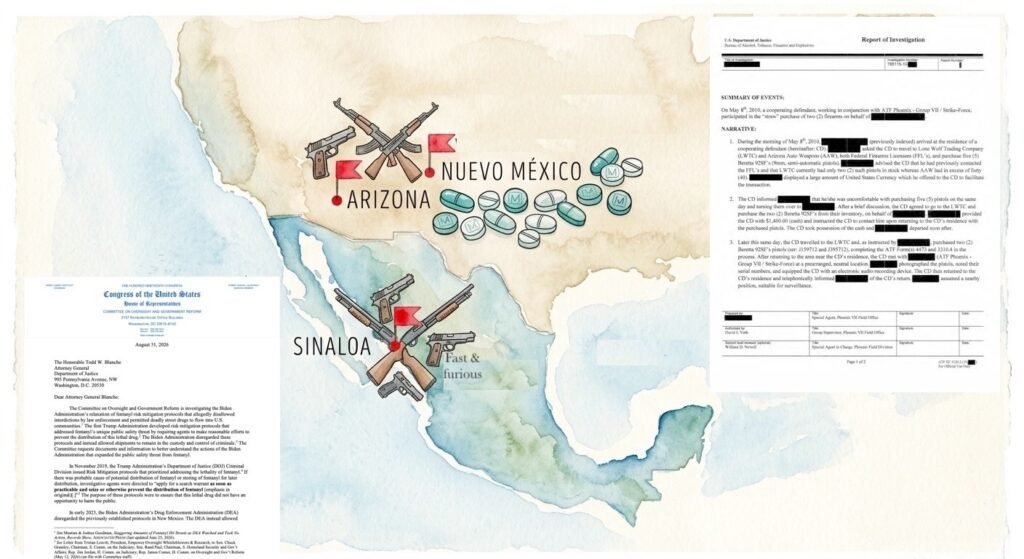
From Fast and Furious to Walking Fentanyl: Lessons Not Learned by the US
Nancy Flores digs into declassified emails showing the DEA let fentanyl ‘walk’ New Mexico streets, echoing the ATF’s Fast and Furious guns to the Sinaloa Cartel a decade earlier.
-
China Accuses the US of Dividing Mexico over Trade Dispute
China’s embassy described the US comments as an expression of “supremacy and hegemony” and asserted that they sought to discredit the economic cooperation between Mexico and China.
-
Sheinbaum Meets Privately with Maru Campos on Her Arrival in Ciudad Juárez
If any law was broken in the drug operation involving CIA agents in Chihuahua, those responsible, including state officials, must be prosecuted, the two agreed.