Senate Concludes Vote Against “Golden Pensions”; Sends Reform to San Lázaro
This article by Rafael Ramírez originally appeared in the March 11th, 2026 edition of El Sol de México.
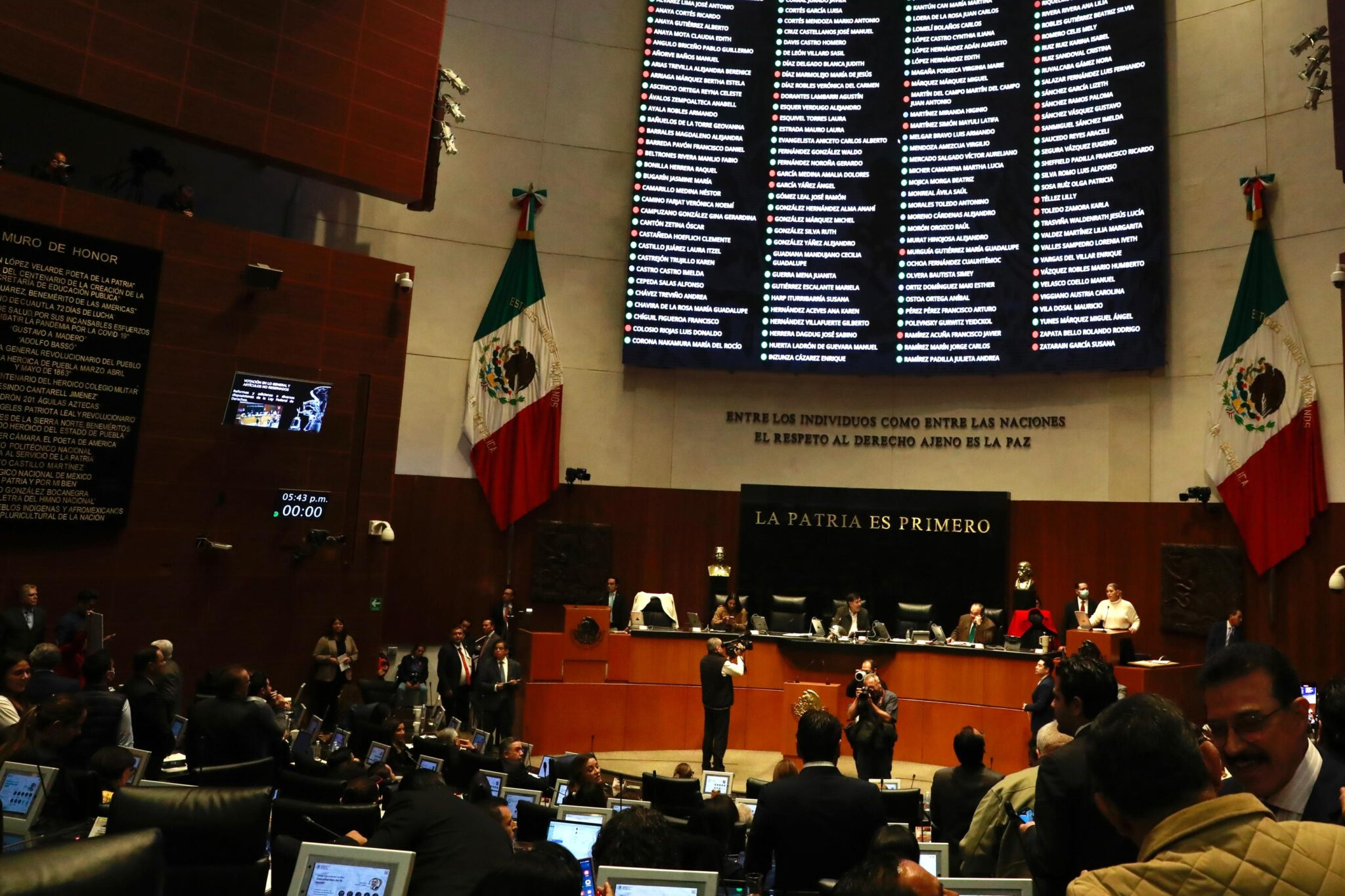
The Senate of the Republic approved this Wednesday, in general and in particular, the constitutional reform promoted by President Claudia Sheinbaum to put a limit to the so-called “golden pensions” in the public service.
By unanimous vote, the plenary session approved with 116 votes in favor the ruling that reforms article 127 of the Constitution, with the purpose of establishing that retirements and pensions financed with public resources cannot exceed the maximum amount of remuneration received by the head of the federal Executive Branch, in accordance with the constitutional principle that no public servant can earn more than the President.
The reform proposes that the pensions of trusted personnel in the parastatal sector cannot exceed 50 percent of the remuneration of the head of the Presidency of the Republic, which currently would be equivalent to approximately 70,000 pesos ($3,900USD) per month.
According to estimates presented during the legislative debate, the measure would impact approximately 6,297 former public sector officials and employees who currently receive pensions exceeding that amount. These include primarily retirees from Luz y Fuerza del Centro, Petróleos Mexicanos (PEMEX), the Federal Electricity Commission (CFE), and some state- owned financial institutions.
Lawmakers from the ruling party indicate that, if the reform is fully approved, it would allow for savings of close to five billion pesos annually for the treasury.
Morena Defends End of Privileges, While Opposition Points Out Inconsistencies
During the discussion, Morena senator Óscar Cantón Zetina argued that the reform seeks to bring order to the pension system financed with public resources. “We are convinced that when it comes to defending the public interest and strengthening justice in the use of the Nation’s resources, this Senate demonstrates that it is up to the task of serving the people of Mexico.”
The legislator stressed that the goal is not to eliminate pensions, but to prevent disproportionate retirements financed with public resources.
Although they voted in favor of the ruling, opposition legislators raised several reservations about the design of the reform.
Luis Donaldo Colosio Riojas, Senator from the Citizens’ Movement party stated that it is necessary to correct the inequalities in the pension system, but warned that the reform could generate legal problems if it affects previously acquired rights. “There are thousands of people who receive pensions of three or four thousand pesos a month, while others receive hundreds of thousands of pesos paid by the same state. This inequality must be corrected.”
However, he questioned the reform’s exclusion of the Armed Forces and warned that linking the cap to the presidential salary could create uncertainty.
Meanwhile, a fellow senator, Alejandra Barrales, acknowledged that the initiative could generate significant savings, but warned that the pension system in Mexico faces a much larger structural problem, explaining that currently one out of every five pesos of the federal budget is allocated to pension payments, while the country’s pension liability could reach 11.4 trillion pesos in the coming decades.
Senator Carolina Viggiano, from the PRI , expressed concern about the possibility that the reform could have retroactive effects that affect labour rights acquired by retired workers. She also questioned why the initiative does not include other sectors of the State, such as the Judiciary or certain special regimes, and suggested that the project could be motivated by political calculations.
After its approval in the Senate , the ruling was sent to the Chamber of Deputies for analysis. Since it is a constitutional reform , if it is approved by San Lázaro it must subsequently be approved by at least 17 state congresses before its promulgation and entry into force.
-
Morena Leader Accuses Chihuahua Governor of Slandering Her: She Represents “Corruption, Privilege, and Disloyalty”
She said Mexico deserves to know who authorized CIA agents’ role in a Chihuahua operation, after Campos linked her to drug trafficking in an interview.
-
Maru Campos Assured Me Jáuregui Was Corrupt and a Casino Owner, Sheinbaum Says
Asked who let foreign agents into the Chihuahua operation, Campos told her “it wasn’t me, it was the prosecutor,” in a tense meeting in Ciudad Juárez.
-
People’s Mañanera October 23
President Sheinbaum’s daily press conference, with comments on medicine supply, health equipment and staff, perceived insecurity, and sovereignty.