Anti-4T Civil Associations Allegedly Simulated Activities to Evade Taxes
This article by Nancy Flores originally appeared in the March 28, 2026 edition of Revista Contralínea.
Editor’s note: “Pink Tide/La Marea Rosa” in Mexico refers to an ostensible civil movement funded and supported by figures from the neoliberal period and political parties who oppose the Fourth Transformation governments and frequently wear pink in their demonstrations; not to the reformist left governments of Latin America.
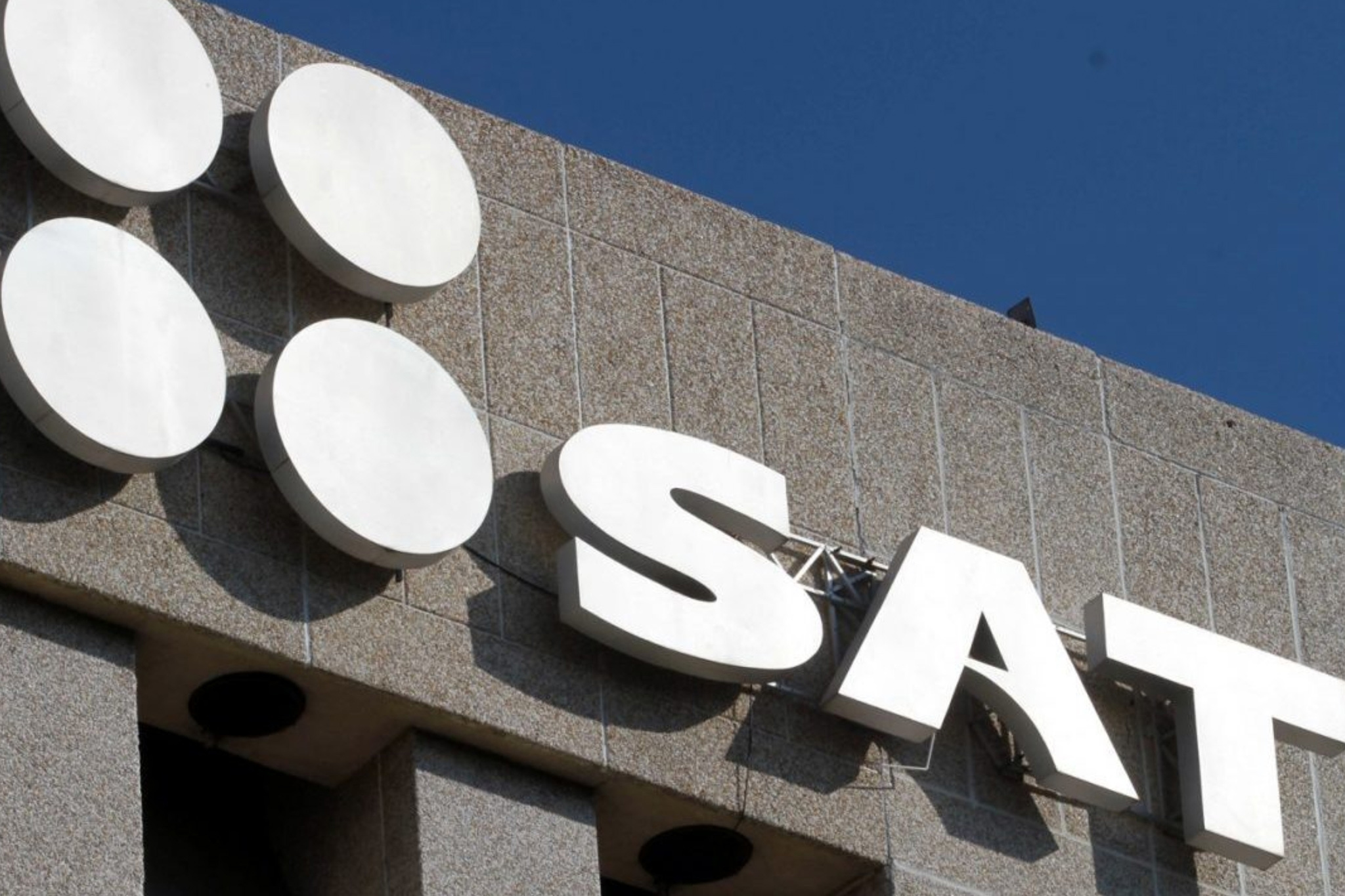
Following a technical analysis, the Tax Administration Service (SAT) revoked the authorization for 270 civil associations to receive tax-deductible donations and be exempt from income tax, citing violations of the Income Tax Law. The tax authority explained that, prior to this decision, the associations were given the opportunity to present their arguments, but “failed to comply with or rectify the legal requirements within the allotted time.”
Contrary to what has been circulating, the tax authority’s decision does not prohibit these organizations from receiving donations, but rather means that their donors will not be able to deduct them from their tax payments, and that the non-profits will be required to pay income tax. In other words, they will no longer be able to live off public funds.
Among the 270 civil associations, three stand out for their systematic opposition to the governments of the Fourth Transformation: the Mexican Institute for Competitiveness, AC (IMCO); México Evalúa, the Center for Public Policy Analysis, AC; and Mexicanos Primero, Visión 2030, AC. Two of these were funded for several years by the United States government through USAID, which is prohibited by the Constitution (because foreign governments are barred from interfering in Mexican politics).
However, the SAT (Mexican Tax Administration Service) indicated that the revocation of the authorization was not politically motivated, but rather due to the fact that these civil associations violated the law by declaring that they conduct scientific or technological research, which they could not prove. In other words, they allegedly lied to qualify for a preferential tax regime, which could also constitute a crime.
Furthermore, Contralínea has revealed that IMCO, México Evalúa, and Mexicanos Primero are linked to the national and transnational oligarchy, the political right opposed to the 4T and promoters of expressions such as the pink tide; and the analyses and studies they generate border on neoliberal propaganda.
The IMCO Case
The information that IMCO provided to the SAT indicates that its governing body is made up of the businessmen Tomás Roberto González Sada –executive of the company Cydsa, SAB de CV–; Alejandro Ramírez Magaña –owner of Cinépolis and opponent of the fourth transformation–; Claudio Xavier González Laporte –president of Kimberly Clark and one of the staunchest adversaries of former President Andrés Manuel López Obrador–; Valentín Diez Morodo –member of the boards of directors of Grupo Financiero Banamex; Kimberly Clark de México; DESC; Multivisión MVS Comunicaciones; Avantel; Grupo Ferroviario Mexicano; and Grupo Alfa, and adversary of the 4T–; and Luis Manuel Murillo Peñaloza –general director of Valores Mexicanos Casa de Bolsa, advisor of Operadora Valmex and of Grupo Peñoles.
Two other associate members of its governing body are: Juan Ernesto Pardinas Carpizo, former editorial director of the Reforma newspaper and former director of IMCO itself; Jaime José Serra Puche, a Salinas supporter —current president of Grupo Financiero BBVA México, former Secretary of Commerce and Industrial Development during the administration of Carlos Salinas de Gortari—and chief negotiator of NAFTA—and former Secretary of Finance and Public Credit during the first days of Ernesto Zedillo’s government—from December 1 to 29, 1994—a period in which he became primarily responsible for the collapse of the economy due to the so-called “December mistake,” which resulted in the greatest theft suffered by the people of Mexico: the Fobaproa-IPAB; and Eugenio Santiago Clariond Reyes, shareholder of Jidosha Internacional and former Mexican consul in Brazil during the administration of Felipe Calderón.
Additionally, in its 2025 Annual Report, the Institute includes in its Council: José Barraza, Emilio Carrillo, María Amparo Casar (president of Mexicans Against Corruption and partner of Claudio X González Guajardo, whom President Claudia Sheinbaum called “the toxic junior”), Lorenzo de Rosenzweig, Antonio del Valle Perochena, Gabriela Hernández, Armando Paredes, Antonio Purón, Daniel Servitje, Vicente Yañez and Jaime Zabludovsky.
And it adds as a “board member” the Business Coordinating Council, made up of Alejandro Malagón Barragán (Concamin), Juan José Sierra Álvarez (Coparmex), Antonio del Valle Perochena (Mexican Business Council), Daniel Servitje Montull (Mexican Business Council), Enrique Zambrano Benítez (Mexican Business Council), Jorge Esteve Recolons (National Agricultural Council), Emilio Romano Mussali (Mexican Banking Association), Diego Cosío Barto (Antad), Jorge Humberto Santos Reyna (Caintra), Pedro Pacheco (Amis), Guillermo Zamarripa Escamilla (Amafore), Sergio Contreras Pérez (Comce), Vicente Gutiérrez Camposeco (Canaco), Álvaro García Pimentel (Amib), Antonio Cosío Pando (CNET).

Other relevant data from IMCO that illustrate how this think tank is linked to the Mexican and transnational oligarchy and right-wing groups are those related to its “2025 strategic alliances,” which the institute itself describes as those with which it developed projects. Some of these alliances were with the World Bank , the International Monetary Fund , and the World Economic Forum; the embassies of the United States in Mexico, the United Kingdom, Canada, Norway, and Switzerland; the private foreign banks BBVA and Banamex; the companies Mercedes-Benz Mobility Mexico, Starbucks Mexico, Casa de Bolsa Finamex, and TC Energy, and the Coppel Foundation; as well as with the Mexican Employers’ Confederation (COPARMEX) and the Mexican Business Council for Foreign Trade, Investment, and Technology (CEMET).
Other important alliances are with foreign organizations identified as right-wing, including the Konrad Adenauer Foundation; and with the Atlas Network, although it reported no joint funding or projects in 2025. Furthermore, throughout its history, IMCO has been funded by the Mexican Business Council, comprised of multinational corporations such as Femsa , Alfa, Lala, Mabe, MVS, Grupo Pisa, Vitro, Televisa , Grupo Carso, Chedraui, and Grupo México.
According to the most recent financial report submitted to the SAT (Mexican Tax Administration Service), in 2024 IMCO received tax-deductible donations totaling 33,897,949 pesos , and an additional 4,502,426 pesos in interest and investment returns. According to the data, its payroll of just 43 people cost 26,614,125 pesos; if everyone had received the same salary, they would have earned 618,933 pesos annually (51,577 pesos per month).
Furthermore, some of the money was used to produce studies such as: “ Energy reform must respect the spirit and letter of the USMCA ”; “Local Public Electoral Bodies and their role in democracy”; “Ten proposals on public finances”; and “Proposals for the energy we want 2024-2030.” These last studies were conducted in the context of that year’s presidential elections.
México Evalúa Case Study
The next case is that of the civil association México Evalúa, whose governing body is chaired by Luis Rubio Freidberg (a member of the board of Coca-Cola FEMSA and investment funds such as Aberdeen India Fund, Inc. and The India Fund, Inc. ). The vice-chairman is businessman Fernando Senderos Mestre (owner of Grupo KUO—which includes brands such as Herdez, Del Fuerte, Kekén, Megamex Food, and Grupo Dynasol—and the real estate developer Dine, and a member of the boards of directors of companies such as Grupo Televisa, Industrias Peñoles, Grupo Nacional Provincial, Grupo Carso, and Kimberly Clark de México).
Furthermore, the governing body is composed of José Ramón Cossío Díaz (former Supreme Court Justice, opponent of the 4T movement , whom former President López Obrador identified in 2021 as the architect of the injunction against the Electricity Industry Law, in association with Claudio X. González Guajardo), Edna Camelia Jaime Treviño, Jaime Enrique Zabludowsky Kuper (a Salinas supporter who served as deputy chief negotiator for NAFTA and in 1994 was appointed Undersecretary of International Trade Negotiations), Federico Jesús Reyes Heroles González Garza, Martha Matilde Mejía Montes (CEO of Zimat Consultores), Eugenio Rafael Garza Herrera (Chairman of the Board of Directors of Xignux, a company linked to the energy sector), Luis Fernando Gerardo De La Calle Pardo (former independent board member of the CFE and member of the board of the company Cintra), and Ángel Emilio Carrillo Gamboa. (founding partner of the Carrillo Gamboa law firm, member of the Audit Committee of Kimberly Clark de México, Grupo México and Southern Copper, as well as being executive secretary of the Mexican Business Council and chairman of the Board of Directors of The Mexico Fund).
In addition to this clear link with one of the highest de facto powers at the global level (economic power), México Evalúa openly acknowledges that among its funders are the National Endowment for Democracy (NED), Atlas Network, Open Society and The William & Flora Hewlett Foundation, which connects it with international right-wing groups and transnational interests.
An example of this is the NED, linked to the US government and its clandestine networks. Officially defined as a private, non-profit US foundation dedicated to the growth and strengthening of democratic institutions worldwide, it actually carries out interventionist activities around the globe that were previously delegated to the CIA, under the guise of promoting democracy.
Historically, the NED has interfered in the internal affairs of various countries, exerted influence on elections, financed pro-American and pro-neoliberal propaganda, and donated resources to projects of non-governmental organizations, generally opposed to progressive democratic governments.
The book The Plots of Power in Latin America: Elites and Privileges points out that the National Endowment for Democracy and the U.S. Agency for International Development (USAID) are organizations funded by the United States government that “frequently intervene in the electoral and political processes of other countries. These two organizations have become a source of funding for MCCI [Mexicans Against Corruption and Impunity, founded by Claudio X and chaired by María Amparo Casar], México Evalúa, and ETHOS. Furthermore, this funding also connects several centers, as in the case of IMCO, which shares several board members with the board of México Evalúa.”
He adds that the NED was “created in 1983 to promote democracy and economic freedom around the world. It has funded organizations in 90 countries, including Cuba, Nicaragua, Venezuela, Russia, Ukraine, and many others. However, the impact of its interventions has been the subject of much controversy. Hale (2003) found no evidence that it contributed to democracy and economic freedom during the 1990s. According to Franklin (1985), the NED has channeled millions of dollars into anti-communist diplomacy, and Busic (2020) argues that its policies are anti-democratic, imperialist, and immoral, and that its resources are used in countries that align with US interests.”
Another patron of México Evalúa is the Open Society Foundation, owned by magnate George Soros, founder of the vulture fund Soros Fund Management, and investor in companies such as: Southwest Gas Holdings, Alphabet Inc (Google’s parent company), the pharmaceutical company Astra Zeneca, and the electric vehicle manufacturer Rivian Automotive, Inc.
According to the report From the Economy of Occupation to the Economy of Genocide, by UN rapporteur Francesca Alabanese, among the corporations that contribute to and benefit from the genocide in Gaza is Alphabet (which, in addition to controlling Google, manages Youtube).
Another sponsor of México Evalúa and projects like the media outlet Animal Político is The William & Flora Hewlett Foundation, founded in 1966 by businessman William R. Hewlett—co-founder of the multinational Hewlett-Packard—his wife Flora, and their son Walter. Although it currently claims to have no connection to HP.
And Atlas Network, the largest think tank of the international right. According to the book The Right in Mexico: Analytical Debates and Case Studies (coordinated by researchers John M. Ackerman, Miguel Ángel Ramírez Zaragoza, Adrián Escamilla Trejo, and Israel Jurado Zapata), it “presents itself as an organization ‘that connects a global network of more than 475 free-market organizations in over 90 countries with the ideas and resources needed to advance the cause of ‘liberty.’ Atlas Network offers its members guidance, competitive grant and award opportunities, and occasions to celebrate high-impact successes. Atlas Network was founded by a disciple of Friedrich von Hayek and has been based in Washington since 1981 to defend neoliberal positions.’”
On November 5, 2025, President Sheinbaum revealed in her morning press conference that Atlas Network was behind a digital media campaign against her, as the social media accounts promoting a recall election march were linked to that think tank . She also noted that Atlas Network is connected to the international far right, whose objective is to manipulate society by promoting trends on social media.
“It is a far-right organization that operates not only in Mexico, but in many countries, particularly in Latin America, and it does so not through public debate related to ideological or political positions, but through the manipulation of images and the payment of large sums of money to all these so-called bots, robots, which are not actually numbers related to a person, but rather multiple accounts that—for money—are publishing what they agree upon in order to create trends and for manipulation.”
President Sheinbaum Pardo also recalled that this organization had already been exposed for promoting the hashtags #narcopresidenteAMLO and #narcocandidata. “Also, many of the accounts were linked to the narco-government during his time and everything related to the narco-president that President Andrés Manuel López Obrador experienced.” She explained that this is “a pattern of behavior that also originates abroad” and that this situation is connected to the social media protests following the assassination of the mayor of Uruapan, Michoacán, Carlos Manzo, and the call for a demonstration supposedly organized by Generation Z.
“It seems like out of nowhere a lot of people used social media to protest, and yes, there is some truth to that, but it turns out to be quite small; and what they do with this is, in addition to publishing and generating trends, to encourage others to believe these lies in order to be able to link themselves [to the movement],” said the President.
The Mexicanos Primero Case
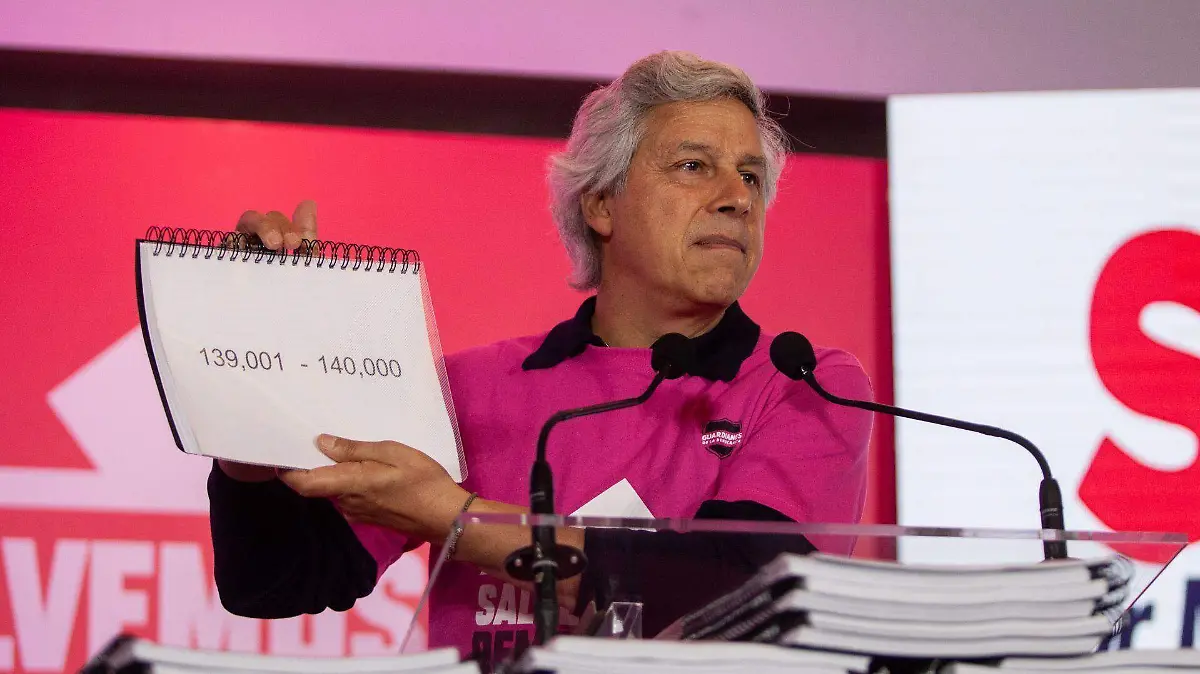
The third civil association canceled by the SAT (Mexican Tax Administration Service) is Mexicanos Primero. According to its most recent tax report submitted to the SAT, corresponding to the 2024 fiscal year, its governing body is composed of three businessmen: Claudio Xavier González Guajardo, a Kimberly Clark shareholder who, in the context of the last presidential elections, led the so-called “pink wave” that propelled the right-wing candidate Xóchitl Gálvez to the presidency and became the “moral leader” of the PRIAN (PRI and PAN alliance); his brother Pablo Roberto González Guajardo, CEO of Kimberly Clark; and the owner of Cinépolis, Alejandro Ramírez Magaña.
In 2021, Contralínea revealed that Mexicanos Primero Visión 2030 accumulated assets of 276 million 887 thousand 318 pesos from 2010 to 2015, of which 205 million 843 thousand 478 pesos corresponded to donations, plus 13 million 361 thousand 499 pesos of bank interest generated in investment accounts –speculative–, which gives a total of 219 million 204 thousand 977 pesos, which is equivalent to 79 percent of the total assets of that civil association in just six years.
According to information contained in a 1,000-page file prepared during the government of Enrique Peña Nieto (2017) by intelligence, security and tax agencies, the amount of “cash donations” received by this “non-profit” civil association reached 53,427,956 pesos that same year, money that generated bank interest in investment accounts for 1,853,505 pesos, for a total of 55,281,461 pesos.
In 2015, the workforce of Mexicanos Primero Visión 2030 consisted of 34 employees hired under the salaried regime and another as assimilated; seven more people were as volunteers and did not receive any salary, according to the SAT portal of authorized donee associations.
In those years, the organization’s associates had million-dollar salaries at the expense of donations: in 2015, its president was Fernando Landeros Verdugo (currently linked to Teletón), who in that year alone received 4 million 230 thousand 969 pesos in salaries from that civil association, which is equivalent to 352 thousand 580.75 pesos monthly, all the product of donations that in 2015 reached 55 million 281 thousand 461 pesos.
The business continued to flow, as the report submitted to the SAT indicates that in 2024 it obtained income of 42 million 621 thousand 791 pesos from donations.
Other Revoked Civil Associations
The list of 270 civil associations whose authorization to receive tax-deductible donations and be exempt from income tax was revoked by the SAT (Mexican Tax Administration Service) also includes: the Camino a Casa Foundation – associated with PAN (National Action Party) member Rosi Orozco, and involved in cases of mistreatment and sexual abuse against child trafficking victims; the Social Journalists Network-Journalists on Foot; Acción Unida, AC, founded by PAN member Miguel Ángel Villegas; the Barra Mexicana Foundation, AC, created by the Mexican Bar Association; Moverse Vector, owned by Vector Casa de Bolsa, which is facing problems after the Treasury Department’s allegations of money laundering; and CEAAD, linked to the far-right Konrad Adenauer Foundation.
-
Provoke AMLO
“That old man they give up for dead will return to the plazas if necessary. Get ready, because he has the strength to travel the country once more,” warns Páez Varela.
-
Mexican VW Workers Weigh Strike as Company Cuts Jobs Globally
After 800 layoffs and a rejected wage offer, the independent union at VW’s Puebla plant, the largest outside Germany, reached a tentative 13.16% deal.
-
People’s Mañanera October 5
President Sheinbaum’s daily press conference, with comments on women’s rights, sovereignty, public approval, and social media violence.