Mexico’s Mobile Consulates in the US
This column by Magdalena Rosales Cruz originally appeared in the March 30, 2026 edition of El Sol del Bajío. Magdalena Rosales Cruz is a Federal Deputy for Distrito 12 Celaya, Guanajuato and a member of Morena. The views expressed in this article are the authors’ own and do not necessarily reflect those of Mexico Solidarity Media or the Mexico Solidarity Project.
The mobility of the Mexican population in the United States has undoubtedly been linked to different factors, including: their proximity, the asymmetry of their development and economic growth, all as a result of the historical particularities of both nations.
We must remember that, since the establishment of the 13 English colonies, their objective was their constant expansion, which is why it extends southwards; there is no better example than having invaded Mexico, to appropriate more than half of its territory.
In this process, with the Treaty of Guadalupe Hidalgo of 1848, the population of our country became trapped in another culture, from there arises the Chicano community: Mexican-American born in the U.S., with purely Mexican roots.
In the 1960s, the term Chicano became popular as a political movement of resistance against racism, discrimination, and cultural assimilation. Today, it is used to refer to a U.S. citizen of Mexican descent, or a person born in the United States of Mexican descent, and their descendants who proudly identify as Chicano. Therefore, Chicanos are now found throughout the United States.
There are approximately 40 million Mexicans or descendants of Mexicans living in the United States, making our northern neighbor the second country in the world with the largest number of Mexicans.
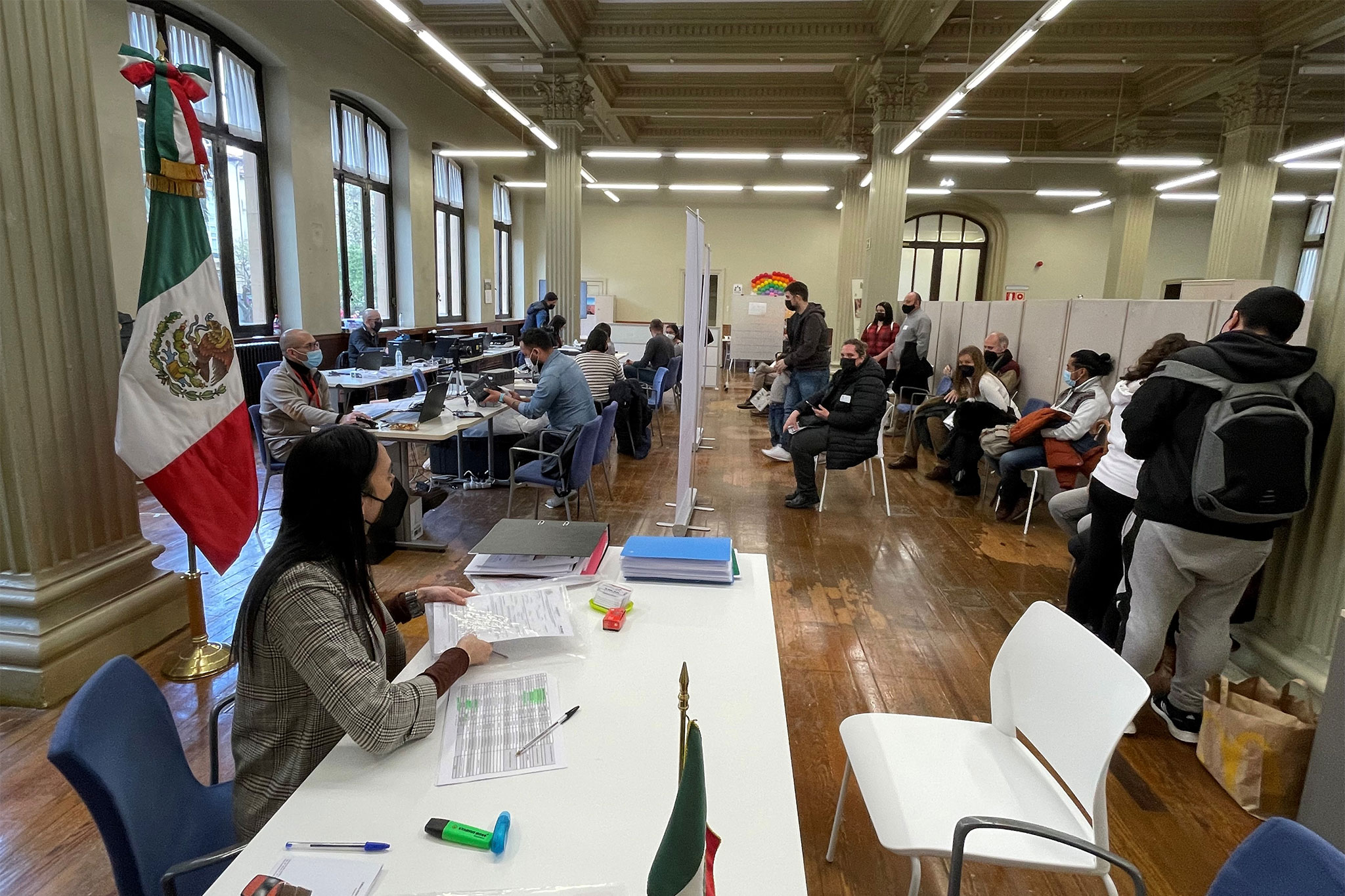
To meet the needs of the Mexican and Mexican-American population, the current government has developed a network of 53 consulates, in addition to mobile consulates, with the aim of bringing documentation and protection services closer to areas far from the consular headquarters, which also operate on weekends.
Mobile consulates perform an extremely important task, especially in these times, when the policies of the US administration under Donald Trump are becoming increasingly aggressive.
The demand for documents from all citizens has exponentially increased the need for services provided by consulates: issuance of Mexican passports for adults and minors in the face of threats of family separation, birth certificates, voter ID cards, assistance in obtaining welfare cards to send economic resources to Mexico, and guidance on obtaining dual nationality and for the repatriation of loved ones who have died in the United States.
In addition, they also provide guidance for consular protection through teams of lawyers, which is offered at both mobile and permanent consulates.
Also noteworthy is the collaboration of the Chicano community and organized migrants for the mobile consulates.
In most cases, these organizations are responsible for providing the best facilities, with functional spaces for the hundreds of people who come for guidance and procedures. These facilities must have internet access and adequate lighting, and provide food and play areas for the children who will spend almost the entire day at the mobile consulate.
Educational communities in Mexico and other Latin American and Caribbean countries, with experience in previous raids, offer guidance to protect minors from the likely separation from their families, actions that are part of the various cruel policies of the US government.
We must acknowledge the collective work of the Mexican community in the United States, in collaboration with the Mexican government. We must also admire our Chicanos and migrants who do so much to maintain our Mexican pride.
-
Sheinbaum Backs UN Resolution on Pedro Castillo
Sheinbaum backed a UN panel that found Castillo’s detention arbitrary, said his ouster lacked the votes Peruvian law required, and signaled Mexico is open to restoring ties with Lima.
-
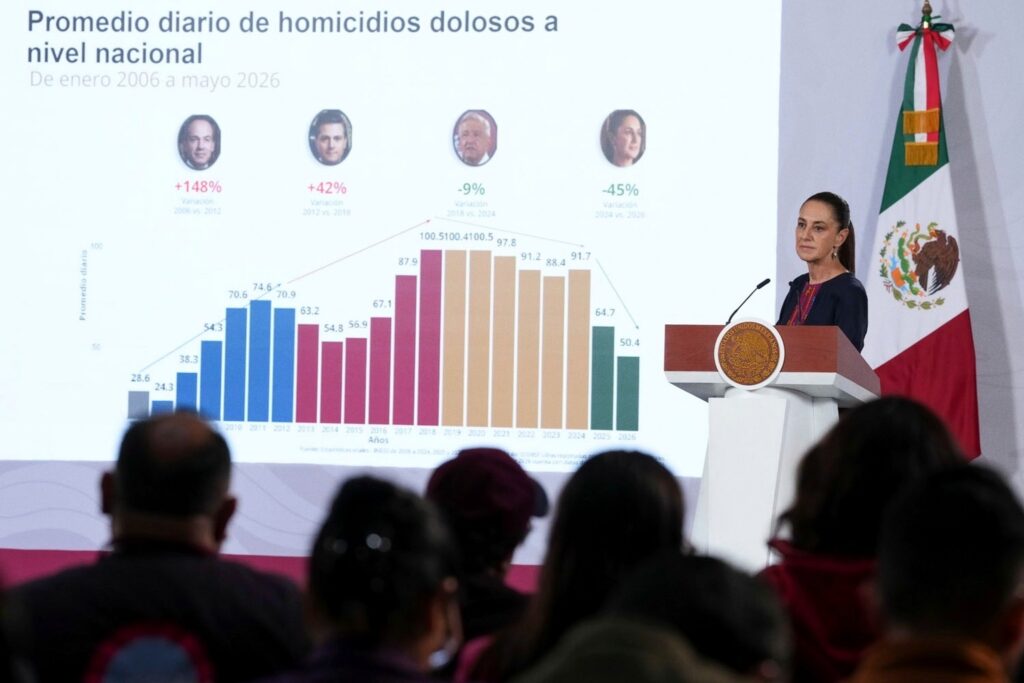
Under Calderón There Was Interference, Deals With Cartels, and Violence Increased: Sheinbaum
Sheinbaum said Calderón’s pacts with the Sinaloa Cartel and unchecked US operations drove homicides up 148%, citing Fast and Furious.
-
Centro Fox, a Little Gift from the Elites Thanks to Tax Favors, Will Become a Catholic School
Former Mexican President Vicente Fox handed his elite-funded complex, bankrolled by Slim, Azcárraga and Salinas, to a Catholic order on a 100-year loan.