“The blind and the crippled came to him in the Temple, and he healed them.”
This editorial by Gabriela Rodríguez originally appeared in the April 3, 2026 edition of La Jornada, Mexico’s premier left wing daily newspaper. The views expressed in this article are the authors’ own and do not necessarily reflect those of Mexico Solidarity Media or the Mexico Solidarity Project.
On Good Friday it is imperative to refer to the passion, crucifixion and death of Jesus Christ, a day of mourning, reflection and fasting for those who live the Christian faith and represent a third of the world’s population (includes Catholic, Protestant and Orthodox); while 77 percent of the Mexican population identifies as Catholic and 11.2 percent as Christian (Protestants, Christians and Evangelicals, 2020 Census).
Compassion and empathy for people with disabilities are deeply rooted in Western culture, due in part to Christ’s miracles for people with disabilities in the Gospels: “And the blind and the lame came to him in the temple, and he healed them” (Matthew 21:14-16). However, studying and addressing the needs of people with disabilities has only recently gained importance.
In this space, I present a study on the double vulnerability of Mexican migrants returned from the United States who have at least one disability, conducted by Marisol Luna and Valentina Rabasa, researchers at the Latin American Faculty of Social Sciences (FALCS, Mexico). As the authors note, the number of deportations of our compatriots has been decreasing. Compared to his predecessors and successors, the highest number of deportations of Mexican nationals occurred during the administration of Barack Obama (2009-2016), with 1,844,573 and 1,003,364 deportations during his two presidential terms, respectively. In contrast, during Donald Trump’s first presidential term (2017-2020) there were 766,376 deportations (with an annual average of 191,594 events) and a total of 839,760 during Joe Biden’s term (2021-2024).
With the halt to northward migration in the first year of Trump’s second term, the decline exceeded all forecasts; the number of Mexican nationals returned from the United States was 206,232 in 2024 and during 2025 it decreased by 22.3 percent, settling at 160,192 (mostly men over 18 years of age); the number of Mexican nationals in an irregular migratory situation on the southwest border of the United States went from 407,932 in 2024 to 64,795 during 2025 (estimates from the National Population Council, CONAPO).
The study by Luna and Rabasa identifies 19,926 Mexican migrants who returned from the United States (2020 Census) as having disabilities. It also analyzes the diversity of their profiles, the types and causes of their disabilities, their affiliation with health services, the degree of difficulty they face in performing activities, their medical conditions or mental health problems, and the underlying cause of each reported difficulty. They classify the type of disability into five categories: 1) motor: this includes people who have great difficulty or are unable to walk, go up or down stairs, as well as those who reported similar difficulties bathing, dressing, or eating; 2) hearing: people who, even with a hearing aid, could not hear or did so with great difficulty; 3) visual: people who, even with glasses, could not see or did so with great difficulty; 4) speech: people who cannot speak or communicate or have great difficulty doing so; and 5) cognitive: people who cannot remember or concentrate, or do so with great difficulty.
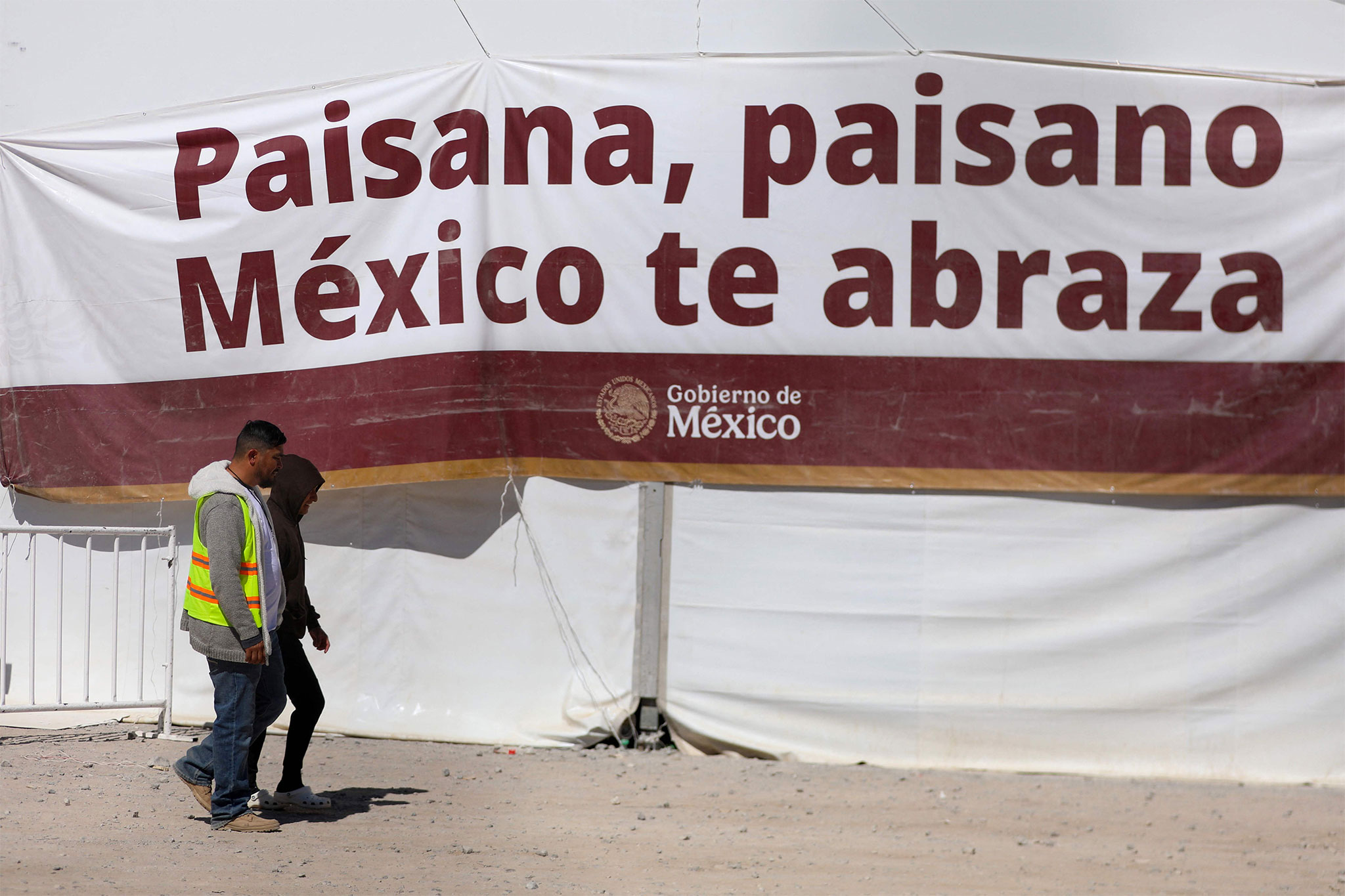
The study’s findings reveal a high prevalence of visual and motor disabilities, concentrated among older adults, as well as conditions related to work activities and conditions in the United States. It concludes that this population experiences a form of structural exclusion and recommends strengthening their support through participatory evaluation mechanisms, an intersectional approach, and institutional coordination to ensure a dignified and non-discriminatory reception. It must be acknowledged that these individuals, although Mexican, are returning to a country that often feels foreign to them. The study notes that the government program “México te Abraza” (Mexico Embraces You) responded effectively by offering social support to returnees, but a clear and differentiated operational strategy is needed.
The publication can be viewed here.
Since January 2025, the Mexico Embraces You program has established a Command Center at the Ministry of the Interior to monitor service modules located at border points. Support has been provided to more than 189,000 Mexicans repatriated from the United States, including medical and psychological care, legal guidance, lodging, document issuance, food, welfare cards (worth 2,000 pesos), and employment to facilitate their dignified and orderly reintegration. Those living with a disability will be able to receive the special pension that already reaches 1.6 million compatriots in that condition.
Because compassion and inclusion of people with disabilities is also a conviction of the Mexican State.
-
Sheinbaum: US Decision to Name Cartels ‘Terrorists’ ‘Must Not Be a Pretext for an Invasion’
In opposition-run Aguascalientes, Sheinbaum called welfare spending ‘investment, not expense,’ pointing to the trillion pesos now behind programs recast as constitutional rights.
-
Intentional Homicides in Zacatecas Fall 96% Since 2021, SESNSP Reports
Zacatecas’ daily homicide average fell from 4.5 killings a day at its 2021 peak to 0.2, the lowest on record, as residents’ sense of insecurity also eased.
-
Mexico Reinforces Search Strategy with 10 Actions; Reports 13,625 People Located
Mexico reinforced its National Search Strategy with 10 new actions; of 31,946 people located, 13,625 were found since July 2025 through the strategy’s mechanisms.