Mexico’s Unpaid & Exploited Gas Station Attendants
This article by Jared Laureles and Jessica Xantomila originally appeared in the April 6, 2026 edition of La Jornada, Mexico’s premier left wing daily newspaper.
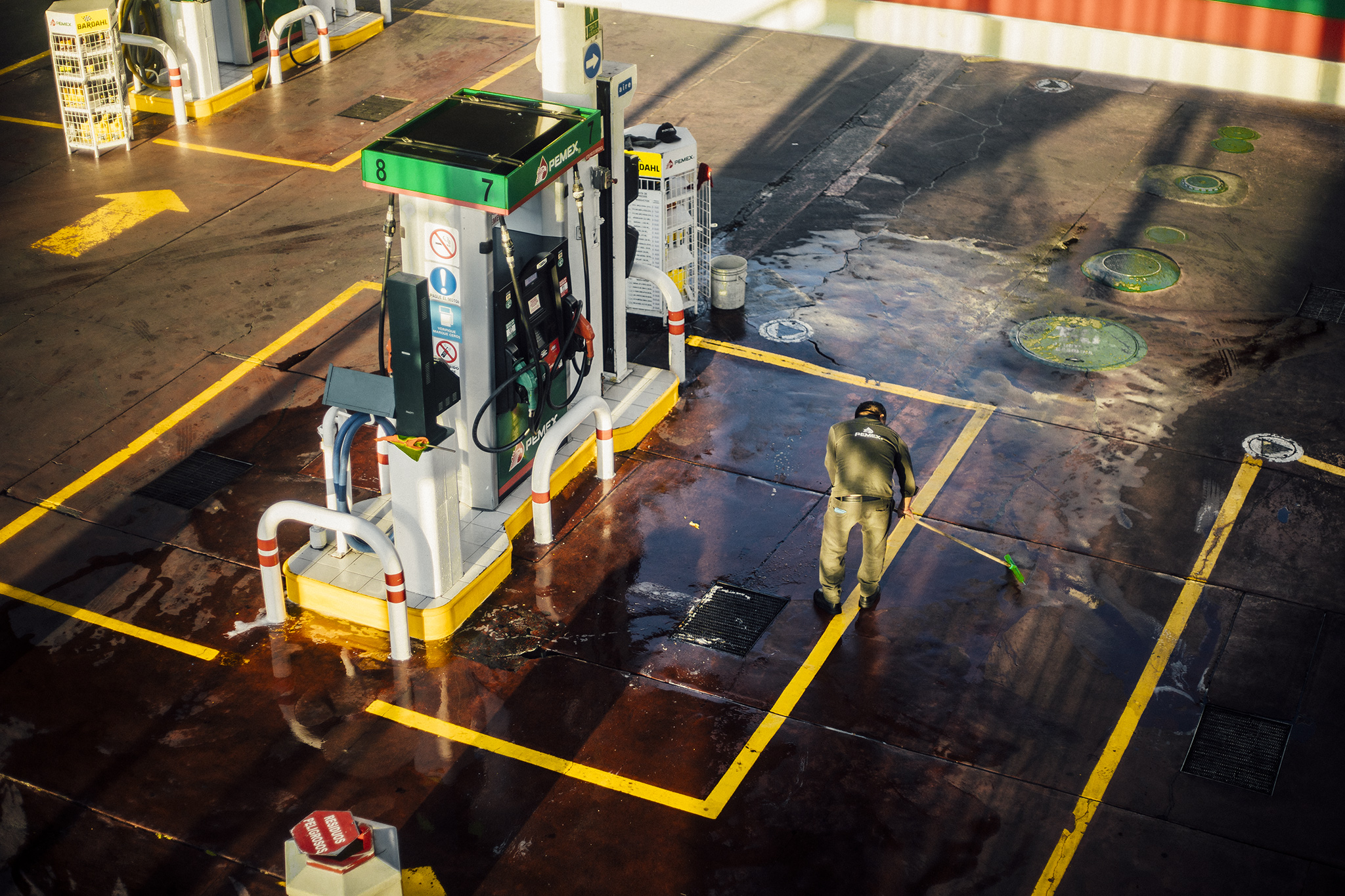
In addition to lacking an employment contract, salary, social security and benefits, gas station attendants must pay a fee to be able to work in one of the more than 13,500 service stations in the country, where they depend solely on tips to provide for their families.
In this industry, which registers daily transactions of millions of pesos, “slave-like” working conditions persist due to multiple abuses, ranging from being forced to sell additives or motor oils, to carrying out repairs in other businesses of the franchisees.
According to the National Minimum Wage Commission, a gas station attendant’s daily wage should be 326 pesos; however, not all of them receive it, which affects other rights such as Christmas bonus, profit sharing, and even access to housing or a retirement pension.
Raúl has been pumping fuel for four years at a Pemex station on the Picacho-Ajusco highway, south of Mexico City, where he says he pays a daily fee of 100 pesos (a few months ago it was 150) which is deducted from the tips he receives from motorists to work one of the three eight-hour shifts.
The 22-year-old says his average daily tip income is around 600 pesos, from which he deducts that fee; he also has to pay for his uniform and shoes.
Oswaldo’s case isn’t much different; he says he ended up paying 150 pesos of his tips, since he also had to buy cleaning supplies for the station’s upkeep. When he was 19, he started working at the Olesma station in Milpa Alta; at first, they didn’t charge him, but later they did, and at the end of his shift, he only kept 350 or 400 pesos, not enough to cover his and his family’s expenses.
“The way the manager and the owner treated us was like slavery, because if I had an emergency and didn’t show up for work, they would put us to work doing odd jobs: after working eight hours at the station, I had to stay four more to paint another business that the boss had, or he would take us to his house to do some repairs,” he explains.
The Union Struggle
The dispatcher, now 27 years old, indicates that these conditions changed after he joined the National Union of Workers of Services, Commercial Houses, Offices and Expenditures, Similar and Related of the Mexican Republic, which obtained the ownership of the collective contract at that station, where in December a strike broke out due to the unjustified dismissal of 11 workers.
Salvador Arellano, general secretary of this union, pointed out that 11,000 gas station attendants work under these precarious conditions in the 370 stations in Mexico City and its metropolitan area, even though Pemex establishes that, for the granting of franchises, they must comply with the requirements established by Mexican laws.
He mentions that service stations obtain variable profit margins; it depends on the deal with the fuel marketer and the sales volume, but on average it ranges between 1 and 3 pesos per liter.
Although there are more than 13,500 stations in the country, according to official data, he clarifies that this situation occurs mainly in the capital of the country – where 85 percent of the dispatchers do not have a salary – as well as the state of Mexico, Morelos, Puebla, Querétaro and tourist places such as Acapulco or Cancún.
In addition to the lack of union freedom and the existence of protection unions, labor authorities conduct no inspections. Meanwhile, dispatchers “wander around” stations, the union knows each other, and they recommend places where staff have already been laid off.
-
Defense of Sovereignty “Is Not Rhetoric, It’s Principles,” Sheinbaum Says
Sheinbaum recalled foreign pressure on Mexico in the 19th and 20th centuries and blamed the neoliberal governments and Calderón for opening the door to U.S. influence.
-
Sheinbaum Presents Draft Decree to Force Digital Platforms to Take Down Content That Incites Violence and Hate
No fines for now: the government will talk with tech companies before publishing the decree next week, a promise made after the Coahuila school attack.
-
People’s Mañanera October 9
President Sheinbaum’s daily press conference, with comments on digital safety, IMSS-Bienestar, sovereignty, and the opposition.