The USMCA is Causing a Decline in Mexican Agriculture
This article by Braulio Carbajal originally appeared in the April 7, 2026 edition of La Jornada, Mexico’s premier left wing daily newspaper.
Editor’s note: CONASUPO, or the National Company for Popular Subsistence, was a Mexican parastatal company which helped regulate and support Mexican agriculture by guaranteeing the purchase and price of basic crops in Mexico, as well as was involved other initiatives such as establishing LICONSA, the Mexican dairy producer which still to this day provides fortified dairy products to increase the nutritional intake of rural and impoverished Mexican communities. It was created by President Adolfo López Mateos in 1961. President Adolfo López Mateos had also nationalized the Mexican energy industry.
More than three decades after the opening of trade with the United States and Canada under the then North American Free Trade Agreement (NAFTA), Mexico’s imports of U.S. corn have increased ninetyfold (9,000 percent), according to official data. Now, purchases from abroad exceed domestic production, to the point that one out of every two kilograms of corn consumed in the country is of U.S. origin.
According to data from the United States Department of Agriculture (USDA), in 1993—the year before the treaty came into effect—Mexico purchased 286,874 tons of corn from the United States, while in 2025 that figure reached 26,112,845 tons. Almost all of this corn is genetically modified and yellow; that is, the kind used in industry and as livestock feed, not in the production of masa and tortillas.
In 1993, the business of selling corn to Mexico represented only $35 million for the United States, and now it exceeds $5.9 billion.
The North American Free Trade Agreement (NAFTA), now the United States-Mexico-Canada Agreement (USMCA), entered into force on January 1, 1994. Within it, specifically in Chapter VII, the complete liberalization of trade in the region’s agricultural and forestry sectors was promoted. Its implementation, according to an analysis by Grain and Bilaterals.org, occurred immediately after the counter-reform to Article 27 of the Constitution, which facilitated the land grabbing and privatization of indigenous lands, as well as all collective peasant landholdings.
The international organization highlights, among other things, that the trade agreement fostered impunity for unfair imports, serving the interests of transnational corporations. This, in turn, boosted corn imports, despite it being a staple food in Mexico.
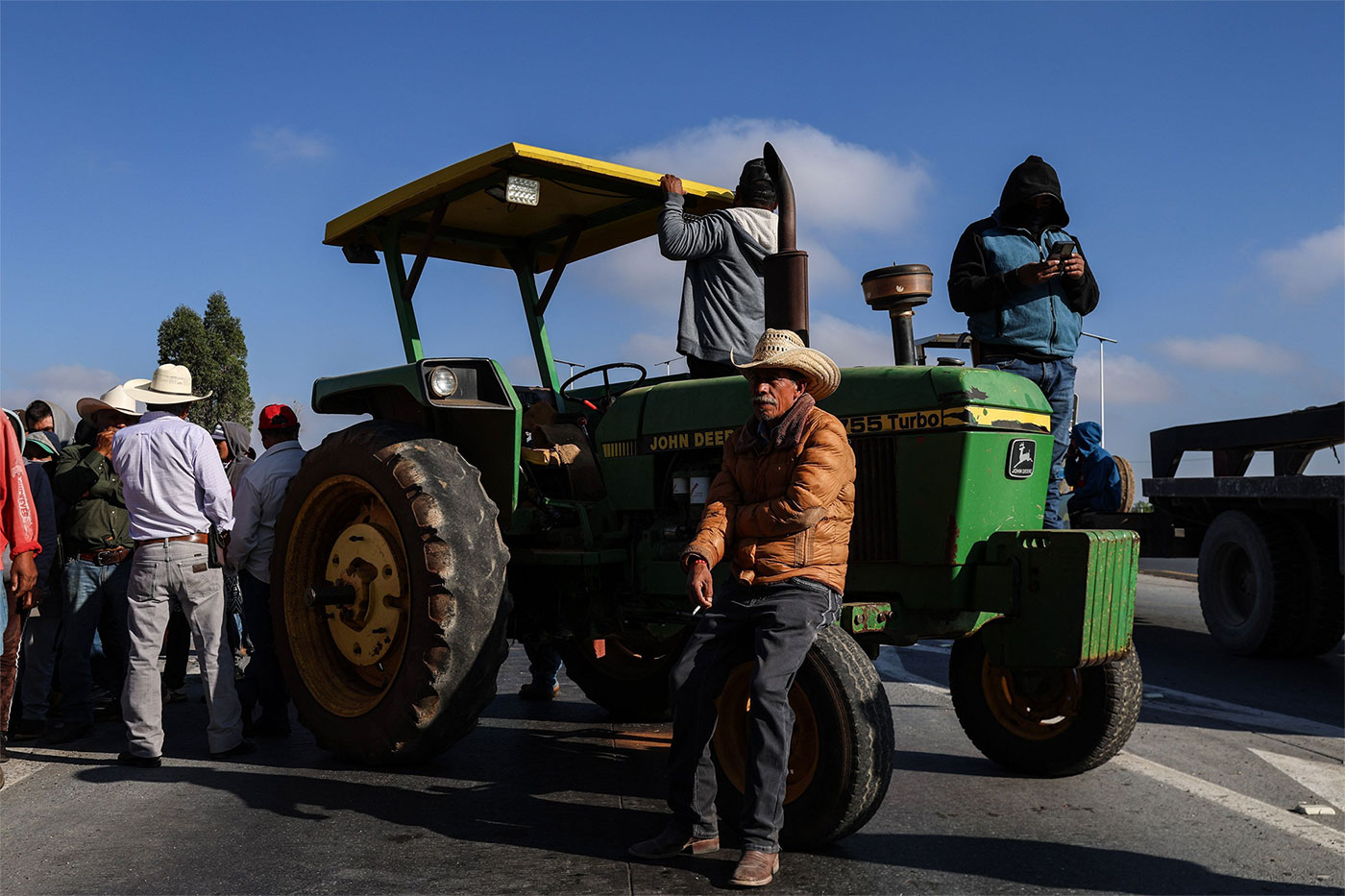
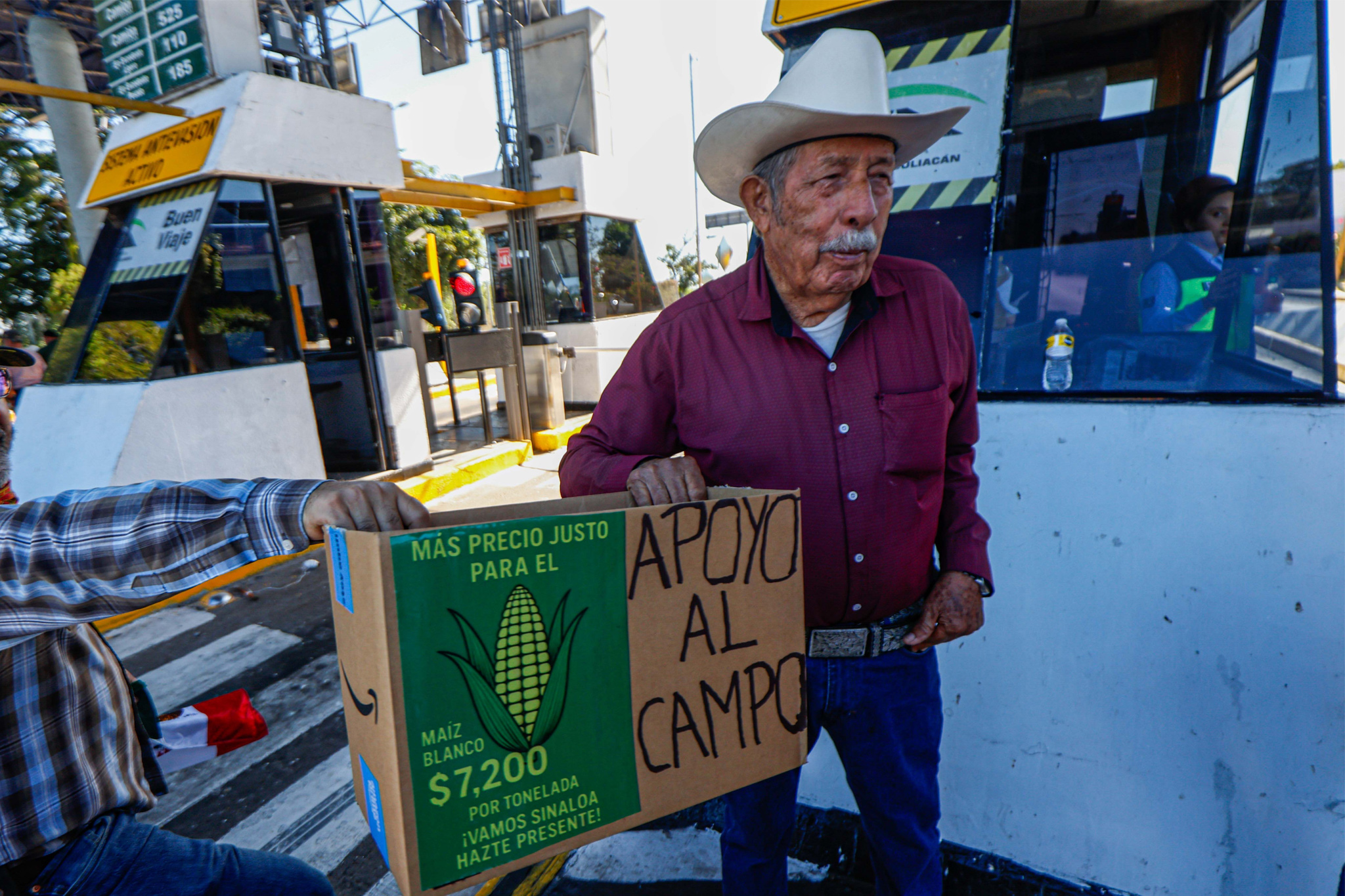
In this context, as they have done on other occasions, various agricultural producer organizations are carrying out a national and indefinite strike with blockades on strategic highways in Mexico, protesting the crisis in the countryside, low corn prices, insecurity on the highways (robberies and extortion) and the lack of compliance by the federal government with the agreements signed in November 2025.
Among the demands is the exclusion of white corn and other basic grains from the USMCA, arguing that dumping, or unfair competition, from US corn has driven down national prices, affecting thousands of small producers across the country.
Ana de Ita, director of the Center for Studies for Change in the Mexican Countryside, emphasizes that Archer Daniels Midland, Bartlett and Cargill, global agribusiness giants, are responsible for almost half of the corn imports from the United States.
These corporations influence international prices through real or speculative movements. According to de Ita, all three grew and strengthened by taking advantage of the market vacuum left by CONASUPO and the complete liberalization of agriculture brought about by NAFTA and the USMCA.
Marcelo Ebrard, the Secretary of Economy, recently stated in an interview with La Jornada that the farmers’ request is unfeasible, as it would jeopardize parts of the agreement, especially export products like berries and avocados. “It’s not in our best interest. The way forward is to accelerate competitiveness where possible and mitigate the damage where it isn’t.”
Carlos Bautista, an international trade specialist at La Salle University, explained that if Mexico were to suggest tariffs on agricultural products during this new review of the USMCA, the United States would demand something in return; for example, in the automotive or manufacturing sectors, which would cause further repercussions. “It’s very difficult to change the rules of the game at this point.”
However, Mexico can negotiate the application of “import quotas” to allow the entry of grains with preferential tariffs up to a certain amount, and then, once the limit is exceeded, the normal tariff is paid, he advised.
-
“I Want to Work With President Sheinbaum,” Mamdani Says; He Praises Her Policies
At the Urban 20 forum, New York Mayor Zohran Mamdani called Mexico City an international ‘inspiration’ for how it confronts the cost-of-living and care crisis.
-
Mexico Sees the US as a ‘Greater Threat’ Than China or Russia, New Survey Confirms
A Focaldata–Rockefeller poll finds 58% of Mexicans see the US as a major threat, more than double the figure for China and well above Russia.
-
Mexicana Receives Its Ninth Embraer Aircraft; Increases Its Capacity by 11.04%
Mexico’s recently nationalized airline Mexicana receives its ninth Brazilian-built Embraer E2, raising monthly capacity to 57,020 seats out of the AIFA airport.