Unresolved Issues with Teachers
This editorial by Simón Vargas Aguilar originally appeared in the April 10, 2026 edition of La Jornada, Mexico’s premier left wing daily newspaper. The views expressed in this article are the authors’ own and do not necessarily reflect those of Mexico Solidarity Media or the Mexico Solidarity Project.
As we clearly saw during the [national farmers strike] blockade on April 6th, which paralyzed several highways in more than 20 states and exposed the profound deficiencies affecting various sectors, social demands persist in Mexico. Undoubtedly, these demands are justified; they reflect a widespread frustration with inequality, the lack of support, and the indifference of the authorities.
And while many sectors need help, today I would like to focus on one of the hardest hit and most systematically mistreated by various levels of government: education workers. Far from being valued as pillars of the nation, they have been made victims of chronic precarity that erodes not only their dignity but also the very quality of public education. For example, in Japan, teachers are considered fundamental pillars of society, enjoying very high social status, honor, and great respect. It is also one of the highest-paid professions in the country, to the point that they are publicly called sensei.
But, for our country, sadly, the problems are not new, but they have worsened into a structural crisis; thousands of teachers work under temporary contracts without any certainty of continuity; salaries are shamefully low, far below what inflation and the cost of living demand.
It is up to the current government to make the necessary changes, but, it must be said openly, all governments have failed teachers and for decades have used them as electoral pawns, stigmatized them as “lazy” or “troublemakers,” and abandoned them while boasting about “transformations.”
Added to the above is the excessive bureaucracy and workload, because, in addition to teaching large groups, teachers must complete endless reports, attend mandatory training without real support, and participate in unpaid extracurricular activities. A lack of material resources is another constant: broken blackboards, a lack of updated textbooks, inadequate laboratories, and, in many rural schools, not even internet access or basic teaching materials.
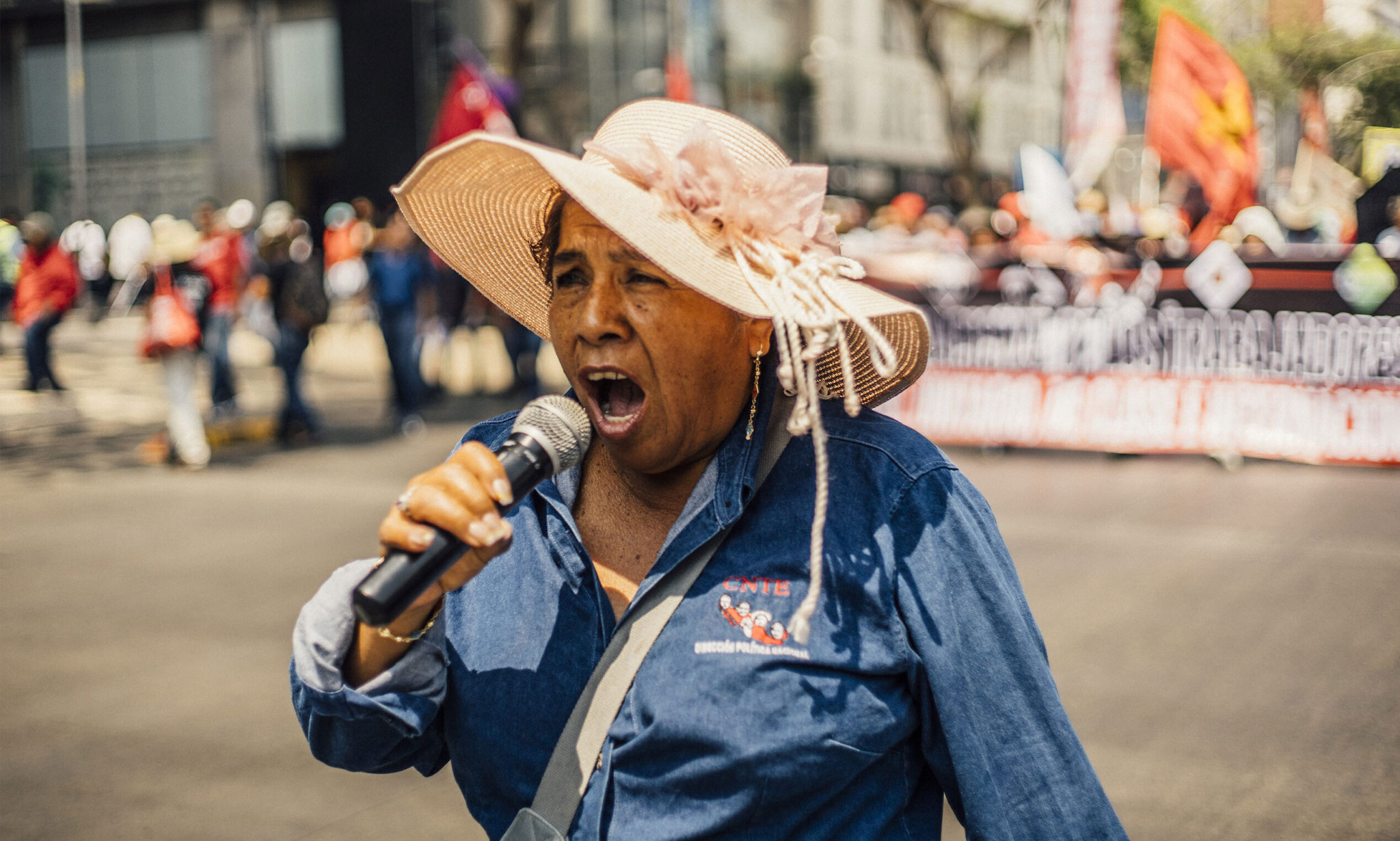
The professional development courses promised by federal and state education departments are usually virtual, generic, and lack follow-up, leaving teachers to fend for themselves. In this context, the National Coordinator of Education Workers (CNTE) has once again raised its voice and taken to the streets to continue demanding what it has been demanding for years. Today, among its many objectives, they aim to repeal the 2007 ISSSTE Law, which changed the pension system from a pay-as-you-go system to one of individual accounts managed by AFORES (privatized Retirement Fund Administrators).
This reform turned the right to retirement into a business for private financial capital, because teachers contribute for decades, but upon retirement they receive amounts that depend on market volatility, with pensions that can be up to 50 percent lower than those of the previous system. And what is most outrageous is the broken promises. Since Andrés Manuel López Obrador’s presidency, it was promised to end this law; it was said that the system would return to a solidarity-based one, which did not happen.
During her campaign, President Claudia Sheinbaum Pardo repeatedly declared at rallies, “We are going to repeal the ISSSTE Law,” but now, even after being elected, she has yet to fulfill that promise. Despite dialogue sessions and national strikes, the law remains intact. Even recently, contingents from the CNTE teachers’ union have led protests against the individual account model imposed by the 2007 ISSSTE Law, demonstrating in front of the AFORE pension fund administrators and demanding that the right to a dignified retirement cease to be merely a profit for the banks.
Education professionals have given compelling proof of their demands, with even the CNTE (National Coordinator of Education Workers) stating that if the Sheinbaum Pardo administration does not address their demands, including the immediate repeal of the aforementioned law, they could boycott the 2026 FIFA World Cup: “If there is no solution, the ball won’t roll.” Given this situation, even the National Union of Education Workers (SNTE), which until now had been an unconditional ally of Morena (the ruling party), is beginning to show signs of activity and voice its grievances. Its general secretary, Alfonso Cepeda Salas, delivered the 2026 National List of Demands (PND) to the Secretary of Public Education, Mario Delgado Carrillo, two months ago.
It demands, among other things, a salary increase of at least 13 percent, improvements in pensions, and the end of mechanisms like the USICAMM [Editor’s note: promised in February 2025]; what is significant is that the SNTE, which had almost unconditionally supported the federal government, is now joining, albeit timidly, the historical demands of the CNTE, and it is that the teachers are waking up and the leader fears losing credibility and base; but the signal is clear: the discontent is evident and can no longer be hidden or contained.
For now, it is up to the current government to make the necessary changes, but, it must be said openly, all governments have failed teachers and for decades have used them as electoral pawns, stigmatized them as “lazy” or “troublemakers,” and abandoned them while boasting about “transformations.” Today, with a mobilized CNTE and a SNTE beginning to make its presence felt, the message is clear: teachers will no longer accept mockery; they demand decent salaries, stability, real resources, and the fulfillment of promises that have been postponed for decades.
Until this crisis is addressed at its root, public education will remain the weakest link in a chain of inequalities that can no longer tolerate excuses. Mexico owes its teachers much more than applause in the Zócalo: it owes them justice.
-
China Accuses the US of Dividing Mexico over Trade Dispute
China’s embassy described the US comments as an expression of “supremacy and hegemony” and asserted that they sought to discredit the economic cooperation between Mexico and China.
-
Sheinbaum Meets Privately with Maru Campos on Her Arrival in Ciudad Juárez
If any law was broken in the drug operation involving CIA agents in Chihuahua, those responsible, including state officials, must be prosecuted, the two agreed.
-
Beatriz Mojica: From Criticizing AMLO to Coordinating Morena in Guerrero
The senator on leave is Morena’s pick for governor of Guerrero in 2027, after a career that includes the PRD and her 2018 support for Ricardo Anaya.