PAN-Affiliated Cop Who Wanted to Give Offices to CIA, ICE & DEA Wants to Govern Chihuahua
This article by Sugeyry Romina Gándara originally appeared in the May 7, 2026 edition of Sin Embargo.
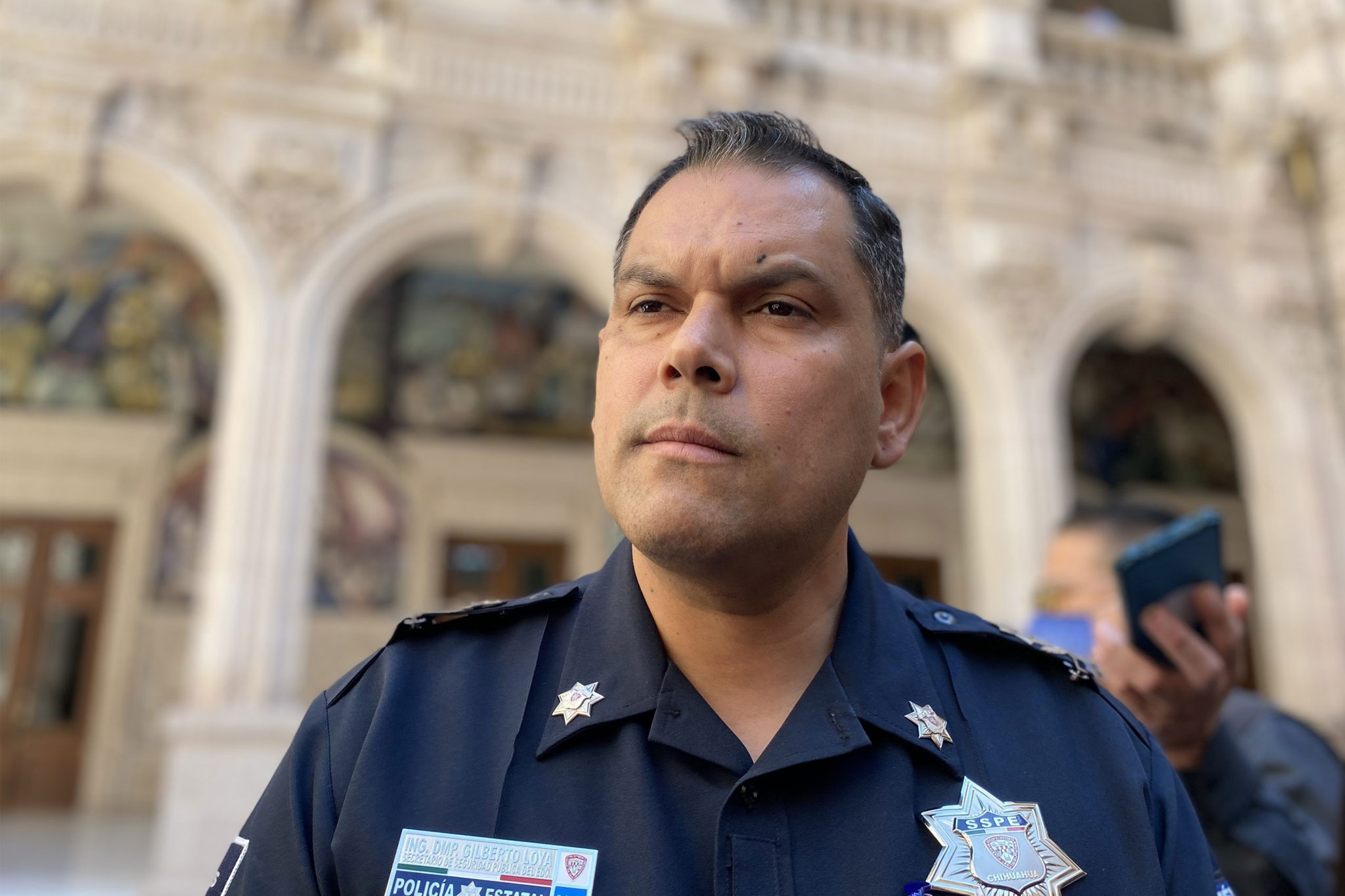
Chihuahua’s Secretary of Public Security, Gilberto Loya Chávez —identified as one of the figures linked to the CIA’s interference plot in the state—is openly promoting his candidacy for the National Action Party (PAN) nomination for governor. The scandal doesn’t seem to be affecting him: far from slowing him down, it has accelerated his campaign and intensified his early promotion of his image in the lead-up to the 2027 elections.
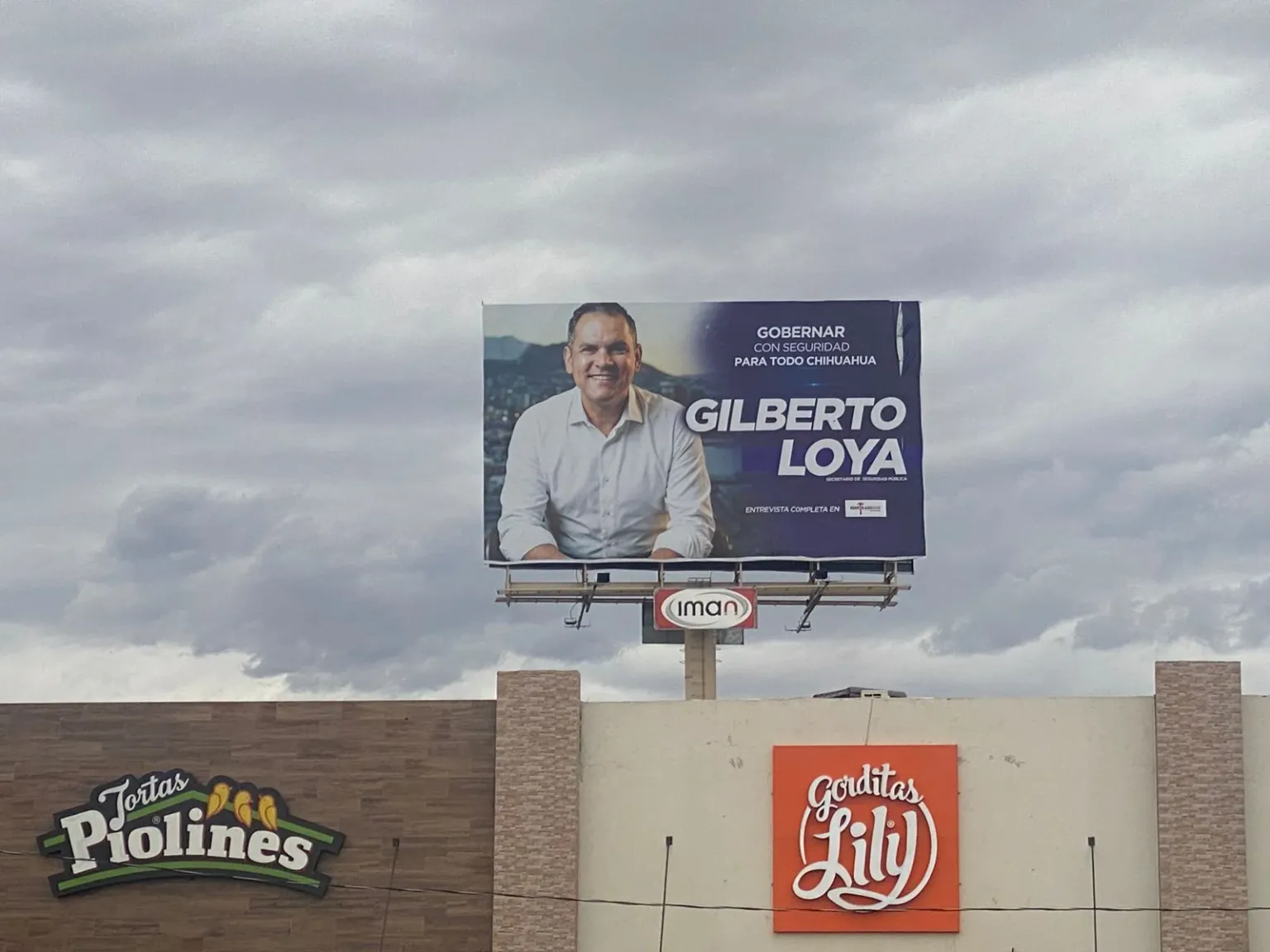
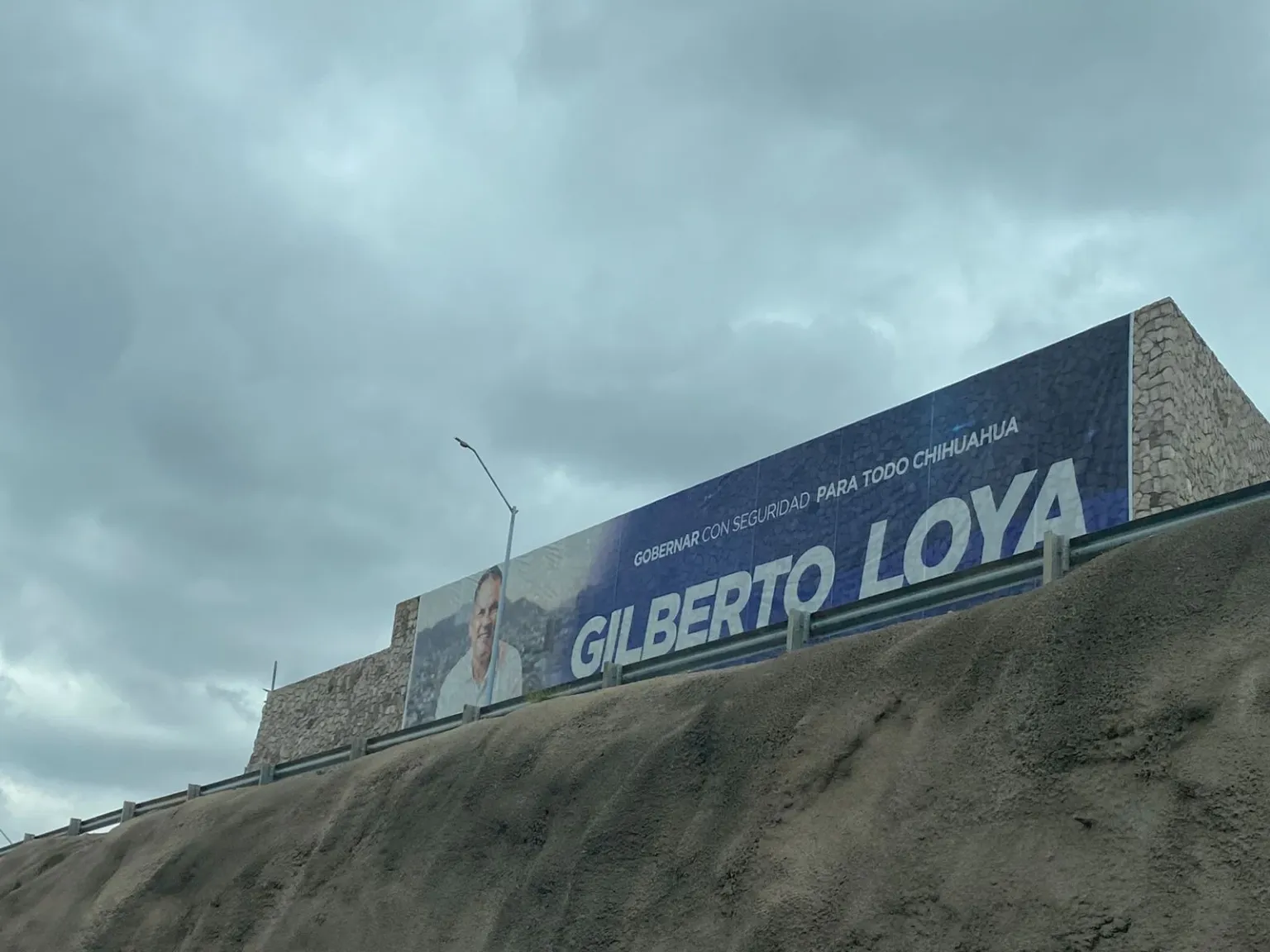
In the capital of the so-called “big state,” blue dominates the urban landscape, not because of the sky, but because of the proliferation of billboards for PAN (National Action Party) hopefuls. Among them, Loya Chávez stands out, his presence growing with each passing day. Other figures seeking the nomination are also featured, and even some aspiring to the mayoralty. For example, though less frequently, advertisements for former Attorney General César Jáuregui are still visible, even after his resignation due to the CIA scandal.
Loya Chávez also became a figure in the recent public debate following the CIA operation in the Sierra de Chihuahua. His role gained prominence by revealing that this operation was not an isolated incident, but rather part of a series of actions framed within the state government’s permissive policy toward foreign agencies. Months earlier, the official himself acknowledged that María Eugenia Campos’ administration was opening its doors to agencies such as the FBI, the DEA, CBP, and the Border Patrol, not only for the exchange of information, but also for their potential presence on Mexican soil.
“The Sentinel Tower is open for the eventual and, eventually, permanent presence of these agencies [FBI, DEA, and CBP],” the Secretary of Public Safety stated in an interview with El Heraldo de Juárez on April 13. In that conversation, he explained that the 18th floor will operate as an International Intelligence Fusion Center, with the potential for collaboration and even a permanent presence of these agencies.”
“The 18th floor is designed to become an International Intelligence Fusion Center, to operate and share information legally with national, but also international, agencies,” he added days before the scandal broke regarding the CIA’s involvement.

Added to this are the statements of President Claudia Sheinbaum Pardo, who on April 27 —after the attempt by the Government of Chihuahua to shield itself with the creation of a unit to investigate the case— maintained that the presence of US agents can only be explained in two ways: either the State Attorney General’s Office made a pact with the CIA, or the State Public Security Secretariat itself did so, the latter headed by Loya Chávez.
However, the scandal has not slowed down his aspirations.
On the contrary, all indications are that their efforts have intensified. Although he doesn’t yet appear in the polls as a strong contender, he’s already working to position himself. The city is plastered with his image: billboards, walls, and buildings display his face alongside the phrase: “Governing with security for all of Chihuahua, Gilberto Loya.”
The promotion is presented in the form of a supposed magazine, whose name is barely visible; a modus operandi that has become common among politicians seeking to get ahead of election times.
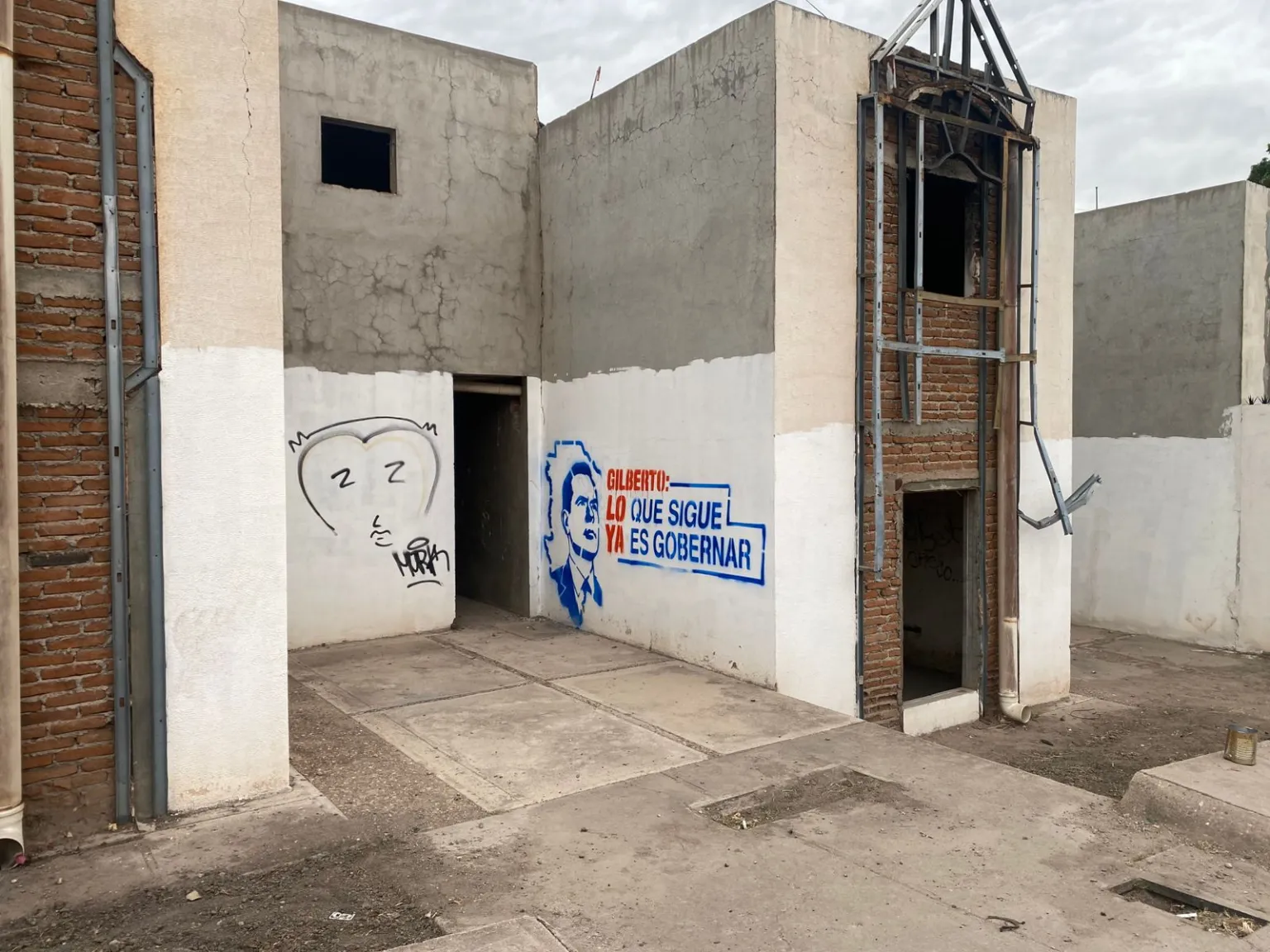
In the case of the Chihuahua Secretary of Public Security, it’s not just about advertisements. The same graffiti is repeated on walls and houses under construction: the outline of the state, his face, and his name turned into an acronym, as part of a positioning strategy spread across different parts of the city.
It’s not just an advertising campaign. Loya himself has reiterated his political aspirations on several occasions.
A few weeks ago, he openly acknowledged it: he’s already working on his project for 2027. Although he had hinted since early 2026 that it would be “an honor” to become the PAN’s candidate for governor, he recently spoke more clearly about his intentions. He even stated that, in his “free time,” he maintains dialogue with different sectors and that his aspirations have already been discussed with Governor María Eugenia Campos.
On April 29, amid the controversy surrounding the CIA case, Loya reiterated his political intentions and asserted that favorable conditions existed within the PAN party to advance his project. During a visit to Delicias, he declared:
“The office I hold, that is, Governor Maru Campos, has entrusted me with the responsibility of ensuring the safety of all Chihuahuans. Right now, I am very focused on that. However, I have also had the opportunity to use my free time to engage in dialogue with various sectors, and of course, I am on the path to first seeking the PAN party’s nomination for governor and subsequently aspiring to be the next Governor of the state,” he told the media.
Furthermore, he insisted that his political aspirations remain intact: “Right now, I’m focused on being Secretary of Public Security. In my free time, I’m focused on building a project for the governorship of the state. Yes, I have a legitimate aspiration,” he declared.
The Governor’s New Candidate?
However, the aspirations of Chihuahua’s Secretary of Public Security, Gilberto Loya Chávez, have not yet been reflected in public opinion. In the main polls, the best-positioned candidate within the National Action Party (PAN) continues to be the Mayor of Chihuahua, Marco Bonilla.
Until a few months ago, Bonilla was considered the most visible figure in the National Action Party (PAN) and one of Governor María Eugenia Campos’s key political allies. However, recent reports suggest a possible rift between the two. Political columns and local media have documented tensions that were on full display during the Mexican Revolution Day parade last November, when several sports teams marched with banners supporting the mayor.
Some of the banners read “Bonilla, the neighborhood supports you,” while others displayed messages like “Let’s go for the knockout in the 27th,” clearly alluding to his aspirations for the governorship.
“I consider it a lack of respect on the part of the contingent and the Mayor because we must be respectful of the timing,” Campos Galván declared at the time, in a statement that did not go unnoticed and was interpreted in political circles as a public sign of a break between the two members of the PAN party.
In addition, in recent activities, they are no longer seen with the political closeness they previously maintained, something that various local columns have interpreted as an evident cooling in the relationship between the governor and the mayor of the capital.
Despite this context, Bonilla continues to lead in the polls within his party. However, the mayor of Chihuahua has also faced criticism regarding the cooperation of local authorities with U.S. agencies.
Since last December, before the scandal broke regarding the CIA’s involvement, the municipality of Chihuahua itself reported, through official statements, that the mayor traveled to New York to sign a collaboration agreement with security authorities in that city. The agreement focused on the training of municipal police officers and firefighters by U.S. agencies.
Although the information was widely disseminated through institutional bulletins, it went virtually unnoticed in national media and even in much of the state’s traditional press. However, regional political analysts critical of María Eugenia Campos’s government did take up the issue and began to warn about the seriousness of the agreement.
On the podcast El punto G de la política, hosted by journalist Antonio Piñón and Adrián Sánchez, the agreement was discussed, and it was revealed that it was allegedly signed without notifying the Ministry of Foreign Affairs. During the program, documents were even shown, and it was suggested that this collaboration could imply potential violations of the legal framework and provisions of the National Security Law.
This precedent takes on new relevance today following the scandal involving CIA agents in operations in Chihuahua, as it reinforces the idea that this was not an isolated incident, but rather a prior dynamic of rapprochement and collaboration with US agencies by local authorities.
This week, the Chihuahua state government issued a statement declaring that no public official may enter into agreements with foreign agencies. While not an explicit admission, the message was interpreted by various sectors as an implicit acknowledgment that such practices were indeed occurring.
The measure also opened up new questions: if the state government now prohibits these agreements, the question inevitably arises as to whether they were previously allowed or tolerated without the intervention of the Ministry of Foreign Affairs.
Meanwhile, the scandal involving the CIA has already begun to spark protests in Chihuahua. Various sectors have taken to the streets to demand clear accounts from Governor María Eugenia Campos about what happened and have even suggested that she request a leave of absence from her position to clarify her actions in this case.
Morena Takes the Lead
However, Bonilla remains the frontrunner to become the PAN candidate, although not necessarily to win the governorship, since Morena has begun to overtake the PAN in various polls leading up to 2027.
Generally speaking, polls in Chihuahua vary depending on the polling firm and the methodology used in each survey. However, one thing that has begun to attract attention in the electoral arena is the growth of Morena in a state historically governed by the National Action Party (PAN).
For example, according to a poll by Demoscopía Digital published on April 17, Morena leads in voter preferences in Chihuahua when the measurement is based solely on political parties. When asked which party they would vote for if the elections were held today, Morena received 34.9 percent of the preferences, while the PAN garnered 29.5 percent.
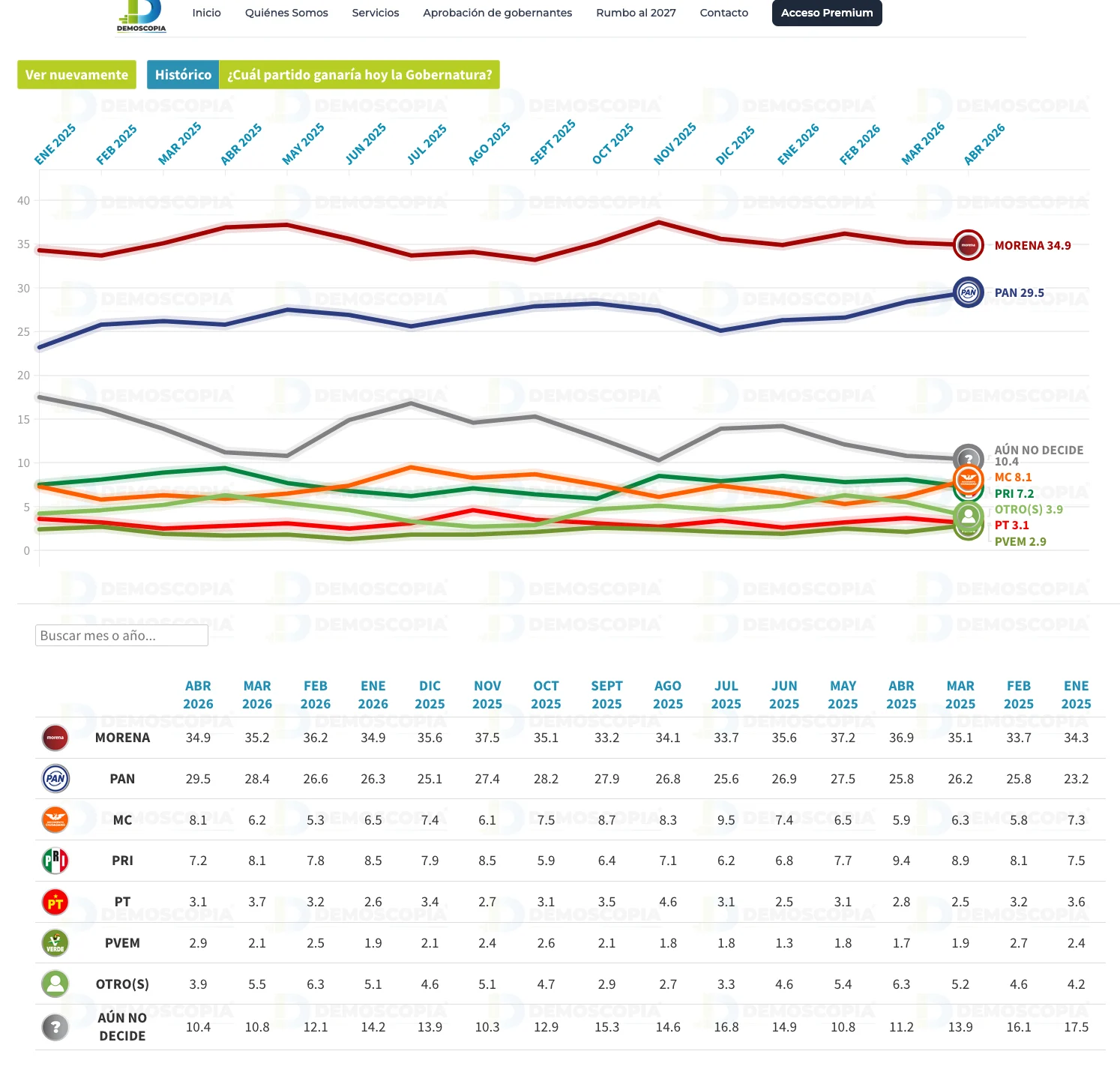
In that same poll, Movimiento Ciudadano even surpassed the Institutional Revolutionary Party (PRI), garnering 8.1 percent of the vote. The PRI trailed behind with 7.2 percent, followed by the Workers Party with 3.1 percent, and the Green Party of Mexico with 2.9 percent.
But it’s not the only polling firm that places Morena in the lead in Chihuahua. Another survey, conducted by TResearch International and released last April, also gives the Morena party an advantage. In that poll, when asked which party they would vote for in the gubernatorial election, Morena obtained 31.7 percent of the vote, while the PAN garnered 21 percent.
In fact, in that exercise, the percentage of people who did not respond or who said they had not yet decided how to vote was higher than the support obtained by the PAN, reaching 27.1 percent. Further down the list were the PRI, with 9.4 percent, and Movimiento Ciudadano, with 6.4 percent.
Another poll, conducted by the firm Cripes and also published in April, concurs that Morena is positioned as the political force with the greatest party support in Chihuahua. In that survey, Morena reaches 44 percent of voter preference compared to 36.2 percent for the PAN, while the PRI again appears relegated, with 7.8 percent.
However, while Morena is making progress as a party, polls of individual candidates show a more divided landscape. And in that context, the state Secretary of Public Security, Gilberto Loya Chávez, isn’t even among the leading contenders for the PAN nomination.
-
People’s Mañanera October 21
President Sheinbaum’s daily press conference, with comments on Pemex, fuel theft, Jalisco’s water crisis, missing persons, and the lie detector.
-
Jáuregui’s Arrest Does Not Close the CIA Case in Chihuahua; Morena Demands Broader Investigations
Morena leader Ariadna Montiel holds Governor Maru Campos politically responsible and says ex-prosecutor Guillermo Zuany must also face justice.
-
Morena Accuses Violation of the Secular State Over Award Ceremony for Evangelicals in the Chamber of Deputies
A representative of Israel’s embassy attended the PRI-hosted event, and the group’s founder was arrested in the U.S. for drug trafficking in 2007, Morena deputies said.