Confiscate What Was Looted
This article by Ana Lilia Pérez originally appeared in the May 14, 2026 edition of Sin Embargo.
We could count on our fingers the cases in which a white-collar criminal’s ill-gotten assets and properties are seized and confiscated, to be returned to the public treasury. Our country’s history is a recurring one of officials illegally enriching themselves while in office, who, in addition to remaining unpunished, even when judicial investigations are opened against them, almost always leave untouched the wealth that was the product of the public resources they plundered or the underhanded schemes they carried out under the protection of their power.
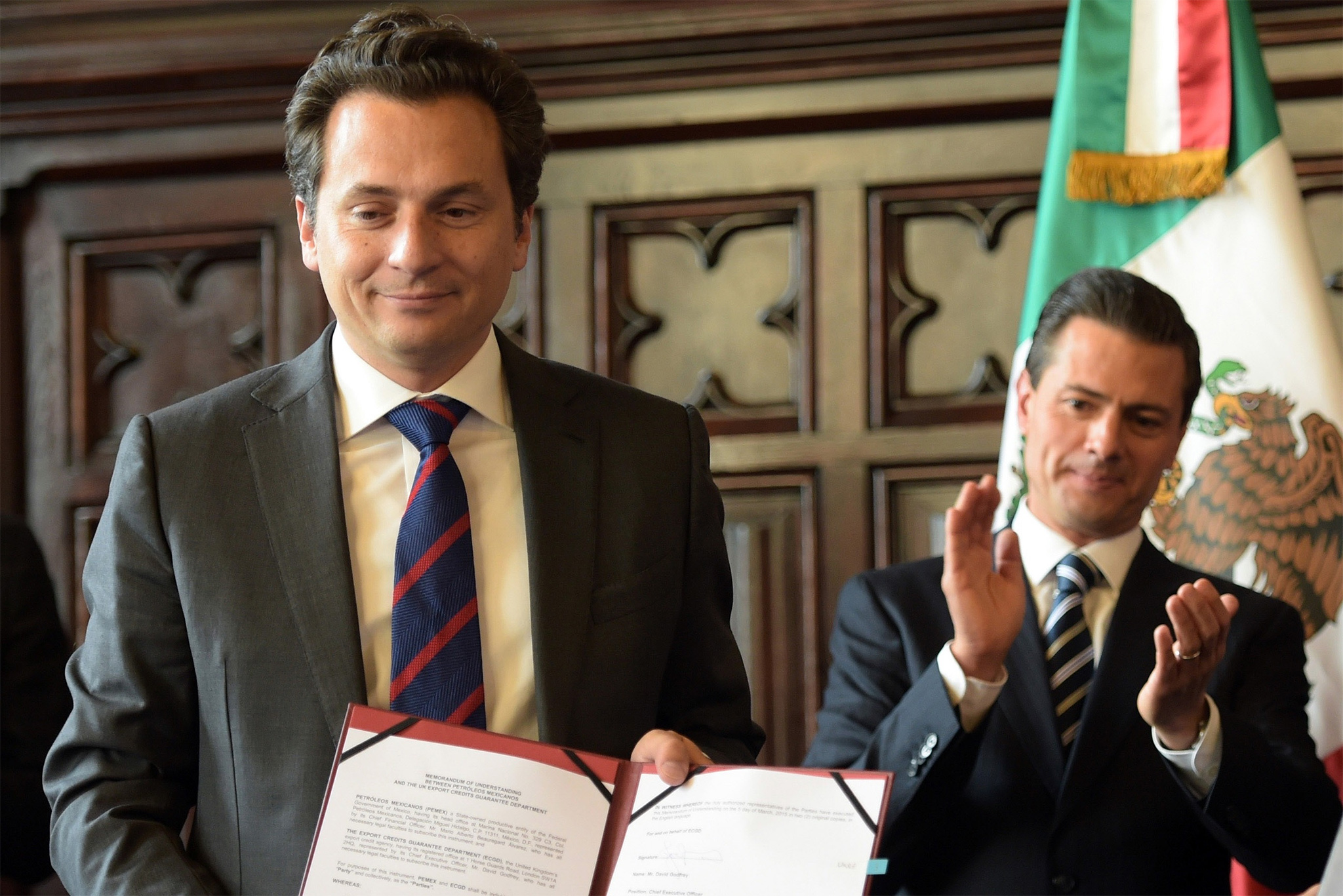
That is why it is of interest that the Attorney General’s Office (FGR) obtained a second favorable court ruling to apply the extinction of ownership and confiscate from Emilio Lozoya another of the mansions that he bought with resources of illicit origin: with money from the bribes that he was given for the disastrous business deals that he made as director of PEMEX, which generated losses for the oil company, to favor the businessmen who gave him those bribes.
This second mansion, located in the Lomas de Bezares neighborhood—an area promoted as “ultra-luxury” in the Miguel Hidalgo district—is a 1165-square-meter construction valued at more than 51 million pesos; Lozoya bought it with bribes given to him by the owner of Agronitrogenados, Alonso Ancira, for getting Pemex to buy his scrap plant at inflated prices, and with bribes from Odebrecht.
In March, as I detailed in this column, the Attorney General’s Office (FGR) obtained a favorable ruling to seize the mansion that Lozoya and his wife owned in the most exclusive area of Ixtapa, which they also paid for with bribe money. Now, the FGR has obtained a court order to confiscate the mansion located in Lomas de Bezares. The FGR legally proved that they acquired both mansions with funds of illicit origin.
Like many of that generation of PRI members who called themselves the “New PRI,” Lozoya turned out to be the classic nepotistic influence peddler, the son of a former Secretary of State under Salinas, and the grandson of a politician who served as interim Governor of Chihuahua. Born into privilege, Emilio Lozoya enjoys collecting jewelry, luxury watches, and works of art; his collection includes paintings by Picasso, Salvador Dalí, and Luis Zárate.
But despite his extensive master’s degree from Harvard, or his position at the World Economic Forum in Davos, this did not prevent him from assuming public office already showing signs of corruption, given that during his time as a campaign promoter for Enrique Peña Nieto he was already receiving bribes from business groups that would benefit from that government, and as director of Pemex he used his position to continue enriching himself.
Some of the deals that Ancira Lozoya made to benefit Odebrecht were arranged precisely at that mansion in Lomas de Bezares. This residence, like the one in Ixtapa, was acquired using a complex financial scheme designed to conceal the origin of the money through shell companies in tax havens.
Since 2019, the mansions have been under seizure as a precautionary measure, and since then the Attorney General’s Office has been litigating to apply the asset forfeiture law to both properties. The next step is for them to be incorporated into the State’s assets.
So far, there are few cases in which the extinction of ownership is applied to assets illegally acquired by white-collar criminals, because historically we have seen case after case of criminals from the political or business elite go through the judicial instances who, due to negligence, legal trickery, or even the collusion of the authorities, those properties that they accumulated illicitly remained untouched.
To cite just a few cases: that of Juan Collado, the lawyer for PRI politicians, and all the money he took to tax havens like Banca Privada D’Andorra; Collado went unpunished and now lives in Madrid, like his friend and client Peña Nieto.
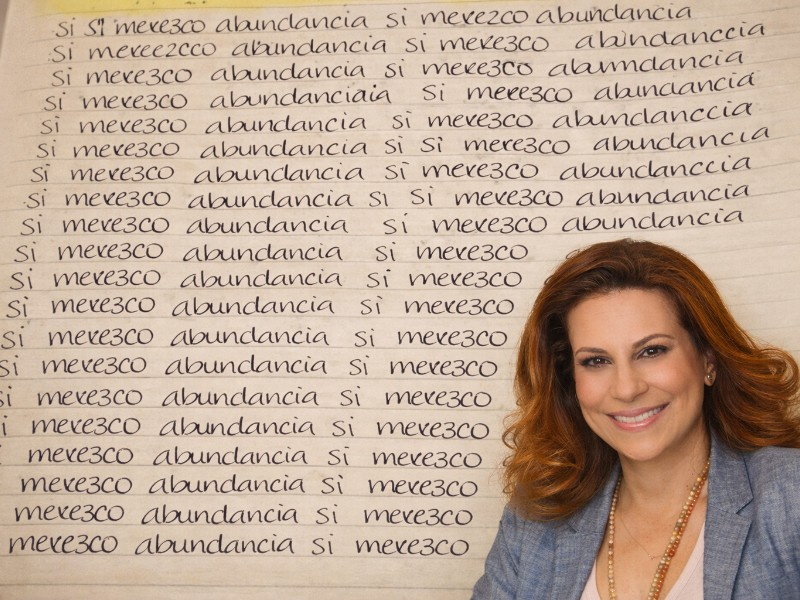
Or there’s the case of Karime Macías, wife and accomplice of Javier Duarte, the one who wrote the phrase “Yes, I deserve abundance” over and over in notebooks while she and her husband looted the health and social program budgets of Veracruz using shell companies and fraudulent invoicing schemes. She lives a wealthy and unpunished life in an exclusive and expensive residential area of London.
Among these cases of illicit fortunes is the one that the corrupt Carlos Romero Deschamps bequeathed to his family. Romero Deschamps lived by plundering the resources of the oil workers’ union, and the millions transferred to him from Pemex, disguised as supposed loans, in the style of Pemexgate, remained unpunished, using his legislative immunity to shield himself until the day he died.
But there are also cases in which the FGR still has the possibility of seeking the extinction of ownership over assets acquired with resources of illicit origin, such as those accumulated by César Duarte, the former governor of Chihuahua, another of the group that called itself “New PRI”, and who with the money he looted from Chihuahua, bought properties in Mexico and the United States.
As part of Operation Justice for Chihuahua, in the Government of Javier Corral, the Legal Counsel and the Prosecutor’s Office of that entity were carrying out lawsuits in Texas to claim the return of 49 properties that Duarte acquired in the United States with money looted from Chihuahua.
But then, when María Eugenia Campos came to power, she abandoned those lawsuits. Her office and that of her Attorney General stopped responding to emails and communications in which lawyers requested documentation to advance the lawsuits seeking the return of those properties to the public treasury.
As late as April 2025, the law firm handling the lawsuits in Texas requested information from the Campos government to advance the trial against Duarte, a few days before the judge closed the case, but the governor negligently and in a way that covered up for Duarte ignored those requests.
Campos’ complicity with Duarte is predictable, considering that she was one of the beneficiaries of the secret payroll that the former governor had for the bribes he handed out.
Just last December, the Attorney General’s Office (FGR) executed the arrest warrant issued against César Duarte by a federal judge, sending him to the El Altiplano prison in Almoloya de Juárez. He is charged with money laundering. In its indictment, the FGR alleges that Duarte operated a money laundering scheme to conceal illicit funds embezzled from state coffers.
So now the Attorney General’s Office (FGR) also has the possibility of resuming litigation to seek to seize those properties from Duarte, which, according to estimates made by the Texas firm that handled the lawsuits, are valued at more than 30 million dollars.
Just as the forfeiture of the two mansions that Lozoya bought with the bribes he received was carried out, so too could the Attorney General’s Office confiscate the illicitly accumulated wealth of Duarte and every white-collar criminal, to enforce the law and ensure that the looters who have so greatly harmed the country do not go unpunished.
-
“They Want to Erase Us From the Digital Cloud”: Mixtec Engineer Asks Mexican Deputies to Use AI to Preserve Indigenous Languages
Speaking in tu’un savi from the Congress tribune, Moisés Hilario López proposed living digital archives of native tongues and AI trained on elders’ voices.
-
Mexico’s September 16 Military Parade Will Incorporate Tactical Drones and Nationally Made Armored Vehicles
First-ever 99-aircraft flyover, 45 debuting tactical drones, and DN11 vehicles with 100%-national remote weapons systems; 15,458 troops will march.
-
Sheinbaum Foresees 12 Million Families Benefited by the Housing Program by the End of Her Government
“The most important thing is having access to what we consider a right, which is decent housing,” Sheinbaum said.