Mexico 2026: The Protests Behind the World Cup
This article by Raúl Romero originally appeared in the June 1, 2026 edition of La Jornada, Mexico’s premier left wing daily newspaper.
In 1986, Mexico was experiencing profound social discontent, which manifested in protests surrounding the 1986 FIFA World Cup, scheduled for May and June of that year. The atmosphere was still fresh from the social response to the devastating 1985 Mexico City earthquake. The National Coordinator of the Popular Urban Movement (CONAMUP), founded in 1980 to coordinate struggles for housing rights, was one of the key players in those protests. It’s also important to remember that in April 1986, the rector of the National Autonomous University of Mexico (UNAM), Jorge Carpizo, presented the document “Strengths and Weaknesses of the National University” to the University Council, initiating a period of criticism and debate within the university that later led to the formation of the University Student Council. Although the protests against the 1986 World Cup in Mexico were relatively small and concentrated mainly in the central part of the country, those protests served as a barometer of what was to come. “We don’t want goals, we want beans!” and “We don’t want the World Cup, we want a pay raise!” were among the slogans chanted that year.
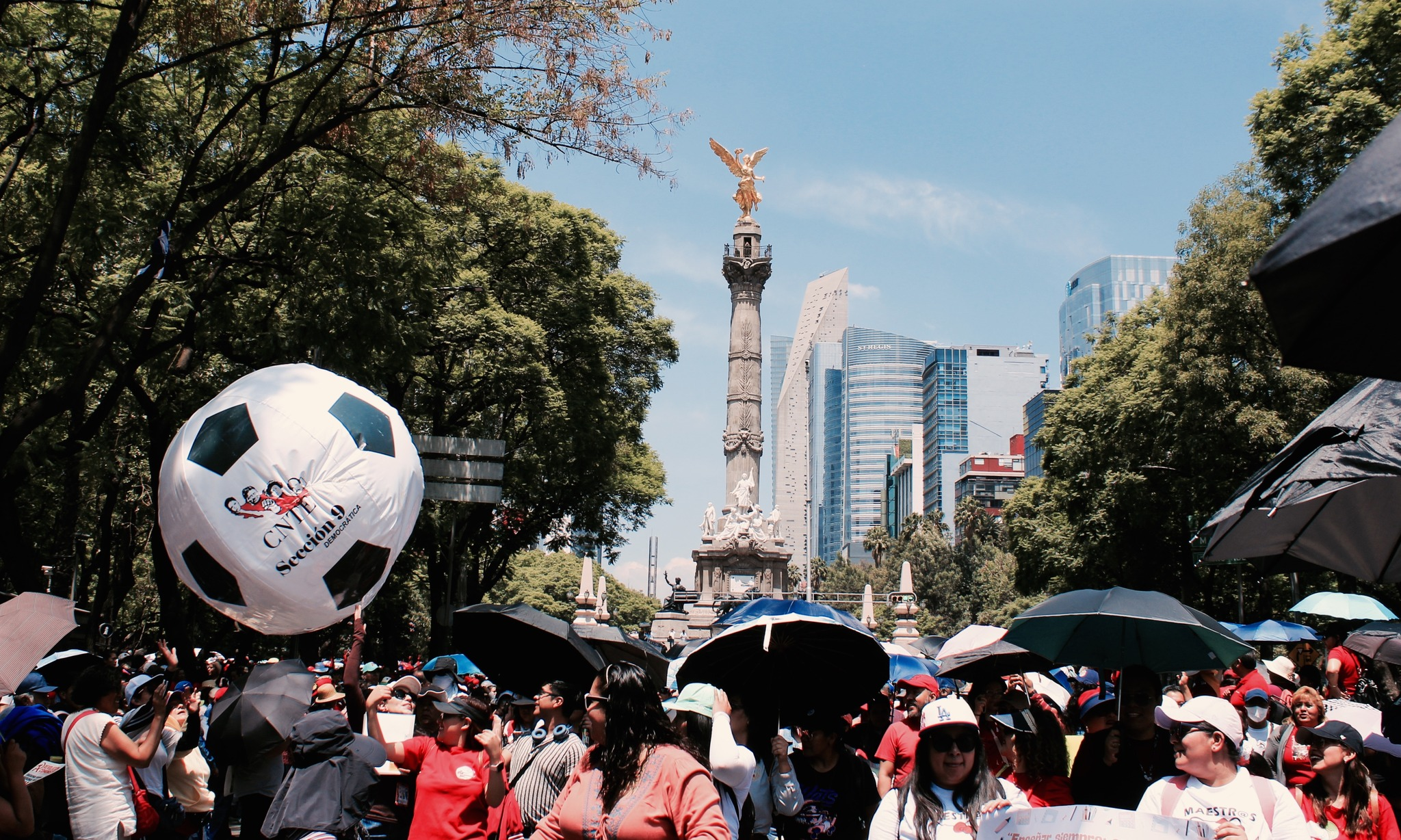
Much has changed since then. The 2026 World Cup will be the first to be held in all three North American countries: the United States, Canada, and Mexico, as if it were a new chapter in the North American trade integration sealed with the North American Free Trade Agreement (NAFTA). As in that treaty, Mexico is at a disadvantage: it will be the only one of the three countries to grant FIFA “general tax exemptions.” Much has changed since Mexico in 1986: some of those who protested against the World Cup that year now govern the city and the country.
As in the USMCA, Mexico is at a disadvantage: it will be the only one of the three countries to grant FIFA “general tax exemptions.”
The arrival of the self-proclaimed Fourth Transformation to the Mexican presidency in 2018 occurred amidst a profound political crisis and high social expectations. Decades of plunder, dispossession, corruption, violence, and impunity led millions to place their bets on the candidate who promised change. However, eight years later, and now in the “second phase” of the Fourth Transformation, many of the most important changes have not materialized, and worse still, some problems have worsened.
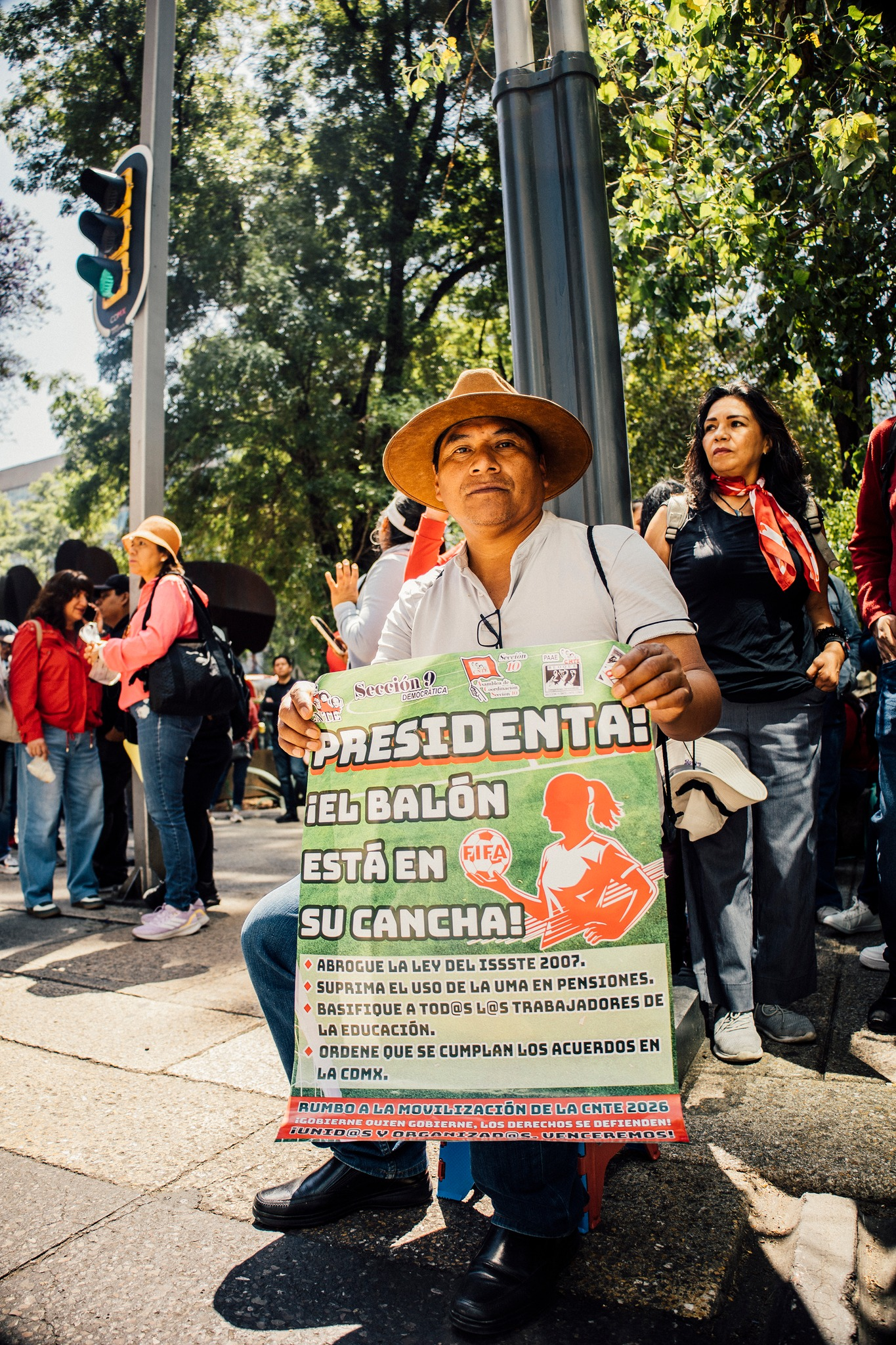
These “changes that haven’t arrived,” combined with “the deepening problems,” have plunged the entire country into a complex situation: across the nation, thousands of mothers and families continue to denounce and search for their missing relatives, while also denouncing the forensic crisis, clandestine graves, recruitment camps, areas of disappearance, slave labor, and countless other horrors that grow daily and are not treated as the true national emergency they represent. Added to this is the violence against Indigenous communities, who in various parts of the country have organized to resist criminal organizations. The cases of the Nahua communities in the Lower Mountain region of Guerrero and the Nahua and Purépecha communities in Michoacán, which recently garnered national attention, exemplify a situation that extends throughout the country.
Despite so much violence, the people resist; as do the teachers of the National Coordinator of Education Workers (CNTE), who with the slogan “whoever governs, rights are defended”, have not stopped mobilizing and demanding better working conditions, facing not only the stigmatization from the press and the official discourse, but also resisting the armed attack led by Esaú López Quero, municipal president of San Pablo Villa de Mitla.
To the turbulent social scenario must be added the mobilizations of the students of the National Polytechnic Institute, of the Autonomous University of Mexico City, of the sex workers subjected to social cleansing policies, and the complaints of various social organizations that from Mexico City denounce the increase in the cost of housing and services, as well as the terrible conditions of public transport.
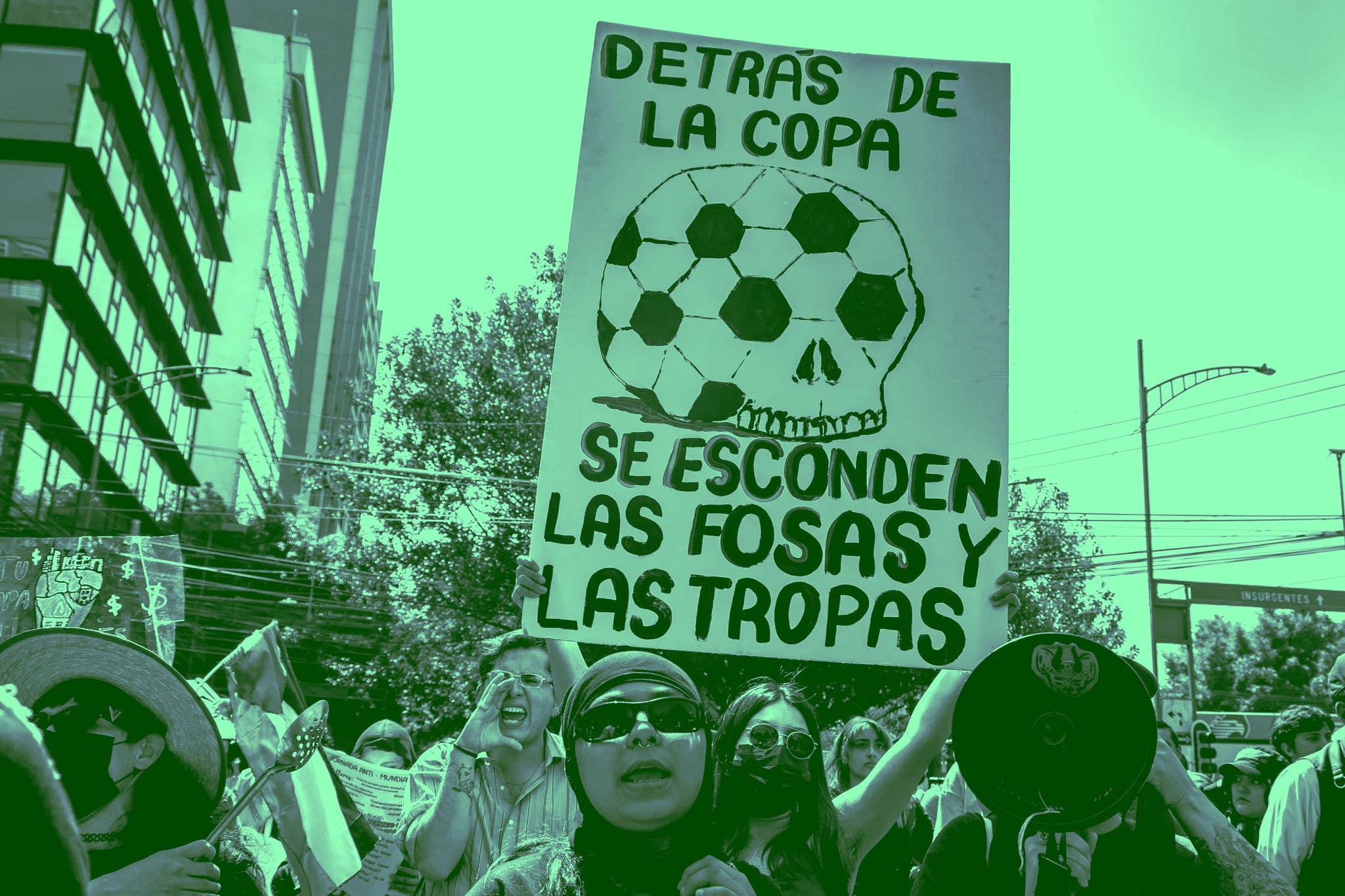
In an already tense political context, fueled by pressure from the United States, exacerbated by the ever-consolidating power of conservative elites, and further exacerbated by internal divisions within the ruling party and the costs of its pragmatic alliances, we must not ignore the legitimate and simmering social discontent that is resurfacing from below. These are not “agents of the empire” or “puppets of the right wing”; they are people fed up with so much violence, working people demanding better working conditions, young people demanding decent housing. They are also mothers and families still searching for their disappeared relatives, and today they cry out a terrible but powerful slogan: “Behind the World Cup lie the mass graves.”
-
Mexico Sees the US as a ‘Greater Threat’ Than China or Russia, New Survey Confirms
A Focaldata–Rockefeller poll finds 58% of Mexicans see the US as a major threat, more than double the figure for China and well above Russia.
-
Mexicana Receives Its Ninth Embraer Aircraft; Increases Its Capacity by 11.04%
Mexico’s recently nationalized airline Mexicana receives its ninth Brazilian-built Embraer E2, raising monthly capacity to 57,020 seats out of the AIFA airport.
-
From Fast and Furious to Walking Fentanyl: Lessons Not Learned by the US
Nancy Flores digs into declassified emails showing the DEA let fentanyl ‘walk’ New Mexico streets, echoing the ATF’s Fast and Furious guns to the Sinaloa Cartel a decade earlier.