What Are Mexico’s Striking Teachers of the CNTE Demanding?
This article by the Collective of the El Zenzontle newspaper originally appeared in the May 30, 2026 issue of La Jornada de Oriente, the Puebla edition of La Jornada, Mexico’s premier left wing daily newspaper.
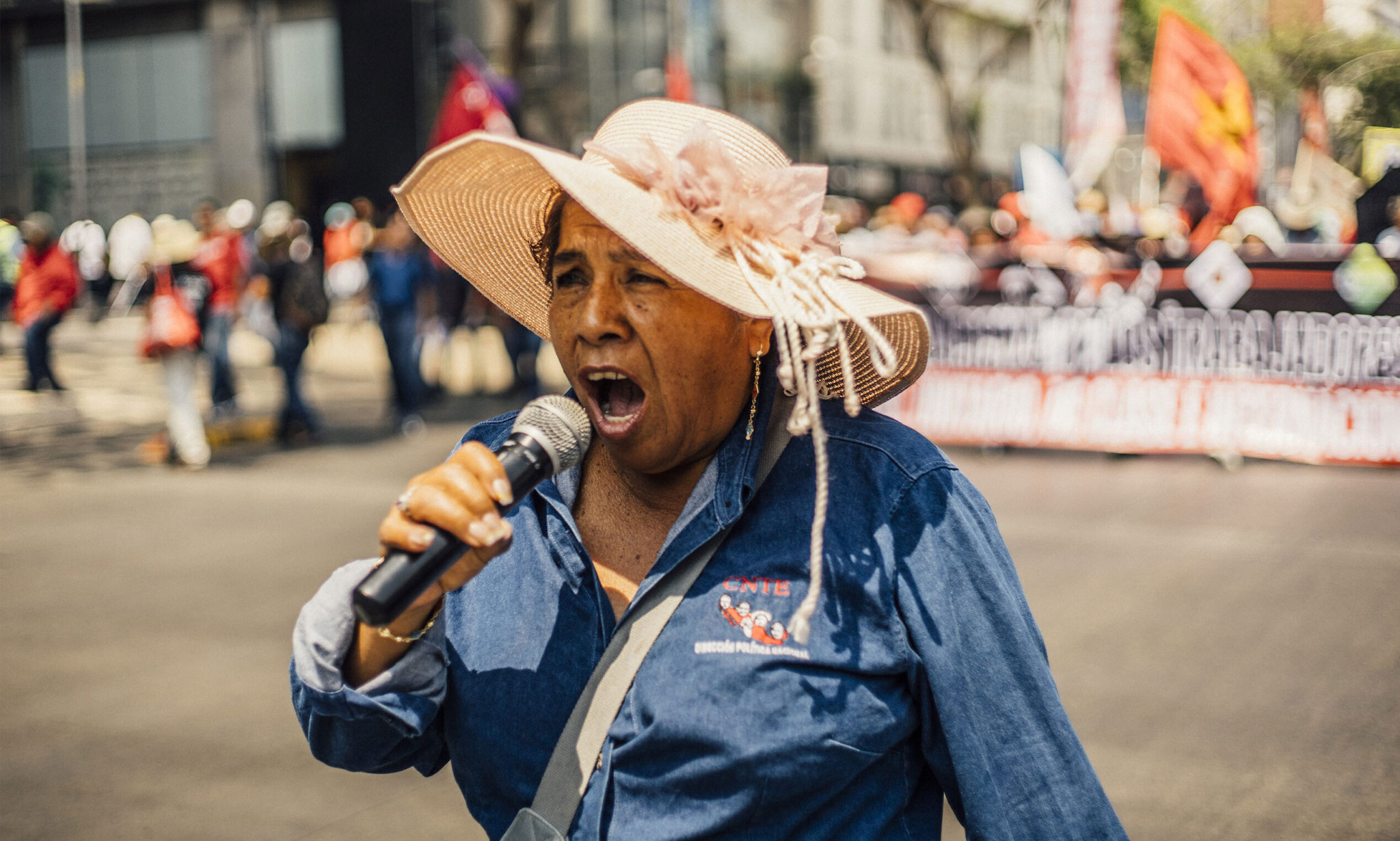
The CNTE has been clear in its central demands:
- Total repeal of the 2007 ISSSTE Law. No reforms, no patches, no simulations: let the law disappear from the legal system.
- Returning to a solidarity-based pension system, where active workers contribute to pay for the pensions of those who have already retired, and where the pension is calculated based on the last salary and years of service, not on individual savings and the whims of the financial market.
- Retirement should be based on years of service, not age. The CNTE (National Coordinator of Education Workers) proposes returning to 30 years of service for men and 28 for women, regardless of age. If a teacher starts working at 22 and completes 28 years of service at 50, they should be able to retire at that time, not have to wait until 65.
- Pensions should be calculated based on the minimum wage, not the UMA . The UMA is a unit of measurement that has lost purchasing power compared to the real minimum wage, so calculations in UMA further reduce pension amounts.
- A 100% salary increase . This demand is not arbitrary: teachers’ base salaries are so low that even if the system were to return to solidarity-based pensions, their pensions would still be insufficient. The CNTE demands doubling the base salary so that future pensions have a solid foundation.
Why does the government refuse to repeal the law? (The pension fund business and public debt)
The government is afraid, and not without reason. Repealing the 2007 law would mean returning to a pay-as-you-go pension system, which would represent an enormous expense for the public treasury. But behind this financial argument lies a dirtier reality: the money that workers have accumulated in their retirement savings accounts (more than 707 billion pesos in the case of the ISSSTE alone) is already committed to investments, loans to the government, and other financial dealings.
Removing that money from the individual capitalization system would be a blow to the heart of the Mexican financial system. That’s why, although the President promised during her campaign to repeal the law, now in power she has dedicated herself to putting on a show, presenting cosmetic initiatives, and blaming the lack of resources. The CNTE (National Coordinator of Education Workers) sums it up like this: “Don’t lie, don’t steal, and don’t betray—the government does exactly the opposite. You have lied, you have allowed the dispossession, and you have betrayed the promise made to the people.”
The Struggle Continues (and it’s not just for a few more pesos)
The teachers of the CNTE are not asking for handouts; they are demanding rights. And the repeal of the 2007 law is not just an economic demand: it is the restoration of a fundamental principle of social security: solidarity. The individual account system not only impoverishes workers in their old age, but also isolates them, individualizes them, and pits them against each other in a struggle for savings that will never be enough. The fight for a solidarity-based system is, in essence, a collective struggle: a commitment to a world where workers recognize themselves as a class, support each other across generations, and do not let the market decide who deserves to live with dignity in old age.
The national strike that will begin on June 1st is the last resort of a union that has watched as, for almost two decades, the State stole their future. Teachers aren’t asking for a raise; they’re demanding the return of what should never have been taken from them. They’re demanding that the government stop protecting the interests of bankers and start protecting workers’ rights. And until that happens, the streets will remain their only classroom, protest their only voice, and repeal their only hope.

15 Points on the Media War & the Current Struggle for the Repeal of the 2007 ISSSTE Law
- The current struggle must take into account that the government is generating social consensus among important sectors of the population, due to social programs, promises to build a project different from the PRI and PAN governments, and because the disastrous effects of right-wing governments on workers and popular sectors are fresh in the memory of millions.
- The movement must send a clear message to state workers, industrial workers, transportation workers, students, homemakers, residents, etc. Many of them are not organized (the unionization rate is very low, and social and grassroots organizations have a small share of the population). It must be explained that the demand is to dismantle the structural reforms of the PRI and PAN governments, such as the 2007 ISSSTE Law, passed by the criminal government of Felipe Calderón.
- Repealing the 2007 ISSSTE Law would entail reviewing the entire pension system, which is controlled by a handful of bankers and businesspeople (9 in total). If successful, this would allow millions of workers to achieve a dignified retirement after years of dedicated work.
- Reversing the 2007 ISSSTE Law and the 1997 IMSS Law was a campaign promise of the current mayor, Claudia Sheinbaum. This is because a handful of wealthy individuals (nine in total, including Ricardo Salinas Pliego) profit from the management and collection of commissions on the retirement savings accounts of millions of workers. While this tiny minority, representing 0.000007% of the population, continues to enrich itself, 75 million workers, comprising 58% of the population, are destined to receive meager pensions and face an uncertain old age.
- The current government came in promising to reverse the structural reforms of the PRI and PAN governments, since the privatization of the pension system was promoted by those criminal governments… An act of consistency from Claudia Sheinbaum would be to begin reviewing the issue and move forward with a proposal to dismantle the privatization of the pension system.
- Another important point is that 60% of countries that opted for privatization of their pension systems have reversed this decision in recent years, due to the disastrous results for the majority of the population. Why not do the same in Mexico?
- There is a low-intensity media war underway that aims to obscure this problem, which is at the heart of the protests. The goal is to distort information for millions of people.
- Right-wing mass media, pro-4T YouTubers and journalists say: “No government has given them that salary increase! They even gave them a week of vacation! What more do they want?”
- This message that is being repeated tries to instill the idea that labour gains are favors for which workers must be submissive and pay for; this is the first false premise. Labour gains are a product or byproduct of the collective mobilizations of the working class! This is what history and events show. Regarding wages, the increase is not 9%; the increases have not exceeded 4.5% directly to wages; the rest goes to benefits with little impact on purchasing power.
- The other distortion is that all education workers earn $17,677, which is inaccurate. The compensation needed to reach that salary level comes from two components: Guaranteed Compensation and Welfare Measure. While this is an improvement in monthly earnings, these measures do not affect the full range of benefits or the worker’s retirement income. The fairest solution would be to integrate these two components into the base salary of all workers.
- Another distortion is that the retirement age for workers has already been lowered. This is the biggest lie. What was done was to freeze for two years a table for workers who began their service before 2007 and who opted for the tenth transitional provision of the Law, which is a product of the struggle of 2007. And this measure impacts no more than 24% of active workers; for the majority, who are in individual accounts, the retirement age will be 65.
- Another claim is that a pension fund has already been created, thus solving the problem of low pensions. What goes unsaid is that the resources in this fund won’t be enough for 75% of workers, who won’t receive a single peso from the much-touted fund. Isn’t it questionable to subsidize the failure of a private system (AFORES) with public funds?
- Another absurd argument is that those mobilizing are corrupt unions seeking privileges, even reviving the image of Elba Esther Gordillo. No, the CNTE has fought against corrupt union leadership since its inception. The corrupt leaders of the SNTE have servilely accommodated themselves to the PRI and PAN governments, and now claim to be “the intellectual soldiers of the 4T.” The Morena governments have made deals with them and given them: a Senate seat, seats in the Chamber of Deputies, mayoral positions, council seats, and alderman positions. Who is strengthening these corrupt union leaders and the SNTE?
- This media war within the ranks of the 4T, whether consciously or unconsciously, should be understood as undermining their own project. A victory in the current struggle would help dismantle the measures implemented by the PRI and PAN governments, but the way this struggle is being handled undoubtedly strengthens the most right-wing sectors of Morena and the 4T—those they call the “PRI-PAN infiltrators”—who are the most faithful mouthpieces for the interests of big capitalists in government and a benchmark for how future mass mobilizations of the working class and popular sectors will be handled.
- The limitations of the government’s program and project are beginning to surface, no longer just in the eyes of activists, but in the face of a massive workers’ movement. It is time for the working class to put its stamp on this process, with its collective methods of struggle and its own ideas, avoiding provocations or actions that strengthen the dirty war. The struggle will have internal contradictions; it will not be like a graph drawn from a linear function, but will have its ups and downs.
- It is time to point out that those who talk about fighting against the neoliberal model without raising the fight against the capitalist system that generates it are leading the struggles of the working class and popular sectors into a dead end.
To be the people, to build the people, to be with the people
Who Owns the AFORES?
There are 10 AFORES, that as of 2025 manage more than 7.18 trillion pesos (401 Billion USD). The AFORES system, modeled on Chilean fascist dictator Pinochet’s privatization of pensions, have been criticized by international pension industry observers for lacking sufficient oversight. The Mexican government has cited the complexity of the system as a reason not to de-privatize it, which begs the question, if the pensions are too complex to return to the public, how can they be meaningfully overseen and regulated?
AFORES accounts are mandatory for every worker: they cannot withdraw from the system or manage the fund themselves or collectively with their union, such as with the Ontario Teachers’ Pension Plan, which manages over $188 billion USD).
1. AFORE Coppel – Coppel Group
2. AFORE Azteca – Grupo Salinas, owned by Ricardo Salinas Pliego, an ultra-right wing billionaire who is fighting in the courts to not pay the 35.450 billion pesos ($1.8 billion USD) in taxes he owes to the Mexican government.
3. Citibanamex Afore – Citigroup —in the process of being sold (USA)
4. Afore XXI-Banorte – Banorte
5. SURA – SURA Group (Colombia)
6. Profuturo – BAL Group (owners of the high-end department store El Palacio de Hierro)
7. Principal – Principal Financial Group (USA)
8. Invercap – Private investment fund
9. PensionISSSTE – The only public pension, limited to state workers
10. Inbursa – owned by Carlos Slim, one of the richest businessmen in the world, who advocates ending the public pension system and abolishing the retirement age in Mexico.
-
People’s Mañanera September 21
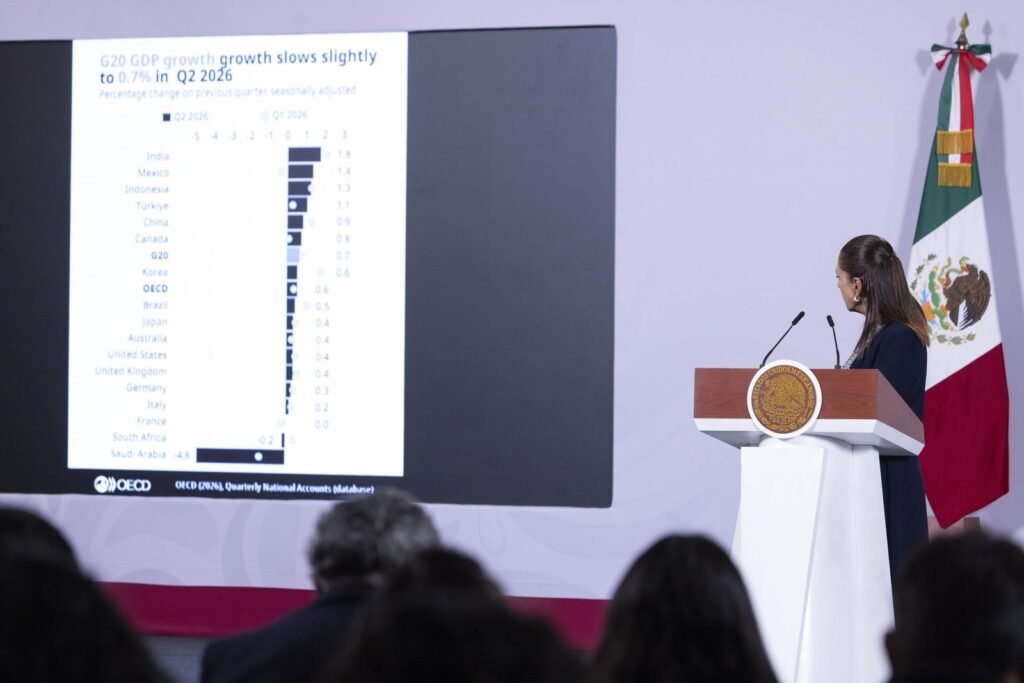
President Sheinbaum’s daily press conference, with comments on the report assemblies, education scholarships, G20 growth, diesel supply, and sovereignty.
-
Companies Lobby Against Mexican Reform That Would Require Them to Report the ‘Definitive’ Price
Netflix, Uber, Rappi and DHL are pressuring Congress to weaken Morena’s bill against ‘drip pricing,’ the hidden fees tacked onto a low advertised cost.
-
“I Want to Work With President Sheinbaum,” Mamdani Says; He Praises Her Policies
At the Urban 20 forum, New York Mayor Zohran Mamdani called Mexico City an international ‘inspiration’ for how it confronts the cost-of-living and care crisis.