
Mexico Must Define a Position For Its Relationship with the US & China: Enrique Dussel Peters
This article by Braulio Carbajal originally appeared in the June 5, 2026 edition of La Jornada, Mexico’s premier left wing daily newspaper.
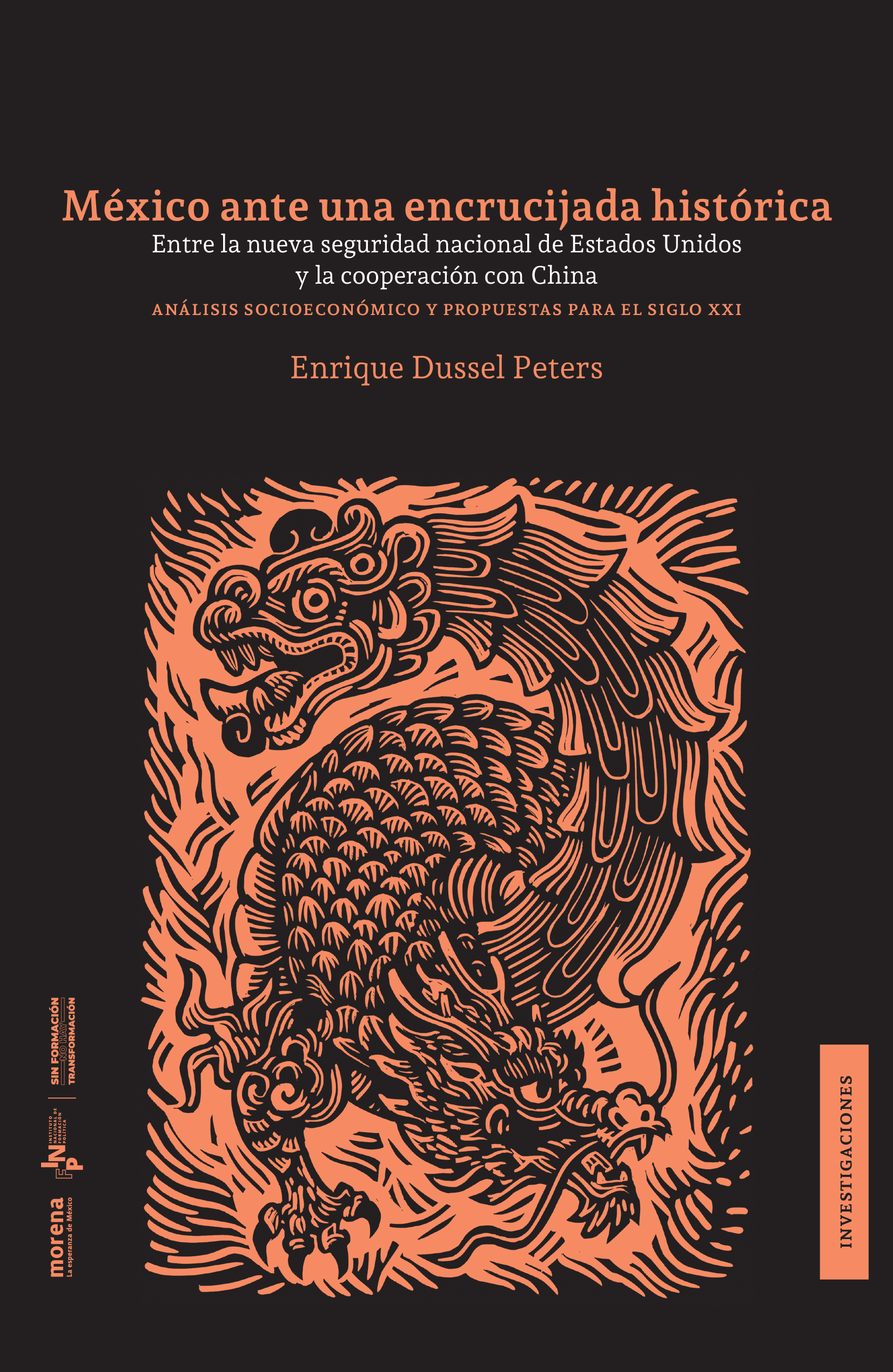
Mexico faces a historic crossroads in 2025 comparable to the one it experienced when neoliberalism was imposed as a development model in the 1980s, with consequences that defined the country’s course for decades, said Enrique Dussel Peters, a researcher at the National Autonomous University of Mexico, in his book, México ante una encrucijada histórica: Entre la nueva seguridad nacional de Estados Unidos y la cooperación con China (Mexico at a Historic Crossroads: Between the New National Security of the United States and Cooperation with China).
The decision that Mexico makes or avoids making, says the founder of the China-Mexico Studies Center (CECHIMEX), on how to relate simultaneously to the world’s two main powers will have long-term implications.
From his point of view, the Mexican elites, understood as the Presidency, Congress, political parties, business organizations and academia itself, have for decades failed to keep pace with the global changes involving China, so it is urgent to open a national strategic debate that defines an explicit position on the systemic competition between Washington and Beijing, and that outlines a long-term agenda with both powers.
It points out that the urgency of this debate is partly explained by the magnitude of the bilateral trade relationship. China is Mexico’s second-largest trading partner, and its presence has grown steadily in the 21st century. In 2024, Mexico’s trade deficit with China reached $120.717 billion, an all-time high, with a ratio of 14.3 imports for every one exported.
At the same time, Mexico accumulated a trade surplus with the United States of $251.1 billion.
This structure is not accidental, he explains, given that the export model Mexico adopted in 1988, based on attracting export manufacturing with minimal tax burdens for companies, generated a growing dependence on imported inputs. Thus, in the 21st century, China massively replaced the United States as the supplier of these goods.
Since 2017, when Washington first recognized China as a “great power competitor,” the bilateral relationship between the world’s two largest economies has entered a phase of systemic confrontation encompassing technology, trade, investment, and security.
The Priority, National Security
Dussel Peters coined the term “security shoring” to describe the US strategy of subordinating any economic ties with third countries to the priority of its national security. He highlights that Mexico is mentioned twice in the Trump administration’s 2025 national security document, identified as a “springboard” for Chinese exports to the US market.
That pressure resulted in the tariff package that the Mexican government approved in December 2025 and which came into effect on January 1, 2026. The measure raises tariffs on 1,463 imported goods from countries with which Mexico does not have a free trade agreement, including China.
The simple average of those tariffs is 28.95 percent, although Dussel Peters’ analysis shows that the weighted tariff on total Chinese imports amounts to only 9.78 percent, because almost half of what Mexico imports from China was not included in the package.
China responded in September 2025 with a formal investigation into Mexican trade barriers, which could result in countermeasures. The researcher warns that the possibility of an escalation in trade tensions in 2026, precisely when the United States-Mexico-Canada Agreement (USMCA) is being renegotiated, “is realistic and worrying.”
The above occurs in a context in which the United States has proposed, among its objectives for the review of the USMCA, strengthening traceability mechanisms for Chinese investments in Mexico, raising the rules of origin in sectors such as auto parts and automotive to exclude inputs of Chinese origin, and maintaining controls on regional high-technology exports to China.
Dussel Peters also documents that the bilateral institutions created by Mexico and China in the 21st century have operated with a lack of follow-up that he considers unacceptable. The Permanent Binational Commission, the highest body for dialogue between the two countries, has not met since 2014.
The High-Level Investment Group held its last session in 2015. Issues identified since the first meeting of these bodies, such as the trade imbalance or statistical differences in the recording of investment flows, never received a concrete answer.
-
Sheinbaum and Trump Talk. A Deal Appears Imminent
Politico and Bloomberg report a Wednesday call a U.S. official called “constructive,” days before the September 28 and 29 USMCA review, as Trump pushes to close a deal before the U.S. midterms.
-
People’s Mañanera September 17
President Sheinbaum’s daily press conference, with comments on infrastructure, the fight against drugs, sovereignty, Mexican handicrafts, and historical memory.
-
“I’d Like a Report on What the U.S. Does Against Drugs,” Sheinbaum Says
The president turned the tables on Washington’s drug scorecard, pointing to U.S. consumption, the opioid crisis, money laundering, and the guns flowing south into Mexico.