The Right’s Strategy to Destabilize Mexico; the American Society Case
This article by Nancy Flores originally appeared in the July 23, 2026 edition of Contralínea, a Mexican investigative journalism magazine.
In recent weeks, one of the most relevant bets of the Mexican and international right was to accelerate its strategy of political, economic, and social destabilization of Mexico in the context of the 2026 FIFA World Cup. Its objective was to try to prevent it from being held in Mexico City and to take advantage of that sporting event to encourage narratives associated with the “narco-government” campaigns and foreign distrust, of both investment and tourists.
As at other moments, its main tool has been to spread lies through the media corporations and social networks. The false crisis scenarios, however, did not work out for them: the matches played in the capital went off without problems; the Fan Fest in the Zócalo was a success, and sports fans did not associate their disappointment over the Mexican national team’s defeat with the government’s performance.
In that same context, their calls on the US government for Donald Trump to intervene in the country did not work either. The World Cup unfolded without incident and the month of June was one of the most peaceful in the country, with a 48 percent drop in intentional homicides, according to the federal Security Cabinet.
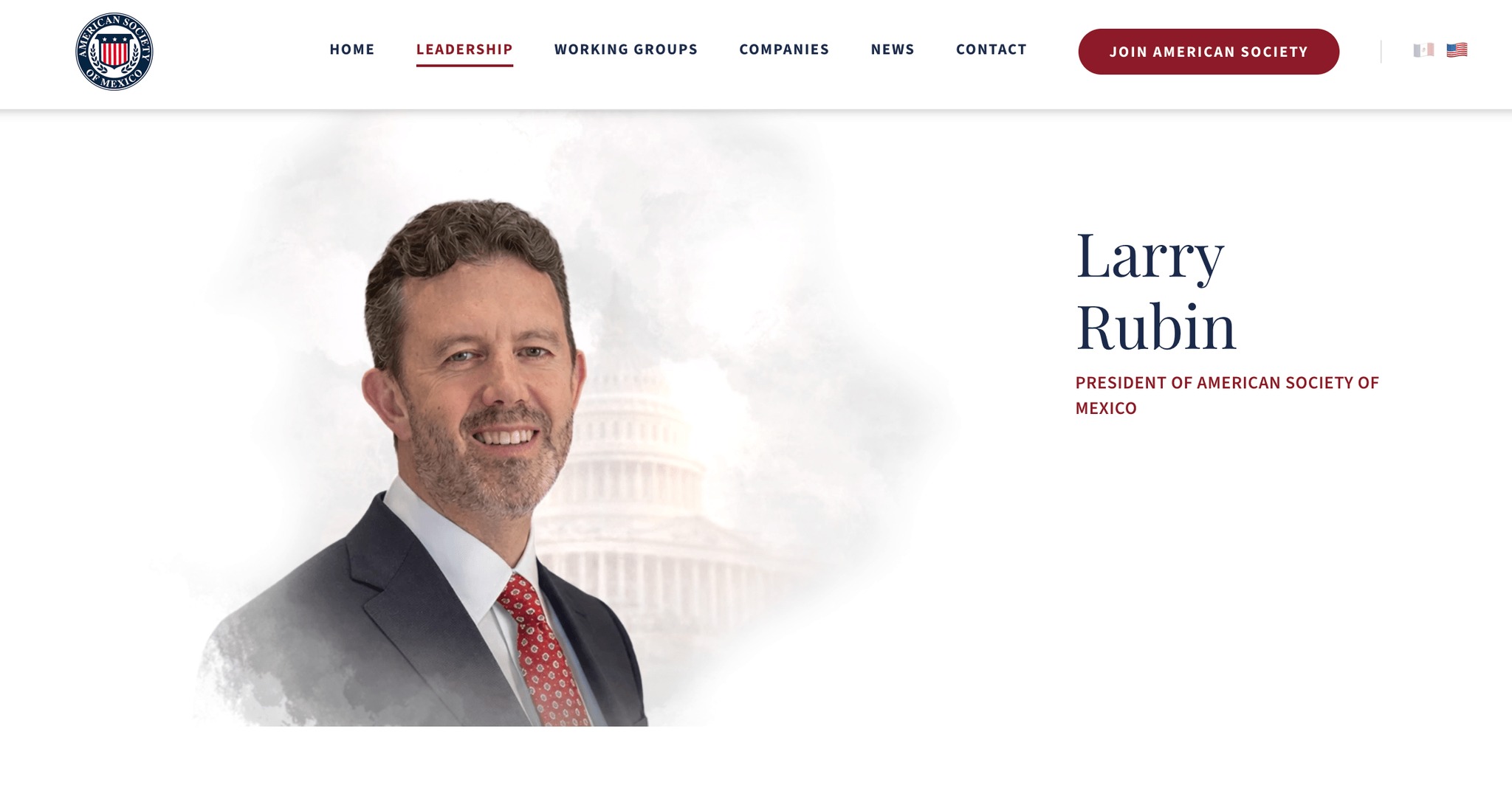
Despite these failures, the right’s destabilization campaigns continue. And one of the most active agents has been the American Society organization, Mexico chapter. Headed by the Mexican-American right-winger Larry Rubin, the association called a dinner this past June 6, attended by politicians opposed to the 4T, as well as representatives of the media corporations.
The dinner, whose explicit objective was for Mexicans to celebrate the 250th anniversary of the founding of the United States, was the epicenter of the destabilizing strategy; this, despite the fact that it did not have the physical presence of Ambassador Ronald Johnson, who was considered the “guest of honor.”
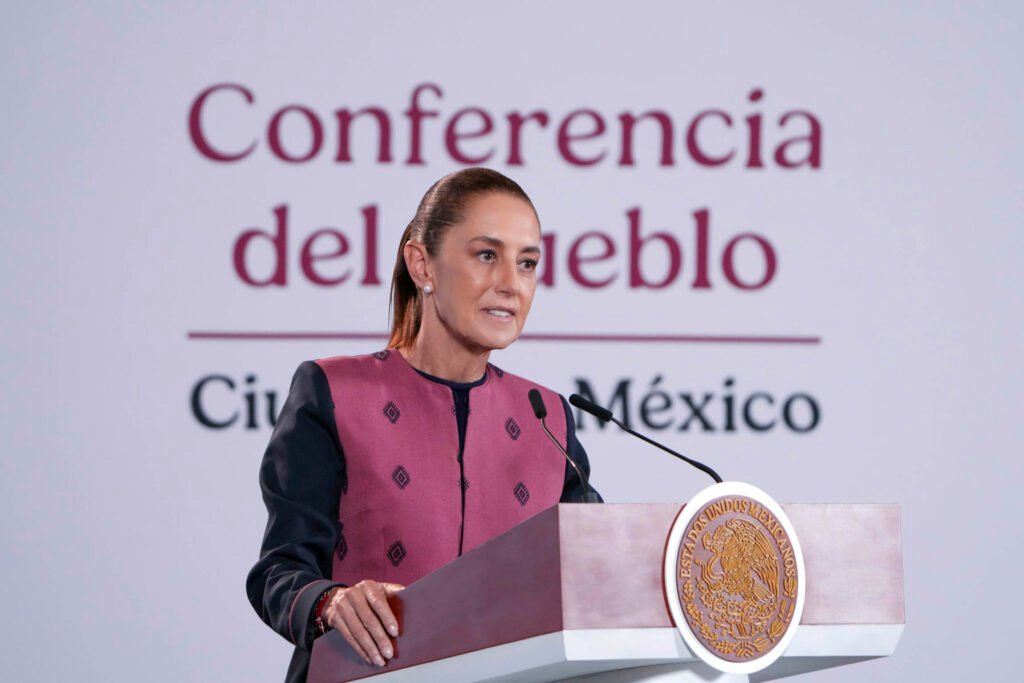
Days earlier, on May 31, President Claudia Sheinbaum denounced, at the Monument to the Revolution and before more than 100,000 attendees, the worst media onslaught her government has faced, and defended national sovereignty in the face of foreign interference. This, after the US government requested the urgent arrest of the now governor on leave of Sinaloa, Rubén Rocha Moya, and nine other people, allegedly linked to the Los Chapitos case.
At the dinner that brought together the Mexican-American right, Larry Rubin said, among other things, that Mexico and the United States should have a real TLCC, which he described as a “crime-fighting treaty” for binational security, with an approach that once again fed the narrative that President Sheinbaum’s government does nothing to combat drug trafficking, and that Donald Trump’s administration does.
On June 8, at her morning press conference, the head of the Executive criticized that the dinner not only brought together the PRIAN, but also businesspeople associated with the right. In this regard, she stressed that the meeting was financed by Grupo Salinas and used by opposition politicians to ask for US government intervention in Mexico’s internal affairs.
By June 9, Larry Rubin rejected that the American Society of Mexico is a platform against the Mexican government, and affirmed that the objective is to “strengthen” the bilateral relationship with the United States. A month later, during a radio interview, Rubin insisted on his TLCC proposal and criticized President Sheinbaum for upholding the defense of sovereignty. From his point of view, the US agencies are not the “enemy,” but rather the criminal groups, despite the recent history involving the DEA, the FBI, and the CIA in clandestine operations in Mexico, in frank violation of our laws (Constitution, National Security Law) and of the international law that establishes respect for the self-determination of peoples as a principle.
Spokespeople Linked to the American Society of Mexico
On several occasions, Larry Rubin has said that because of his dual nationality he speaks of “his country” interchangeably: he can be referring to the United States or to Mexico. The truth is that, given the way he acts and the interests he defends, it is obvious that the current president of the American Society of Mexico identifies more with the neighboring country to the north than with Mexican nationality. Otherwise, he would defend the homeland above any other country.
Despite being the most visible face of the American Society of Mexico, Rubin is not the only voice linked to that organization that feeds the US government’s interventionist narratives. There is also the media participation of the “political analyst” Gricha Raether, who on March 8, 2025 declared to the press that the business community knew that Trump’s imposition of tariffs “was the fault of the narco-government in Mexico,” the same narrative pushed by the US agencies.
Alongside Larry Rubin, the 4T opponent Gricha Raether is a member of the Board of Directors of the American Society of Mexico and secretary general of the [unregistered] party México Republicano. In his media appearances he has defended Donald Trump’s anti-immigrant policies, based on the idea that the United States should deport criminals and terrorists.
The México Republicano party is Trumpist in orientation, and prior to Raether’s arrival it was headed by Juan Iván Peña Nader, who was coordinator of advisors to the Deputy Secretary of Government at the Interior Ministry, Abraham Kunio González, during the Felipe Calderón administration. He is also chief payment officer of Mis Métricas, SAPI de CV, a meal-voucher contractor.
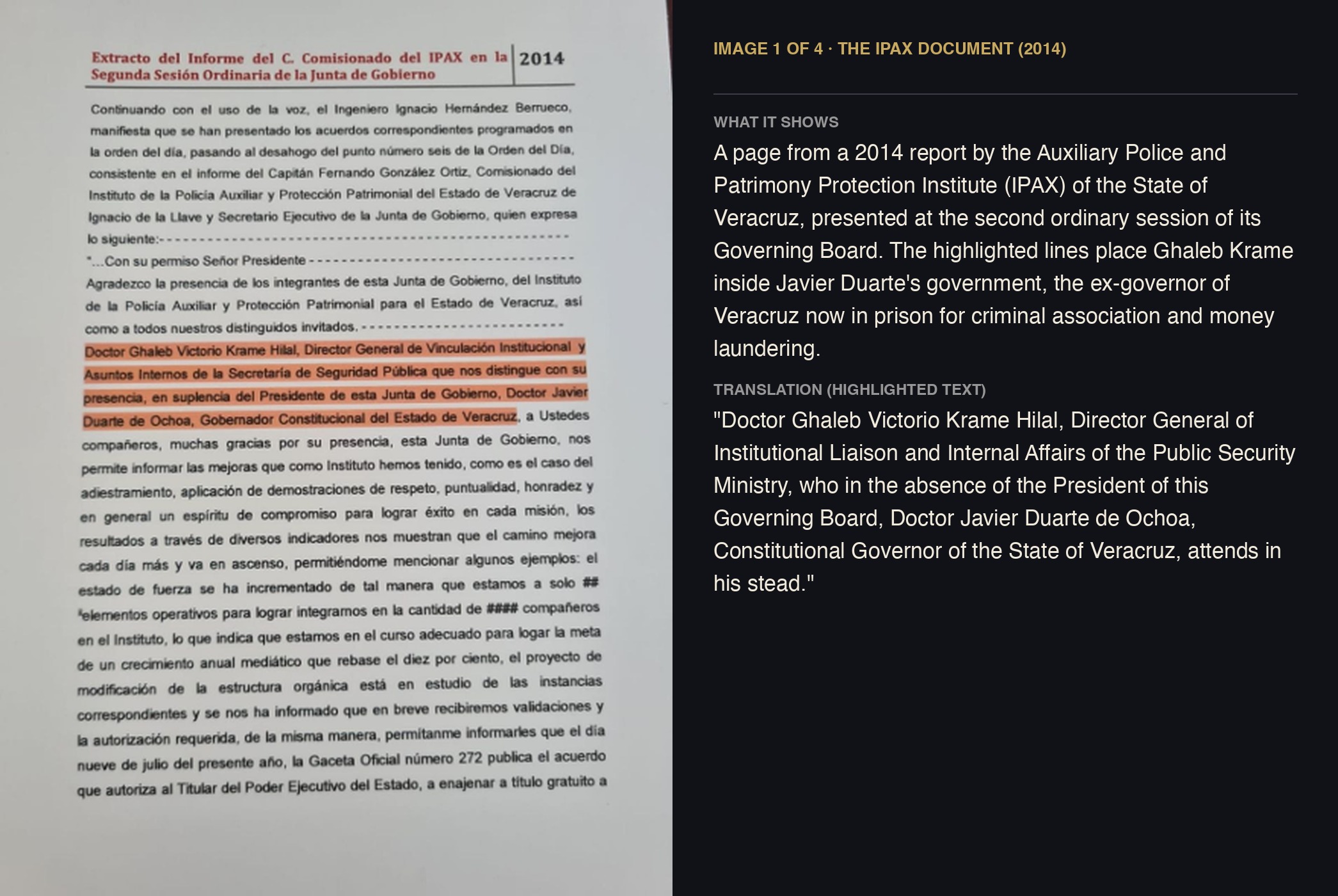
In turn, Raether is associated with another 4T opponent who is very active in media and social networks: Ghaleb Krame, a former collaborator of the PRI ex-governor of Veracruz, Javier Duarte, imprisoned on corruption charges, who has positioned himself as an “expert voice” on security issues in most of Mexico’s media corporations.
An open opponent of the Sheinbaum government, following the life sentence of drug trafficker Ismael “el Mayo” Zambada, Ghaleb Krame suggested that the Sinaloa Cartel leader sent a political message by indicating that he was not cooperating with US prosecutors nor accusing any official. According to Krame, that message was destined for Palenque, where former President Andrés Manuel López Obrador resides, or the National Palace, seat of the federal government.
Although Krame describes himself as an academic and an expert in national security and policing, his track record in PRI and PAN governments accused of corruption is his true calling card. In Veracruz he was a collaborator, first, of Fidel Herrera; and then of Javier Duarte. In the latter case, he was director general of Institutional Liaison and Crime Prevention and executive secretary of the Interinstitutional Commission for the Social Prevention of Violence and Crime, between 2011 and 2015. The security expert seems to have forgotten that his former boss Javier Duarte remains imprisoned for criminal association and money laundering.
In addition, between 2016 and 2017, Krame collaborated with José Ignacio Peralta Sánchez, former governor of Colima. In that government he was deputy secretary of Crime Prevention and Citizen Participation. His former boss, Peralta Sánchez, was bound over for trial for embezzlement and misuse of powers.
And the jewel in the crown: Krame was a collaborator of the PAN member Francisco Javier García Cabeza de Vaca, in Tamaulipas. Between 2017 and 2018 he was coordinator of advisors to the head of Police Strategy at the SSP and interim deputy secretary of Sentence Execution and Social Reintegration, following the murder of Felipe Javier Téllez. As is known, García Cabeza de Vaca has an arrest warrant against him for alleged organized crime and money laundering.
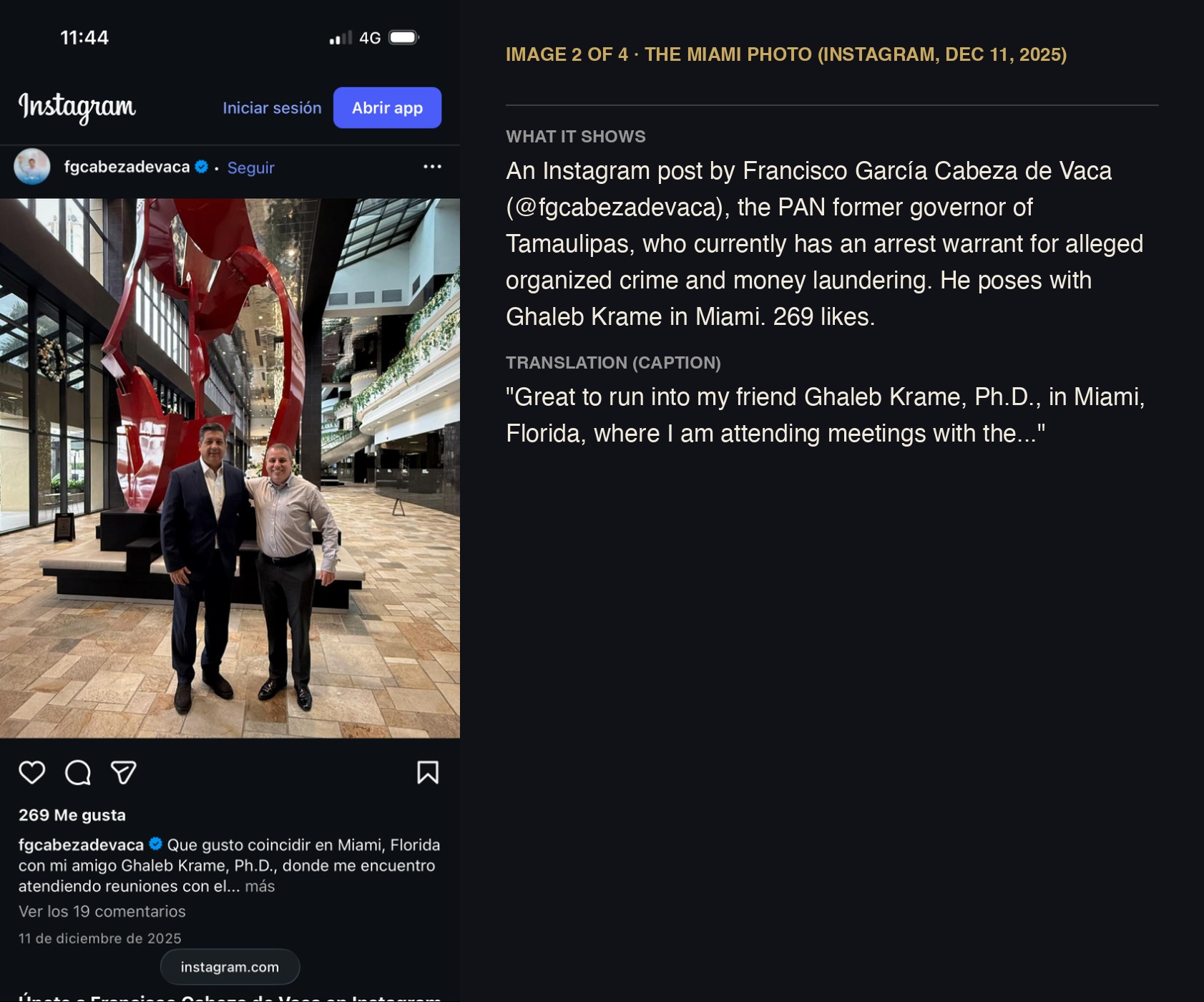
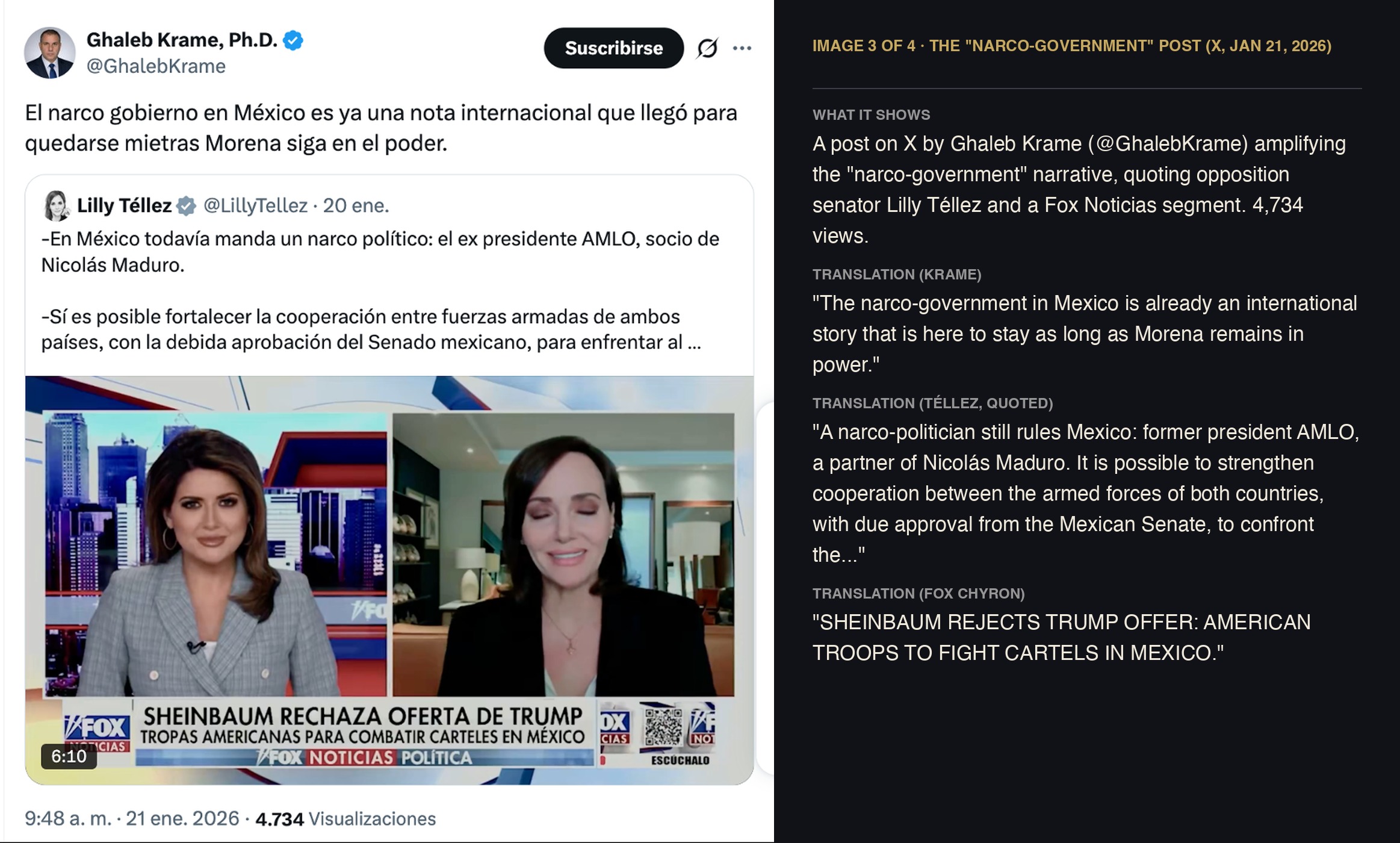
Despite that background and those friendships, Ghaleb Krame opines as an “expert voice” in the media on public security and criticizes the policies of the Fourth Transformation, in line with the position of the American Society of Mexico. And on his social networks he labels President Sheinbaum’s administration the “narco-government,” in tune with the vision that the US DEA seeks to impose.
Added to his political interests are his business interests, as he is a partner in three companies: Krame & Raether, SA de CV, where he is associated with Gricha Raether; KRC Intelligence Group, SA de CV; and Gutbar Servicios Empresariales, SA de CV.
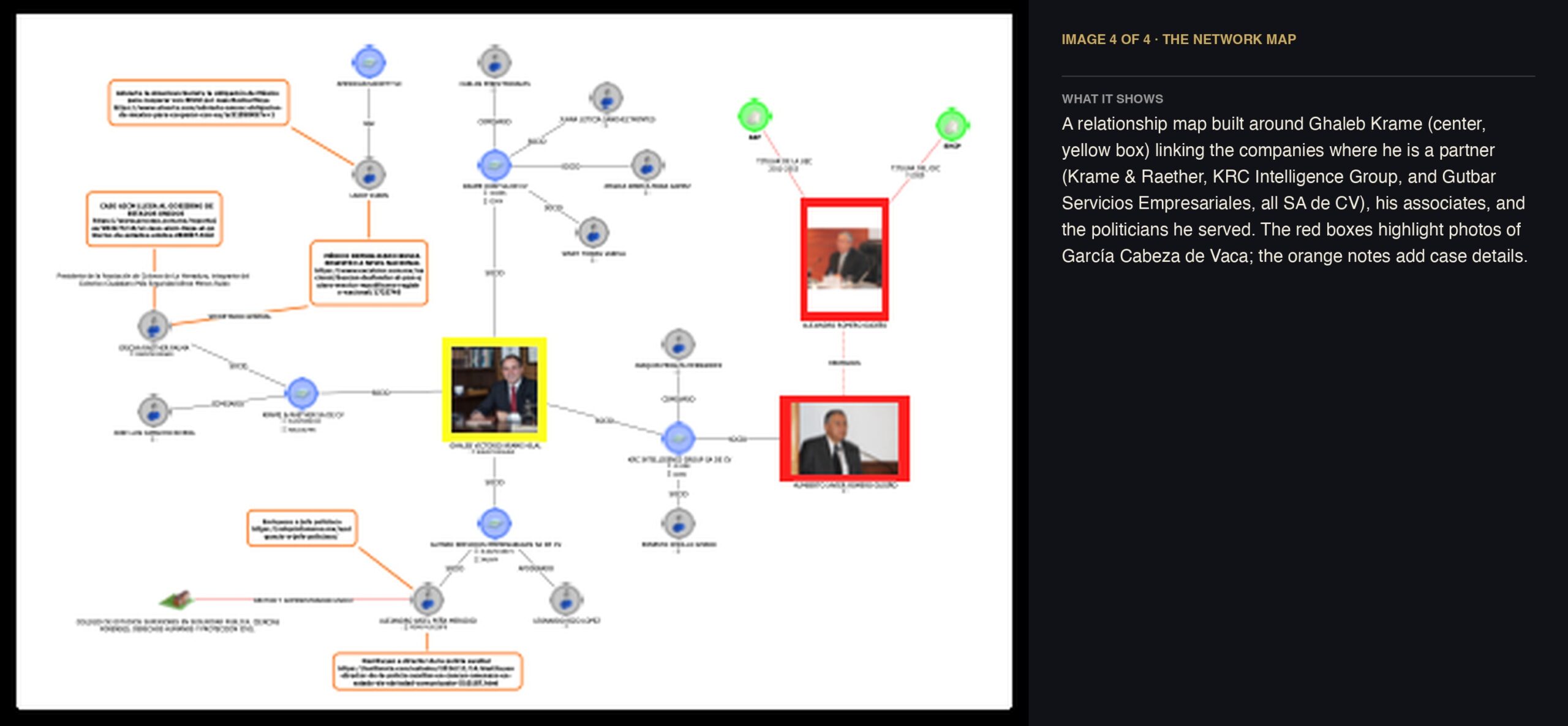
In KRC Intelligence Group he is a partner of Humberto Romero Gudiño; and in Gutbar Servicios Empresariales, SA de CV, he is a partner of Alejandro Ariel Peña Merodio, who, as director general of the Cancún Auxiliary Police, drunkenly threatened a journalist with death.
-
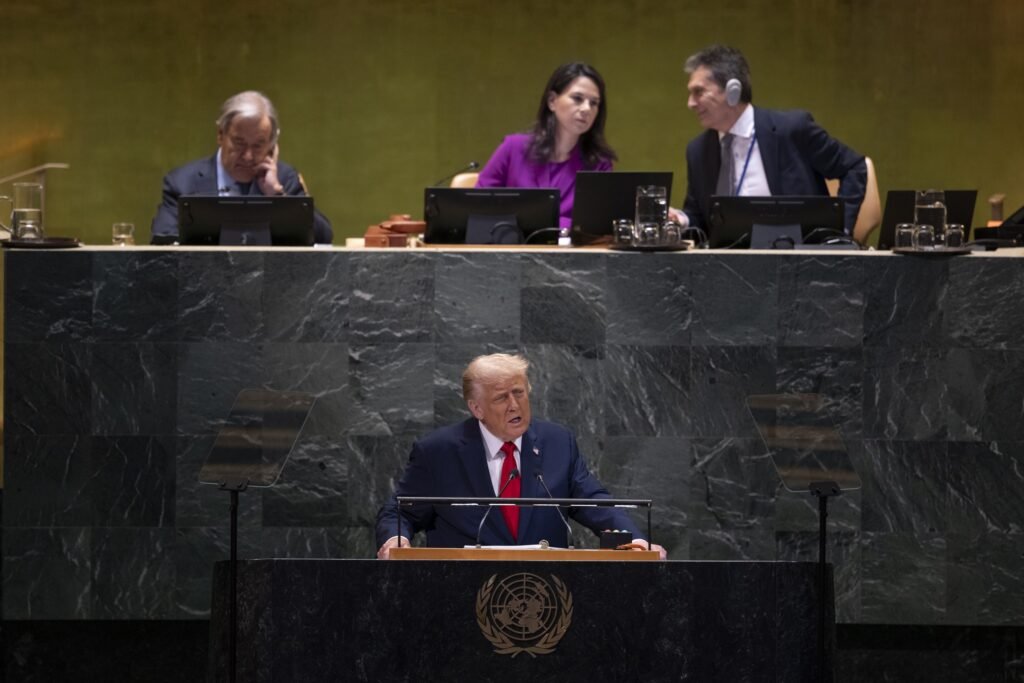
Trump at the UN: Accuses Mexico of Being the “Epicenter” of Drug Trafficking, but Highlights Progress with Its Government
“Mexico has to take back control of its land from the enemies of humanity,” Trump told the UN General Assembly, calling cartels the ISIS of the Western Hemisphere.
-
41.4% of Mexican Households Supplement Income with Government Programs
Up from 25% in 2020, according to Mexico’s statistics institute, which also found half of all homes now get some income beyond wages.
-
People’s Mañanera September 22
President Sheinbaum’s daily press conference, with comments on corruption prevention, anti-corruption reforms, public debt, privileged pensions, and dual nationality.