Sinaloa Opens Sorghum Market to China; Seeks to Sell 1.2 Million Tons
This article by Adrián López originally appeared in the August 16, 2026 edition of La Jornada, Mexico’s premier left-wing daily newspaper.
Topolobampo, Sinaloa. The company Sichuan Yourong Group, based in the city of Chengdu, China, and Gessa Agroservicios signed a letter of intent for the purchase of up to 1.2 million tons of Sinaloan sorghum, an agreement that formally opens the door to the Chinese market for this crop and positions the port of Topolobampo as a strategic hub for exports to Asia. The event brought together representatives of the state government, port authorities, agricultural organizations, storage companies, producers, and businesspeople from both countries, who agreed that the project represents a marketing alternative in the face of the profitability crisis affecting corn and other grains.
The document was signed by Pedro Martínez, partner and CEO of Sichuan Yourong Group for the Americas; Li Jia Jian, a representative of that company; and Samuel Germán, legal representative of Gessa Agroservicios, a subsidiary of the Chinese company. As a first step, five containers of sorghum produced in Sinaloa will depart from Topolobampo, to be evaluated by the Chinese industry before the definitive commercial contract is finalized.
Pedro Martínez explained that this shipment constitutes the final test to validate the quality of the grain at its destination and that, once this stage is passed, they will proceed to formalize commercial contracts backed by letters of credit and international guarantees. “We came to stay, to do business and, above all, to buy Sinaloa’s sorghum.” He specified that the project does not seek to make speculative purchases, but rather to establish contract-farming schemes that give producers certainty before planting.
The Best in the World
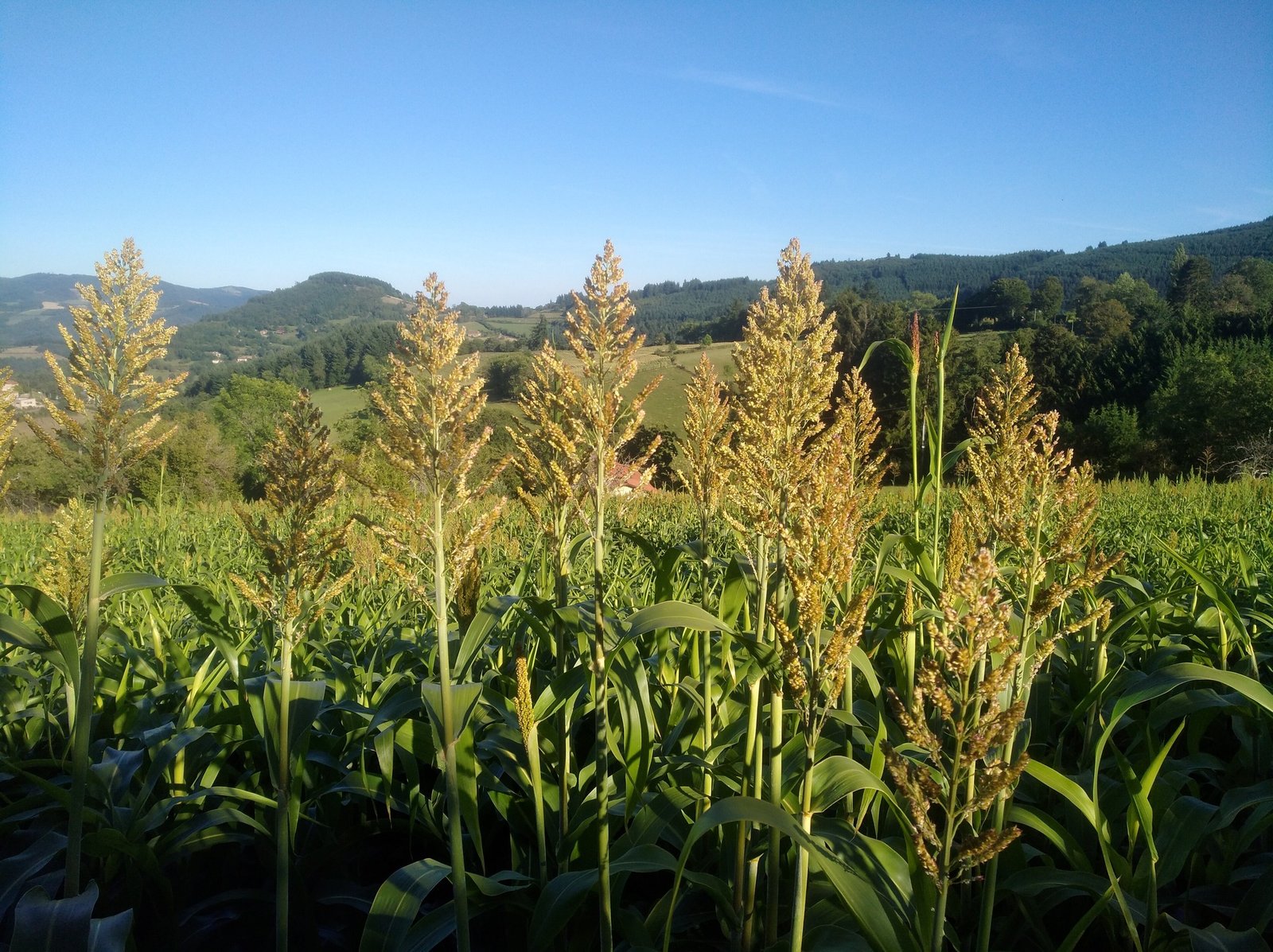
During his remarks, Pedro Martínez stated that the company carried out analyses of the sorghum produced in Sinaloa and Chihuahua for industrial use, above all in the production of the Chinese liquor baijiu, obtaining results that surpassed even Australian sorghum, considered one of the highest-quality for that market. He explained that the tests revealed a practically null tannin content, a characteristic highly valued by the Chinese industry. “Today we can say that we believe we have found the best sorghum in the world,” he affirmed.
He added that, beyond the quality of the grain, the company found in Sinaloa competitive advantages such as the producers’ experience, the storage infrastructure, the logistical capacity, and the strategic location of the port of Topolobampo. “I have traveled through Brazil, Argentina, Uruguay, Bolivia, and many Latin American countries; honestly, it is among the best I have seen in terms of agriculture and storage,” he noted.
China Seeks a Long-Term Commercial Relationship
For his part, Li Jia Jian stressed that the Chinese company’s interest is not limited to sorghum, but is part of a strategy to build a permanent commercial relationship with Mexico. “We come to buy sorghum, but it is the beginning of many more products. The idea is to build a long-term relationship. Not a day or a year, but always to be together,” he said.
He indicated that the Mexican grain will have various industrial destinations in China, among them the manufacture of the national liquor baijiu, balanced animal feed, and biofuels. He also thanked the support of Mexican producers, businesspeople, and authorities for bringing about a project he described as historic.
They Will Have to Comply With the Phytosanitary Protocol
Pedro Martínez clarified that the agreement does not mean that all sorghum production can automatically be marketed to China. He explained that producers, storage companies, and exporters will have to strictly comply with the phytosanitary protocol established by the Chinese and Mexican authorities in order to access the Asian market.
He asked farmers to approach the associations and authorized warehouses to learn the technical requirements and avoid mistaken expectations generated on social media. “Not everything said on the internet is exactly so. The processes have to be met; if they are not met, the Chinese market cannot be accessed,” he warned.
An Option for Agricultural Reconversion
The undersecretary of Agriculture of Sinaloa, Ramón Gallegos Araiza, stressed that the signing represents much more than a commercial agreement, since it opens new opportunities for thousands of rural families. He noted that the letter of intent contemplates up to 1.2 million tons of sorghum produced in Sinaloa destined for the Chinese province of Sichuan, and is the result of joint work between producers, companies, and authorities of both countries.
He added that the opening of this market represents an opportunity to strengthen the state’s productive reconversion through a crop with lower production costs and lower water demand than corn.
The representatives of the Chinese company explained that the agreement is the result of more than a year of joint work with Mexican authorities, phytosanitary agencies, farmers’ associations, storage companies, and producers of Sinaloa and Chihuahua. During that period they conducted laboratory analyses, field tours, inspections of storage centers, and logistical evaluations to ensure that the grain met the standards demanded by the Chinese market.
Samuel Germán acknowledged the support of producers, warehouses, and agricultural organizations that took part in complying with the export protocols. “This is the beginning of something that is coming. We are going step by step. The foundations are being laid for this project,” he affirmed.
-
César Jáuregui, Maru Campos’s Former Prosecutor, Arrested in Relation to the CIA Case in Chihuahua
The CIA operated illegally on Mexican soil without the federal government’s consent; now the Chihuahua officials who allowed it are facing charges.
-
US Lifts Restrictions on Mexican Airlines
Washington revoked Order 213-2, imposed in 2025 over cargo flights moved to AIFA, reopening new US routes from both Mexico City airports.
-
“Ingeniero,” CJNG Member Who Designed and Built Narco-Tunnels, Falls in Zapopan
The Defense Secretariat says Luis Manuel “N” built drug tunnels into the US from Tijuana and took orders directly from CJNG leader Juan Carlos Valencia González.