Mexico Reinforces Search Strategy with 10 Actions; Reports 13,625 People Located
This article by Anahí Del Ángel originally appeared in the September 4, 2026 edition of Contralínea, one of Mexico’s leading investigative magazines.
The government of Mexico reinforced the National Strategy for the Search and Location of Missing or Disappeared Persons with ten actions aimed at improving the records of disappeared persons, ensuring that every report has an investigation file, speeding up searches, strengthening forensic identification, and expanding the operational capacity of the National Search Commission, in addition to bringing attention directly to families and to the states.
Of the 31,946 people located that President Claudia Sheinbaum reported on March 27, 2026, 13,625 correspond to locations obtained since July 2025 through the mechanisms that form part of the search and location strategy now being reinforced.
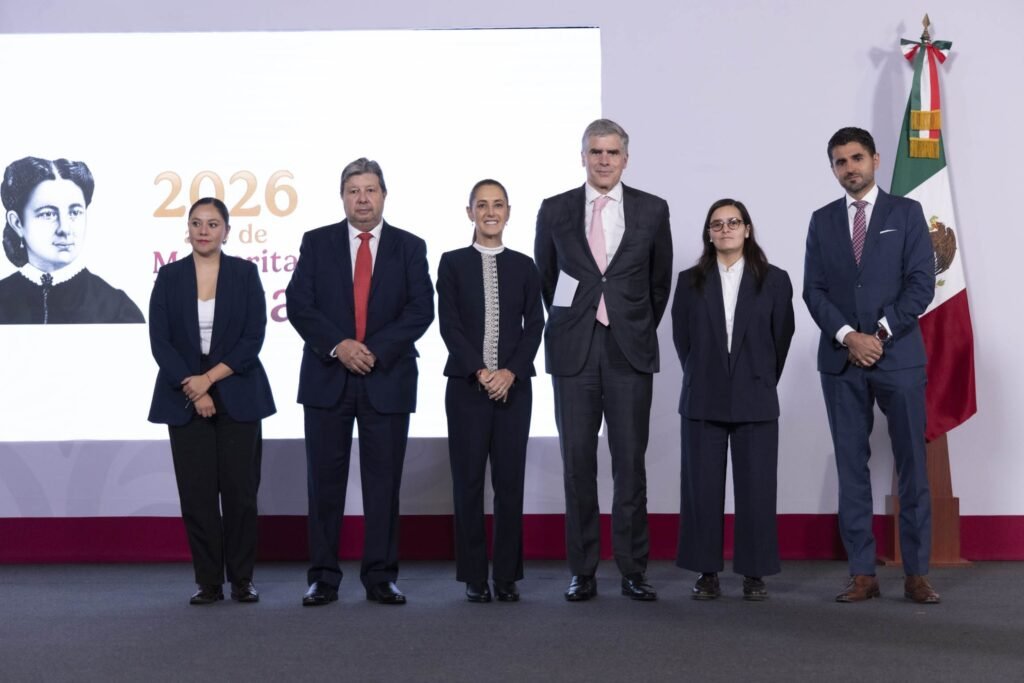
The figure, presented during the presidential morning press conference by Arturo Medina Padilla, undersecretary of Human Rights, Population, and Migration, comprises the results of the Single Identity Platform, coordination with the states, the National Immediate Search Alert, and searches carried out directly in the field.
According to the breakdown given by the official, 6,939 people were located through the Single Identity Platform; 3,039 through coordinated work with the states; 2,572 through the National Immediate Search Alert; and 1,075 as a result of searches in the field.
The 31,946 people located were reported by Sheinbaum during her morning press conference on March 27, 2026, as the cumulative result from the start of her administration, in October 2024, up to that cutoff.
In contrast, the 13,625 were presented this past September 3 as locations obtained through the search mechanisms implemented or strengthened since July 2025.
It is on that search structure that the ten actions announced by the government are organized. Medina Padilla explained at the morning press conference of September 3, 2026, that “these 10 actions that the president instructed us [to carry out] […] are organized around the National Strategy for the Search and Location of Missing or Disappeared Persons.”
The first pillar proposes “Ensuring that all reports in the National Registry of Disappeared and Missing Persons have complete data.” The objective is to improve the information available from the outset, since the quality of the data determines the possibilities of establishing a search route.
To this end, Medina Padilla explained that, together with bodies such as the United Nations and UN Human Rights, “a group of national and international experts” was formed “with whom a technical, scientific review of the registry will be carried out in order to organize this registry and make decisions about it.”
The review seeks to determine what to do with the records that have sufficient information and with those that present incomplete data. The final purpose, the official noted, is “to be able to turn the registry into an effective search tool.”
The second point establishes “Ensuring that every disappearance report has an investigation file.” With this, the aim is to make it possible to assign responsibilities and activate investigation mechanisms. “That there be a responsible authority: the Public Prosecutor’s Office, that there be expert examinations, that there be a formal search plan, within the framework of an investigation file,” Medina Padilla explained.
The measure also seeks to allow cases in which a possible crime exists to move toward investigation and the eventual punishment of those responsible. The undersecretary stressed that “not all absences or failures to locate are disappearances, and this is very important.”
The third point is “Reporting on the progress in the search and location of persons.” It is precisely in this section that the federal government seeks to organize the information on results and make visible which mechanisms have made it possible to find people.
At the September 3 press conference, Medina Padilla explained that the locations are the result of work involving the CNB and other institutions, among them authorities of the Interior Ministry and the National Population Registry (Renapo), through the Single Identity Platform. The objective of making this progress transparent is for families to know the status of the searches and for the results to be evaluated in a differentiated manner.
The fourth pillar consists of “Reporting on the progress of the National Immediate Search Alert (ANBI),” one of the central mechanisms of rapid reaction to a disappearance.
In this regard, the president explained that the Immediate Search Response Center makes it possible to activate the authorities from the moment the report is received. “If there is a person who reports a missing or unlocated family member, they immediately alert this Immediate Alert Response Center that same day.”
She added that “most of the people who are reported are found the same day,” while Omar García Harfuch reported in a post on his account on the social network X that 50 percent of the people reported through the ANBI are located within the first 24 hours.
The fifth point consists of “Strengthening searches in hospitals, detention centers, and other institutions.” The measure seeks to expand the possibilities of finding people who may be physically located, but whose identity could not be established or who provided a different name.
“We are going to strengthen the search in hospitals, detention centers, to locate people whose name is perhaps unknown due to a lack of identification or who gave a different name,” Medina Padilla explained, and noted that this is one of the requests repeatedly raised by the collectives.
The sixth pillar is “Implementing the Human Identification Plan to reduce the forensic backlog together with the Attorney General’s Office,” based on three points: carrying out a diagnosis of unidentified deceased persons who are in safekeeping centers; strengthening those spaces to carry out the corresponding analyses; and reducing the backlog in DNA tests.
The search, according to the government, maintains locating people alive as a priority, but also requires developing capacities to identify deceased persons when it is not possible to find them alive. “Here it must be said that we always prioritize the search for the living,” Medina Padilla noted.
The seventh point incorporates a preventive dimension: “Preventing the recruitment and co-optation of young people through digital platforms.” Since the start of the administration, the undersecretary reported, more than 1,700 account profiles that made false invitations to young people, mainly through supposed job offers, have been deactivated, and more than 12,500 messages have also been removed.
The eighth pillar establishes “Expanding the operational, technical, and human capacities of the National Search Commission with specialized personnel and equipment.”
The Second Government Report stated that the operational personnel of the CNB and the National Network of Searchers reached 354 experts, distributed across 26 states and specialized in criminology, criminalistics, geophysics, forensic sciences, archaeology, physical anthropology, dentistry, and other disciplines.
During the presentation of the ten actions, Medina Padilla also reported on the hiring of specialized personnel and the incorporation of equipment such as drones and ground-penetrating radar to strengthen forensic searches.
The ninth point proposes “Maintaining ongoing attention and dialogue with the families of disappeared persons and collectives.” The strategy contemplates sustaining contact with families, not only to report results, but also to build search routes and address the particular needs of each case.
Between September 2025 and June 2026, the Second Government Report recorded attention to 221 collectives from 29 states, in addition to nine brigades for taking and delivering genetic samples in which more than 550 members of families and collectives from seven states took part.
Medina Padilla, for his part, reported that more than 13,300 assistance sessions and meetings with families and collectives were held in Mexico City, in the states, and in the field.
The tenth pillar seeks to transfer that attention scheme directly to the states: “Bringing the Strategy to the territory through visits to the states in family-assistance sessions and coordination with the states.”
The intention is for families to be able to receive regional attention and for the strategy not to depend exclusively on meetings in Mexico City. Medina Padilla announced a new national session to explain to the collectives the methodology and the results achieved, and to verify that the cases have an investigation file and that DNA samples have been taken when necessary.
The 284 Locations in the Second Report Correspond to a Specific Cutoff
The figure of 284 people located that appears in the Second Government Report requires an additional clarification because it does not represent the total of people located during the administration, nor does it contradict the figures of 31,946 or 13,625.
The Second Report, which covers the period from September 1, 2025, to June 30, 2026, states that during those ten months 6,679 search actions were carried out: 3,581 search-for-the-living actions and 3,098 forensic and criminalistic actions. As a result of those actions, 284 locations were reported: 198 alive and 86 dead, an increase of 16.6 percent compared to the previous period.
Therefore, the 284 locations correspond to the result of that specific set of search actions carried out during that period, and not to the entire universe of locations obtained through all the mechanisms of the national strategy.
The Second Report itself documents, for example, that through 155 geolocation requests to the National Intelligence Center, 47 people were located alive, while, in coordination with the FGR and prosecutors’ offices from 13 states, 1,005 search proceedings were carried out.
For this reason, the figures must be read according to the components measured in each universe: 31,946 people located was the cumulative figure reported by the president on March 27, 2026; 13,625 locations was the cutoff presented on September 3, 2026, for the mechanisms linked to the strategy since July 2025; and 284 locations is the result recorded in the Second Report for the search actions carried out between September 2025 and June 2026.
In that context, the purpose of the ten new actions presented by the federal government is to make the authorities’ response capacity more systematic; it is not only about increasing field searches, but about intervening from the first report onward by having complete information, opening an investigation file, immediately activating the alert, checking hospitals and detention centers, strengthening forensic identification, preventing recruitment mechanisms, expanding the capacities of the CNB, and maintaining contact with families.
President Claudia Sheinbaum insisted that this is constant work: “so, like that, every day there is permanent work, both of communication and dialogue with the collectives.”
That permanent character will be accompanied, she announced, by periodic reports and new territorial tours, with the aim that the strategy can be evaluated not only by the number of people located, but also by the speed with which a search is activated, the quality of the available information, the existence of a ministerial investigation, and the capacity to identify those who could not be found alive.
Thus, the central figure of the administration is that of 31,946 people located, while the 13,625 make it possible to identify the volume of locations associated with the mechanisms that the government is strengthening.
-
People’s Mañanera October 22
President Sheinbaum’s daily press conference, with comments on Plan México, housing in Guerrero, foreign agents in Chihuahua, and IMSS wages.
-
Mexico Owns the Water. Who Can Use It?
From the poisoned Santiago River to the 1992 law that turned water into a commodity, Luis Eugenio Parés explains what it will take to make water a right again in an exclusive interview from our latest bulletin.
-
Heads Will Roll – Soberanía 129
Chihuahua’s ex-attorney general arrested for treason over the CIA raid, Morena’s commanding lead ahead of 2027, the Mexican-American swing in Texas, and the FBI’s El Mayo FOIA dodge.