“They Want to Erase Us From the Digital Cloud”: Mixtec Engineer Asks Mexican Deputies to Use AI to Preserve Indigenous Languages
This article by Iván Evair Saldaña and Enrique Méndez originally appeared in the September 14, 2026 edition of La Jornada, Mexico’s premier left-wing daily newspaper.
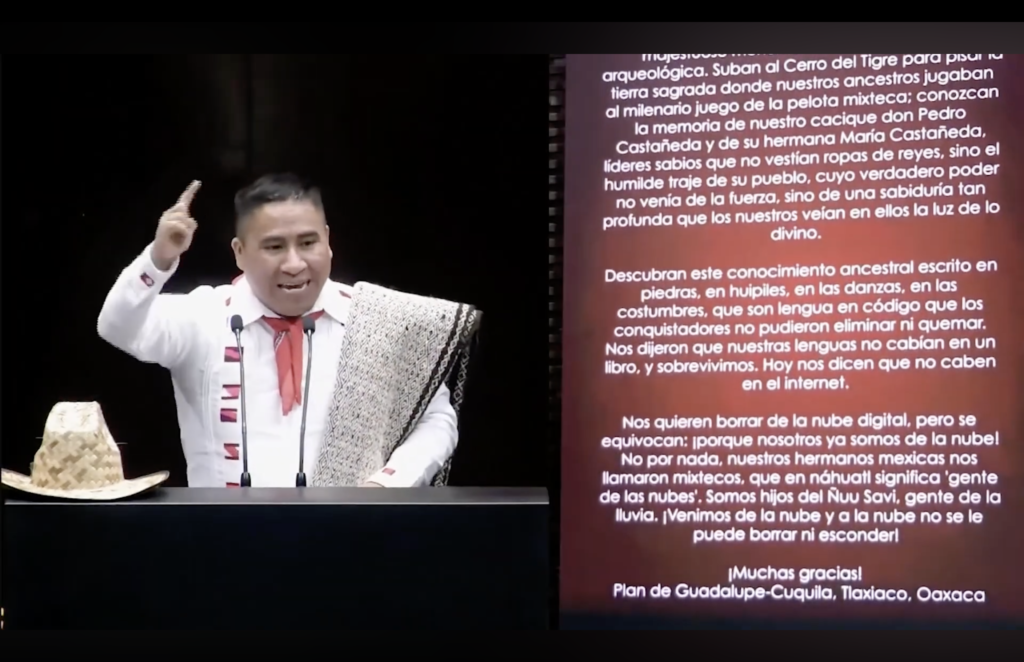
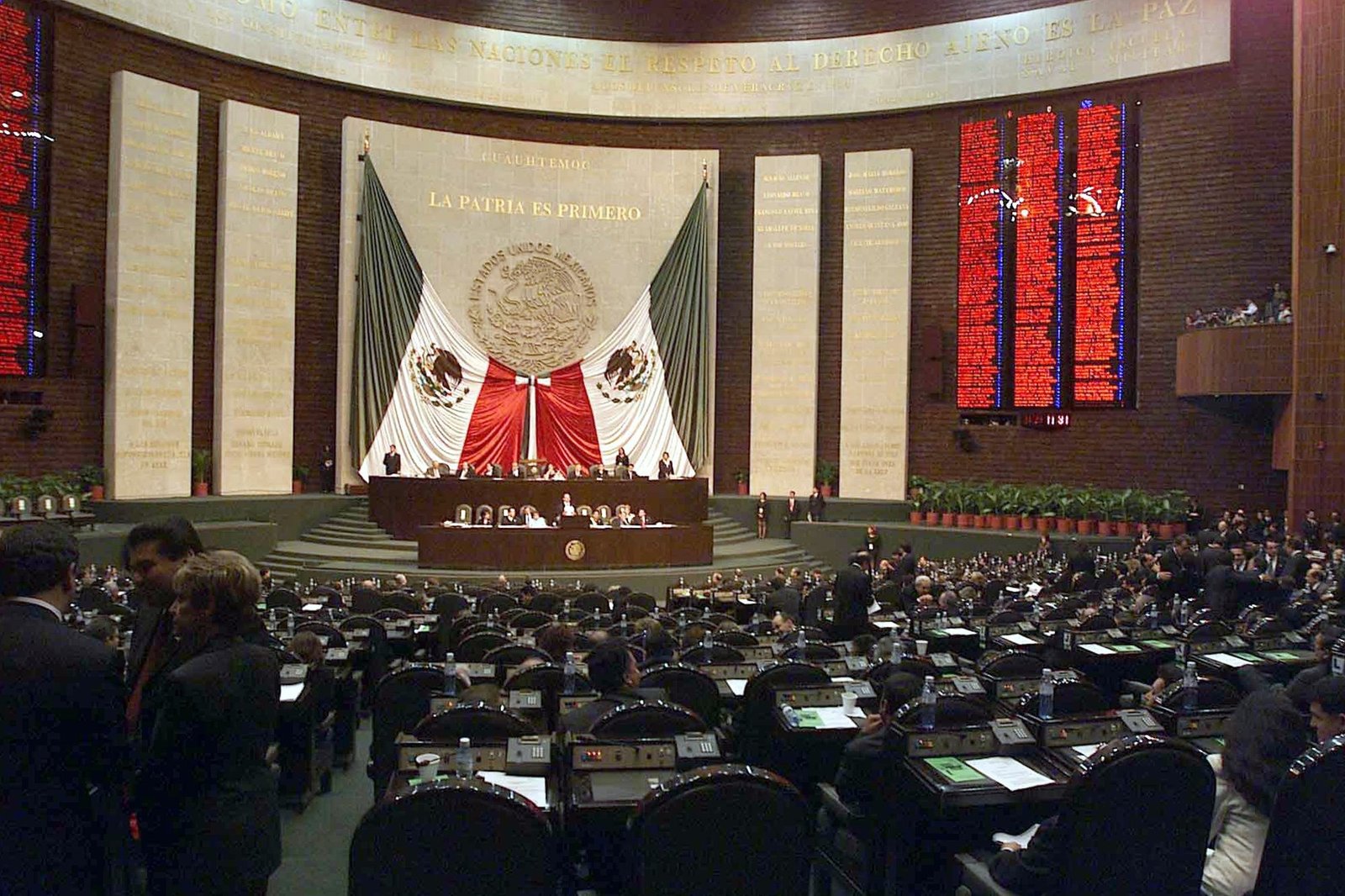
Mexico City. From the tribune of the Chamber of Deputies, the citizen and member of the Mixtec community Moisés Hilario López this Monday called on his legislators to modify the law to promote the use of technology and artificial intelligence (AI) in order to preserve Indigenous languages and combat discrimination against their speakers. “They want to erase us from the digital cloud,” he pronounced in tu’un savi, a language also known as Mixtec, while his words were translated simultaneously in writing into Spanish on the large screen of the plenary hall.
Also a mathematics engineer from the National Polytechnic Institute (IPN) and a specialist in science, technology, data analysis, and consulting, he took part as part of the exercise “Indigenous Languages Take the Floor,” held at the start of each session.
Although during his speech the hall looked half-empty and most of the deputies present were not paying attention to his intervention, Hilario López warned that Mixtec children come to hide their language to avoid being mocked; that Indigenous people who migrate to the cities are pressured to be ashamed of the way they speak; and that this discrimination is also reproduced on social media.
If Artificial Intelligence can learn English, French, and German in a second, why don’t they teach it Mixtec? Why isn’t another Indigenous language taught? It’s not a lack of technology, it’s a lack of political will!
Hilario López proposed that the legislators take on three state commitments. The first, he said, consists of allocating programs and budget to create living digital archives of the native languages and to use the voices of elders to train AI models. The second, requiring digital platforms to detect and sanction hate against speakers of Indigenous languages; and the third, financing artisans, creators, and teachers so that they can commercialize and transmit, through technology, their knowledge and trades in their own languages.
He also proposed creating a program called “Young Artisan Guardians of the Language and Ancestral Knowledge,” inspired by the federal program Youth Building the Future, with the goal of generating income and preserving traditional knowledge.
He closed his intervention with an invitation to visit his homeland, the Mixteca Alta, to get to know its culture, taste its cuisine, and admire and buy its art, from huipiles to sarapes, but “without haggling.”
He emphasized that the ancestral knowledge of Indigenous peoples must be preserved, beginning with their languages.
“They told us that our languages didn’t fit in a book, and we survived. Today they tell us they don’t fit on the internet. They want to erase us from the digital cloud, but they are wrong: because we are already of the cloud! It is no coincidence that our Mexica brothers called us Mixtecs, which in Nahuatl means ‘people of the clouds.’ We are children of the Ñuu Savi, people of the rain. We come from the cloud, and the cloud cannot be erased or hidden,” he concluded.
-
Mexico’s September 16 Military Parade Will Incorporate Tactical Drones and Nationally Made Armored Vehicles
First-ever 99-aircraft flyover, 45 debuting tactical drones, and DN11 vehicles with 100%-national remote weapons systems; 15,458 troops will march.
-
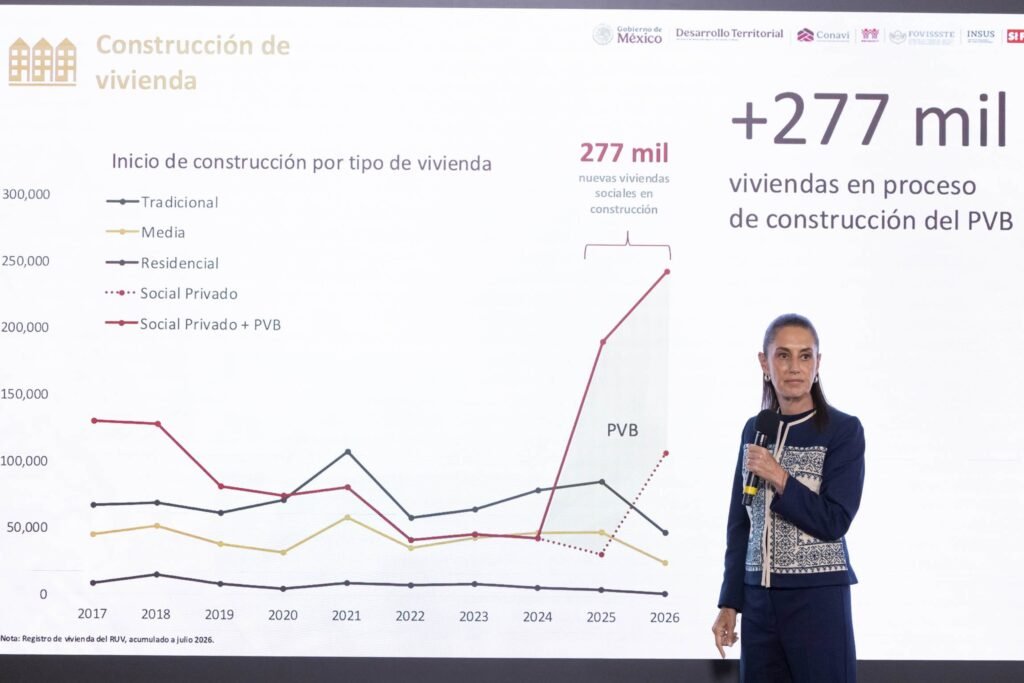
Sheinbaum Foresees 12 Million Families Benefited by the Housing Program by the End of Her Government
“The most important thing is having access to what we consider a right, which is decent housing,” Sheinbaum said.
-
People’s Mañanera September 14
President Sheinbaum’s daily press conference, with comments on housing, property rights, gentrification, sovereignty, and national pride.