Mexico Records Significant Findings in Strategic Minerals
This article by Aníbal García Fernández originally appeared in the September 21, 2026 edition of Contralínea, a Mexican investigative journalism magazine.
Mining was one of the sectors in which the Mexican economy surrendered its sovereignty and the presence of state-owned companies during the neoliberal governments. From the changes made to the Mining Law during the term of Carlos Salinas through that of Enrique Peña Nieto, private companies carried off enormous quantities of minerals and precious metals, and left us the disasters derived from that activity: toxic spills, river contamination, and the consequences for the Mexican population, which is the one that suffers from mining activity.
And as for mining royalties and tax payments, forget it: the amount the main mining companies pay in our country is paltry compared to what they take away. Hence it is a highly lucrative activity.
As a result, the policy of former President López Obrador was to stop granting mining concessions, particularly open-pit ones, among the most polluting mines in the world. In 2018, when López Obrador reached the presidency, the concessioned territory was 20.9 million hectares, and a decree was issued to halt new mining concessions.
But it did not stop there; three other moves were made. One, to review the mining concessions, put them in order, and demand what they must pay in taxes by law. Second, a new Mining Law in 2023. The third —not directly linked but important— the democratization of the judiciary, the political space in which the mining companies had found ways to get around both the payments and López Obrador’s mining policy.
However, three years after the publication of the Mining Law, a set of regulations is still needed that would stipulate the powers of the institutions, as well as the guidelines for those involved in the mining sector: private companies, regulatory bodies, public institutions, community consultations, and review of the mine from beginning to end. And, of course, the sanctions.
President Claudia Sheinbaum’s Second Government Report highlights that in eight years of the governments of the Fourth Transformation the concessioned territory was reduced to 9.19 million hectares, half of what existed in 2018. This means it went from 10.7 percent of the territory under concession to 4.6 percent in 2025. The recovery of the territory is a great achievement.
The Geopolitical Importance of Sonora
Sonora is positioned as a special node in dispute. The Report notes that as of December 2025 “the exploration of 13 strategic areas in Sonora was completed. This helped strengthen the Sonora Plan, given the potential to attract investment and secure the supply of key minerals in the country’s energy transition and technological development.”
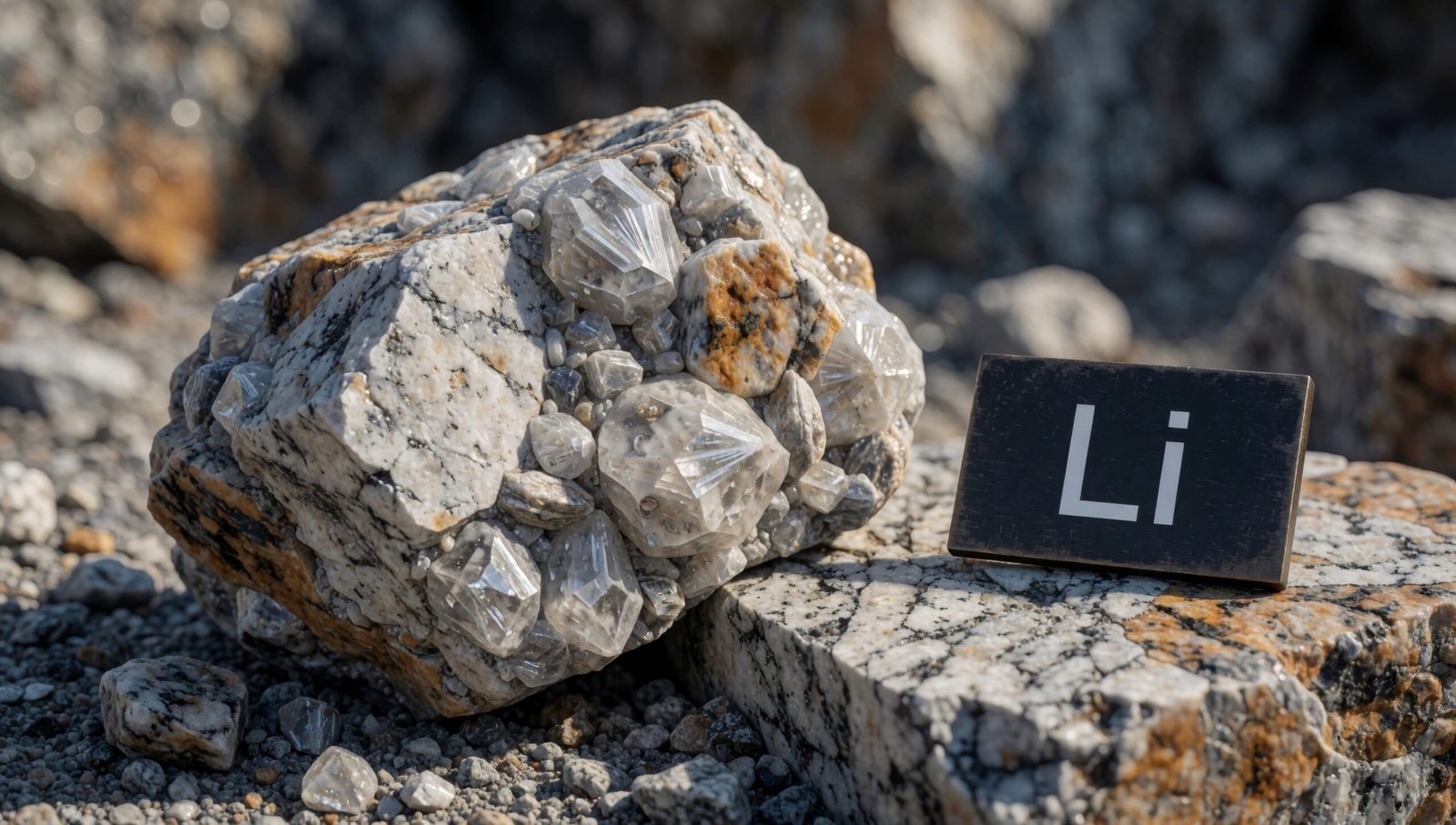
The document highlights that “Information was generated and provided to the entity Litio para México, as a result of regional-scale exploration of the localities of El Picacho and Sahuaripa, Sonora, with geological characteristics favorable for containing this mineral.”
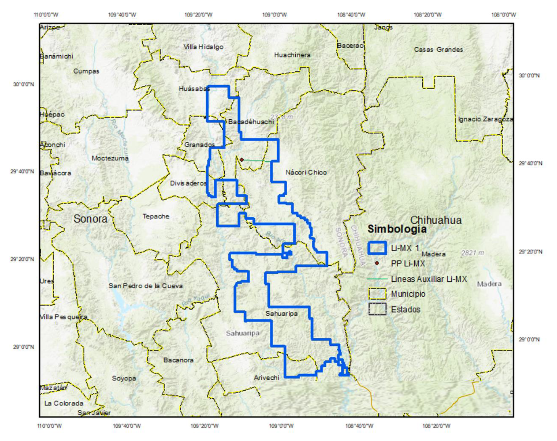
As for Sahuaripa, it is part of the zone declared a lithium mineral reserve along with the municipalities of Arivechi, Bacadéhuachi, Huásabas, Divisadero, Granados, and Nácori Chico. The reserve is named Li-Mx 1, and comprises a little more than 234 million hectares.
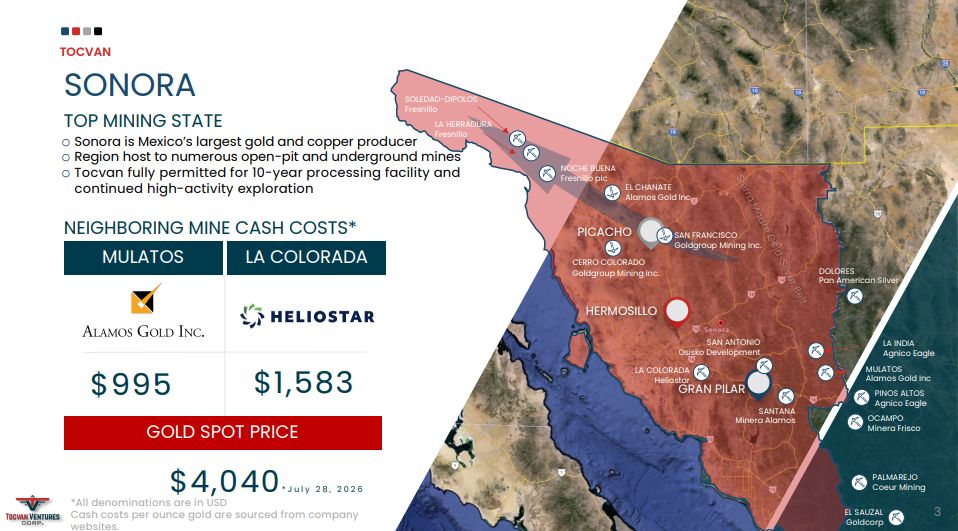
The report notes that in this Morena-governed state two areas with wollastonite were found, and another for gold, silver, lead, and zinc. One of the companies with gold and silver projects in the state, and above all in El Picacho, is Tocvan Ventures. This company holds 2,414 hectares under concession.
According to the Statistical Yearbook of Mexican Mining, in 2024 Sonora produced the equivalent of 247,620 million current dollars. Nationally, the main metallic minerals produced and exported in 2024 were copper (5,383 million dollars), silver (2,812 million dollars), iron (1,541 million dollars), aluminum (1,332 million dollars), lead, and zinc. All of these are minerals considered critical by the United States, the country to which 57 percent of total metallic and non-metallic mineral exports went in 2024. China ranked second with 30 percent.
| Metal | Millions of current dollars |
|---|---|
| Copper | 5,383.4 |
| Silver | 2,812.6 |
| Iron | 1,541.0 |
| Aluminum | 1,332.6 |
| Lead | 1,238.3 |
| Zinc | 773.9 |
Exploration Allocations and Mineral Findings
In addition, the report notes that in the states of Chihuahua, Durango, México, Nayarit, Sinaloa, Sonora, and Zacatecas, 19 areas of geological interest likely to contain economically productive mineral deposits were studied.
It is reported that the country’s geological and geochemical mapping already exceeds the halfway mark. About 1,111,452 square kilometers have been mapped at a 1:50,000 scale, equivalent to 56.6 percent of the land surface. With this, 25 new prospective zones for minerals of importance to various sectors were also identified, although the report gives no further details.
On another front, in 2025 significant findings were made that will position Mexico in an important place given the dispute among the major powers over critical minerals.
In September of last year, it is reported that operations began on three projects covered by the exploration orders published in the Official Gazette of the Federation (DOF). In addition, two graphite studies, two coal studies, and five radioactive-mineral studies were completed; and in three zones anomalous values of uranium and thorium were found.
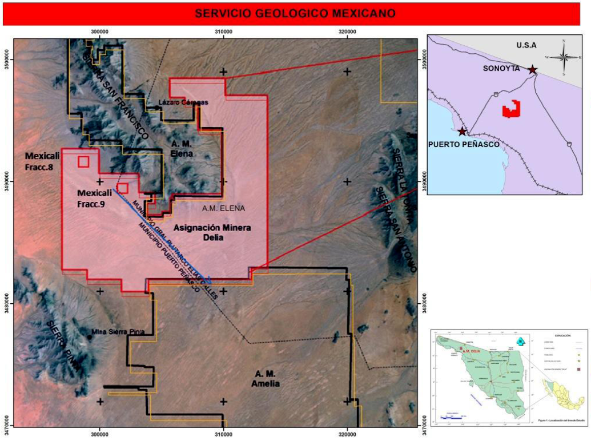
Those permits, according to the DOF, are the Delia lot for gold exploration, located between Puerto Peñasco and Sonoyta. It is an allocation of 15 hectares.
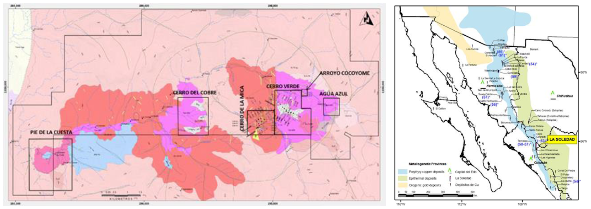
Another allocation was the La Soledad lot for exploration of copper, molybdenum, gold, and tungsten, located between Durango and Sinaloa. It covers an area of 6 hectares.
And, finally, the Las Granadas lot, to explore lead, zinc, copper, gold, and silver. It covers an area of 75 hectares.
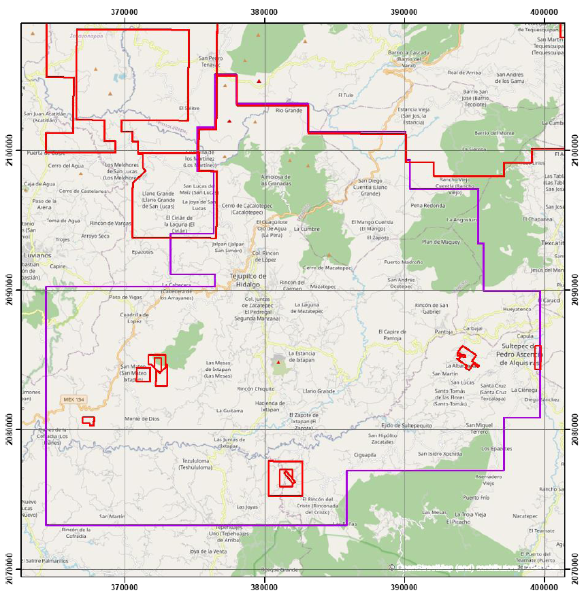
The finding is no small matter, since it must be read under current international conditions. That is, the international dispute over minerals, the hegemonic decline of the United States, and the new forms of attempted control, interference, and meddling in sovereign decisions by this world power lead one to think of the concept of neocolonialism. If before the United States controlled, deposed, and backed coups d’état to control countries, today it kidnaps presidents, violates international law, threatens, blackmails, and applies economic and diplomatic pressure not to control an entire country as before —with the high political and economic costs that entailed— but to extract the resources it needs at a critical moment for the Yankee economy.
In this sense, the Burgos Basin in the north of the country takes on greater relevance, not only because of the probable existence of unconventional gas and its possible commercialization, but because, as geology experts have pointed out, there are also deposits of coal, uranium, and perhaps other minerals. In short, the Burgos Basin and the north of the country are to Mexico what the Orinoco Belt is to Venezuela.
The great absentee here is the Agreement that the Ministry of Economy established with the United States on strategic minerals, announced in February 2026 and which set a 60-day deadline to agree on the following:
The participants will discuss the feasibility and development of coordinated trade policies and mechanisms, including border-adjusted minimum price levels for imports of critical minerals, focusing first on certain critical minerals to be determined.
The participants will hold additional consultations on how those minimum price levels could be incorporated into a plurilateral agreement on trade in critical minerals, including any other provision necessary to guarantee the resilience of the supply chains of the contracting parties to that agreement.
The participants will identify specific extraction, processing, and manufacturing projects for critical minerals of mutual interest in the United States, Mexico, or third countries that comply with internationally recognized standards of responsible business conduct, and will prioritize financing and other political support for those projects. The participants will strive to achieve greater market transparency by sharing information on the location of potential critical mineral deposits developed by their respective government surveyors, including the US Geological Survey and the Mexican Geological Survey.
Aníbal García Fernández
holds a doctorate, master's, and bachelor's degree in Latin American studies from the National Autonomous University of Mexico (UNAM). He is a member of the CLACSO working groups "Crisis and World Economy" and "Violence in Central America." His main lines of study are the Inter-American Cold War, energy geopolitics, Latin American dependency and integration, militarism, and economic relations between the United States and Latin America.
-
Brugada Reaffirms the Right to Housing at the Urban 20, in NY
Beside New York mayor Zohran Mamdani, Brugada said nearly half a million people left housing poverty in Mexico City since 2018, and urged a global housing coalition.
-
People’s Mañanera September 21
President Sheinbaum’s daily press conference, with comments on the report assemblies, education scholarships, G20 growth, diesel supply, and sovereignty.
-
Companies Lobby Against Mexican Reform That Would Require Them to Report the ‘Definitive’ Price
Netflix, Uber, Rappi and DHL are pressuring Congress to weaken Morena’s bill against ‘drip pricing,’ the hidden fees tacked onto a low advertised cost.