Mexico Owns the Water. Who Can Use It?
This introduction by Meizhu Lui and interview with Luis Eugenio Parés Sevilla originally appeared in the October 21, 2026 edition of the Mexico Solidarity Bulletin, the weekly publication of the Mexico Solidarity Project.
Subscribe here to receive original content and a Mexico news compilation weekly.
“Water everywhere… and not a drop to drink”
In Samuel Coleridge’s 18th—century English poem, sailors are stuck in the middle of a windless sea, surrounded by water—but not a drop is drinkable to assuage their agonizing thirst.
In the 21st century, the main problem isn’t salt water. The earth has always provided fresh water—but now its use is monopolized by big industries. This isn’t new. Back in 1995, when I went to the Fourth World Conference on Women in Beijing, I heard a woman from the global south bemoan, “We have Coca-Cola, Pepsi-Cola, RC-Cola—every kind of cola, but there is no water to drink.”
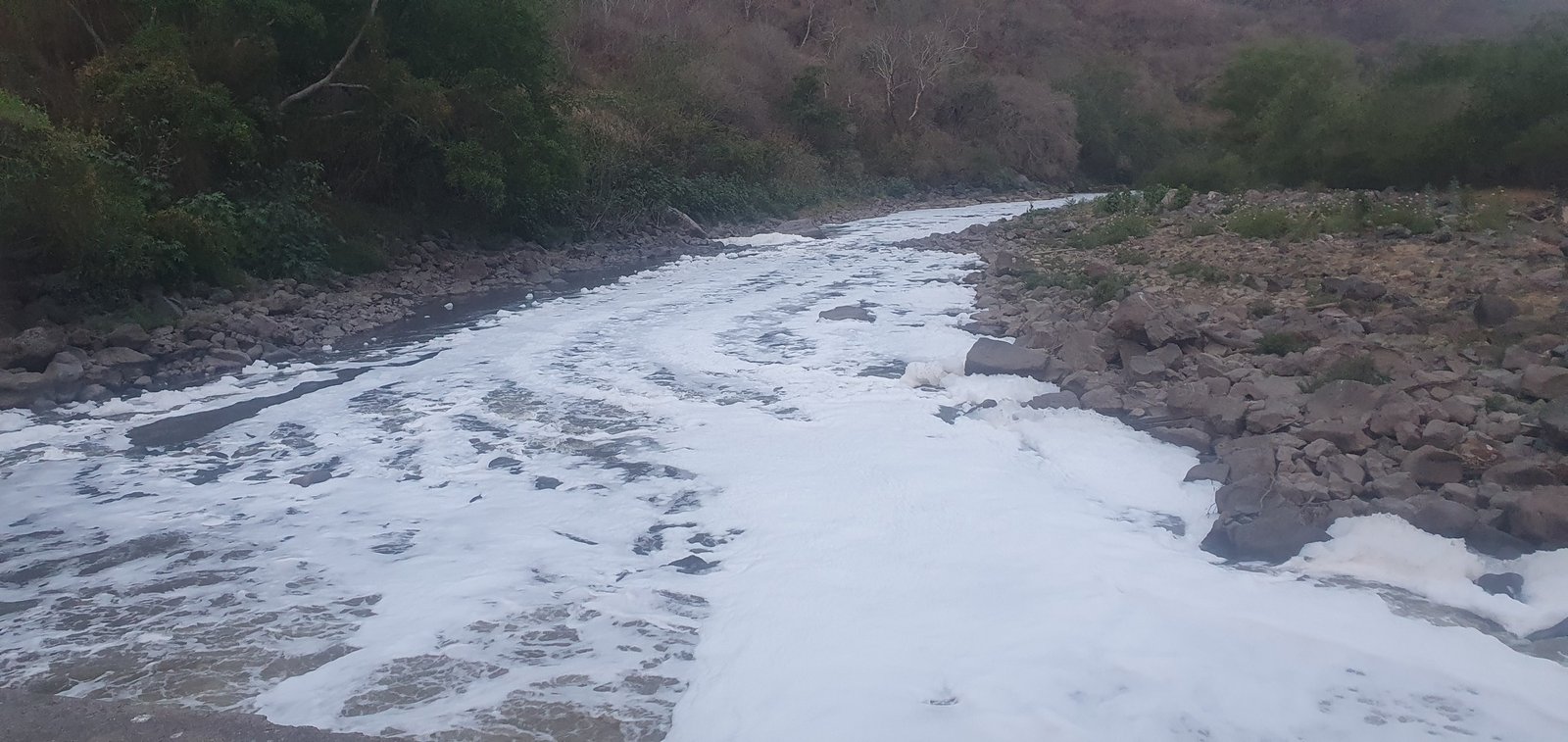
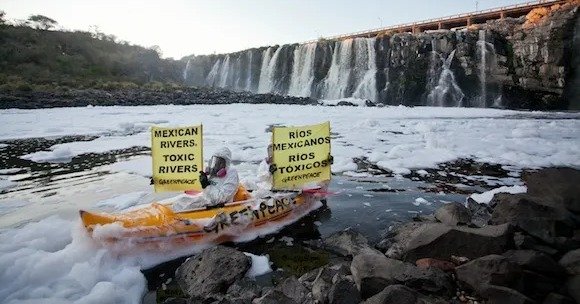
Today, in Jalisco, Mexico, the 400-mile-long Santiago River contains over 1,000 toxic chemicals, including not only heavy metals like arsenic, lead and mercury but also cyanide, industrial waste, benzenes, chloroform, pesticides and untreated municipal sewage. The Santiago once provided life-giving water; now it provides death, disease and environmental destruction.
And just last week, on October 11 in Guadalajara, Jalisco’s capital, residents poured into the streets to protest the foul-smelling black sludge emerging from their faucets. Urban areas have their own problems, such as decaying leaky pipelines that bring contaminated water to people’s homes. Not a drop to drink.
The water supply crisis is growing not just in the Global South but in the heart of the empire, the US. More than 300 US communities are demanding that their local governments ban AI data centers because they consume enormous amounts of water.
A human can live only up to three to seven days without water, and as Luis Eugenio Parés reminds us, water is a finite resource. How long can humanity last when we can’t find a drop to drink?
Meizhu Lui, for the editorial team
VOICES

Luis Eugenio Parés Sevilla is a specialist in agricultural and agroindustrial planning, organization and development.
He has more than five decades of experience promoting projects for ejidos, communities and cooperatives that connect the social economy, technological innovation and food sovereignty to strengthen small producers. He is the author of books and articles on rural development, social organization and transformation of the Mexican agri-food system.
How did people obtain water before the Mexican Revolution of 1910?
In 1910, Mexico was predominantly a rural country. Residents collected water directly from springs, rivers, natural pools, hand-dug wells, cisterns and rainwater reservoirs. In semi-arid zones, they built jagüeyes (earthen reservoirs) and small dams; in the Yucatán Peninsula, cenotes and cisterns; and in Indigenous regions, community-based catchment systems and canals. Water rarely reached homes on its own; people had to fetch, transport and store it—and, whenever possible, boil or filter it.
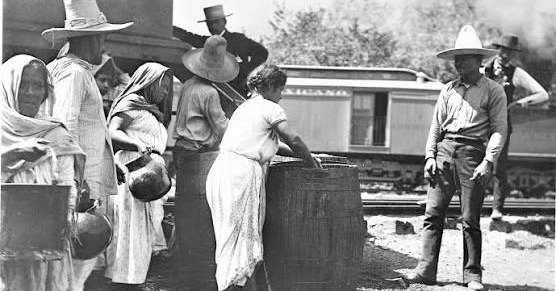
The Revolution’s 1917 Constitution introduced a decisive principle: Article 27 recognized national waters as the nation’s property, which enabled the post-revolutionary State to construct large-scale dams, irrigation districts, potable water systems and aqueducts.
After 1917, how did the right to water change?
In 1946, the State created the Secretariat of Hydraulic Resources to coordinate the harnessing of all waterways and to utilize hydraulic engineering for the country’s development. The nation viewed water as a strategic public good—necessary for producing food and improving public health.
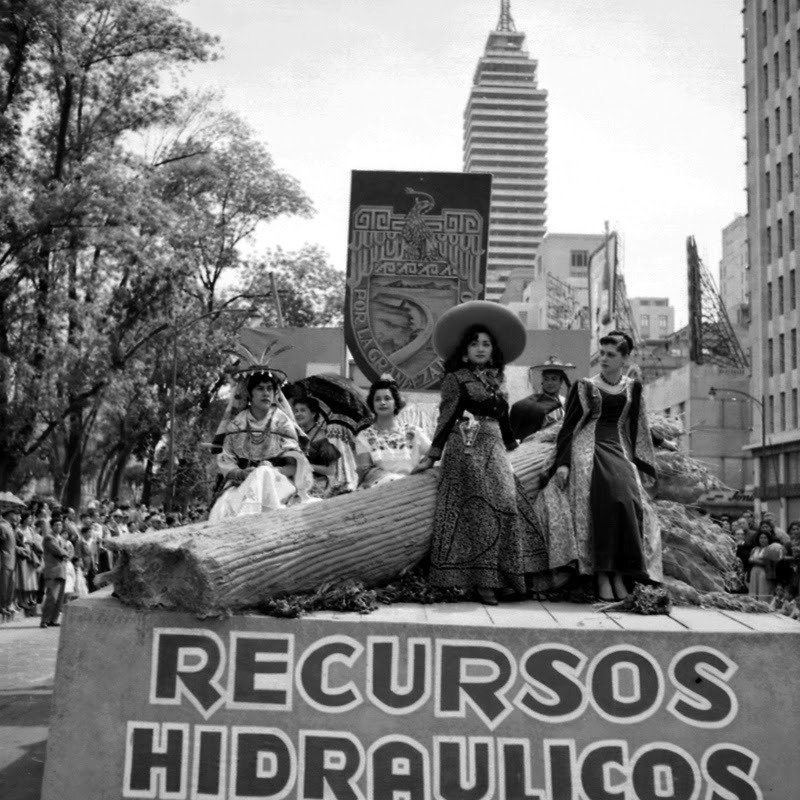
In 1989, at the dawn of the neoliberal era, the government established the National Water Commission, marking the start of a different management model. It focused on regulating users, collecting fees, decentralizing services and registering water “concessions.”
In a crucial turning point, under the 1992 National Waters Law, the nation retained ownership of the water but consolidated the system of private exploitation through concessions. These authorize the extraction of a specific volume for a designated use, location and timeframe. A regulated market for water rights emerged.
A fundamental distinction is that, legally, no one could buy or sell the river or aquifer itself—only an authorized volume or concession, which granted access to a scarce resource. The right to water increased the value of a plot of land, an industrial facility or a real estate project. Water shifted from being an essential requirement for life, collectively developed, to being an industrial input—an economic asset for private profit. The right to use water turned into a tradable commodity, and those uses generating the greatest economic value got priority.
In short, prior to 1992, the State was responsible for distributing water—a public good. From 1992 onwards, it functioned primarily as an office responsible for issuing and registering access permits for private entities.
Did free trade agreements further limit the access to water?
Yes—they indirectly altered land and water use patterns.
Two simultaneous trends emerged in agriculture. On one hand, importing grains produced with water from other countries is tantamount to importing the water contained within them, which can alleviate local water stress. On the other, the expansion of export crops (fruits, vegetables, berries, avocados, tomatoes and beer) concentrates water extraction in irrigated regions, which reduces the supply available for human needs.
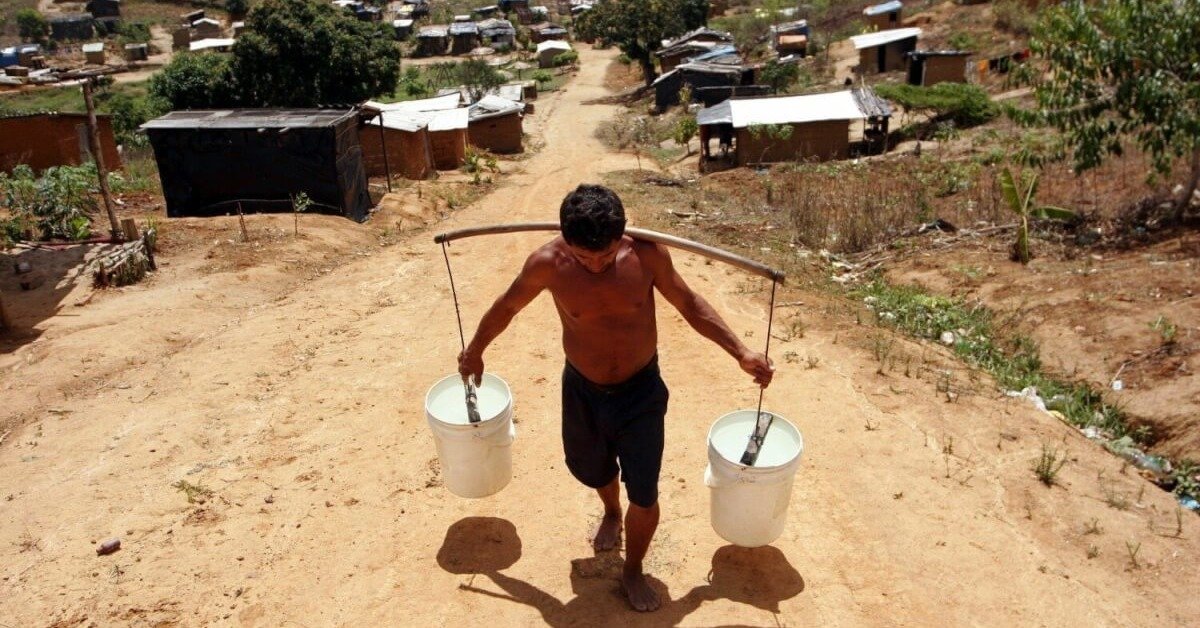
Industrial discharges clearly cause water pollution. The Mexican Institute of Water Technology examined the stretch of water between Lake Chapala, the Santa Rosa Dam and the Santiago River and identified massive levels of pollutants. Usual methods for cleaning the water aren’t sufficient; it would be akin to using a kitchen colander to clean up paint and solvents. Community people who live close to mines, Coca-Cola bottling plants and so on consistently protest the lack of potable water for people and the environment.
What is Mayor Clara Brugada’s response to the water crisis in Mexico City?
Clara Brugada has made water a top infrastructure priority and introduced several complementary strategies. For 2026, it announced a 7-billion-peso investment in 643 projects covering potable water, drainage and sanitation.
The strategy combines citizen reports via the “H2O Line” with rapid-response crews and equipment designed to detect underground leaks. The government aims to triple the number of repairs compared to last year and replace sections of deteriorated piping. The logic is sound: recovering a liter of water already extracted and treated is generally cheaper (and more environmentally sensible) than seeking a new source.

The city has launched a “100 water acupuncture points” program, featuring absorption wells and rehabilitation of storm drains and small dams to capture excess rainwater. It promotes rainwater harvesting in homes and public buildings—a “sponge city” approach.
Treatment plant upgrades and expansions have increased water reuse. Treated water can be used for industry, irrigation of green spaces, cleaning and other purposes not requiring potable water. Every liter reused frees up higher-quality water for human consumption.
What about President Sheinbaum and her proposals to “recover” water?
In September 2026, the National Water Commission (CONAGUA) reported that reorganizing water concessions had enabled them to recover approximately 5 billion cubic meters of water. According to official estimates, this figure is equivalent to the annual water supply for 90 million people, based on a consumption rate of 152 liters per person per day.
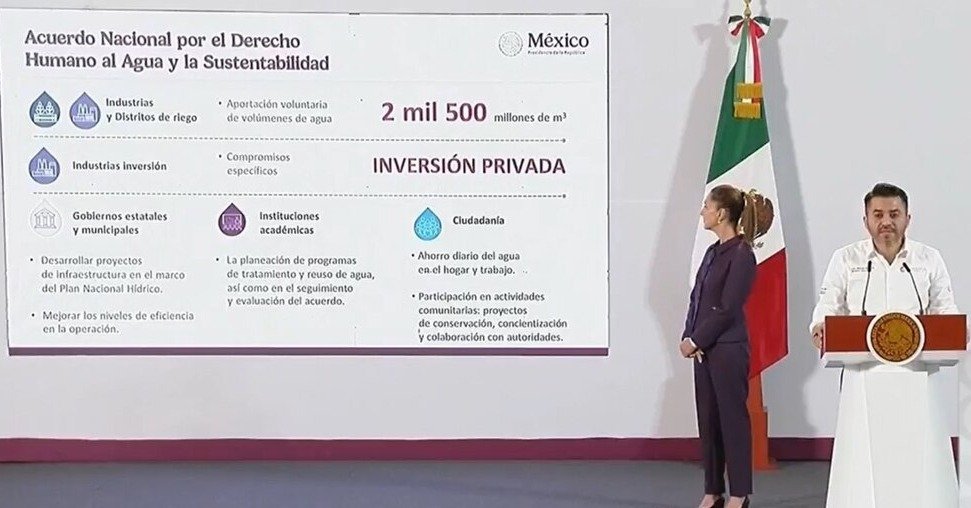
What, then, does “recovering water” mean? Primarily, it means that certain volumes—previously under concession, underutilized, returned, regularized, or consolidated—have changed their legal status regarding availability and can be lawfully reallocated.
The reforms of the new General Water Law of December 2025 aim to limit the transfer of water rights between private parties correcting the 1992 priority on concessions in 1992. It puts in writing the human right to access, availability and sanitation for domestic consumption. It asserts that water is both a human right and a national asset.
But undeniable and unresolved challenges persist: aquifer overexploitation, pollution, limited inspection capacity, insufficient budgets, weak municipal services and inequality between rural and urban areas.
Ultimately, we judge a rights-based policy at the pipeline’s end: whether the water arrives, whether it’s of good quality and reliable and whether it avoids forcing a poor family to pay more than the cistern owner. The reform’s ultimate test will be: do individuals and communities receive sufficient, safe, reliable and affordable water?
Is it necessary to frame the problem in a new way?
Water operates in a continuous cycle. Paying attention to the entire journey—from source to user—requires restoring forests, wetlands and soils; offering compensation to ejidos who conserve critical areas; requiring large-scale consumers to pay for damage to water systems; promoting rainwater harvesting and use of graywater; supporting local water committees; and halting water-intensive projects where water is scarce. Above all, personal and domestic consumption, ecosystems and food security must be the priority.
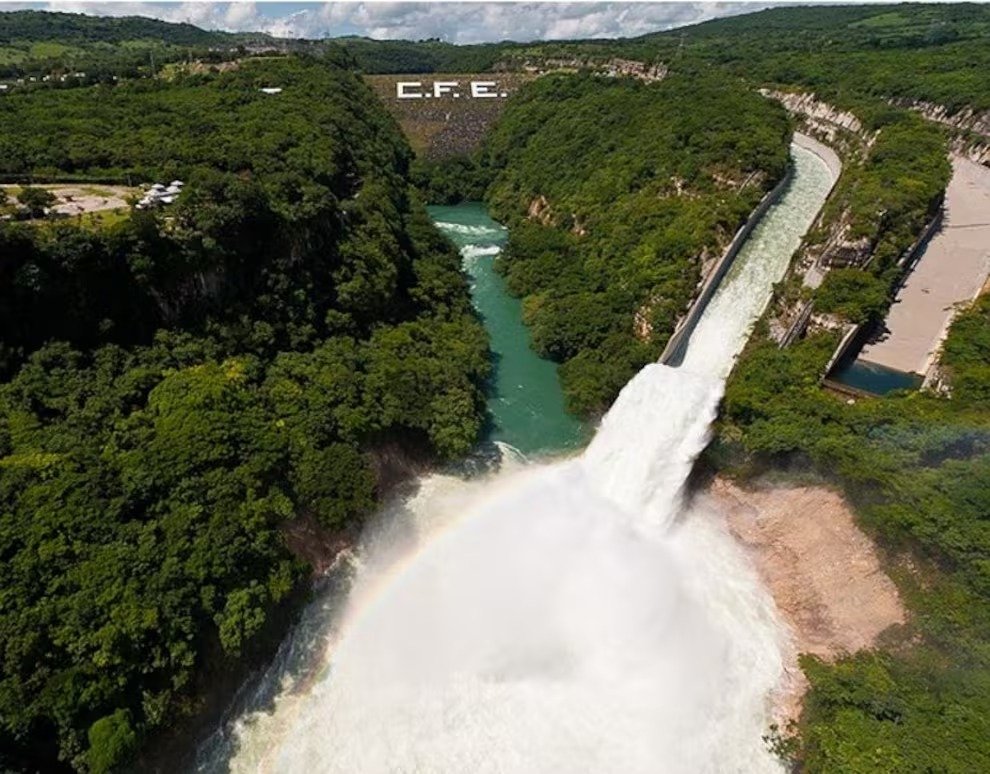
In short, water is neither created in an office nor guaranteed by words on paper. It’s captured in the mountains and the soil, conserved within the watershed, distributed via infrastructure, protected through budgets and laws and shared through social agreements. If a step fails, the tap runs dry or delivers contaminated water.
Are the changes you recommend possible within a capitalist system?
The extractivist capitalist model treats natural resources like land and water as inexhaustible commodities, measuring their value solely by their profitability. Thus, a forest is worth more when chopped down and an aquifer worth more if it feeds industry. While a few capture the profits, local communities and society bear the heavy cost of pollution, depleted resources and lost livelihoods.
Nature doesn’t produce at market pace, nor does it recover at the speed demanded by capital accumulation. Land needs time to regain its fertility; forests require decades to regenerate; and aquifers can take hundreds or even thousands of years to replenish. When extraction outpaces these natural rhythms, it’s not true development—because the consumption practices of today can make life impossible tomorrow.
When water ceases to be a commodity for profit-making, the human right to water will become an everyday reality: a tap providing clean water, a community with a future and a natural world capable of continuing to sustain life.

Meizhu Lui
is a co-founder of the Mexico Solidarity Project.
-
People’s Mañanera October 22
President Sheinbaum’s daily press conference, with comments on Plan México, housing in Guerrero, foreign agents in Chihuahua, and IMSS wages.
-
Heads Will Roll – Soberanía 129
Chihuahua’s ex-attorney general arrested for treason over the CIA raid, Morena’s commanding lead ahead of 2027, the Mexican-American swing in Texas, and the FBI’s El Mayo FOIA dodge.
-
Digital Revolution Must De-Bureaucratize Mexico’s Social Security Institute, Sheinbaum Says
Ahead of a new wage offer for social security staff, Sheinbaum said a week-long savings review will fund a bigger raise and called workers’ demands legitimate.