Cuauhtémoc Cárdenas Has Died
This article by La Jornada Editorial Staff originally appeared in the October 28, 2026 edition of La Jornada, Mexico’s premier left wing daily newspaper.
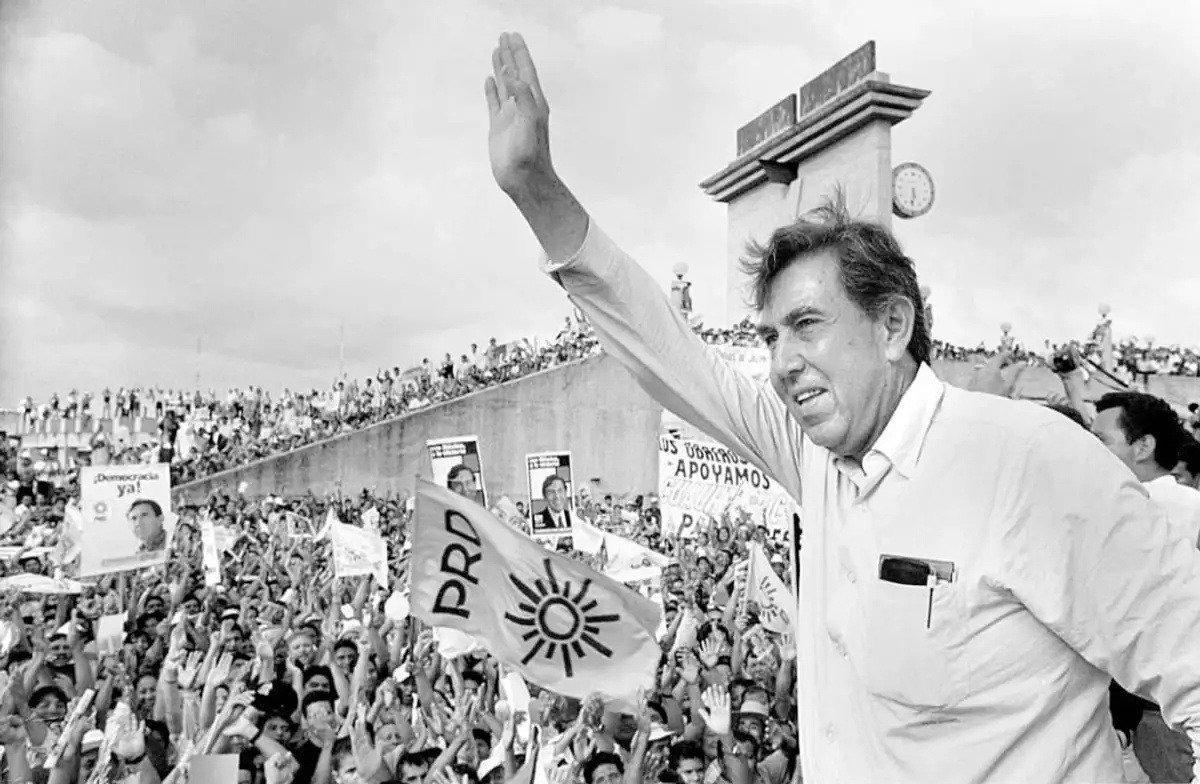
Engineer Cuauhtémoc Cárdenas, historic leader of the Mexican left, has died at the age of 92.
The body of Engineer Cárdenas will lie in state tomorrow, October 29, between 10:00 and 16:00 at the Panteón Francés de Legaria, where his wife Celeste Batel, who died on October 19, 2021, also rests.
Cuauhtémoc Cárdenas was born on May 1, 1934. He was a presidential candidate three times, in 1988, 1994 and 2000. He was the first head of government of the Federal District chosen by popular vote, in 1997.
The son of former President of Mexico (1934-1940) General Lázaro Cárdenas del Río, considered one of the best presidents the country has had, he obtained his degree in civil engineering from UNAM’s National School of Engineering in 1955.
In 1954 he began his membership in the Institutional Revolutionary Party (PRI). His first participation was in the National Liberation Movement (MLN), 1961-1964, which within the PRI meant the ability to bring together young people with concerns and channel proposals from groups far from power, and in which figures such as Heberto Castillo, Enrique González Pedrero, Octavio Paz, César Buenrostro, Clementina Batalla de Bassols, Manuel Marcué Pardiñas and many other nationalists and leftists took part, inside and outside that party.
In 1974, with Jesús Reyes Heroles as president of the PRI and Luis Echeverría President of the Republic, Cárdenas campaigned as a pre-candidate for governor of Michoacán, but the candidate was Carlos Torres Manzo, which provoked a public protest by the Engineer over the imposition.
He took part in José López Portillo’s pre-campaign for the presidency in 1975. He then had the candidacy for senator for Michoacán, and the Communist Party candidate Manuel Pérez Adame withdrew his candidacy and supported Cárdenas. In 1980 he won the election and became governor of Michoacán for the PRI, a term that ended in 1986.
In 1987, together with figures such as Ifigenia Martínez, Porfirio Muñoz Ledo, César Buenrostro and Rodolfo González Guevara, they formed the Democratic Current of the PRI, seeking the party’s internal democratization, against the designation of candidates by the sitting President of the Republic.
Leaves the PRI in 1987
He left the PRI after considering that it had strayed from the principles that gave rise to it in the Mexican Revolution and that the imposition by the President of the Republic in the naming of who would be the presidential candidate should not be accepted.
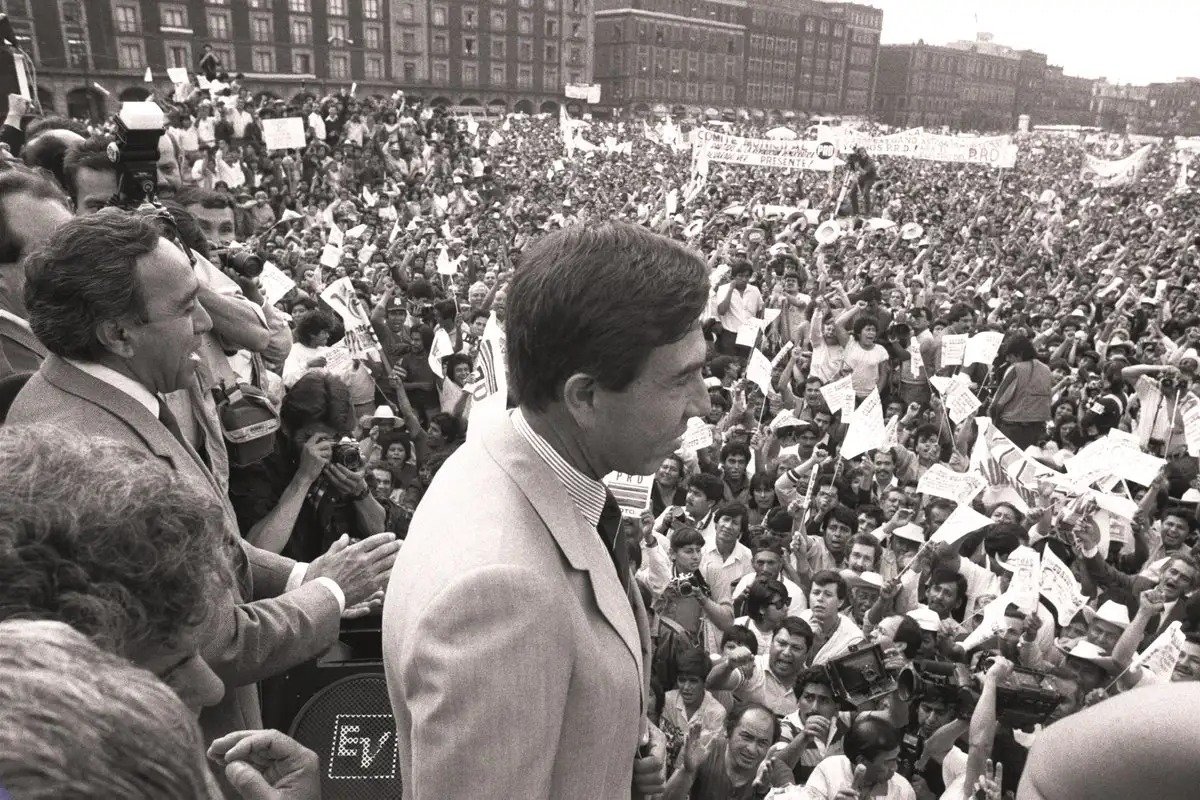
For more than a year he gathered supporters for that democratic cause, and on October 14, 1987, the leader of the Authentic Party of the Mexican Revolution, Carlos Cantú Rosas, nominated Cuauhtémoc Cárdenas as its candidate for the Presidency of the Republic. Then the Popular Socialist Party and the Cardenist Front for National Reconstruction Party joined, to form the National Democratic Front (FDN), with other small groups such as the Social Democratic Party, the Mexican Green Party and later the Movement for Socialism, which was made up of splinters from the Unified Socialist Party of Mexico, the Mexican Workers’ Party and the Revolutionary Workers’ Party.
Founder of the PRD
He then launched himself as presidential candidate of the so-called National Democratic Front in 1988, while the PRI nominated Carlos Salinas de Gortari. On July 6, the day of the presidential elections, in the face of the famous crash of the system, Cárdenas, Manuel J. Clouthier (PAN candidate) and Rosario Ibarra de Piedra (of the PRT) set aside their differences and went to protest before the Secretariat of Governance.
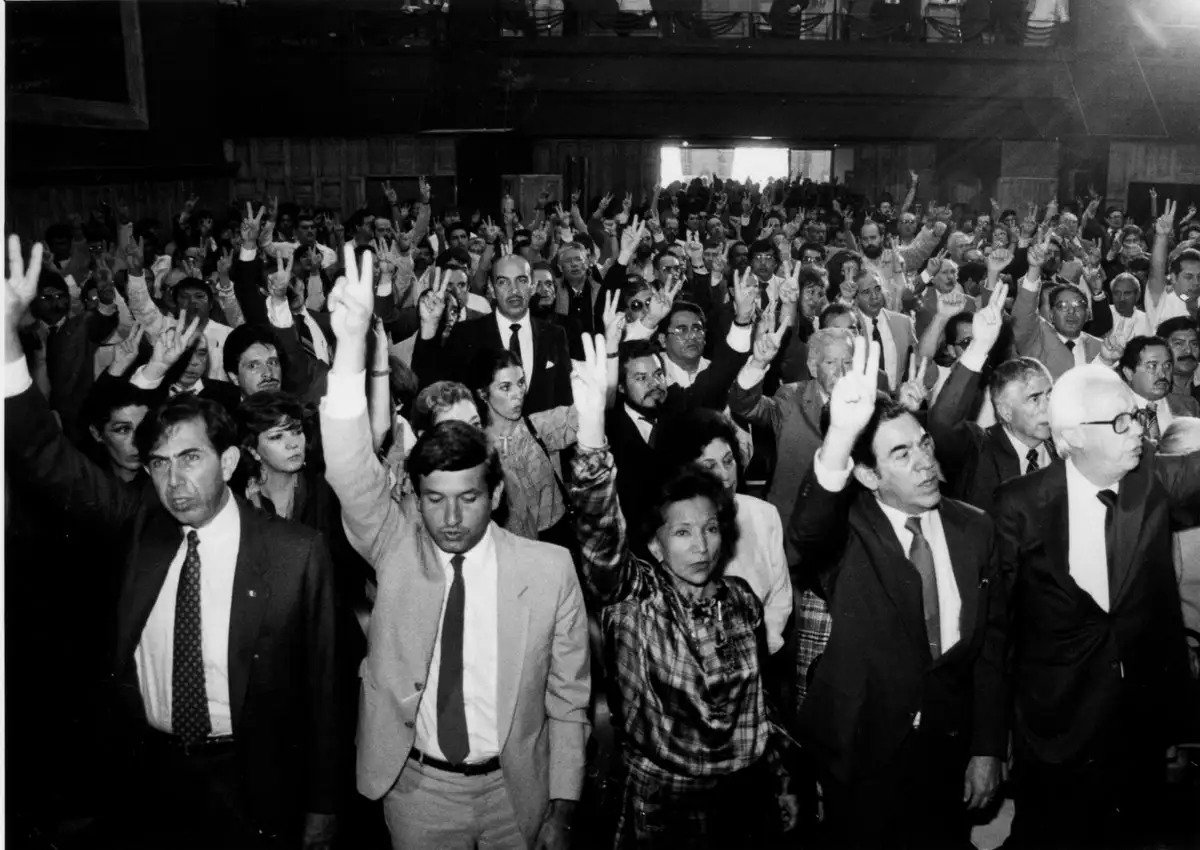
The trends favored Cárdenas, who declared himself the winner with a trend of 42 percent, to 36 for Salinas, with 50 percent of polling stations counted. Then the protests over the alleged electoral fraud began, the mass rallies were repeated across the country, and many were waiting for Cárdenas’s call to defend the vote at the ballot boxes, but it did not happen. His collaborators said that, had it happened, a civil war could have been unleashed.
After the 1988 election, and with the electoral fraud that brought Carlos Salinas de Gortari to the presidency consummated, he founded a political party to continue his movement, now with an open rejection of neoliberalism and in defense of social policies in favor of the lower classes and vulnerable sectors, as well as government support for culture and State control of strategic sectors, especially energy. He also spoke out for policies of austerity, honesty, secularism and national sovereignty.
Thus the PRD was born in 1989. He was again a presidential candidate in 1994 and 2000, and in 1997 he became the first elected head of government of the capital.
Meeting With the EZLN
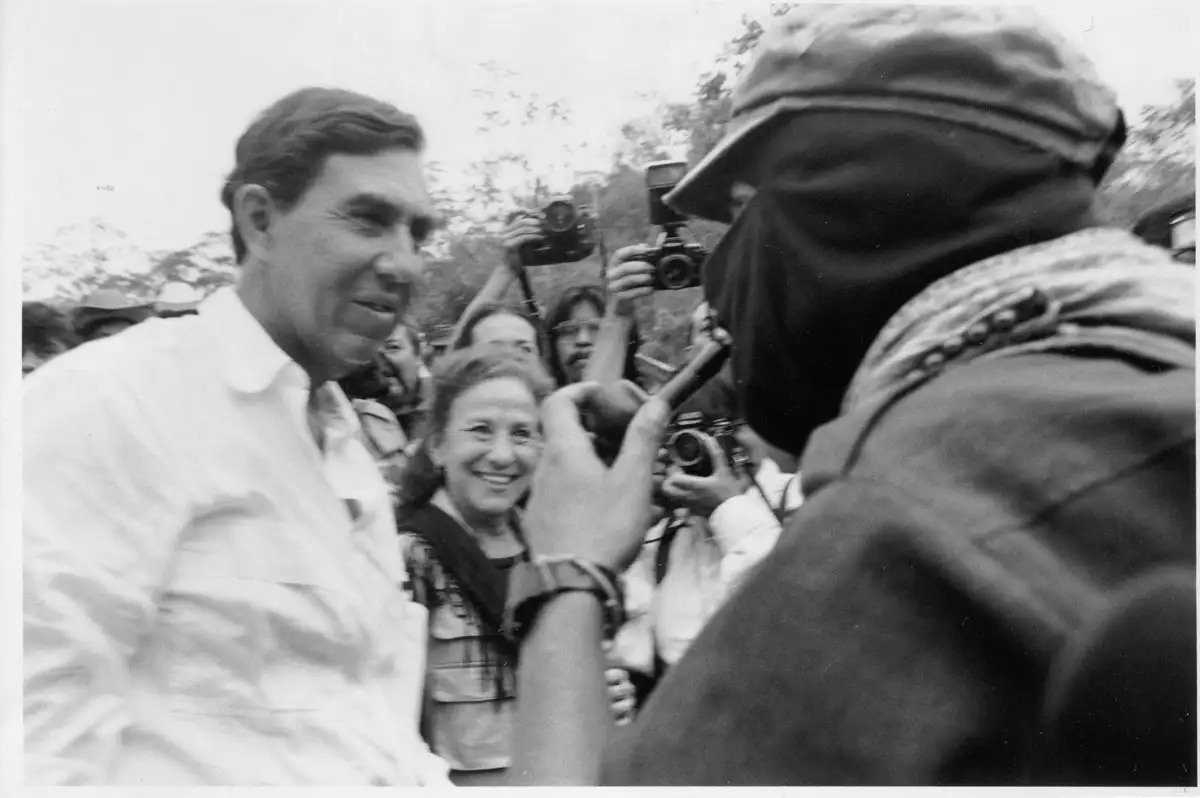
On May 17, 1994, Cuauhtémoc Cárdenas visited the EZLN in Guadalupe Tepeyac, Chiapas, while he was the PRD candidate for the presidency of the republic.
Marcos received Cárdenas as a valid political interlocutor, but used his speech to harshly criticize the PRD, which he accused of repeating the vices of the old political class.
“Many forces support the candidacy of Mr. Cárdenas Solórzano for the presidency of Mexico, but these will not be the decisive ones for the transition to democracy; neither will we, the Zapatistas, be the force through which democratizing change is reached,” Marcos said.
First Head of Government of the Federal District
The electoral victory of Cuauhtémoc Cárdenas Solórzano on July 6, 1997, marked a milestone in the struggle for the democratization of the country, as he became the first elected Head of Government of the then Federal District.
The arrival of the left to lead the capital, driven by the Party of the Democratic Revolution (PRD), meant a resounding defeat for the PRI regime and wrested from the federal Executive control of a city that for decades suffered the imposition of regents, thus restoring the political rights and sovereignty of the capital’s citizens.
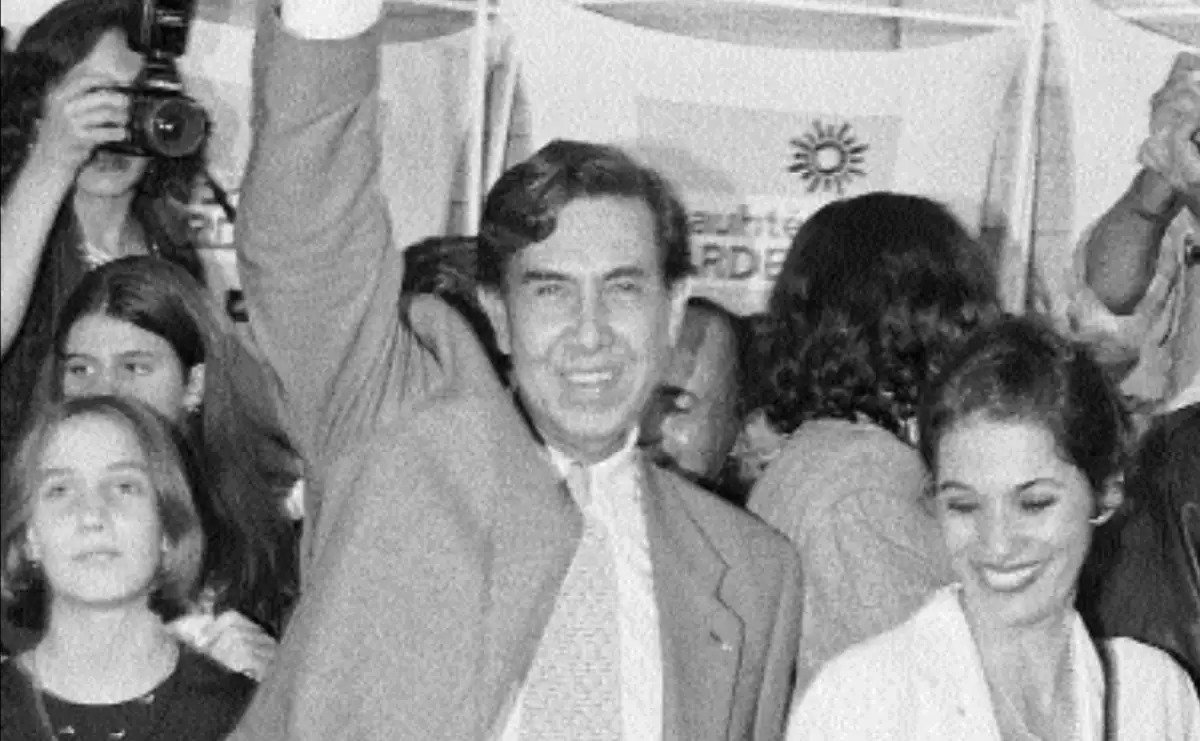
As Head of Government, Engineer Cárdenas inaugurated an administration with a deep social emphasis and laid the institutional foundations for the capital’s political autonomy. His administration prioritized attention to the demands of the popular classes, administrative transparency and the development of urban infrastructure with an equitable vision.
Before his third presidential candidacy, in 1999, he consolidated the Federal District as the main bastion of progressive causes in the country.
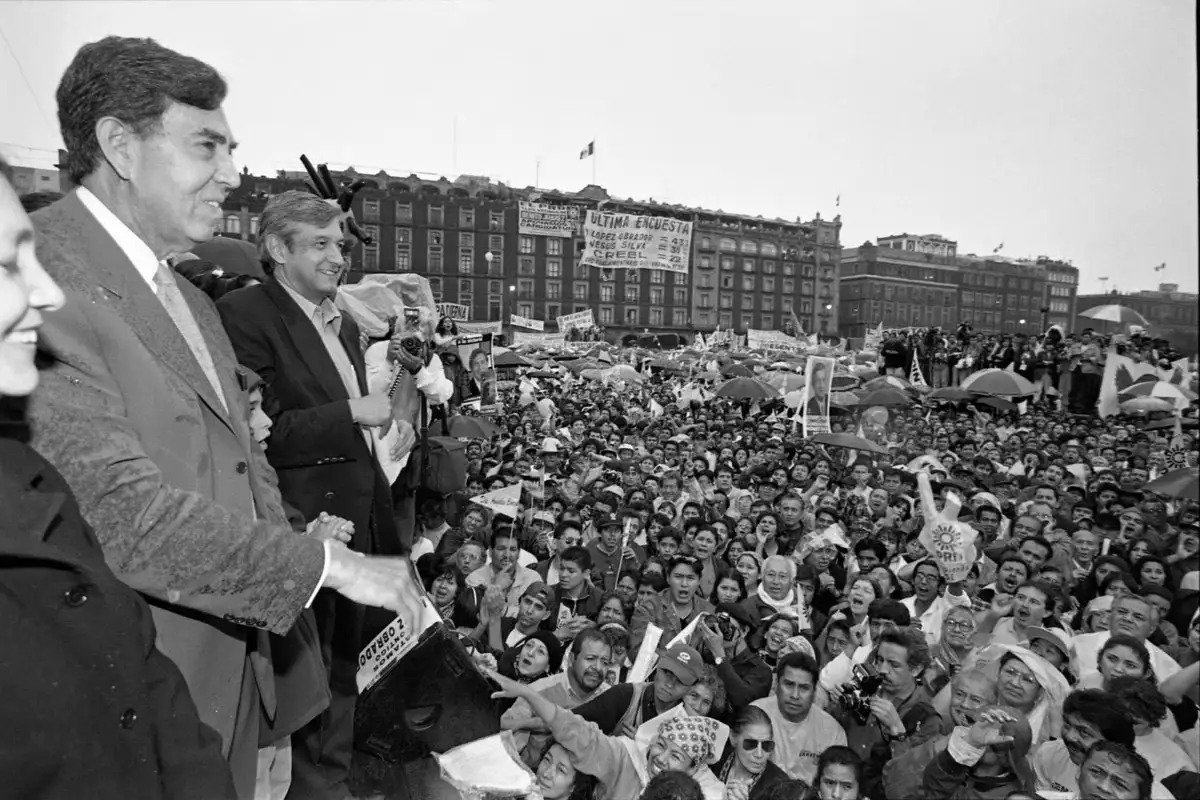
Alongside López Obrador in the 2000 Election
As part of the transformation of the country, the Engineer fought for the democratic transition, and in 2000 he accompanied Andrés Manuel López Obrador in the Alliance for Mexico City, for head of government of the Federal District.
It is we, those of us who are here, who have provoked it, we have provoked it, we have undermined the regime.
Cuauhtémoc Cárdenas, Zócalo rally with Andrés Manuel López Obrador, May 6, 2000
“We have undermined the PRI, we who are in this plaza and the millions of Mexicans who are fighting for democracy,” he added before hundreds of Mexicans.
In October 2010, Cárdenas Solórzano called for the unity of the progressive and democratic forces that “today are dispersed, divided, even confronted,” as the only ones capable of getting the country back on course. Time is short and the pace must be quickened, he said on the 40th anniversary of the death of his father, General Lázaro Cárdenas del Río.
The National Polytechnic Institute (IPN) awarded Engineer Cuauhtémoc Cárdenas Solórzano an Honorary Doctorate last January for his outstanding career, his contributions to Mexican society and his invaluable contribution to the consolidation of democracy in the country.
During the UNAM tribute for his 90th birthday, Engineer Cárdenas recalled that starting in 1988 the democratic struggle cost between 600 and 800 “dead, fallen on different days. Crimes, I would say, all of them, that remain in impunity and that have remained in impunity.”
In March 2026, Petróleos Mexicanos (Pemex) announced that the company would have an advisory commission headed by Cuauhtémoc Cárdenas Solórzano.
-
People’s Mañanera October 28
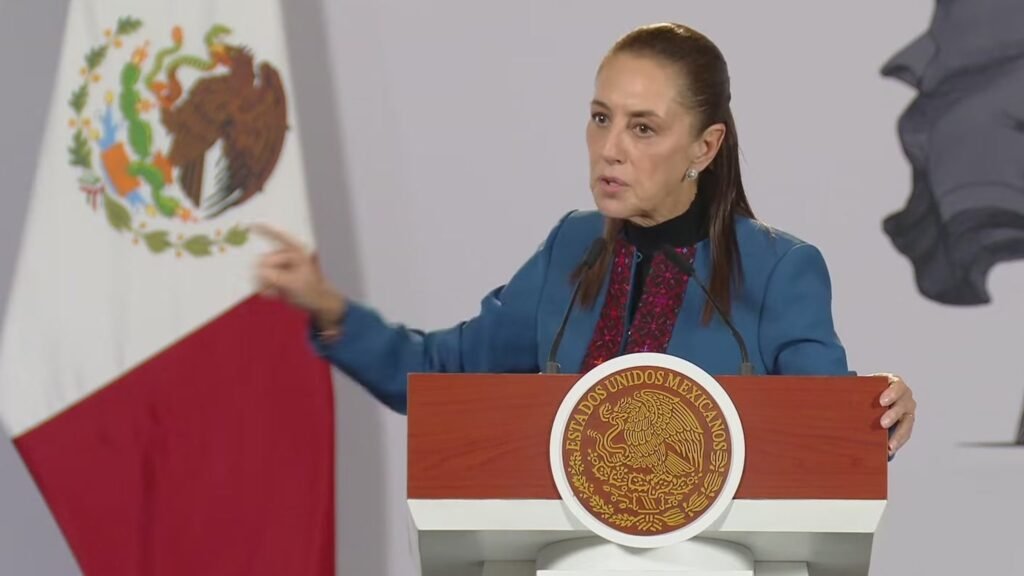
President Sheinbaum’s daily press conference, with comments on Guadalajara water, INE contracts, Marine Le Pen, and the Lie Detector.
-
Denying the Blockade Against Cuba Is US Hypocrisy, Cuban Ambassador to Mexico Eugenio Martínez Says
At Mexico’s Chamber of Deputies, the diplomat said Washington imposes an energy siege, virtually a naval blockade, and pressures countries to change their UN votes.
-
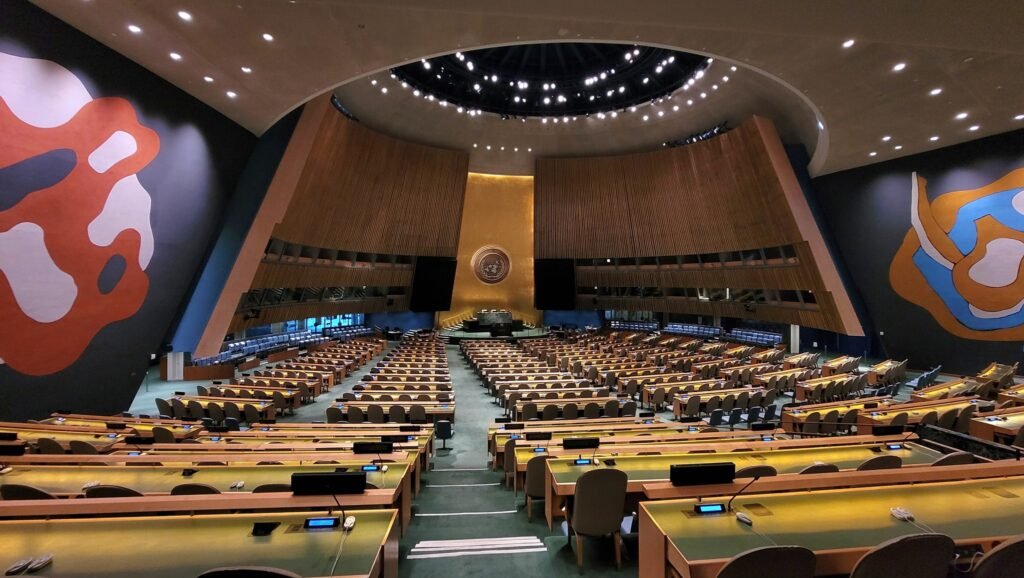
Mexico’s Ambassador Vasconcelos Says at UN That Ending US Blockade Against Cuba Is Urgent and Imperative
Citing food and medicine shortages and an energy crisis on the island, Mexico also called for Cuba’s removal from Washington’s list of state sponsors of terrorism.